 Energetic, articulate, and biblically literate, Chris Seiple, the President of the Institute of Global Engagement, travels widely as a relational diplomat. In this exclusive interview for wagingwisdom.com, Chris draws on personal experiences to describe the world of relational diplomacy and, with a heart-on-sleeve vulnerability, he talks in-depth about working through tough challenges to remarkable breakthroughs in the Middle East. People who are puzzled about why it is taking so long to get to the kind of meeting of minds that can end adversarial relations and conflict will, I think, be especially helped. The wealth of wisdom Chris shares also has clear practical meaning for people like you and me who try our level best to be wisely peaceable in our own communities and nations, amid situations where fresh insight is always welcome to help us improve our listening and learning from others.
This extended conversation covered many key areas, including the theology, philosophy, and praxis of relational diplomacy. After I finished transcribing it, I was surprised to see how much ground it covered. When a friend asked about this, I found myself saying: “It reminded me of stepping into Ezekiel’s river – of going from ankle deep to knee deep to the waist, and then you’ve got to start swimming in it!” (This conversation took place by phone on June 30, 2015, with a short follow-up email.)
Charles Strohmer: What is relational diplomacy, and how did it become vital to your work at the Institute for Global Engagement?
Chris Seiple: Well, thank you for your question. And thank you, again, for what you’re doing. It’s the Holy Spirit moving in different ways in different people in different contexts. It’s always so encouraging to know folk like you and to be in this mutually edifying conversation and relationship. It’s encouraging, even if the pessimists have all the headlines!
I think of relational diplomacy as a secular way of illustrating the example of Jesus talking with the Samaritan woman at the well, in John chapter 4, where Jesus living the Parable of the Good Samaritan by loving the “bad” Samaritan. It’s instructive because this woman has been very shunned and marginalized, both by her own society and by the majority culture. Yet here is Jesus [a Jewish rabbi with a lot of authority] entering into a relationship with her. But it’s intentional. So it’s also a method of engagement for us because we see Jesus taking a big risk to his own reputation. If he gets up close to her, or touches her water pot, or even gets in her shadow, he becomes unclean, according to the old order [of Jewish laws]. So there’s model there for us: to be obedient you’ve got to go right up to the edge of every single cultural, social, gender norm you have in order to love the neighbor who is your exact opposite.
Charles: You have to enter their square inch.
Chris: Yeah. Walk in their shoes. And the other thing about that model, for Christians, is that we sometimes worship, even with the best of intentions, at the altar of proclamation, which sometime becomes the altar of quantification. You want to convert everybody. But Jesus doesn’t “convert.” He says “make disciples.” In order to make a disciple you have to be in a relationship and earn the right to speak into that relationship. Then learn to speak the truth with gracious honesty. Jesus does all of that in John 4, as his relationship with the Samaritan woman develops and becomes trustworthy. And, wouldn’t you know it, then many people in the village become his followers and he spends two days there, discipling them. All of this was intentional.
Charles: Intentional?
Chris: Well, there’s more to the model than just his relationship with the Samaritan woman and discipling of the village, as important as that was. The story begins by saying that Jesus had to go to Samaria. So Jesus was quite intentional about this. I think he was also discipling his disciples then, just as he is doing now, as the Creator: this is what it means to love your neighbor, someone who doesn’t look, act, vote, or pray like you do. You guys have to be in a relationship with them. Tolerance is not enough. You have to respect and even reverence them, because everybody bears the image of Christ. As the apostle Paul says, in Ephesians 5:21: Submit to one another out of reverence for Christ. So all of that is a theological backdrop.
Charles: Why do see relational diplomacy as a secular way?
Chris: The secular explanation, very simply, is what we call top-down and bottom-up. Mutual respect and mutual reliance has to be socially owned from the bottom up according to the best of culture and the best of the local faith traditions. Both of which, I think, echo the intention of the Creator, but you have to chose it. And it has to be legally protected from the top down, by good governance. So it takes both. In the twenty-first century, we’re a little heavy on the bottom-up, the crowd sourcing, flash mob kind of activities. But you still need governance that people accept as common rules and are protected under some kind of transparent rule of law that everybody accepts. Therefore you have the capacity to be on a level playing field, all at the same table, all respected according to their inherent dignity, being made in the image of God and having freedom of conscience and belief, to chose Christ or reject him, or anything. The role of the state is to protect that. So I always relate relational diplomacy back to religious freedom.
Charles: How did you, personally, come to this understanding? Has it always been part of your life or did you journey to it?
 Chris: It was a journey, for sure. If the role of Christians is to know Jesus a little better each day than you knew him the day before – to be transformed more into his likeness each day – because you’re spending time the Word [the Bible] – then theoretically at least we should all be moving forward in that direction. I hope [laughing] that I’m more mature now than when I was in highschool and the Marine Corps. You go through this process where you think about many things, like your interests and passions (those things are no accident; they are given to you). Or you think about what it means to be a witness for Christ (that there is no such thing as professional missionaries; we’re all called to live the Word in word and deed). And so you wrestle with this stuff, with what the Scripture means and how do I apply it. And along the way you run across what Jesus says – love God and love neighbor: the whole law hangs on that. But he also says: love each other so that people will know that you are my disciples. And he goes even further and says: love your enemy. Well, okay, but what does that mean?
Charles: You’ve got to struggle with working that out, personally.
Chris: Right. So you’ll see on our website pictures of me with Islamists and communists, people who could be, or have been (some still are) the enemy of America or of Christianity. So how do you begin to engage with such people in ways that do not sacrifice the substance of your beliefs but, hopefully, in ways that live that out, while stewarding the gift of American and global citizenship? These are hard things to wrestle with. And you have to wrestle with them where you are at, in the state that you wrestle with them. Sometimes you get hurt, like Jacob wrestling with the angel at the River Jabbok.
Charles: How was relational diplomacy crucial to the initiatives IGE began ten years ago in Pakistan with some fundamentalist Muslim leaders there?
Chris: That was our first trip to Pakistan, and we met with Islamists who had been freely elected on an anti-American, pro-sharia platform. That was my first journey into “what does it really mean to love a neighbor who is self-defined as anti-American?” You begin to understand that all religion and all politics is local, and that a particular region or people group within a foreign country has legitimate concerns, which we may not have understood going in. As you start entering such relationships you learn, you begin to understand how that country, rightly or wrongly, had been received and perceived. So we began to have those conversations. And because it’s the first time many of them have met an American, you also learn what it means to be a punching bag.
Charles: The journey is rough at times, learning where others are at.
Chris: Yeah. When you go into these overseas contexts, you’ve got to understand that they’re just as human as you are. And some Americans would that think Pakistan is the homeland of terrorism, and some Pakistanis think that America is the homeland or terrorism because of all the drone strikes and all those casualties. Okay, well, let’s have a conversation about this. Let’s listen to each other. Let’s see where you’re coming from, where you’re at. It could be that I disagree with one hundred percent of what they’re saying, but I’ve still got to show them respect, to listen to them, in order to love them in a language and a logic that they understand, so that they’re even capable of receiving what I might say to explain how they might understand us, or to present a different understanding of the same set of facts.
For example, Americans pulled out of Afghanistan in 1989, when the Soviets pulled out after their long war there. We pulled out because we had won the Cold War and soon there was no more Soviet Union. But they saw that as: you Americans abandoned the Pashtun people and then the Taliban came and then two million refugees came into our country and overwhelmed our educational and social infrastructures. I would have some problems with that too. Now whether you blame that all on America is a different issue, but that doesn’t change the fact that they went through that. So how do you begin to process that and come to a common narrative as opposed to two narratives? That to me is heart of the gospel because it’s the heart of reconciliation. Getting people to talk across their deepest differences and then ask: what motivates you?
A Pakistani will say: why are you even here? Why are you on the border of North-South Waziristan? Well, because I love you, and my faith says I love you. We are never going to agree on Jesus. I think he’s the son of God, you don’t. But I’m here because he says to love you. And the fact that I’m here and that there aren’t many other Americans here ought to be proof enough that I’m a person of my word. And over time you get to points where you can have these conversations and disagreements about theology, politics, and geopolitics, but the point is that you’re into a relationship and that changes everything.
Charles: You and some of your colleagues have had some pretty good success there, with some of the academics and students in the university.
Chris: Yes, we used to support students at the University of Banu, on the border of North-South Waziristan. Unfortunately, that has not continued because of the war. It’s just been too difficult to do. But there are a number of relationships out of the Peshawar University, and the center for peacebuilding there, that we have maintained, people who have participated in our “religion, security, and citizenship” discussions, which we’ve also held in Kazakhstan, Kyrgyzstan, Myanmar, and most recently in Singapore. And out of that we’ve developed essentially a multi-faith curriculum, which we are going to provide back to people so that they can tailor it to their contexts. What does it mean to love God and love neighbor in your context? And using their local words. Because they need to have it according to the best of their culture and the best of their faith tradition. For example, thinking for a minute about peacebuilding, the curriculum can help the Pashtun who teaches international relations at Peshawar University, or at the center for peace studies. And they can speak based on Koranic texts about what it means to build peace as a function of being a good Muslim.
Charles: Where does the rubber meet the road in this?
Chris: It’s good for relationships, and for honest multi-faith dialogues about theology, and for geopolitcs. And when you have them making the case, that’s a whole lot more sophisticated and sustainable than me making the case [in their context] about why terrorism is wrong in any case.
Charles: IGE also had breakthroughs bringing some of these Pakistanis to Washington, so various relevant parties here (analysts, policy people, State Department folk) could listen, learn, and start building some unusual yet significant relationships.
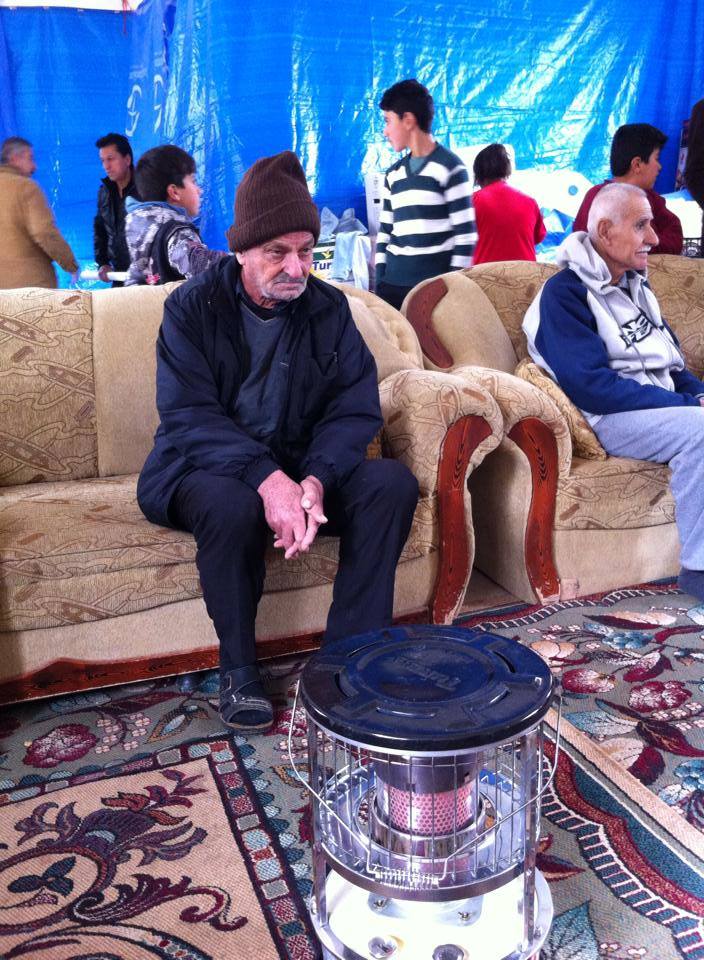
 Chris: Well, I don’t want to give the impression that we were at the center of these contexts, but here’s one illustration in the broader context. One time I was in Peshawar and we were meeting with the Council General there, and he said: it’s so good to talk to you because I can’t get out of my armor-plated car. And that’s true not just in Peshawar but in some other countries as well. I was Erbil [Iraq] four times in the last eight months, and the consulate people don’t get out. These are people responsible for humanitarian aid, but they can’t get out of the consulate, because it’s a security threat. And when they do get out, their footprint is so big, because you’ve got to have a lead vehicle and an end vehicle and an armor-plated car and a security detail. So you attract attention by the amount of security you have everywhere you go.
So at IGE can play a role as an NGO to talk to the people they’re unable to talk to and then come and speak to them at the consulate or in Erbil or back at State Department headquarters on C Street, and have conversations saying: this is what we’re hearing, and we want to be able to share it with you because we feel that we steward American foreign diplomacy just like you do, and maybe there’s things that you can do with this that make for a better American foreign policy. So we’re always at that intersection between Track One (state-to-state; government-to-government relations) and Track Two (people-to-people; NGO-to-NGO relations). Sometimes we call what we do Track 1.5 – a relational approach between the tracks, which gets them in conversations, sometimes through us as an intermediary.
Charles: How do you see relational diplomacy as different than traditional (state-to-state) diplomacy?
Chris: The state, with its traditional diplomacy, is not going away any time soon, and in many places the state is stronger than ever as an organizing principle. But there is the Internet and globalization, and people are more connected than any time in human history. So the question is how do traditional and relational diplomacy interrelate? That’s why what we call Track 1.5 is so important. What you’re seeing is traditional Track One elements of power – State Department, military, or otherwise – looking for ways to engage and be smart about things like social media, which is totally bottom up, and incorporating that into their own tool kit, and then finding ways to be engaged in ongoing conversations with civil society.
So, for example, when she was Secretary of State, Hillary Clinton created a strategic dialogue with civil society that had five working groups, and I happened to be co-chair of the religion and foreign policy working group, which was actively set up to solicit the input of faith leaders and faith communities in American about how America engages faith communities worldwide. And we wrote a White Paper, which is Washington-speak for a document that reports back and offers ideas for how to do it better. We gave five options. And the State Department created a new office of Religion and Global Affairs, which came out of that White Paper’s recommendations. All in about a year’s time, which is unheard-of – a demonstration that there’s a God! Because no government moves that fast! Of course it’s a reflection of the reality of the times we live in, of the need to engage the bottom-up, which in this case is faith communities. And faith communities are getting smarter about government.
Charles: Let’s talk a little about IGE’s wisdom-based methodology. A person doesn’t have to look far on the IGE website to see that wisdom is a key to your breakthroughs in relational diplomacy. In particular, in the biblical wisdom tradition I see what I call the “wisdom norm of relations,” which refers to humanity as a whole, as Proverbs chapter eight puts it, in the sense that we are all created in the image of a personal and relational God. So we are all valued by God and therefore should value each other.
Chris: Well, and this may sound super touchy-feely, but I think it’s ultimately the most hard-headed thing that you can do. When you begin to think about these things, and your on this journey to know Jesus a little bit better today than yesterday, you begin to understand what Jesus intended in love God/love neighbor: it’s the whole law. My understanding of this is that I become more fully human the more other-rooted I am in my neighbor, and that wisdom comes from that. It’s part of the fear of the Lord, following his commands. Psalm 25:14 says that the Lord confides in those who fear him, and that he makes his covenant known to them.
Charles: That’s a powerful insight, man.
Chris: Well, it gets back to the cross. “Love God” (vertical); “love neighbor” (horizontal). The God of history has chosen crucifixion as his means of demonstrating redemption and reconciliation to him. And the literal symbol demonstrates love God/love neighbor. If you’re loving neighbor you’re loving God, which is where wisdom begins, with the fear of the Lord (Proverbs 9:10). I become more in Jesus likeness the more I love those made in his image.
Charles: I also see the ancient sages, who gave us the wisdom tradition, as hugely emphasizing the “wisdom norm of mutuality,” which, if we rely on it at least, creates space for mutual respect for persons of different faiths to work peaceably together to solve local, national, or international problems for the common good. I see this norm being relied on, big time, in the work of IGE, such as in what you call multi-faith engagement.
Chris: I sometimes juxtapose inter-faith with multi-faith, to get a good conversation going. And so “inter-faith,” which is a good word, but it can be kind of touchy-feely: let’s cooperate and graduate, all roads leads to heaven, let’s go hug a tree, let’s water down everything we have in common – to the point where you leave the room and there’s nothing practical whatsoever about the conversation.
Charles: Nothing’s happened to solve a problem.
 Chris: Exactly. There’s no James 2:18: I’ll show you my faith by what I do. So multi-faith says (at some point in a conversation or a relationship), you’ve got to talk about the differences. So although there are many commonalities among faith traditions, such as peace, justice, compassion, and love, there are also core differences that are irreconcilable. So if you’re a Christian and you understand the fundamentals of the Christian faith – for instance that Jesus is the way, the truth and the life (John 14) – then you can’t make the argument that there’s nothing different about our faith, that it’s just another version of the same thing. So you can agree to disagree with Muslims about that. It does not stop you from living the life of Jesus as we see it at the well in John 4.
Multi-faith allows for the space to say: hey, look, we’re not going to agree on Isa al-Mesih (“Jesus the Messiah” in Arabic), with Muslim or Jews or others. But that doesn’t mean that I’m just going to tolerate you. I’m going to respect and revere you because you bear the image of God. And I’m going to be a punching bag, be willing to absorb blows as we get past mutual stereotypes and love you in a language and a logic that you understand. Otherwise it’s not love. And to get to that point takes a long, long time sometimes.
Charles: I think most Christians will agree, even if they haven’t thought about it from your particular biblical point of view. And it will make sense to many Jews and Muslims, too, I think. But what about the extremist militants, those I call the “submit or die” ideologues.
Chris: So here’s another juxtaposition I draw sometimes between faith and religion. Faith allows for doubt. Faith allows for the mercy and majesty and mystery of God. Religion – again it’s a good word, like inter-faith – but religion has all the answers. Religion becomes institutionalized and all about what you can’t do. Faith is about what to can do. Religion creates the context for “having all the answers” and “speaking the mind of God,” then you validate violence in the name of God against somebody who’s innocent because [you think] you know the mind of God. That’s how the logic works when you get to religious extremism and religiously motivated violence.
Jesus gets into this in Matthew 23. His toughest words are for the religious establishment. He says, you do go out to make converts, but you turn them into twice as much a son of hell as you are. So it’s okay to have converts and disciples, but you’ve got to remember the larger picture of faith, mercy, and love. If you forget that because you’re worshiping at the “convert and quantification” altar, then that’s about you, that’s basically idolatrous. But as a person of faith who’s got that doubt factor going, then you can say, “Well, I’m not sure about that. I’m continuing to wrestle with it.” You know, we’re all like Jacob at the River Jabbok wrestling with that angel, trying to name something.
Charles: At IGE you and your teams have over many years engaged in many listening and learning initiatives where relational diplomacy has come together in practical ways with good results.
Chris: In Pakistan in 2007, for example, we did a conference in Peshawar on faith and peace and what we can learn from each other, and we did it with some Islamists and some Deobandi Pasthuns. We met at the house (a government building) of my friend, the Chief Minister of the province at the time. We thought that we were going to sit down with Muslims and Christians because that was the purpose of the conference. But on his own accord – because of the relationships; we never asked him – he invited the others religious minorities not only to the conference but to sit at his table.
Charles: That was huge.
Chris: Yeah. So you have this wonderful picture of Akram Khan Durrani, then the Chief Minister, sitting at the head of the table – the sixth highest ranking person in Pakistan at the time, sitting down with Christians, and Sunni Muslims (the majority population, by far), and some Shia Muslims who some Sunnis would consider sects of Islam not fully Muslim. And there was a Hindu and a Sikh. So you had all these different people at the same table in a multi-faith conversation, without the threat of violence. The next day, the Hindu and the Sikh apologized to me for taking twice their podioum time at the confernce, which wasn’t a big deal to me. But they said, you don’t understand, we’ve never been giving the opportunity to speak as Pakistanis to our fellow citizens about how our faith contributes to the flourishing of society and the common good.
Charles: Yet what took place later, sadly, was terrible.
Chris: Yeah. The building where we held the conference in Peshawar, it got blown up within a year. We haven’t been able to do these kinds of conferences in Peshawar since then because of the increasing violence there. The irony is that when a secular government came in, the situation got worse. But that’s what we strive for, to be at that table as equals, even against great odds, with different points of moral departure, but understanding that we have to engage each other with the very best of the Golden Rule in our respective holy scriptures. And then to have conversations of persuasion based not on tolerance but on mutual respect, about why we believe or don’t believe certain things. That’s as good as it gets this side of Revelation in the New Jerusalem. My Muslim and other friends are never going to believe in that, but if I can speak into their lives because I’ve earned the right to be in a relationship, then there’s a better chance that they would hear and understand that in their own way in own context, rather than through a traditional missionary.
Charles: You also had a remarkable, almost unimaginable, listening and learning sit-down with some Salafis, ultra-conservative Sunni Muslims who want to return what they understand as the original way of Islam.
Chris: That was at a workshop in 2013 in Istanbul. I was invited to participate in a conversation among twenty-four Salafi political leaders from seven countries in the Middle East and North Africa to discuss a simple yet difficult question: how does one mainstream into the political life of one’s country without moderating one’s own theological convictions about God? Put another way: can one engage in democracy (the sovereignty of the people) without dishonoring the sovereignty of God [a non-negotiable Muslim belief that is often incompatible with a Muslim understanding of democracy]. The event was convened by the Cordoba Foundation of Geneva and catalyzed and supported by the Swiss government, and the discussion built upon the group’s first meeting in Tunis, in 2012, which I also attended. It was pretty remarkable, including the fact that for many of the Salafis, this was the was the first American Christian Evangelical that they had ever met.
Many Salafis have been imprisoned and tortured in the Middle East, but they want to ensure that their interpretation of Islam remains relevant to their countries and regions. Many have organized to participate in their countries’ political life. So they want to consider how best to build political coalitions with different Salafi, Islamist, and secularist groups that promote the values they believe to be common to humanity, without losing their belief and identity in God in the process. We exchanged ideas about the challenges of moving from religious predication to good governance, by translating religious values into a political language understandable by all. The successful integration of Salafi parties into political processes is a crucial stake for peace in the region.
I should add that some people thought I was being a bit naïve to engage with these people. But, as we talked earlier, and to say it a different way, I believe that the best of faith can help defeat the worst of religion. Nor should we shy away from naming Islam as part of the solution. I happened to be with six Libyan Salafis as news broke of the death of Ambassador Stevens [September 11, 2012] and his three colleagues. The Salafis condemned and apologized for the attack. Of course, it’s not yet clear what “their Islam” is and how it might prevent terrorism. I do believe, however, that if I do not define against them now, I might not have to defend against them later. I would rather risk being called politically and theologically naïve now, by engaging and building relationships with Islamists and Salafis, rather than ask “what if” later.
Charles: It’s working at what Jesus called being “peacemakers,” isn’t it, which can mean engaging in some very tough contexts at times, not just settling an argument at home or a busted relationship with a friend. If I understand Jesus in his Sermon on the Mount (Matthew 5), he’s calling his disciples to be samples of the kind of the kind of peace the Bible calls shalom.
Chris: That’s the other message in all of this. Look at all the issues that are coming out about the Charleston murders. It’s been said that Sunday is the most segregated hour in America. The sad irony is that we still have these great racial issues within a Christian-majority country. This is not Sunni v. Shia. This is basically a Protestant Christian v. Protestant Christian problem, for the most part, although Catholics and others could be involved too, obviously. So we’re still struggling, and we have to have more humility to find ways to engage the other and say: I’m a white Christian of the majority, what has been your experience as a minority Christian in this culture? How have you felt received and perceived? And then that question gets asked back to us. We’ve got to have these conversations.
Charles: But, instead, we tend to fall back on polemics and stereotypes.
Chris: We’re not having these conversations because – this is a big statement and I mean it generally – I believe the church has lost the capacity to be prophetic because we’ve lost the capacity to disciple. And to disciple is to take people back to Scripture in John 4 and say this is what it means to be prophetic. You’ve got to be willing to be uncomfortable. You’ve got to be willing to be with people who don’t look, vote, act, pray like you do. That’s part of being a Christian. It’s easier to take comfort in our cocoon, with people who do look, vote, act, and pray like we do. That’s why I think pastors, but also lay leaders, go back to Scripture and say, okay, Jesus lived the good Samaritan by loving the bad Samaritan. It’s like a Republican W.A.S.P. going to the south side of Chicago engaging with an Africa-America woman who’s converted to the Nation of Islam. So if Jesus is saying to his disciples this is what I’m doing, I expect no less from you, then okay!
How many of us are doing it? That’s what drives me. My calling, at least at the moment, is not to urban areas or America per se, but to do these things in forgotten places, to be, hopefully, an ambassador of reconciliation for Christ, and also be their ambassador back to our culture, to say there are good Muslims, or Buddhists, or whoever in the world. And this is what they’re trying to do in their contexts, and there’s ways we can come alongside them. So this is how we’re trying to think it through.
Charles: Relational diplomacy has been so foundational to IGE’s creation of the Cradle of Christianity Fund, a truly remarkable initiative that you launched in 2014, to rescue restore, and return displaced families in the Middle East who have been on the run from ISIS. I suspect that the Cradle Fund might not even have arisen had IGE not been building for so many years relationally with Middle East partners. What’s the story on that? How did those partnerships buildup over the years?
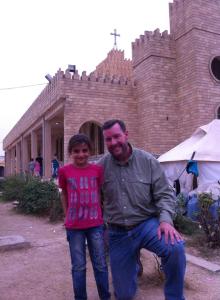 Chris: That’s a great question. Thank you for asking it. About those different elements you mention, one is that we’ve been engaged in the Middle East, and engaging Salafis in particular, for ten years now. And this gave IGE and me a sense for the Muslim majority world, in particular the Arab Sunni world, which is what we’re talking about when were talking about some of this extremist ideology that results in violence and terrorism.
Second, because of all of those experiences, and in other places, like Vietnam, Laos, Myanmar, and Central Asia, that reputation is what caught the attention of Mark Burnett and Roma Downey, the Hollywood producers of A.D. The Bible Continues, Survivor, The Apprentice, The Voice, and others. They said to us: look, this is not about us, this is about serving the people in the Middle East. We’ve know that you work in complex places and we’d like to partner with you. So that was step two in God’s plan and hand in all this. We had our background in Middle East awareness, and these tactical lessons in 1.5 diplomacy, and then Mark and Roma called and said let’s apply this in the Middle East.
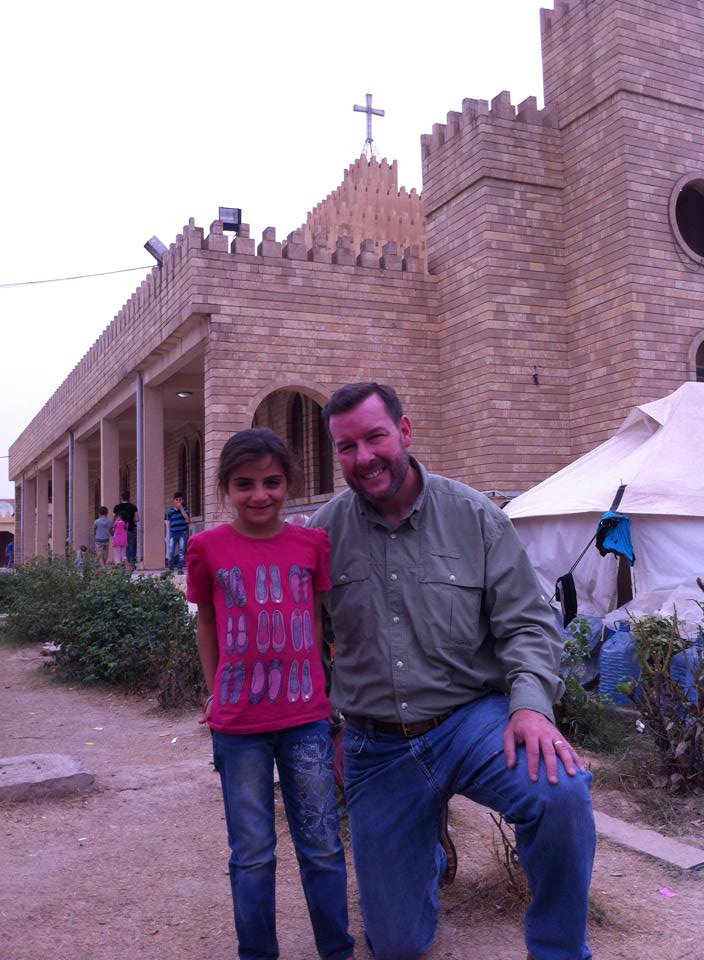
So, since we did not have the pre-existing partnerships in terms of being able to do rescue and relief work, but because we understood how to engage, that lead me to take four trips in the last eight months to the Middle East, visiting northern Iraq each trip. None of those four trips were planned. It was just me trying to sense the timing of the Holy Spirit and to meet people and listen and learn from them on the ground there. And then partnerships resulted for the rescue and relief work of the Cradle Fund, which we launched last year.
The relationships revealed the strategy of rescue, restore, and return. Rescue people who’ve fled ISIS and are in terrible situations with their families. Restore: talk about their traumas and how to help heal them. Some have seen family members murdered in front of them. Return: how do you come up with a geopolitical plan that gets these people back to rebuild their homes and communities on the Ninevah Plain? Some NGOS are doing different pieces of this, but no NGO is doing all three. And that could be a mistake, by the way.
Charles: Why’s that?
Chris: Because NGO funding depends on segmented marketing and black and white simple answers, and we’re saying, hey, there’s a lot of shades of grey here, and we believe God is sovereign over all of that, so we want to try to link them all together with near-term action that leads to long-term sustainable results. And the jury is still out, frankly. We’re only eight months into this. But we’ve got serious partnerships and a strategy resulting from these ongoing relationships, revealed from what we’ve learned from them, through the recent visits and the past ten years of relationships in the Middle East, and from our instincts, and from practical lesson from other cultural contexts. All of that has come together to do The Cradle Fund. It’s led to some amazing breakthroughs already, including the recent article in Christianity Today, which seems to have been well received, both for its theological backdrop and its practical multi-dimensional way forward. So we’ll see what happens. And thank you for your recent blog, by the way, about the Cradle Fund. Both the article and that image of the weeping angel. That was awesome.
Charles: Well, many of us have learned a lot from you, man, and we can’t thank you enough for your persistence, and for letting yourself be run ragged at times [Chris laughs]. And this has been an extremely insightful conversation, so thank you for taking time out of your travels to do it. I’m bristling with many more questions, but let’s wind it down now. Not to end on a sour note, but I would be remiss not to get your thoughts about the group President Obama has called “a brutal, viscous death cult,” which the media call ISIS. They would just as soon murder the relational diplomats as they would anyone, including Muslims, who doesn’t convert to their agenda or pay a large monthly tax. So if ISIS won’t negotiate and isn’t interested in diplomacy, if that’s not the answer, what is?
Chris: Well, this gets back to Romans 13, which a lot of Christians, on their very positive journey, have reached the point were they’ve become passivist. And there’s nothing wrong with that. I don’t know if I would have the courage to become passivist. I do know that pacifism and civil disobedience require the rule of law to work. But there are times…. And everybody’s willing to fight Hitler seventy years after his death, but nobody wants to fight how a guy like Hitler could even arise. And now we’re seeing that in the form of ISIS. But the trick is, okay, it’s evil, but we’re all evil, you know, Jeremiah 17:9, so we’ve got to approach this with great humility. But we do know this: it’s going to get worse before it gets worse.
I mean, when we look back to 2011 when ISIS came out of the woodwork and began distinguishing themselves from al Qaeda, and now it’s years later and things have gotten much worse, and still [little is being done]. In that inaction, ISIS has claimed a territory as big as the United Kingdom, and they’ve done all the things that they done to get it. So what’s to say that they won’t do other things in the region? And we know this is a global issue, because there’s almost as many global fighters in ISIS-held territory as there are regional fighters. And we see fighters outside ISIS-held territory swearing allegiance to ISIS. So there are immediate implications for the Middle East and for surrounding regions and the world.
Charles: They want to establish and spread that bogus caliphate – even most Muslims say it’s bogus – as far they can.
Chris: Yes. You’ve got to do something to stop it. We know that nobody wants to re-invade Iraq and that force is not the answer; but force has to be part of the answer. And Americans have to be part of the answer. But the problem with that is that it feeds their narrative a little bit: see, we told you, here come the colonialists, the Zionsists, etc. So you’ve got to be vert smart about this. If you read between the lines of the Christianity Today article, you’ll see why I see Muslims leading a coalition of the world that includes America against ISIS. That way they can’t say: it’s the Americans, or the Christians, or the Crusaders, or the Zionsists. And then you’ve got to go out and slowly take back land, so I suggested a strategy for the Ninevah Plain.
The land is integral to ISIS’s identity and to the establishment of their caliphate and the theology behind that. When you take away the land they hold, you blunt their image of an unstoppable force and you diminish their theological identity as true Islam. So it makes sense that you have some kind of force that’s able to do that. And then in turn that’s followed up by good governance and the equivalence of a Marshall Plan that is largely Muslim funded, perhaps out of the Gulf.
America could be the convener to make all this happen. There are ways to do this, and that’s called leadership. But there’s a big problem. There’s no desire in any Western country to do that. And in America we’re just kicking the can down the road until after the presidential election in 2016. And I find that to be morally irresponsible.
 Charles: It’s a real Gordian Knot, isn’t it, and it’s going to take something other than cutting it, or even more than Solomon’s wisdom, to resolve. But as I was preparing for our conversation today, I remembered the peaceable future that Christians anticipate. In particular, I was recalling a remarkable vision from prophet Isaiah. I’m sure you know this. It’s just two lines from Isaiah 19:24-25.
Chris: Assyria and Egypt.
Charles: Right. “In that day Israel will be the third, along with Egypt and Assyria, a blessing on the earth. The Lord Almighty will bless them, saying, ‘Blessed be Egypt my people, Assyria my handiwork, and Israel my inheritance.’” Man, that’s some future to anticipate! Three historic enemies reconciled by “the Lord Almighty” himself and then living in the land peaceably and being a “blessing on th earth” as well. Isaiah was not lining up behind some nationalistic political agenda. He was lining up behind God’s vision of international enemies reconciled. Evil does not have the final say.
Chris: That’s the whole point. Isaiah 55: God’s ways are not our ways. And it’s all the more reason to be humble, and to allow for the fact that there’s still unfulfilled prophecy. Could it be that these times are those when something like that happens? I don’t know. We have to proceed in great humility in faith. But let’s proceed, and let’s show up with the best of our faith traditions, and let’s find ways to work together. We’ve gotta show up, but nobody wants to show up because it’s too complex and too hard.
Charles: We’ve got to be players on the field, samples of shalom in the here and now.
Chris: You may think that showing up to ISIS is beyond you, but we have some very deep unreconciled differences in our own country. There are people capable of ISIS brutality and violence in other places. Now is the time to talk to them and love them where they’re at, and build our communities together, do social justice together. Not in some touchy-feely way, but that says: hey, there are some differences among us, but we’re Americans and we love each other and we’re not going to let our theology or our politics get in the way of loving each other. That can be done in every single neighborhood. If more people did it, we’d have less opportunities for ISIS-like people to rise up.
The God of history is waiting for us to show up, to choose to do what he’s doing in every vocation and location that we’re in, because that was his purpose, too. Not just the church, not just governments. But everybody. That’s where top-down/bottom-up finally comes together, because he’s got his church and his people already anointed and appointed in places all around the world. But they need to think of themselves as such and stand up in the moment. This could be a moment where great opportunity comes out of great tragedy and Isaiah 19 is fulfilled. We don’t know. But we won’t know unless show up.
©2015 by Charles Strohmer
Charles Strohmer is a frequent writer on politics, religion, and international relations. He is the author of several books and many articles and is the founding director of The Wisdom Project.
Images by permission Creative Commons. Top, by Mohammed Asaid Abbasi; third from top, by D-Stanley; penultimate, by IGE; bottom, by crosslens.
A personal note from Charles Strohmer: If you want more of the perspectives that wagingwisdom.com seeks to present, I want to invite you to follow the blog. Simply click here wagingwisdom.com, find the “Follow” button in the right margin, enter your email address just above that button, and then click “Follow.” You will then receive a very short email notice whenever I publish a new article. And, hey, if you really like it, tell some friends! Thank you.

![refugee tent city [Klaus Reisinger]](https://wagingwisdom.com/wp-content/uploads/2015/09/refugee-tent-city-klaus-reisinger.jpg)
![3 refugee boys in Lebanon [Carmen Andres]](https://wagingwisdom.com/wp-content/uploads/2015/09/3-boys-tent-camp-in-lebanon-carmen-andres.jpg)










 Waging Wisdom