The Foreign Policy of the Personality

God and Adam“The foreign policy of the personality.” The late John Peck, British theologian par excellence, used this fascinating play on words in a class he taught about the fruit of the Spirit. As far as I know, he originated it. But anyone who has heard him teach will not be surprised at his ability to turn a phrase to give us fresh ideas for thinking about old truths. So what’s with this strangely clever idea?

After talking about love and joy, John had come to the third fruit in the list, peace (Galatians 5:22). He reminded the class that the great Old Testament word for “peace” is shalom, adding that it was the special task of the king to establish shalom (peace; well being) in the forms of political and economic justice, including, and especially, for the poor, the needy, and the afflicted – as they often have no advocate. (For a fuller look at the word shalom in the OT, see this.)

“In the individual,” John then said, “the equivalent of justice in shalom is a balanced personality, one that doesn’t give undue weight to one thing over another. It is an ordered makeup in which priorities find their due place. The economy of the personality is neither inflated or deflated. In external relationships – the foreign policy of the personality, as it were – is secure.”

I heard that word play through the lens of someone who has written much about foreign policy over many years (on this blog and elsewhere), so my mind immediately began making all sorts of associations and analogies between what goes on in the field of international relations and the relationships that can, and do, exist between individuals.

For instance, as with bilateral international relations, relations between two individuals can be tense or relaxed, threatened or secure, unjust or just, adversarial or allied, broken or repaired, distrustful or trustful, unfriendly or friendly, uncooperative or cooperative, intolerant or respectful, and much more besides. But as everyone knows, human relationships are never that cut and dried. They always evidence some mixture of these features. And in some cases, for some periods, they may indeed be mostly friendly or trustful or cooperative, but it doesn’t take much to turn them unfriendly or untrustworthy or uncooperative.

For we are not only sinners privately in the sight of God. Like soil contaminated with sewage or water with lead, our relationships with one another are also befouled by our sinfulness. No bilateral (or multilateral) relationship is going to be perfectly secure, just, or respectful.

“If only it were all so simple!” Solzhenitsyn wrote in The Gulag Archipelago. “But the line dividing good and evil cuts through the heart of every human being.”

But there is also twisdom traditionhis. No relationship need stay adversarial or broken or unjust if the redeeming and renewing grace of God is at work in it. So with all these associations and analogies rattling ‘round my brain, I challenged myself: What kind of shape is the foreign policy of my personality in these days? Am I increasingly walking in the redeeming, renewing grace of God with every passing year? I’ve been thinking about this. And there are so many contexts in which to think about it, and to do something about, or not. Husband – wife; parent – child; sibling – sibling; employer – employee; pastor – congregant; congregant – congregant; board member – CEO; neighbor – neighbor – the contexts seem endless.

Perhaps I am getting lazy about this transformative process, or making excuses, or unconcerned about it, or even going backward?

One unnoticed way of going backward is by subtly absorbing into our DNA the anti-graces that can be heard in the unbalanced and disordered personalities of any number of public voices, and over time picking up unredemptive attitudes and actions toward others as a result. Be careful what you hear, Jesus said.

In international relations, adversarial or broken or unjust relations are changed through negotiations, persistently pursued. Likewise, achieving the kind of “balanced” and “ordered” personalities of shalom in our relations with others is possible through “negotiations,” persistently pursued. Therefore, “If it is possible, so far as it depends on you, live at peace with everyone” (Romans 12:18).

Of course, getting to shalom takes time, concerted effort, and skill. And it may entail, as in international relations, bringing in a mediator. And in this world, some relationships may never reach the heights of shalom that we might like them to achieve. But apart from working at it, what other option did the Prince of Peace, Sar Shalom, leave us?

©2016 by Charles Strohmer

Images permission of Creative Commons.

Note from Charles: For the next several weeks, I’ll be blogging somewhat less than my customary once/twice-a-week in order to concentrate on meeting a writing deadline for a large project I’m on and also to finish work on a very special Web project, which you will hear about in the near future. Meantime, you many want to catch up on any reading you’ve been wanting to do in one of the topic categories: see on the main page, left column. Thank you very much for your interest in this blog.

The News Media and the Middle East: An Indictment

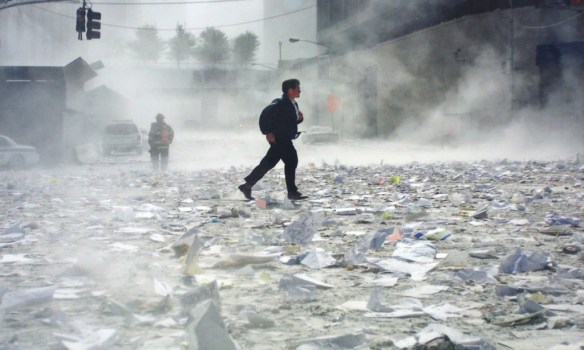
explosion 9/11The secularism of the foreign policy establishment of the United States and the religious influences coming out of the capitals of the Muslim Middle East can play adversarial roles in these state-to-state relations. That was the realistic picture painted by four posts on this blog in January, beginning with this one. Secularism vs. religion, of course, is not the only dynamic that makes these international relations difficult, if not conflicted. States asserting their identities, national interests, and political ideologies also contribute. But the secular / religious picture can seem gloomy indeed. Yet there is a hope.

During the past fifteen years, governments and their diplomatic teams, think tanks, NGOs, and high-level religious leaders have been pooling all sorts of resources to develop credible ways ahead for defusing tensions and peaceably negotiating the rough secular / religious intersection of U.S. – Middle East relations. In fact, there is now a large and steadily growing number of these successful initiatives, big and small. And yet even as I wrote that sentence I could hear readers thinking: What?! Are you nuts, Strohmer? That can’t possibly be true, given all the violence and war.

No, I’m not nuts, nor do I have my head buried in the sand. Of course violence and war is tragically a current fact of life in the Middle East, for any number of significant reasons, which national leaders are fully aware of and which any informed citizen can easily put names to. I don’t want to rehearse those reasons here. Instead, I want us think about a reason for the hopeless picture we have of the Middle East but that no one talks about, because we don’t know about it. It is as subtle as it is influential, and its neglect by us in public debate (in America if not elsewhere) is inexcusable.

I’ll get right to the point: I’m talking about the fact that many if not most Americans take their cues about U.S. – Mideast relations from the news, and the news is organized around the principle: if it bleeds, it leads. Of course, television journalists may say: “We are only mirroring what’s going on in the Middle East”; or, “These things need to be covered”; or, “We are only giving the public what they want.” Well, maybe this is what the public wants, but it is not the only thing the public needs. There are many other things going on in the Middle East other than atrocities, death, and war that ought to be covered, which the public needs to know. But they are not covered. As a result, the remarkable and diverse diplomatic initiatives of governments, think tanks, NGOs, and high-level religious leaders working to defuse adversarial relations and prevent violence and war seem non-existent. Even when an historic exception emerges on the world stage, such as the intensive years’-long struggle to negotiate the nuclear agreement with Iran, the pessimistic energy in America about the Middle East militates against its success.

Television news and Web reporting on the Middle East, with its perennial emphases on mayhem, bloodshed, atrocities, violent clashes, and war is a huge problem. If that is all we know about what’s going on, our understanding has been deceived and we are being made de facto contributors to the violence. We need to take a deep breath, push Pause, and think about this phenomenon.

It has now been over fifty years since Marshall McLuhan, a prescient philosopher of communications theory, introduced into public debate the now famous principle that “the medium is the message.” If so, then the only message in the American media about the Middle East during the past fifteen years is that it is a very violent place. During the past fifteen years, when it concerns the Middle East all of the dominant televison networks in the U.S. – CBS, ABC, NBS, CNN, and others – are constantly reporting on the latest atrocities and mayhem, and they cover these with a barrage of live images from the region.

Even if you don’t watch the national evening news programs, or CNN during the day, you will still get regularly hit with stories and images of Mideast violence on your local TV stations, who get their news feeds from the major networks; where else? (Of course reporting in magazines and newspapers also fans the flames.)

CNN HQWhen the only movie you watch about the Middle East is that of violent conflict, and when you have watched remakes of it for fifteen years, it affects your attitude, even your beliefs. If you are chatting with other parents after a PTA meeting and the topic turns to the Middle East what do you say? If you are working in a factory and talking during a lunch break with fellow workers and the conversation turns to the Middle East, what do you say? If you are a chiropractor working on a patient’s back and she brings up the Middle East, what do you say? If you are a lawyer or a sales clerk or a bricklayer, what do you say?

If television and Web news has determined our view of the Middle East, are we going to talk about the State Department’s Bureau of Conflict and Stabilization Operations (CSO), which was  formed to advance understanding of religiously motived conflict? Are we going to be able to say that Jerry White, a distinguished Christian thinker and Nobel Peace Prize recipient, served as the first Deputy Assistant Secretary of CSO?

Are we going to talk about the State Department’s Office of Religion and Global Affairs (ORGA), and say that it is currently run by the religiously savvy Shaun Casey, who advises the Secretary of State on policy matters as they relate to religion? Are we going to talk about how the ORGA complements the work of the U.S. Ambassador-at-Large for International Religious Freedom?

Are we going to talk about the State Department’s Religion and Foreign Policy Working Group, which launched the Office of Faith-Based Community Initiatives to partner with faith communities around the world to help solve global challenges. Are we going to talk about the Secretary of State’s engagement with Muslim communities in the Middle East on issues of mutual interest in support of shared goals? Are we going to talk about the National Strategy on Religious Leader and Faith Community Engagement, in which U.S. foreign policy people work with religious actors and institutions to promote sustainable development and more effective humanitarian assistance, protect religious freedom, and prevent and resolve violent conflict?

If television and Web news is our picture the Middle East, are we going to share with our friends, neighbors, and co-workers about even just one pioneering book that makes a wise case for peaceable ways ahead at the rough intersection of the religious and the secular in U.S. – Middle East relations? Probably not, because we haven’t read one.

I’m thinking here of: Religion: The Missing Dimension of Statecraft (Douglas Johnston and Cynthia Sampson, eds.); The Global Resurgence of Religion and the Transformation of International Relations (Scott M. Thomas); Ambassadors of Hope: How Christians Can Respond to the World’s Toughest Problems (Robert A. Seiple); Faith-based Diplomacy: Trumping Realpolitik (Douglas Johnston, ed.); Holy War, Holy Peace: How Religion Can Bring Peace to the Middle East (Marc Gopin); The Sacred and the Sovereign: Religion and International Politics (John D. Carlson and Erik C. Owens, eds); Religion and Foreign Affairs: Essential Readings (Dennis R. Hoover and Douglas M. Johnston, eds); Religion and Security: The New Nexus in International Relations (Robert A. Seiple and Dennis R. Hoover, eds). I could list others.

If television and Web news has determined our view of the Middle East, are we going to be able to talk to people about how Track Two diplomats (e.g., initiatives by NGOs, high-level religious leaders, private individuals) labor intensively with Track One diplomats (traditional state-to-state diplomacy) to defuse adversarial relations and to prevent and end conflicts and wars? Are we able to talk about the “relational diplomacy” of the Washington DC-based, Christian-run Institute for Global Engagement? Time-tested and much respected in the foreign policy communities of the U.S. and the Middle East, IGE’s relational diplomacy is grounded in a commitment to first study, listen to, and understand the local context before seeking to create partnerships and practical agreements between governmental and religious communities that promote social and political stability.
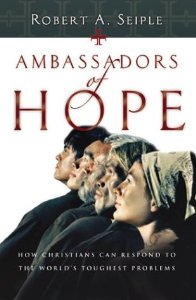
Ambassadors of HopeWhat more shall I say? Time and space prevents me here from discussing the impressive, monthly Religion and Foreign Policy Conference Call series run by the Council on Foreign Relations, which gives religious and congregational leaders, scholars, and thinkers the opportunity to participate in nonpartisan, cross-denominational conversations on global issues; or the work of the Brookings Institution and the Carnegie Endowment for International Peace in the areas of religion and politics, faith based initiatives, legal protections of religious expression, and relations between Christians and Muslims; not to mention the quiet work of many stellar individuals and their small, dedicated teams, who have impressive track records and are risking much personally.

Do we talk about any of these things when we are on the phone, or waiting for our car to be serviced, or down at the pub, or driving a cab, or commenting on a blog post, or standing in the unemployment line, or having dinner with friends, or talking to a neighbor at Krogers? Probably not. We don’t talk about this picture because it doesn’t exist for us if all we know and believe about the Middle East has been determined by television and Web news.

There’s been an education of sorts taking place across our land by our news media about the Middle East. But we need to be re-educated. Look, I get it. You’re busy. Your time is taken up with a career, or course work, or the kids, or the parents, or ministry obligations – fill in the blank. So you only have time to catch the news on televison or the Web when you’re eating dinner, or on the radio when driving to work or to classes. Maybe once in a great while you have time to peruse a magazine article on the Middle East, but it too focuses on some new atrocity or explosion. I get it. Besides, where do you even look to see this other, non-violent picture of what’s taking place, if the only thing everyone else you talk to about the Middle East talks about the mayhem and violence? But even a busy person could take the following simple practical step.

First, you won’t see it or learn it from television and Web news. Second, if you have made it this far in this article, you now do know of many credible, respected, time-tested initiatives and projects – named above – where you can start to learn about this other picture. So, third, here’s your homework assignment for the next two months. Pick just one or two of the above initiatives or books or organizations and make it a priority to find half an hour here and there educating yourself about it. Afterward, take the next two months to educate yourself about one or two others, or learn more about the first one or two. And then repeat the process until your picture of the Middle East starts to change for the better. To grab an old word here, it behooves you to turn your eyes in this direction, to see the more hopeful picture. Finally, find the scene(s) in this picture where you can make a personal appearance as a supporting actor. Even if that support only appears in your conversations with people when the topic of the Middle East comes up, or only in your prayers, you will be doing a good thing.

If it is true that what we eat now can turn so sour, it is equally true that what we see uncritically is what we say believingly. If we don’t know about any Middle East reality other than the violence, what else is there for us to believe and say? We are then passively contributing to the violence, however unwittingly that may be, by talking only about that. I don’t expect the news media to change policy, to, say, eliminate two-thirds of its reporting on Middle East violence and replace it with he more hopeful picture.

But if we as individuals and communities re-educate ourselves by learning at least a few basic things about the groundbreaking initiatives discussed in this article (there are many others), and then if we tell others about them, rather than talking about the violence all the time, we will be actively helping these efforts, which are already in place, to change the picture for the better, toward defusing adversarial relations and ending violent conflict. This is a worthy goal.

The projects, books, and organizations discussed above are creating wise ways ahead for peaceably negotiating the rough secular / religious intersection of U.S. – Middle East relations. In a future article we will look at the role that the historic wisdom tradition plays, diplomatically, in this emerging picture.

©2016 by Charles Strohmer

Top image by Cliff, and all images via Creative Commons.

A note from Charles: If you want more of the perspective that Waging Wisdom seeks to present, I want to invite you to follow this blog. Just click here and then find the “Follow” button in the right margin, enter your email address just above that button, and then click “Follow.” You will then receive a very short email notice when I publish a new post. And, hey, if you really like this stuff, tell some friends! Thank you.

The Refugee Crisis: Make It Personal

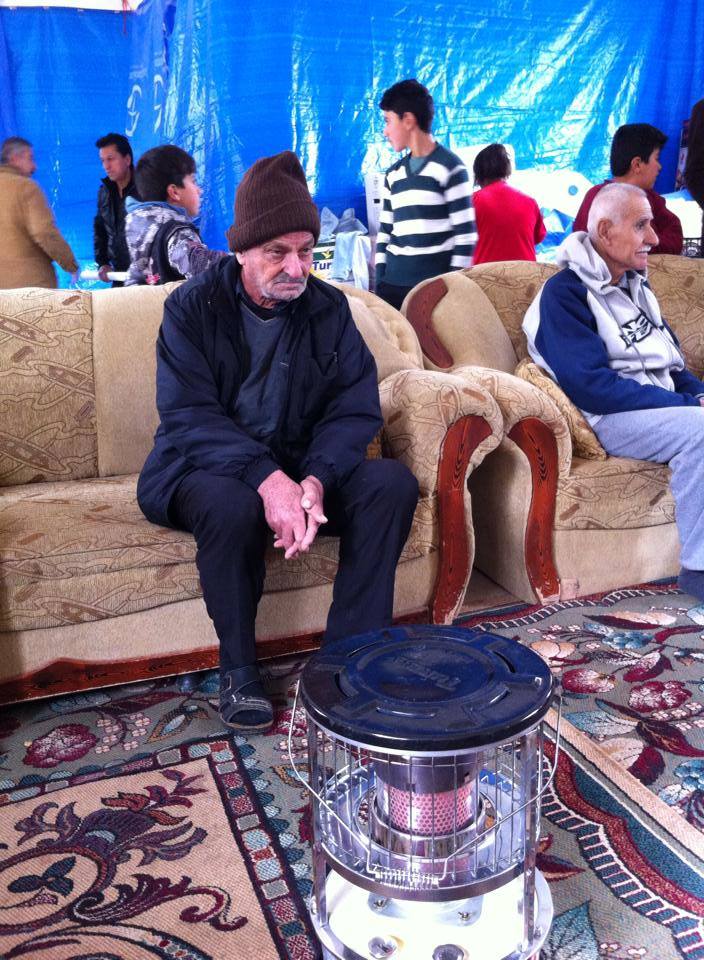
refugee men and boys shelteed in a community centerRegular readers of this blog will know that I post periodically to raise awareness of a truly remarkable initiative called the Cradle of Christianity Fund, which focuses on bringing short, midrange, and long term aid and support to the neediest Middle East refugees (chiefly those who have not benefited from UN relief). I hope, then, that you will be as moved to action as I was with the following article by Phil Reinders. His wisdom and pastor’s heart have combined here to address what the UN has called the “mega-crisis” of our time, straining the world’s relief efforts. C.S.

The Refugee Crisis: Make It Personal
by Phil Reinders

I’m a follower of one who began his life as an asylum seeker. I’m a member of a family of faith whose history stretches back to Abraham, and is summarized in refugee terms: “my father was a wandering Aramean.” The God who has called me has this penchant of binding up his life with those who are on the margins, with the vulnerable and the weak. To take on the name of Christ, then, is to bind your life with the plight of those very same people.

So it is no surprise that Jesus calls people to a care and compassion for others, regardless of the differences and circumstances. Every person who takes on the name of Jesus isn’t afforded the option of turning away from outsiders. In fact, our very reputation and the name of Jesus is wrapped up in that sort of generous care. “Listen also to the immigrant who isn’t from your people Israel but who comes from a distant country because of your reputation … do everything that the immigrant asks.” (I Kings 8:41ff)

The plight of refugees has never been more stark, obvious and in your face. And, no doubt, the complexity of the situation is vexing: the instability of Eastern European and Middle-Eastern political climates, the risks and dangers of radicalized jihadists, the sheer scale of the need.

So what do we do? Listen to the refugee-Jesus, where we find the simplest, clearest of wisdom. “So in everything, do to others what you would have them do to you, for this sums up the Law and the Prophets.” (Matthew 7:12)

But that sounds too basic for this crisis, too simplistic for global geopolitical problems, right?

I’m convinced that the Jewish carpenter is actually the wisest, smartest being to live, and so I’m persuaded that his deceptively simple words are actually the wisdom of the ages, something that is meant to play out in personal relationships and between global neighbors.

It’s often called the Golden Rule, and thought to be another version of something repeated within different religious streams. And while a semblance of it is seen in other religious contexts, what Jesus says is unique and transformative. We see forms of this Golden Rule in eastern Confucianism, where Confucius urges, “do not do to others what you would not wish done to yourself.” Among Greek philosophers, the Stoic Epictetus said, “What you avoid suffering for yourself, seek not to inflict on others.” Socrates wrote: “What stirs your anger when done to you by others, that do not do to others.” And in rabbinic Judaism, Rabbi Hillel said, “What is hateful to you, do not do to anyone else.” These versions are both negative and passive. Avoiding or refraining from something I would not want done to me is a different standard of action than actively pursuing the thing I wish for myself for the sake of the other, which is the life Jesus invites into.

The brilliance of Jesus’ wisdom for how to respond pretty much to any situation is this: make it personal. The gold standard for moral action is to remove it from abstraction, from the pointed-finger deflection of “what others should do,” and from the resigned shrug of “it’s too complex so let’s leave it to the experts.” Instead, Jesus makes us the authority on how to respond to our friends, neighbors, and global, geopolitical issues: do to others what you would have them do to you.

Forget the professors, pundits and policy wonks; check your own heart.

Escher StairsFor a moment, as best as you’re able, enter into the story of a refugee. If it was your home that was riddled with bullets and bomb fragments, your neighborhood a rubble, with neighbors and extended family killed; if you had no money because the local economy was devastated due to the instability; if your children went to bed hungry; and if you made the sane but crazy decision to get out of Dodge and walk to wherever was safe, how would you want to be treated?
If you were stuck for years in the purgatory of a refugee camp, watching your children sink into the despair of a hopeless future, facing some Escher-like bureaucratic government approval process, how would you want to be treated? If you lacked all access to a flourishing life, far from any semblance of home, dependent upon the goodwill of others, how would you want to be treated? Think of the hopes refugees have for their lives and for their families. Imagine the fears that dominate their lives? Then think, “if I was in that person’s shoes, what would I want?” What would you hope for from foreign countries and governments when yours was corrupt or impotent to do anything to help you?

See what Jesus is doing? He taps into our own natural, God-given instinct to care for ourselves but then pulls the most liberating, redemptive move. He takes that inward-looking instinct but pivots us outward, redirecting all those good instincts for care and protection towards the other. Whatever we hoped and wanted others would do for us, he now commands us to go and do that for others.

And did you notice the first words: “in everything.” That’s a pretty comprehensive scope. Don’t try to limit this wisdom for small-scale issues. “In everything.” This is not a kindergarten lesson in niceness. It is the wisdom of the ages, saving us from inward-focused fear and self-absorption, aligning ourselves with the grain of the universe, which is God’s self-giving love, his fondness for the least, the last, and the lost.

A refugee is not a problem but God in disguise. They are a gift for anyone who carries the name of Jesus, helping us to know the meaning of that name and calling.

Phil Reinders, who pastors a church near Toronto, blogs here.

To support The Cradle Fund.

©2016 by Charles Strohmer

Top image courtesy of the Institute for Global Enagement.

The Next U.S. President and the Iran Nuclear Deal

glass chess piecesThere are good and sufficient reasons for arguing for and against the nuclear agreement with Iran. Far too much ambiguity exists in human affairs, especially in international relations, to conclude in any absolute sense that either camp has nailed it. The optimists tend to applaud the deal. The pessimists tend to conclude that the deal has us stepping off the cliff. The former trust heavily in the good in human nature. The latter assume, to borrow a word from the field of theology, that human sin prevents reaching responsible compromises among adversaries.

And then there are the diplomats and negotiators. In the real world of international relations, with its perennial admixtures of the constructive and the destructive, they are tasked with finding ways wiser than war. The dilemma they face is called “the problem of peaceful change,” and they focus on finding responsible compromises to try to solve it. To put it in words from the New Testament, “If it is possible, as far as it depends on you, live at peace with everyone.” Here, it is regrettably affirmed that in any given situation between individuals, peace may not be possible, yet one of the parties at least still must try. For peace may be possible.

If that is the predicament between individuals, and everyone knows that it is, then in predicaments between adversarial nations, efforts toward more peaceable agreements will be much more difficult. But finding wisdom for war prevention may be possible. This is what diplomats and negotiators are tasked to do. And so we now have, instead of war, the nuclear agreement with Iran.

There will be a new American president one year from now and a new Iranian president a year and a half later. Only God, and novelists, know the future. But the following “if … then” scenario seems a pretty sure bet. If the next U.S. president takes steps to pull us out of the nuclear agreement then the hardliners in Tehran will cry foul. They will say to Iran’s more moderate President Hassan Rouhani, whose team negotiated the nuclear deal with the P5+1 nations, “We told you so. You can’t trust the United States.” And then the regime will most likely manipulate into office in 2018 a nightmare Iranian president.

The regime employed this very strategy ten years ago. As Trita Parsi explains at length in his book Treacherous Alliance, Tehran formally reached out to Washington in the spring of 2003 with a comprehensive proposal to start high-level talks on points of contention between the two nations, including about Iran’s nuclear program. But the George W. Bush administration immediately and rudely snubbed the reach out, despite the fact that Iran had been a key actor with the United States in ousting the Taliban and al Qaeda from power in Afghanistan. “An opportunity for a major breakthrough had been willfully wasted,” Paris writes. In Tehran, “the American nonresponse was perceived as an insult.”

The hardliners played the snub skillfully. They undermined the peaceable foreign policy initiatives that Iran’s then president, the more moderate Mohammad Khatami, had in place toward America. They excluded nearly every moderate political candidate from seeking seats in the next parliamentary elections. And they stacked the presidential deck in favor of the sophomore mayor of Tehran, Mahmoud Ahmadinejad, in 2005.

Mark Twain is reputed to have said that history may not repeat itself but it sure does rhyme. Constitutionally, it would be possible through executive orders for the next America president to disrespect the Joint Comprehensive Plan of Action (JCPOA), as the nuclear agreement is formally known. New U.S. sanctions could be introduced and the U.S. could withdraw from key committees that oversee the accord.

Of course neither the U.S. nor the other signatory nations to the deal should not sit passively by if Iran makes a habit of violating terms of the agreement, but harsh penalties are in place for dealing with such deceit.

Mr., or Ms., Next President, give the deal a chance. But go even further. Task diplomats and negotiators to use the deal to seek to better U.S. – Iran relations. Wisdom is better than weapons of war.

©2015 by Charles Strohmer

Image by Neural, permission via Creative Commons.

This editorial was originally published in The Mountain Press, Sunday, November 1, 2015.

Charles Strohmer is a frequent writer on politics, religion, and international relations. He is the author of several books and many articles and is the founding director of The Wisdom Project.

A personal note from Charles: If you want more of the perspectives that Waging Wisdom seeks to present on important issues of the day, I want to invite you to follow the blog. Just click here and then find the “Follow” button in the right margin, enter your email address just above that button, and then click “Follow.” You will then receive a very short email notice whenever I publish a new article. And, hey, if you really like it here, tell some friends! Thank you.

Israel and the Iran Nuclear Deal

choicesThere has been very little reporting in the U.S. media about what Israelis think of the Iran nuclear deal, or the Joint Comprehensive Plan of Action (JCPOA) as it is formally known. In fact, given the media’s persistent focus on Prime Minister Netanyhu’s condemnation of the deal, it is tempting to think that every Jew inside Israel is also against the deal. But this is far from true.

I only hinted at this in a previous post about the nuclear agreement, so I thought it would be good to say more about the notable leaders from across the spectrum in Israel who cautiously support the agreement. But I’m not going to do that in my own words. I want you to hear from someone else, someone whose “first personal encounter with Iran left me surrounded by death and destruction.” Read: Someone who could easily justify a view that opposed the nuclear deal, instead cautiously supports it. Why?

This someone is Rabbi Arnold Resnicoff. I realize there is controversy and contention over the nuclear agreement even among friends, so I urge you to read his article, published in The Jerusalem Post on the eve of the agreement’s assured passage through the U.S. Congress. It is “in large part because of my memories [that] I stand with the growing number of Israelis and Americans, including many Jewish Americans, who support the Joint Comprehensive Plan of Action on Iran,” Resnicoff writes.

Sukkot structure with ladsIn the interest of full disclosure, Rabbi Resnicoff is a friend, but that is not why I want you to hear him. I have read a lot views about the deal, as I’m sure many of you have, but his article may be the best of the lot: in its sensitivity to both sides, its insider’s street cred, and the wise lesson that the solemn Jewish holiday of Sukkot can teach us about the nuclear deal.

Like the walls of the sukkot, Rabbi Resnicoff writes, the agreement is “a little shaky, and it might not last, but if it is the best that we can build right now – and I agree with the Israeli and American experts who say that it is – then build it we must.”

“[M]any Jewish groups have been trying to create the impression of consensus against the deal across the American Jewish community. But polling shatters that illusion, revealing that 63 percent of respondents who have an opinion on the deal are in favor of it. Top pro-Israel members of Congress from the past four decades have spoken out in favor of the deal. I was among more than 400 rabbis from across America’s denominational spectrum who signed a letter recommending support for the deal, at the same time urging increased efforts to fight Iran’s actions against Israel and other nations.”

“In Israel, too, the myth of the anti-deal consensus has been shattered. A pivotal point was the release of a letter in favor of the deal signed by dozens of the deans of Israel’s defense and intelligence elite, from former heads of the Mossad, Shin Bet and the Israeli nuclear program, to generals and admirals from all branches of the military.”

Read his entire article in The Jerusalem Post for full story of why Rabbi Resnicoff supports the deal. And then let’s have some conversation about it (use “Leave a Reply” at the end of this post).

©2015 by Charles Strohmer

Rabbi Arnold E. Resnicoff, captain, USN (ret.), is a former special assistant on values and vision to the secretary and chief of staff of the US Air Force. He is a former national director of interreligious affairs for the American Jewish Committee and was the first rabbi to study at the US Naval War College.

Charles Strohmer is a frequent writer on politics, religion, and international relations. He is the author of several books and many articles and is the founding director of The Wisdom Project.

Top image by William Ward (via Creative Commons). Lower image from atzimmes (via Creative Commons).

A personal note from Charles Strohmer: If you would like more of the perspectives that wagingwisdom.com seeks to present, I want to invite you to follow the blog. Simply click here wagingwisdom.com, find the “Follow” button in the right margin, enter your email address just above that button, and then click “Follow.” You will then receive a very short email notice whenever I publish a new article. And, hey, if you really like it, tell some friends! Thank you.

Pope Francis and Political Vision

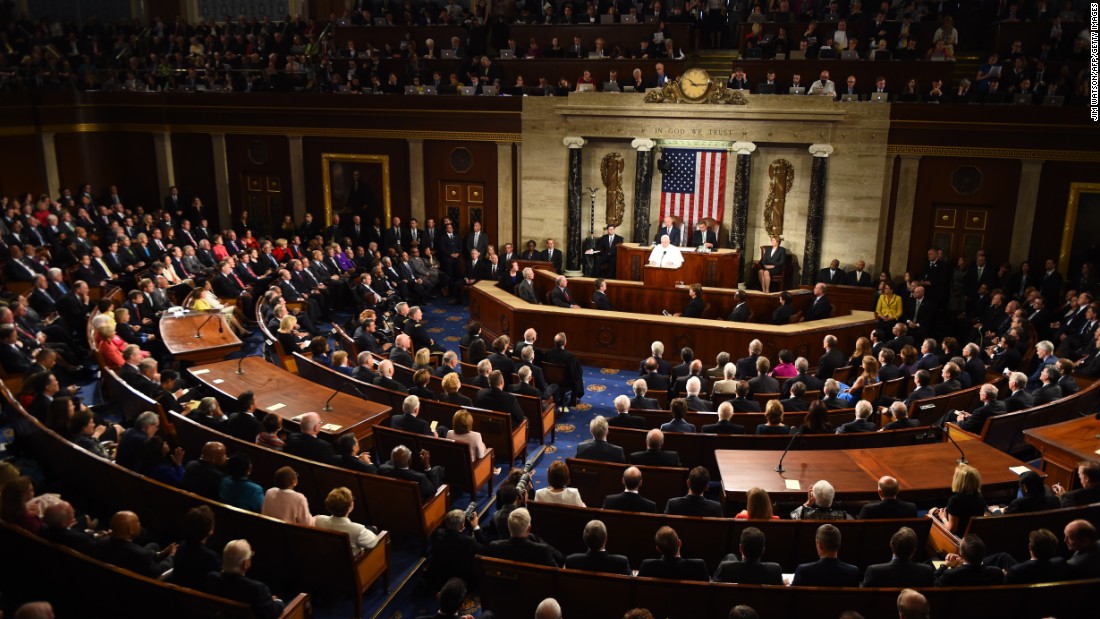
Pope Francis speaking to CongressSo, Pope Francis has come and gone from America and his visit left me with a question. Why did our politicians want to be seen hobnobbing with the pontiff? The cynic in me says they only wanted to bask in his reflected glory. After all, Celebrity draws a crowd, and the pope’s celebrity shines brightly these days.

Which of us wouldn’t want to show off a selfie with the pope to our friends? I imagine the temptation being even stronger among our elected officials, many of whom can now boast to their constituencies about their selfies with the pope.

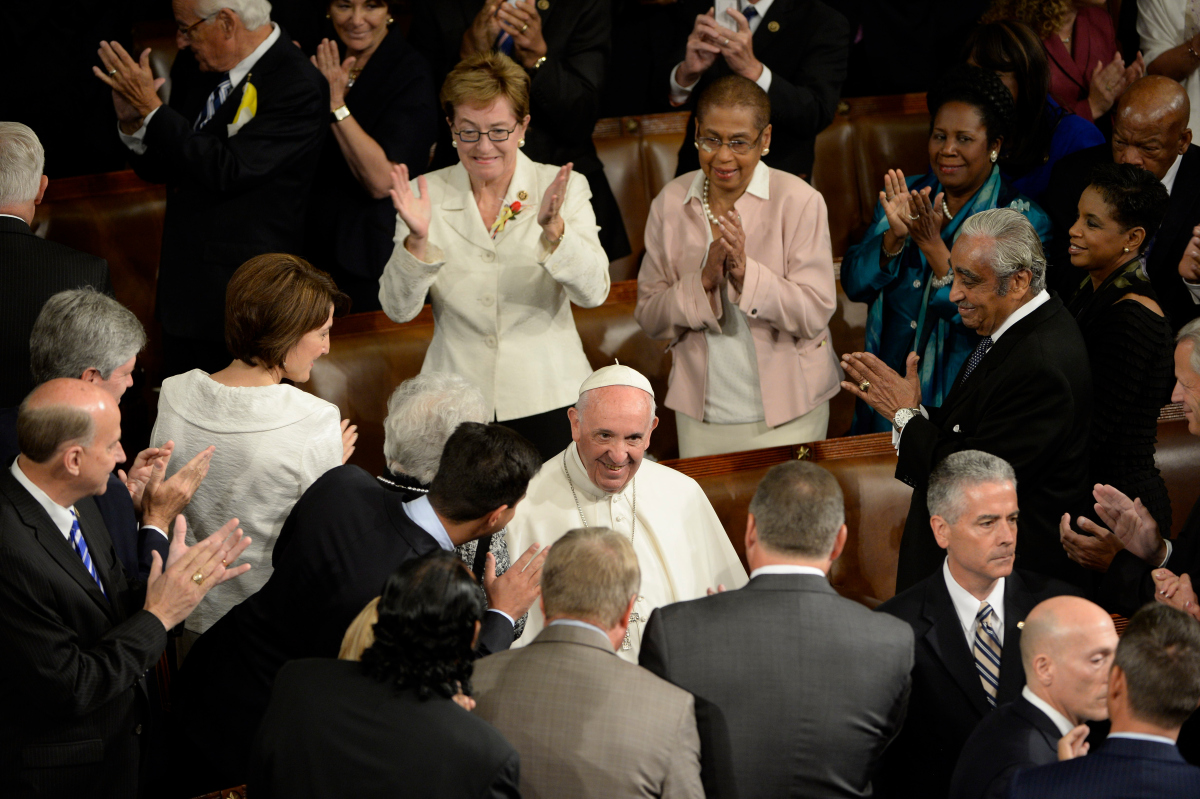
Not saying anything’s wrong with a selfie. Just asking myself why. Why the warm handshakes with Pope Francis on the steps of St. Partick’s Cathedral offered by New York Governor Andrew Cuomo and New York City Mayor Bill DeBlasio? And what was all that schmoozing about? And earlier the same day, why were our representatives in Congress reaching out to touch Someone as he entered that historic political arena and ambled to the podium to speak, where for more than an hour he was flanked by Vice President Joe Biden and House Speaker John Boehner?

That all four of these politicians are Roman Catholic, although DeBlasio admits to being non-practicing, is beside the point. Behind my question is the hope that our politicians have taken to heart the moral challenges Pope Francis has gently preached on our shores. I hope they took the challenges personally, as individuals, and politically, as values and truths to influence policies and law-making. I hope that is what they were saying to the pope during all their schmoozing with him during his visit.

Yet here’s where I need to beat back the cynic. Pope Francis’s moral challenges were so softly put, but with conviction, that I wonder if anyone even heard him, as used as we are to our nation’s constant polemical clamor.

Central to Pope Francis’s message to us, not to mention his personal witness, was his  pastoral challenge that we build together on common ground. This pope is a Jesuit, but no matter what you think about the Jesuit principle of tolerance, taking up this challenge is key for mending the divided America of our time. This pope gets that.

Congress schmoozong Pope FrancisSpeaking directly to the 535 member of Congress, Pope Francis explained that “the tireless and demanding pursuit of the common good . . . is the chief aim of all politics.” A political society endures when it seeks “to satisfy common needs by stimulating the growth of all its members, especially those in situations of greater vulnerability or risk. Legislative activity is always based on care for the people.”

Mind you, this is not about some wimpish togetherness, nor does it mean loss of individuality amid a sea of collectivism via a dictated uniformity. Working together on common ground for common good entails being responsible citizen-stewards of a human mutuality derived from being made as individuals in the image of God. It is a vision that avoids the obstructionism of rigid ideological interests and instead aids and abets a unity in our diversity. Admitting difference, it respectfully pulls together for mutual good. This pope gets that.

Is this too much vision to ask of our politicians? To quote Ringo, you know it don’t come easy. To quote the pope, “Politics” is an expression of “our compelling need to live as one, in order to build as one the greatest common good: that of a community which sacrifices particular interests in order to share, in justice and peace, its goods, its interests, its social life. I do not underestimate the difficulty that this involves, but I encourage you in this effort.”

That is what I hope our politicians had ears to hear. America will not get better if our elected officials stay on their current course of bitter polemics and obstructionist politics.

But let’s not point the finger. America cannot get better only from the top down. America also needs change for the better from the bottom up, with me and with you, in how we treat each other in our homes, neighborhoods, and communities. That will then spread into our state capitals and across the land to Washington. Without that vision, all we will have left is our selfies. This pope gets that, too.

©2015 by Charles Strohmer

This editorial was first published in The Mountain Press, Sunday Oct. 11, 2015.

Charles Strohmer is a frequent writer on politics, religion, and international relations. He is the author of several books and many articles and is the founding director of The Wisdom Project.

Top image from CNN. Lower image from USA Today.


A personal note from Charles Strohmer: If you want more of the perspectives that wagingwisdom.com seeks to present, I want to invite you to follow the blog. Simply click here wagingwisdom.com, find the “Follow” button in the right margin, enter your email address just above that button, and then click “Follow.” You will then receive a very short email notice whenever I publish a new article. And, hey, if you really like it, tell some friends! Thank you.

“The Tale of the Fortune Hunters”

Well done to David Reitsma (Spoke Word Poetry) for this thoughtful 4 minute performance art on the Syrian refugee crisis. And my thanks to Carmen Andres (For Such A Time Is Now) for turning me on to it.

David Reitsma Spoken Word Poetry
“The Tale of the Fortune Hunters”
A spoken word video about the Syrian refugee crisis.
Filmed by Maarten Smeenk and Directed by David Bonsink

A personal note from Charles Strohmer: If you want more of the perspectives that wagingwisdom.com seeks to present, I want to invite you to follow the blog. Simply click here wagingwisdom.com, find the “Follow” button in the right margin, enter your email address just above that button, and then click “Follow.” You will then receive a very short email notice whenever I publish a new article. And, hey, if you really like it, tell some friends! Thank you.

Life Spun Out of Control

refugee tent city [Klaus Reisinger]It’s invigorating, at least it is to me, when different things unexpectedly hit you inspirationally in a short space of time. But it can also be sobering. Recently Chris Seiple tweeted that Oskar Schindler spent all his money saving people of a faith not his own. Are we still capable, Chris mused, of such sacrificial love?

As I was challenging myself with that, aware that Chris was alluding to the severe need faced by countless refugee families in the Middle East, I happened to read a clever take on a summer blockbuster film, Fantastic Four. Written for Sojourners by Lindsay Kuntz, the article turns on the question of leadership. Here is my takeaway: we Americans can end our wistful hunger for Fantastic Four leadership against evil by becoming leaders fighting evil ourselves.

“Many American Christians say they are hungry for leadership,” Lindsay writes, “but what are we actually doing beyond indulging in fictional stories of Mr. Fantastic, Invisible Woman, Human Torch, and The Thing battling evil, or the barely less fictional ‘leadership’ on display in contemporary politics?

“We need to do more than complain from the comfort of our air-conditioned family rooms. The stakes could hardly be higher for Christians and other religious minorities in the greater Middle East – they are at risk of extinction or permanent exile. The international community has essentially given up, as it has little funding and even less vision and resolve. Hence there is a vacuum of leadership that needs to be filled. We need to identify practical ways of bringing people and resources together to combat evil – indeed to transform it with good. For American Christians one of the best places to start is with proactive engagement of the refugee crisis.”

refugee men and boys shelteed in a community centerI also happened to read Carmen Andres, who was blogging about news stories in the Telegraph and the Guardian, which reported on how 10,000 Icelanders responded to a Facebook campaign by author Bryndis Bjorgvinsdottir to urge the government to take in more Syrian refugees. “The striking aspect of this story,” Carmen wrote, “is not only the number of Icelanders expressing their support but that they are also volunteering to personally help the refugees by donating services, time, clothes, money, furniture, children’s toys and even their homes.

“It makes me wonder what it might look like if churches, communities and cities around the U.S. started to talk about pooling our resources and offering to support groups of refugees in our own country. Perhaps some members could offer one of their rental homes for free for a year. Maybe others could offer jobs. Doctor offices could offer a list of pro-bono services. Churches and mosques could offer furniture, clothing and food. Teachers could offer language training. Local social agencies and organizations could link together and coordinate to provide services. The possibilities of ways we could come together to embrace refugees into our communities is endless.”

Chris, Lindsay, and Carmen are all friends of mine, but that’s not why I’m blogging about them here. They are engaged in remarkably worthy initiatives that bring urgent aid and relief to the increasing number of families in the Middle East who have fled from the murderous paths of ISIS and the vicious war in Syria. Their heartfelt cries, challenging to many of us, came together in my mind the other day.

They reminded me of just how crucial and vital “outside intervention” is toward people whose lives are suddenly out of control; people whose lives, even when they begin to get back under control, are best described as “life on hold.” There’s little, if anything, they can do end the chaos or get life moving again. As another friend aptly put it: “There is a sense of being frozen in time.” You’re wishing, praying, someone would intervene to make it all go away, or at least make marking time a little easier for you and your family.

3 refugee boys in Lebanon [Carmen Andres] It is difficult for many people to image what life is like for these families. But if your own life has ever suddenly spun out of control (I mean really out of control), or if it has ever shuddered trembling to a halt and got stuck on hold (you didn’t know for how long), then you may have a share in what it is like for these Middle East families (numbering in the millions), who wish for, long for, pray for intervention. And when that leadership arrives, no words can express one’s gratitude. Chris and Lindsay serve the Cradle of Christianity Fund, which I have previously blogged about. Carmen has been engaged in advocacy work for many years and raises awareness for Heart for Lebanon. Both are remarkable initiatives. Exercise some leadership. The Fantastic Four are never going to arrive. The possibilities for reaching out to the families is increasingly clear, limited only by the imagination of individuals, churches, and communities.

To find out more about the Cradle Fund, go here. To support it, go here. To read some short but informative articles of mine about the CF, go here. To read about the Cradle Fund’s three-fold strategy (rescue, restore, return), see this article in CT by Chris Seiple, President of the Institute for Global Engagement:

To find out more about Heart for Lebanon or support it, go here. To read Carmen’s moving blog posts, see For Such a Time Is Now.

©2015 by Charles Strohmer

Top image, Klaus Reisinger, via Creative Commons. Middle Image, courtesy of the Institute for Global Engagement. Bottom image, courtesy of Carmen Andres.

A personal note from Charles Strohmer: If you want more of the perspectives that wagingwisdom.com seeks to present, I want to invite you to follow the blog. Simply click here wagingwisdom.com, find the “Follow” button in the right margin, enter your email address just above that button, and then click “Follow.” You will then receive a very short email notice whenever I publish a new article. And, hey, if you really like it, tell some friends! Thank you.