JESUS AS A TEACHER OF WISDOM IN ANCIENT PALESTINE part 3 of 7

©2014 by Charles Strohmer.

wisdom traditionIn Jesus, the sages’ peaceable way of wisdom gets taken up in the love of God and transformed into the gospel-shaped wisdom for loving not only one’s neighbors but also one’s adversaries. How is that possible? If it seems like a pretty bold claim, a large part of the reason why, I think, must be laid at our feet. The role of Jesus as a teacher of wisdom has been lost to us today. And we are the poorer for it.

This series of posts offers some thoughts about what it might take to start regaining that lost wisdom and get a line on what practicing it might look like today. We began this in the first two posts by getting a good feel for the region and the time in which Jesus lived and moved as a wisdom teacher. The diverse social, religious, and political atmosphere of ancient Palestine under the domineering power of the Roman empire, including its military presence, was felt by everyone everywhere. Including Jesus. Broken relations, sectarian agendas, and political injustices were as common to ancient Palestine’s disturbed polyculturalism as they are today.

Having set the stage, let’s look start to explore Jesus’s wisdom-based way teaching within those roiling waters. To his audiences, Jesus had a strange view about how people with conflicting interests could live more cooperatively and peaceably with one other. Jesus, regularly addressed as “Rabbi,” taught a wisdom-based way of resolving problems of differing interests, decision making in diversity, broken relationships, and community formation. For him, this way was natural. But to his audiences, even to his own followers, it sounded alien. Why was that?

Let’s start from the negative, by first identifying several things that we do not see Jesus saying or doing as a teacher of wisdom. When people came to him seeking counsel, Jesus did not regurgitate the vested interests, sectarian agendas, or partisan politics of the region’s economic and political powers, or those of the pundits in the media or on talk radio. Adherence to such views was often what had landed people in the broken relationships and sorry situations they had come to Jesus to repair. Neither did Jesus affirm the views that they were accustomed hear from their religious leaders. Nor did he, as so many were doing, promote Greek philosophy or faithfulness to Roman ideology – any more than today he would align himself with American Exceptionalism or any other form of nationalism.

And there is this. Jesus did not tell anyone that it would take becoming a Sadducee or a Pharisee, or a liberal or a conservative, or a Democrat or a Republican, or even a Jew or a Christian before they could start to have their relationships and situations repaired. This is quite a different approach, for instance, and to use Evangelical parlance, than getting people “saved” first, before any thought of saving their relationships and situations could move in more peaceable directions. You only need to consider the bloody internecine history of Christianity to see that “being Christian” is no guarantor preventing brother from rising up against brother.

Well, as they say, you can’t build a case on negatives. So what did Jesus to do? What did his wisdom consist of in the roiling cosmopolitanism of ancient Palestine? To his mixed audiences, and to whoever you would have been in those audiences, Jesus said some pretty outlandish things:

Don’t repay anyone violence for violence. Settle matters quickly with your adversary. Go the extra mile even with a soldier. Turn the other cheek. Forgive, forgive, forgive. Stop throwing stones. Drop the hypocrisy. Forget sectarian allegiances. Repent of your tendencies to othering and violence. Love your enemy, even. And if you hold a career in politics you are not excluded from practicing this wisdom.

This is only a small area of what a close engagement with the four Gospels reveals about Jesus the wisdom teacher. We will pick that up in the next post. But what does any of that have to do with the wisdom tradition and the wisdom of Jesus? Let me close this post with the following.

Those “sayings” from Jesus all comes from Matthew’s Gospel, which Ben Witherington calls a Gospel of wisdom (Jesus the Sage, chapter 8). Witherington concluded this after wondering “what it would have looked like to tell the story of Jesus in light of Jewish sapiential thinking about wisdom in general” and about Jesus himself “as the great parable of God’s wisdom, like and yet even greater than Solomon” (p. 335). Because Matthew was put together chiefly for Jewish audiences, and because it carries so much direct and indirect evidence of the Hebrew wisdom tradition, I think Witherington is on to something.

And to note just this also, “contrasts,” especially brief, striking ones, are integral to the Hebrew wisdom tradition. And at the end of the Sermon on the Mount, which is in Matthew’s Gospel, which is where most of the above “sayings” are found, Jesus not only makes a striking contrast but one that deftly summarizes the entire (wisdom) book of Proverbs: If you put these word of mine into practice, you are a wise; if you don’t put them into practice, you are foolish (Matthew 7:24-27).

Continued in the next post.

©2016 by Charles Strohmer

A note from Charles: If you want more of the perspectives that Waging Wisdom seeks to present, I want to invite you to follow this blog for a while to see if you like it. Just click here and find the “Follow” button in the right margin, enter your email address, and then click “Follow.” You will receive a very short email notice when I publish a new post. Thank you.


JESUS AS A TEACHER OF WISDOM IN ANCIENT PALESTINE part 2 of 7

©2014 by Charles Strohmer.

wisdom traditionIn the previous post I offered a thumbnail sketch of the domineering political and military presence and rule of the Roman Empire over ancient Palestine in Jesus’ day. The empire brooked no quarter whenever uprisings were considered threats to its national, regional, or local interests, which were believed to be under the protection of the Roman pantheon of gods, with “Jupiter Great and Blessed” as its head. The imperial system of the magistrates, with its diverse military forces, keep the people of Palestine in line with the Pax Romana.

I admitted in the previous post that it was not until researching the new book that I began to consider Jesus’ role as a teacher of wisdom in ancient Palestine. I also should admit that I had never grasped the region’s religious and social cosmopolitanism. I had been taught as a young Christian that the region was uniformly Jewish. Any diversity was Jewish diversity. There were Pharisees, Saducees, political zealots, rich and poor Jews, that sort of diversity. And of course the were “the Romans,” whom the Jews despised.

But think with me for a minute about what the religious and social chemistry of Palestine in Jesus’ day was really like. That land, it was crazily pluralist, not unlike ours today. Besides Pharisees, Saducees, or ordinary Jews, Jesus’ audiences could at any time have included any cluster of Jews, Romans, Greeks, non-Jewish religious figures, government officials, political zealots, a magistrate’s political spies, apostates, pagans, philosophers, fishermen, soldiers, tax collectors, lawyers, you name it. One only has to visit the opening scenes of the book of Acts chapter two to see that Palestine under Roman occupation was a land of great diversity.

Further, and significantly, just as today, any number of ethnic, social, religious, political, or other interests and agendas would have been daily in close contact with one another, vying with each other, contributing to every conceivable kind of relational problem in a community or town. It was into this disturbed, regional context, under Roman rule, that Jesus was born and raised. Discovering how Jesus handled this as a teacher of wisdom held many surprises for me.

As discussed in earlier posts, it was the ancient sages who developed the wisdom tradition. Sometime during the Second Temple period before the birth of Jesus, the word “sage” began to be displaced by the word “rabbi” in the Jewish community, although connotations of wisdom remained strong in the emergence of rabbinic Judaism. As a Jewish rabbi of his time, Jesus would have been skilled in the Hebrew wisdom tradition. Exploring what this meant allowed me to start seeing Jesus as a sage for the first time. I began to see his wisdom-based way of reasoning about life and decision making and how much it squared with that of the Hebrew wisdom tradition, with its emphases on shalom, relationships, human diversity, and mutuality. (See previous posts.)

Focusing on Jesus’ role as a teacher of wisdom amid the contentiously disturbed cosmopolitanism of ancient Palestine added a dimension to his life that became so obvious I wondered how I had ever missed it. But because I had missed it, I had missed just how much the wisdom tradition informed what Jesus taught his mixed audiences. And what the might mean in a very practical way for us today.

We will pick it up from here in the next post.

©2016 by Charles Strohmer

A note from Charles: If you want more of the perspectives that Waging Wisdom seeks to present, I want to invite you to follow this blog for a while to see if you like it. Just click here and find the “Follow” button in the right margin, enter your email address, and then click “Follow.” You will receive a very short email notice when I publish a new post. Thank you.

WISDOM AND OUR BETTER ANGELS

the better angels of our natureIn his first inaugural address, Abraham Lincoln had the unenviable task of speaking to a country on the verge of civil war. In the speech he walked a fine line between the North and the South to try to hold the Union together. Perhaps he sensed that was impossible, that war was inevitable. Five weeks later the civil war began.

What, you may ask, does the U.S. civil war have to do with the wisdom tradition. Not much, I grant you. But many years ago when I was racking my brain to call up some apt metaphors for the wisdom-based approach to diversity that I write about, “the better angels of our nature” came to mind. It seemed promising, but I could not recall who said it or in what context. I found it at the very end of Lincoln’s first inaugural.

Having spoken about “so grave a matter as the destruction of our national fabric,” Lincoln said, “We are not enemies, but friends. We must not be enemies. Though passion may have strained it must not break our bonds of affection.” And then this, in which you can sense Lincoln’s gut telling him that the tipping point toward destruction had been reached:

“The mystic chords of memory, stretching from every battlefield and patriot grave to every living heart and hearthstone all over this broad land, will yet swell the chorus of the Union, when again touched, as surely they will be, by the better angels of our nature” (March 4, 1861).

After mulling that over, I saw what Lincoln was on about. His use of the metaphor, in context, shows us his deep understanding of human nature – its penchant to swing from listening to a devil at one ear and an angel at the other ear. But more than that, although he was realistic about human nature, Lincoln was not a cynic, a pessimist, or an anarchist. The last sentence of his speech reveals a president who preferred relying on angels better than war and who wished Americans would go and do likewise.

Being someone who likes to discover origins, I went searching, but concluded that the phrase “the better angels of our nature” originated with Lincoln. A shout-out to Gene Griessman, however, for pointing out Dickens. In Dicken’s novel Barnaby Rudge, the narrator muses: “the shadows of our own desires stand between us and our better angels, and thus their brightness is eclipsed.”

In an earlier post, I hinted that the sages were realistic about the human condition. I now want to a little more about that. The biblical wisdom literature is utterly realistic about human nature. No question. The literature repeatedly warns about folly, deceit, lying, laziness, cruelty, adultery, and many other all-too-human penchants. And often in stunning images. The point is to show why habitual acting on such impulses will devastate the life of an individual, a community, a nation.

Paradoxically, however, almost in defiance of that realistic picture, the sages seek to enable the kind of living that can seem a bit idealistic. They repeatedly call us to rely on the better angels of our nature. This comes into sharp relief in Proverbs, which stresses developing and cultivating attitudes, forms of communication, and ways of individual behavior and collective living that have as their goals the harmony and flourishing of our lives as communities and nations. And our political lives do not get to opt out of this.

In previous posts in this series on the wisdom tradition, I have stressed wisdom as a vital agency that advances shalom, healthy relationships, and mutual good amid human diversity. But there is with us everyday, day after day, that which seeks to run us into the ground, the shadows that seek to darken our paths.

So over the years, I have tried, and continue to try, to learn how to draw on the better angels of my nature when the devils are holding forth. I hope that you are too, and if you’re not, that you will begin to. Taking ongoing steps to learn wisdom and to make the wisdom way part of my DNA has been the best way I know to make the better angels more prominent. As a psychologist-friend once said to me, “Between stimulus and response is choice-point between being foolish or wise.” Choose wisdom, friends. Nothing that may be desired and sought is as precious as wisdom (Proverbs 8:11).

I think that the old-world sages of Scripture would have said a hearty “Amen!” to Lincoln’s image of the better angels, especially during that time when we were destructively divided, tearing our land apart, and killing one another. I also think the sages are turning over in the graves at how many devils are being listened to in our land today.

And I hope and pray for leaders with peaceable wisdom to arise and to be listened to, that perhaps by the mercy of the God we claim to believe in, our land may be spared a fate worse than that of a civil war.

©2017 by Charles Strohmer

A note from Charles: For more of the perspectives that Waging Wisdom seeks to present, try following the blog for a while, to see if you like it. You can always unfollow anytime. Just click here, find the “Follow” button in the right margin, enter your email address, and click “Follow.” You will then receive a very short email notice when I post a new article. And, hey, if you like this stuff, tell a friend! Thank you.


YOUR NEIGHBOR’S WISDOM

©2014 by Charles Strohmer

wisdom traditionA number of posts in this series on the wisdom tradition have looked at ways in which our deepening reliance on wisdom helps foster cooperation and peace amid human diversity.  This is easy for some people to accept. It can be quite difficult for others, especially for some religious people.

Timothy Keller, senior pastor of Redeemer Presbyterian Church in Manhattan, knows something about this. Since its humble launch in 1989 with fifteen people, Redeemer has grown to three locations that now see thousands of worshipers every Sunday. But it’s not the numbers I want to call attention to. It is the fact of Redeemer’s growth in Manhattan, which may be America’s most culturally diverse city. Tourists can even go on multicultural sightseeing tours to experience the diversity close-up. No joke.

You never know what to expect in Manhattan. Some years ago after meetings at the Council of Foreign Relations, I had to catch a cab to the airport. The driver was a young guy recently arrived from Pakistan, and I will tell you that not only was it hard to understand him, but we were suspicious of each other early on. But he was very chatty and we soon were talking about Pakistan’s politics, where we discovered during the half-hour drive a lot of common ground in that area. We also discovered how much about “politics and religion” that we agreed on. When I was paying the fare, we both quite naturally by then commented about how good it would be if we had more time to talk.

It is in that Manhattan where Tim Keller honed his diversity skills, for which he has become well known around town. Some unkind souls may say, well, what do you expect? He has compromised the faith. No, no. This is not that. The wisdom-based, peaceable possibilities of diversity that we have been considering can take place among Christians, Muslims, and Jews who know what they believe and what each other believes. They are fully aware of the irreconcilable differences between their faiths. They are open and honest with one another about that.

I remember a meeting where Muslim and Christian leaders in the room said: I wish you would convert to my faith, but that is not what we’re here for; this meeting has been convened to try to find a way to work together across boundaries to solve a problem. These leaders knew that their irreconcilable core differences need not prevent public collaboration on an initiatives of mutual good.

If you are a Christian who struggles with this, note what Keller has to say. I asked him about it a few years ago during a conference call. He locates this kind of pluralist engagement and “learning from the other” in the Bible’s teaching of common grace. Simply put, all human beings, whether they are Jewish, Muslim, or Christian, or whether they believe in God or not, share gifts of wisdom, insight, creativity, and beauty because these gifts come to everyone. Christians call this common grace, Keller said, because they consider these as gifts that come from God. “If that’s the case,” he concluded, “then I could expect that my neighbor who does not believe anything like I believe might still have wisdom from God that I have to listen to.”

“BUT WHAT ABOUT?”: MOODS & TUDES part 2 of 3

©2014 by Charles Strohmer

playing chessThis is the second of three posts of personal stories about internal obstacles that may inhibit following wisdom’s peaceable paths amid diverse cultures. The previous post contrasted two guest preachers in the context of Christian – Muslim – Jewish relations. This post sticks with that context to discuss what I call the “But what about?” objection.

I run across this dynamic frequently, and there are two kinds of it. One is the genuine kind. It is a response raised from someone who is seeking a good answer to the concern he or she has raised. It is often the next question in a chain of reasoning that a person is working through in hopes of breaking through to a wiser understanding of a situation, to gain a more informed opinion.

The other kind is, shall we say, disingenuous? This kind of “But what about?” objection is more of an interjection whose real purpose is simply to stop a conversation on a topic from going further. It’s a great ploy if it works. They party assumes that their “objection” carries the gravitas of a definitive case against your position, and that when you hear it you will understand this to be true – so what more need be said on the matter?

I run across both kinds in my work on improving Christian – Muslim and U.S. – Mideast relations. Here’s just one brief example, a typical one. But first this caveat. A “But what about?” objection is relative to the questioner’s intention. That is, is the “objector” seeking further enlightenment or merely intending to shut down further progress on the issue?

I once had a very long conversation with a financial counselor about how the wisdom norms of peaceableness and human mutuality could enable Christians and Muslims to dispel bad feelings and work together. It wasn’t an easy conversation. He was smart and pretty well-informed on  Christian – Muslim tensions. He knew what the problems were, and he wasn’t sure if there were answers to them. I have had to work through these issues myself over the years, so as he posed the problems I answered them as best I could, by sharing how breakthroughs had occurred in my own thinking.

Toward the end of the conversation he seemed to be getting a bit uncomfortable and said, “But what about the Qur’an? It commands all Muslims to fight non-Muslims.” Well, as I said, we had been talking for a long time, and he tossed in that bombshell “objection” as we were winding it down. So I mumbled something like, “That’s huge issue. Let’s pick is up next time. I think I can answer it, but it would take too long to do properly that now.”

A few days a latter, I received an email from him, asking me to listen to certain a Web video because “it represents the view I hold.” So I listened. The video summarized, in a fairly scholarly way, actually, the notion, widespread in America, that the Qur’an commands all Muslims everywhere to practice violent jihad (war) against all non-Muslims, until Islam rules the world.

Videos like that one are not uncommon on the Internet. Now I am fully aware of the history of violent jihad and have written a major, journal article on it. I am not “soft” on this matter, and perhaps in some future posts we could discuss this. Here, I just want to say that the view promoted by that video omits talking about the countless Muslims around the world who do not turn to violence and war from their reading of the Qur’an, any more than Christians do from their reading of the Bible.

Further, many respected Muslim intellectuals, imams, and leading muftis are working very hard in their fields – in mosques, think tanks, universities, books, conferences, community projects, and international relations – and with Christian and Jewish leaders and organizations – to promote practices and projects for mutual good. Whether through ignorance of this or vested interests, however, the video I watched did not include anything about that either. It hardly needs to be said that these Muslims leaders are not relying on a violent understanding of Islam, the Qur’an, or shariah. And they have the ear of ordinary Muslims everywhere.

I mentioned all of this in my email reply to the financial counselor, and I said that these videos have contributed to a such a great fear of Muslims among many Christians that they have become afraid even to think about having a relationship with a Muslim. I concluded by saying that, as a Christian myself, I did not think that that was a gospel-shaped response. For at the logical end of that fear, even peace-loving people are left hanging on the horns of a dilemma: to choose between being conquered or to engage in violence or war to try to prevent being conquered. This is a classic example of the fallacy of a false choice – either one or the other unacceptable option.

If, then, a “But what about?” interjection remains unanswered, it may easily limit what can be peaceably imagined between people who are different, even by people who hate conflict and war and who want peace – even by people seeking wisdom.

TWO GUEST SPEAKERS: MOODS & TUDES part 1 of 3

©2014 by Charles Strohmer

Up until this point in this series of posts we have mainly discussed ideas. These ideas about wisdom as a vital agency of cooperation and peace (shalom) amid human diversity have been raising urgent questions about why we tend to limit the reach of wisdom to some people but not to others. For wisdom, according to Scripture, delights in “all humanity.”

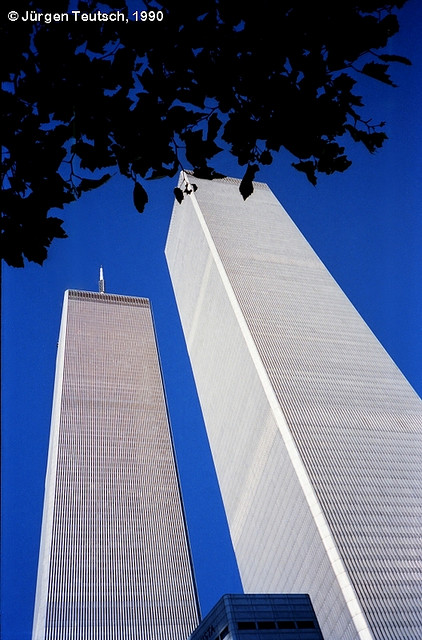
Twin TowersWell, it’s one thing to agree mentally to an idea, but it can be quite another thing to put it into practice. So I thought it might be good to take a few posts and just share some personal stories that reveal internal challenges that may try to prevent following wisdom’s peaceable paths. As you read this first story, ask yourself: Which of the two guest speakers was obeying and which one was breaking the wisdom norms of peaceableness and mutuality? The answer may surprise you.

Let me take you inside a small, brick church in the American south. It’s a Sunday morning and I’m sitting quietly in a pew in the middle of the small congregation. I’ve been invited there to hear a guest preacher, just being introduced by the church’s pastor. And before I go on, you need to know that it is August 2010, the summer when that firestorm of controversy is raging across the country over the proposal to build “a mosque at ground zero,” in lower Manhattan.

The guest preacher begins his sermon with a moving personal story to introduce his topic, which had nothing whatsoever to do with Muslims or the mosque controversy. This could be a good message, I thought. Just minutes later, however, and without any sort of segue, he suddenly starts ranting about “the mosque at ground zero.” Then this bombshell: “I say, let them build it. Then when they’re done, let’s blow it up! That’s what they did to us on 9/11.”

I can’t believe my ears. And I don’t know what shocked me more, his statement or the “Amens!” that arouse around me when he said it. Livid, I come close to shouting out a rebuke. But then just as suddenly he stops ranting and returns to his sermon topic. I didn’t know what to do. Should I walk out? As I was pondering that, I had my mind made up for me. Suddenly he’s back ranting about the mosque and repeating his bombshell remark, which again drew some “Amens!” My heart pounding, I rise, step into the aisle, and walk quickly out, many people eying me.

I couldn’t just sit there and by doing nothing tacitly agree to what amounted to sponsoring a policy of violence. My knees were so wobbly I had a time walking to my car. I sat there in the heat for a long time, unable to drive.

After I cooled off, I wondered whether the guest preacher would change his mind if, for instance,  he got to know Dr. Muqtedar Khan, an academic at the University of Delaware and a self-described liberal Muslim, whose editorial “Mr. Bin Laden: Go To Hell!” ran in dozens of newspapers around the world after 9/11. I also wondered what he would think about imam Feisal Abdul Rauf, a peace-loving sufi Muslim who is well-respected for his decades of interfaith work in New York City and in the U.S. State Department, which occasionally sends him to the Middle East on public diplomacy jaunts.

Now let me take you to another religious meeting, a memorial service for Daniel Pearl at B’nai Jeshurun, a prominent Manhattan synagogue. Daniel is the Wall Street Journal writer who was kidnaped and beheaded in Pakistan by his al Qaeda-connected captors in February 2002, and it’s now a year later. Rays of sunlight are slipping through the arched, blue-toned stained-glassed windows of the sanctuary. Judea Pearl, Daniel’s father, is sitting attentively in the front row of the packed sanctuary, his eyes on the speaker, imam Feisal Abdul Rauf, who has been invited to the memorial service by Judea.

During his eulogy for Daniel, the imam turns to Judea and asks his forgiveness for what has been done to Daniel in the name of Islam. Rauf then adds: “If to be a Jew means to say with all one’s heart, mind, and soul Shma ? Yisreal, Adonai Elohenu Adonai Aha – Hear O Israel, the Lord our God, the Lord is One – not only today I am a Jew, I have always been one, Mr. Pearl.” And to the Christians present, Rauf says: “If to be a Christian is to love the Lord our God with all of my heart, mind, and soul, and to love for my fellow human being what I love for myself, then not only am I a Christian, but I have always been one.”

This is the person that the guest preacher at the Sunday church service wanted to blow up. For imam Rauf, until 2011, was the lead visionary for the development of the multi-faceted, interfaith project in lower Manhattan that was manufactured into the ground zero mosque controversy. (For an in-depth account of the controversy and Rauf’s interfaith vision for the project, see Truth About the Mosque at Ground Zero. He hoped to model it somewhat after the multi-use, Jewish-run, 92nd Street Y.)

Attitudes toward others can oppose or encourage wise actions. Most Christian leaders, of course, would hate what the guest preacher said and agree with Jesus’s comment that “Wisdom is proved right by her actions” (Matthew 11:19). Some attitudes, of course, are on the surface, easily expressed. Others lay buried, and it may be a bit of a shock to discover that they are there. I want to share a story about that in the next post.

WISDOM AND HUMAN MUTUALITY part 3 of 5

©2014 by Charles Strohmer

wisdom traditionWhen it is thinking of humanity as a whole or human beings in general, the Hebrew Bible uses words such as bene ‘adam and banim ‘adam or sometimes just ‘adam. Traditionally, those words have been translated into English Bibles as “children of men,” “sons of men,” “all mankind,” or just “mankind.” More recent translations have been trending toward “humankind” or “humanity.” But back to the Hebrew, and their meaning as “humanity as a whole” in the wisdom literature. Two instances in Proverbs 8 are particularly noteworthy for understanding the wisdom norm of mutuality, and they raise urgent questions about why we may limit the reach of wisdom to some people but not to others.

In Proverbs 8:4, wisdom, speaking in the first person, says, “I raise my voice to all mankind.” The context is significant. In the two preceding verses, prominent multicultural public meeting places in the old-world Middle East are singled out: “the heights along the way,” “where the paths meet” [the crossroads], and “the gates leading into the city.” In the first two, wisdom “takes her stand.” In the third, “she cries aloud.”

Her appearance in these multicultural meeting places is significant, and “the gates” provide clues as to why. In the old-world Middle East, various city gates were established and respected places of authority where people of all sorts, including from different cultures, met to discuss or debate issues and situations or hammer out agreements amidst their competing interests. Somewhat analogous to today’s public squares and civil courts, the gates were where merchants could conduct commerce, elders could hear and settle disputes, and judges could administer justice (see, e.g., the book of Joshua 20:4-6 and Ruth chapter 4). Kings might even meet with their subjects there.

At these places of authority amid mixed multitudes, wisdom says, “To you, gentle ones, I call; my voice is for all humankind [bene ‘adam].” This is the compressed, literal way Kravitz and Olitzky translate Proverbs 8:4 in Misheli, their modern commentary on the book of Proverbs (p. 80). In other words, it doesn’t matter who you are or where you came from, I, wisdom, am speaking to you. This is at one and the same time wisdom’s affirmation of and participation in human mutuality as well as her protest against factionalism and sectarianism.

The text was certainly meant to communicate to ancient Israel that, even at the gates of a thoroughly monotheistic city such as Jerusalem, a wisdom-based way of reasoning provided a morally responsible means for peoples of different faiths not only to meet and greet but to hammer out cooperative and peaceable agreements across all sorts of otherwise perhaps unnegotiable boundaries.

All of this, of course, assumes that it would take persons (elders, counselors, judges, et al.) known for their wisdom to justly oversee such areas. Those who met to negotiate agreements would take that for granted. Apparently, the premium that was placed on this gave rise to the proverb: “Wisdom is too high for a fool; in the assembly at the gate he has nothing to say” (24:7).

Notice, too, that this is not about converting someone to your own faith before cooperative agreements can be reached. (The tragic histories of Christianity in seventeenth century Europe and Islam in the Middle East today disprove that principle anyway.) Instead, just as commercial and legal transactions take place today among all sorts of different people, the text indicates what we could call the internationality of wisdom – she is available to all humankind as they are, rather than, to use a Christian expression, what by the grace of God they may become.

I promised you that we would look at two instances in Proverbs 8 that are noteworthy for understanding the wisdom norm of mutuality, and that raise urgent questions about why we limit the reach of wisdom to some people but not to others. We’ll look at the second instance in the next post.

WISDOM AND HUMAN MUTUALITY part 2 of 5

©2014 by Charles Strohmer

Common GroundThis post picks up the conversation about human mutuality, which, like shalom, looms large in answering the leading question in this series of posts: What is the wisdom tradition? Previously, I mentioned that the “wisdom norm of mutuality” is the language I tend to use to refer to what is typically called common ground or common good or, as some say, the commons. Simply put, it indicates the sages’ emphasis on the basic concerns and responsibilities of life that are shared by all peoples everywhere and in any time in this world. For what other world is there? (I sometimes say that if theology is thinking about God, wisdom is thinking about our life in the world.)

James Skillen, president emeritus of the Center for Public Justice, has done a lot of thinking about this in the context of America’s international role. In With or Against the World? Skillen writes that

the American people “need to gain a deeper understanding of what it means that the world’s people and states share a single global commons, the governance of which is becoming more and more difficult with each passing year. . . . American failure to think and act cooperatively over the long term for the international common good is part of what threatens even America’s future.”

Of all of life’s certainties, Skillen concludes, “one in particular has proven very durable over the centuries, namely, that there is but one world” (pp. 128, 129, 146).

Whether one works in the field of international relations or locally, reliance on the wisdom norm of mutuality realistically enables cooperative and peaceable relations amid human diversity. It aids in building on common ground for common good, and in sustaining and increasing the effects of the good wherever they are already found to be repairing broken situations.

But why not just use standard language? Why not just say the “wisdom norm of commonality” (or commonness)? It’s a fair question, and my answer is tentative, but I favor the word “mutual” because “common” can carry the suggestion that some areas of life are belief-neutral. So, for instance, a Muslim, a Jew, a Christian, and an atheist get together and say: Let’s find some neutral ground where we can work together on a community project.

This common assumption – that there are patches of neutral ground – is also a common misunderstanding. For everyone stands ultimately somewhere. And that “ultimate somewhere” is religious ground, the ground of faith, even for those who do not consider themselves religious. There is no neutral ground. For instance, a theist believes that behind the material world an unseen God exists; an atheist believes that the material world is all that exists. These are irreconcilable differences of faith.

There are also irreconcilable differences between Islam, Judaism, and Christianity. Of core religious differences, wisdom theologian David Ford writes in The Shape of Living that

the “best engagements are between those who can say where they are coming from and then patiently try to communicate and discuss matters of importance” (p. 30).

The way I see it, “mutual” – as in human mutuality, or mutual good, or mutual ground, or the wisdom norm of mutuality – can draw attention (in a way that “common” cannot) to who we fully are as human beings, which includes our ultimate beliefs.

Maybe it’s just silly hair splitting – you decide – but the more I get under the skin of the wisdom tradition, the more I see the agency of wisdom underlining what is mutual and not just what is common. If I say to you: “I hear that you still write your books on paper and with a pen. So do I,” then we have books and paper and pens in common. But if you and I and several others are around the negotiating table and reach and sign an agreement, then our primary focus and aim has not been on what is common to us in the room (e.g., the table, paper, and pen) but on what is mutual (the signed agreement).

In short, according to the wisdom literature, wisdom is for all humanity, whichever word, common or mutual, you choose to use to communicate this. In the next post, I want to look at the significance of that little word “all.”