THE DIPLOMACY OF WISDOM: AGENCY OF PEACEFUL CHANGE

Swords into plowshares“Wisdom is better than weapons of war.” Ecclesiastes 9:18

The Diplomacy of Wisdom: Agency of Peaceful Change
by Charles Strohmer

In recent decades, the strong, religious-like faith that we have placed in the state to solve all of our social problems has given political ideologies an unprecedented authority to control how these problems are defined and solved. The same is true when it comes to ideological analyses of international problems. This ideological control over foreign policy thinking painfully limits what political imaginations consider wise or foolish analysis and policy, and greatly strains the foreign relations between states with conflicting ideological checklists.

In this second of two articles on wisdom and foreign policy, I want to introduce some ideas about the non-ideological nature of the agency of wisdom by considering three norms of wisdom – personalness, peaceableness, and mutuality – as understood from the biblical wisdom literature. These norms were vital to the diplomatic skills of royal court officials who had been educated in the wisdom tradition, and they offer us insight into a historically sound, realistic, and non-ideological way of reasoning for analyzing and potentially resolving IR conflicts.

The personal. The most frequent image of wisdom in the literature is feminine, particularly in the book of Proverbs. There, a woman of nearly divine stature is portrayed as attractive, prudent, virtuous, competent, and speaking in the first person, offering sage advice in public squares, in noisy streets, and at city gates. Lady Wisdom explains that she has been with God since the beginning of creation, and we see her engaging with people, crying out to them, insisting on a hearing. She is a “me,” writes Alan Lenzi, “a personal presence” in the world. Here, wisdom is portrayed not as a platonic Form (see part 1), or as any kind of an abstract body of thought, but as a personal-relational agency in human affairs.

The peaceable. Wisdom’s nature as “peaceable” appears in James 3:17, in a New Testament book that Ben Witherington, in Jesus the Sage, argues is “heavily indebted” to the wisdom material found in the Hebrew Bible. And in Proverbs 3:17, the Hebrew Bible indicates that the paths of wisdom are paths of shalom, that is, of the kind of peace committed to producing social, economic, and political well-being, or flourishing. Importantly, as Rabbi Arnold Resnicoff once explained to me, the opposite of shalom is not violence or war but disorder and brokenness. “There is no shalom,” he said, “even if bullets are not flying, if hearts, minds, and souls, are still broken.” The paths of shalom, then, take us beyond cease fires and peace treaties to repairing social, economic, and political brokenness.

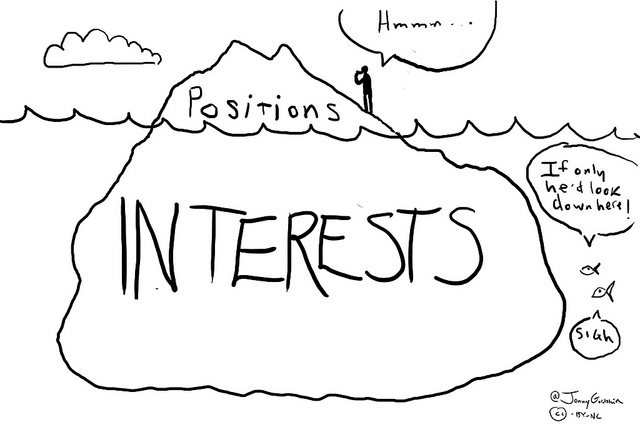
The mutual. Simply stated, since time immemorial everyone on the planet has participated in the same creation, shared the bond of what it means to be human, and held the same basic interests, such as to provide for their families, to see their children raised safely and educated, to be healthy, to enjoy economic well-being, to ease sufferings, and to live peacefully with others. People everywhere are so constituted, and the agency of wisdom draws our attention to this human mutuality, that is, to the deep interests, concerns, and goals shared by the human family as a whole before distinctions are made about ethnicity, nationality, or core belief.

global commomsThe wisdom tradition, then, has a vital interest in seeing relationships (domestic and international) established on mutual ground for mutual good amid their diversity (often discussed today using the adjective “common”). The agency of wisdom is normatively committed to the development of peaceable attitudes, forms of communication, and individual and institutional behaviors, arrangements, and agreements that are essential to human flourishing amid its diversity.

Nearly ten years ago, in With or Against the World?, James Skillen wrote that the “American people need to gain a deeper understanding of what it means that the world’s people and states share a single global commons, the governance of which is becoming more and more difficult with each passing year.” He then reminded us: “American failure to think and act cooperatively over the long term for the international common good is part of what threatens even America’s future.”

It will be evident to those who work to ease adversarial international relations and build more cooperative ones that nothing completely new is being introduced in this article. Seeking wisdom, however, might help us to imagine and obtain peaceable arrangements and agreements that we might not intuitively perceive as possible from within ideological frames that have become second nature to us. Even against great odds, that might at least help governance of the global commons to become a little less difficult along the paths toward shalom.

©2014 by Charles Strohmer

This article was first published in Capital Commentary, here.

WISDOM: THE MISSING AGENCY OF FOREIGN POLICY

“Problems cannot be solved by the same level of thinking that created them.” Albert Einstein

waiting to changeWisdom: The Missing Agency of Foreign Policy
by Charles Strohmer

In The Mighty and the Almighty, Madeleine Albright writes that in university she was taught that religion had no part in shaping the world of foreign policy. Hans Morgenthau, George Kennan, and Dean Acheson, she writes, theorized in almost exclusively secular terms. Religion wasn’t rational. To talk about it invited trouble and diplomats were taught not to invite trouble. “This was the understanding that guided me while I was serving as President Clinton’s ambassador to the United Nations and secretary of state.” Because of the events of September 11, 2001, however, “I have had to adjust the lens through which I view the world.”

Wisdom has suffered a fate similar to that of religion, and an adjustment is needed. The seeking of wisdom for foreign policy decision making often gets been trumped by rigid a priori reliance on forms of ideological thinking, such as American exceptionalism or political realism, idealism, or neoconservatism. Wisdom is often the first casualty when an ideological frame becomes the only grid through which leaders and their advisers analyze events and take decisions.

Part of the reason why wisdom gets such short shrift can be found in the universities. The philosophical starting point for studies in international relations and foreign policy can be traced historically to the roughly one-hundred-and-fifty-year period of classical Greek philosophy and its highly abstract thinking during the fifth and fourth centuries before the time of Christ. From this period, IR scholarship relies heavily on Thucydides, Plato, and Aristotle, especially Plato. As Alfred North Whitehead once quipped, “All Western philosophical thinking consists of footnotes to Plato.”

This starting point is understandable given the foundational indebtedness that Western intellectual life owes to Plato’s theory of Forms, or Ideas, as archetypal ideals, including the array of Western political ideologies for shaping the state, for instance, or for what justice should be. Political ideologies affect analyses and decisions in many areas, such as the way leaders make sense of international relations and forge relationships with one another; the way one nation perceives another; the way states act toward one another; the momentum, or lack of it, in negotiations; and much more besides, including decisions about peace and war.

But IR studies do not go back far enough. There is much insight to be gained by going back to the wisdom tradition of the Ancient Near East, to a time when royal court officials were educated in the wisdom tradition and the agency of wisdom played a vital diplomatic role in creating and sustaining peaceable international periods. This area of research has been sorely neglected by IR scholarship. Even impressive works such as Amarna Diplomacy and Brotherhood of Kings do not consider the vital role of wisdom in ANE diplomacy. That role, however, is seen in many of the political narratives of the Bible and in its wisdom literature, as well as in the wisdom literature of other ANE cultures.

Granted, the Bible frequently shows ancient Israel and her neighbors at war with one another, and the prophets often criticize Israel and its kings for their failures to do justice. Also, the nations of the ANE were no less religiously ideological, for instance, than those of today’s Middle East. Nevertheless, in the wisdom literature, and in some of the Psalms, and in numerous political narratives elsewhere in the Bible, there is preserved for us evidence of the peaceable counsel of wisdom that rulers, their advisers, and the peoples should heed.

This has been the focus of my research on The Wisdom Project, part of which has included trying to approximate the sages’ wisdom-based way of reasoning about life, which is not the same as ancient Israel’s priestly or prophetic actors. One of the most remarkable discoveries has been to find that wisdom is not abstract, ideological, or theoretical, nor is it sectarian. Instead, the agency of wisdom is personal (relational), peaceable, and committed to the mutual good of all humankind within its diversity.

In the second article of this 2-part series, I want to consider three norms of the wisdom tradition: personalness, peaceableness, and mutuality. These norms were vital to the diplomatic skills of royal court officials who had been educated in the wisdom tradition, and they offer insight into an historically sound, realistic, and non-ideological way of reasoning for analyzing and potentially resolving our thorny IR conflicts.

©2014 by Charles Strohmer

This article was first published in Capital Commentary, here.

THE BIG PICTURE

jigsaw big picture“Thank you!” to all who replied to my informal poll, which asked you to name one or two post-9/11 issues and events that you would like to this blog take on during the months ahead. Some sent email, others replied in the Comments area. Thanks also to those I spoke to in person. The replies were thoughtful and identified significant areas of concern, although no consensus emerged. But now that I think about it, I should have known that would be the case.

Our post-9/11 world presents us with a wide array of consequential issues, events, and policies that we need to come to grips with, both in America and in the Middle East. And the reality continues to change dramatically, and at times dangerously. There are so many decisive areas of the post-9/11 big picture to tackle that it would be hard to find agreement any one or two. That was certainly true of my small poll, in which no two people expressed an interest about the same area.

There were also significant aspects of the big picture that were not mentioned by the responders. That was an interesting omission to me, because I thought these areas would certainly be mentioned. What the poll did for me, then, was to remind me that the post-9/11 big picture has many crucial pieces of different shapes and sizes. This was on my mind as I wrote the pool, and one of the email responders picked up on that. So in the next post I want to summarize the salient pieces of the post-9/11 big picture.

Following that post, we will begin to consider some of these areas in depth. I will take you behind the scenes, on a kind of crash course, to understand where are at (really at) and how we got here, and, importantly, to consider what some wiser ways ahead might be. What I have to say is not going to be some rehash of you have learned from the evening news or talk radio or the blogosphere.

We live in a dangerous period. If we do not know why that is, really why, then wiser ways ahead cannot be formulated and implemented.

©2014 by Charles Strohmer

Image by Lynette Cook & NASA

BRIEFLY . . . .

InteretsResponses to the question I asked in the previous post have been arriving via email and the Comments area. I am extending the time frame for responses for two more days. If you have not seen that question, just click here. I will be taking answers through Saturday. See you back here on Monday. Thank you.

HERE’S A QUESTION FOR YOU

InteretsWhat would you like to hear about on this blog during the next several months? Here’s why I’m asking. To date, we have explored vital features about the relation of wisdom to human diversity, focusing on the international relations of the old-world Middle East (Ancient Near East). This post lists the places we have been. Now that we have that foundation to refer to, we are transitioning from that ancient history to the contemporary scene. My general plan, now, is to write about issues, decisions, policies, and people that have loomed large during the past decade in U.S. – Middle East events.

I began that transition here, where we took a few posts to remember what is was like in America during the days of 9/11. But there are so many crucial, post-9/11 areas to consider, including current emerging situations, that I have been wondering where we might start doing that in this next series of posts.

I have some ideas of my own, but you can help. I would like to get your thoughts. What one or two areas would you like to hear about first? I would like to hear from as many readers as possible on this. If one or two post-9/11 areas stand out, I will seriously consider starting there.

So do make a suggestion. Brief or longish. You don’t have to be too specific. Send your suggestions via email or the Comments area. Thank you. I look forward to hearing for you. C. S.

©2014 by Charles Strohmer

JOURNEY TO CLARITY

vision glassesThe monstrous dose of reality that would soon become known by the iconic shorthand “9/11” plunged America and its leadership into a collective worldview crisis, and many individuals and families suffered terribly as well. Although I did not suffer like many people did, my own experience of 9/11 was so unusual that I felt as if I had experienced it too much but missed it completely. Strange inner dissonance, that. The attack had taken place but I did not know that for many hours. I must have been one of the last people on the planet to learn about it. And when I finally did learn about it, the startling way that happened, and the next four days encamped at Shearwater Air Force Base, made 9/11 seem too much to me.

Despite being well-cared-for at Shearwater, I found it difficult to think, and though I consider myself a person of faith, I found it hard to pray. I often found myself with barely a thought in my head. I was pensive and, back home, became disoriented and could not concentrate to work. I had to postpone a speaking engagement and push two article deadlines further into the future.

But knowing myself, I knew that my only way out of the molasses – my back to “normal” – would be by gaining a good understanding of what had occurred and what responses would be wisest. I had too many questions that I needed answered. To ignore getting the answers would be, for me, like trying to live as if 9/11 had not occurred. And I could not go there. I had to understand. And I wanted to get it right. That would take time, but that path, I knew, would deliver me from the dissonance.

So I set out. I suppose this was quite a natural direction for me to go, given that I am a writer and that writers research their subjects. As well, the timing could not have been better. My seventh book had just come out, a co-author job with John Peck, and I had been wondering what the subject of my next book would be. In the interest of full disclosure, however, I should say that I felt more than a natural compulsion. For this new research and writing project I felt a very strong drive.

I should also say that, at the time, I had little interest in international relations and foreign policy. And I will embarrassingly admit to believing that it would only take several months, perhaps a year, to conduct the necessary research. I was foolishly mistaken about that. The most frequent question I get asked is: What’s going on in the Middle East? Unfortunately, many who ask are impatient. They want sound bites, as if sound bites could faithfully answer the persistent questions that have arisen. It takes time to understand how we got here, and why, and what are some wiser ways ahead. Most people reading this blog don’t have time for that amount of study, so I have done the homework for you, and want to offer it to you here.

Today we do not live in a time such as during the Cold War status quo, during decades when, although the United States and the Soviet Union made life interesting at times, international relations between the two super powers were nevertheless static enough. You pretty much knew what was what. Today, the “war on terrorism,” the war in Afghanistan, and the war about Iraq have not – to put it mildly – fulfilled anything even close to either Western or Middle Eastern expectations.

War is a wretchedly incompetent and perverse agent of change. No West – Middle East status quo has emerged. Instead, unexpected major events continue to surprise, and new violent realities emerge so often that it is impossible to put your finger in the script and conclude, “Ahh, this is where we are at. This is the reality. Now here’s what we can do.” So many analysts talk about “the long war.”

And you can forget about what you have heard on the evening news, or talk radio, or the blogosphere. You are not going to get three minutes of “in depth coverage” in the following posts, or sound bites, or cliches, or stereotypical or polemical answers.

We live in a dangerous period. If we do not know why, really why, and if we do not learn from the missteps, then we cannot formulate wiser ways ahead. I don’t claim infallible answers, but over the course of the next several months I am going to be sharing with you on this blog what I have learned from more than a decade of research, including taking you behind the scenes to hear from key people I have talked with on my travels. The unlearning and relearning has been a surprising journey to clarity. I hope it becomes that for you too.

©2014 by Charles Strohmer

Image by katerha (permissions via Creative Commons)

“A LITTLE BIT OF SYMPATHY”

map readingToday we have considerable understanding about what occurred on September 11, 2001, and why. We forget that at the time we all grappled in the dark for answers. The irony was palpable. What was being called a defining moment lacked clarity. Why was that? The jumble of mixed messages about the “attack on America” that was coming from Washington and the media those days, and from political analysts and religious leaders, indicated a terrible collective worldview crisis into which the nation had been plunged.

In our more humble moments today, we might be able to remember that America had suddenly been forced to deal with problems so revolutionary and intractable that there was a shaking of the foundations. National life had been going along fairly well for a pretty long period. The Cold War had ended in 1991 and we all hoped for a more durable peace. But suddenly life was no longer normal. Things that had been taken for granted were now being seriously questioned, even by the “experts.”

Although it was refreshing to hear such humility expressed by many political analysts, the hard truth of it was that answers those days were few and far between. A terrible unknown had knocked America off its stride and the nation was scrambling to make sense of what had occurred. The nation was processing one of those (fortunately) rare phenomenon called a national worldview crisis.

In recent posts we have been discussing how deeply the crisis effected our personal lives and worldviews, as individuals. But it was, of course, a collective worldview crisis as well, one that deeply effected Washington as a political entity, despite the public image it put forward as being in control. Washington’s treasured and basic ideas for understanding and responding to such a national emergency had suddenly been called into question, for there had never been one like this one.

It was, in my opinion, worse than that of another attack from the air sixty years earlier – on Pearl Harbor by the Japanese air force. Although that surprised the country and plunged it into a terrible national crisis, it was nevertheless understandable an act of war by one state, Japan, against another state, America. And as such Washington could immediately process what had taken place and lean on the traditional way of response: the war system.

In other words, Japan’s attack on Pearl Harbor emerged from the modern way of thinking about war – state versus state. It was easy for that generation both to understand what had occurred and to recognize the kind of response in kind that would follow. America would go to war and was able to do so. Everyone got this. The nation could be mobilized. Washington could be confident that America could effectively meet the challenge.

The attack on the United States from the air sixty years later was not a Pearl Harbor kind of surprise. It came not from a state but from a group of non-state actors called al Qaeda, led by the religious militant Osama bin Laden. It struck the nation with fundamental unknowns on both preparedness and response. This left the President and everyone else uncertain about why it had occurred and how to respond. Significant books have been written about this early period of ambiguity in the White House. It was amid this kind of national worldview crisis that Washington had to try to identify where the rough ride had landed the nation, and what the response should be.

Sans a reliable map by which sense could be made of the attack, or what the wisest response to it should be, I hasten to add that I had some sympathy for the White House, its advisers, and the Congressional committees responsible for America’s national security.

Story continued next post…..

©2014 by Charles Strohmer

Image by Ed Yourdon (permission via Creative Commons)

“TURN AND FACE THE STRANGE CHANGES”

going shoppingIn this current series of posts, begun here, I am trying to recall for us, as individuals and as a nation, what we were thinking on September 11, 2001 and in the days and weeks immediately following. As I have been writing this I have been wondering about how many people can actually recall how “the apocalyptic acts of fury” (Kanan Makiya) impacted them as individuals, and I have been thinking about the jumble of mixed messages that we were getting as a nation.

Further still were the selective ways that the White House and Congress chose to deal with the crisis. We are experiencing the ramifications of many of those decisions today, 12 years later, and I want us to consider the wisdom of these decisions in future posts. But here I want to talk about the jumble of mixed messages, which were pulling us is all sorts of different directions.

As individuals, we would never be the same – or so we said. Suddenly life was fragile and personal problems trivial. We would change – or so we promised ourselves, if not others. Such humility even from many talking heads was as refreshing as it was astounding. Those days, you could hardly watch seasoned journalists or foreign policy experts being interviewed and not hear them stop to recount an epiphany about why they would now be more caring toward family and others. Even interviewers would stop to say this about themselves. Not a few were even heard questioning cherished beliefs they held about God and the human race. The same was heard among us lesser mortals. We would no longer be selfish, or rude, or frivolous, or materialistic, or decadent. We would be warm not cold, real not pretentious, loving not ill-willed. We had changed.

Another message was that of war. The nation was at war, President George W. Bush announced to us and the world, a war on terrorism. “Our enemy,” the president explained, “is a radical network of terrorists, and every government that supports them…. And we will pursue nations that provide aid or safe haven to terrorism.  Every nation, in every region, now has a decision to make. Either you are with us, or you are with the terrorists.” Well, then, here was another way in which life would be different. But how, precisely?

globe above waterFurther, many thoughtful people were arguing that to describe the terrorist acts of 9/11 as an act of war might be a category mistake, and so we should be very careful, here, because the attacks were not carried out by a nation but by a militant group of non-state actors known as al Qaeda and led by Osama bin Laden, a terrorist and not the leader of a nation. As this argument went, a more useful metaphor than war is crime and, despite the enormity of the attack and the damage and loss of life, dealing with bin Laden and al Qaeda should be a police matter for the international community.

What was it, then, an act of war or a heinous crime? Deciding between the two would determine what response was just and what kind of sacrifices the nations would need to make. Either way, we all knew, carried with it some clearly dreadful implications about buckling up for the abnormal life that seemed sure to lie just ahead for us. Yet there was another message still. This message not only contradicted that of any sacrifices we were sure were now going to demanded of us by our leaders; it also subtly communicated that collective introspection and conversation about American itself, which had been slowly and cautiously emerging, should end.

President George W. Bush, who, in the days immediately following the attacks said and did some smart things, was also saying that America was “open for business” and asking for everyone’s “continued participation and confidence in the American economy.” At most other times, such rhetoric would go down well enough. But when heard during those days it was interpreted by many people, rightly or wrongly, as a call to “get back to normal” and “go shopping.” Pardon? The Times of London called the attack The Day that Changed the World. Yet we are to get back to normal? Are we being told to ignore the “war on terrorism” that had suddenly been declared and go shopping?

Thoughtful religious and non-religious commentators saw through that rhetoric. Here are just two poignant examples. Brian Walsh, Christian Reformed chaplain of the university of Toronto, in an editorial in re-generation, put it this way:

“America is open for business. Does this sounds like a callous and irrelevant comment under such circumstances? Not at all. You see, the forces of chaos will not triumph because the forces of salvation are stronger. And salvation is found in an ever expanding global economy…. The president knows, his cabinet knows, the guy on the street knows, and we all know, deep down, that things will never be the same again.”

The writer Susan Sontag penned this in The New Yorker:

“Our leaders are bent on convincing us that everything is O.K…. But everything is not O.K…. The unanimity of the sanctimonious, reality-concealing rhetoric spouted by American officials and media commentators in recent days seems, well, unworthy of a nature democracy…. Let’s by all mean grieve together. But let’s not be stupid together. ‘Our country is strong,’ we are told again and again. I for one don’t find this entirely consoling. Who doubts America is strong. But  but that’s not all America has to be.”

Story continue next post….

©2014 by Charles Strohmer

Image by r.nial.bradshaw (permission via Creative Commons)