WISDOM AND INSIGHT part 2 of 3

It has been said that the first lesson of history is that we don’t learn from it. Perhaps the second lesson is Mark Twain’s witticism that history may not repeat itself but it sure does rhyme. In any case, one of the things I am assuming on this blog is that with the agency of wisdom there is an ineluctable sense both of the timeless and of the timely. We have considered the former here. In this post I want us to consider the latter in terms of history, especially as wisdom engages with the practical, everyday purposes in human activity. That is, she lives and moves and has her being where people interact and events are manifested. There, wisdom desires the present to write the future by learning wisely from the past.

wisdom insightInsight is vital to the process of wise historical development, and thus to gaining wisdom. In the Hebrew Bible insight is as inseparable from wisdom as a river is from water. The word “insight” denotes the kind of perceiving, discerning, or understanding that comes through focused observation and learning from history. It is often indicated by the word bina. Proverbs 1:2, for example, explains that the proverbs of Solomon are good for attaining bina (insight) and hokma (wisdom). Proverbs 4:5 reads: Get bina, get hokma, and verse seven reads: Hokma is supreme; therefore get hokma. Though it cost all you have, get bina.” Proverbs 2:2-3, 5:1, 21:30, and other passages in the wisdom literature also insist on this marriage of wisdom and insight.

What I want to call attention to is that we gain wisdom from insight about learned lessons. Much, if not most, of the wisdom writings that we have today, whether of Egypt, Israel, or elsewhere from the old-world Middle East, originated in an oral tradition that resulted from the sages lengthy investigations into creation/nature and human relationships and experience. From this in-depth research, the sages (wisdom teachers) gained insight about creational laws (laws of nature, to some), about patterns of human behavior,and about historical developments.

By “using their powers of observation and the ability to think rationally,” writes Leo Perdue, “the sages sought to understand God, social institutions, and the moral life through their reflections on creation and human experience, including their own” (In Search of Wisdom; 76). For our gaining of wisdom, then, insight, we may conclude, with its depths of discernment, takes effort; it is not usually gained though leisurely thinking.

From their studied observations, the sages gained insight into the regularities of life and the act-consequence connection. Simply stated: What you sow, you reap. Over time, such insights were developed into wisdom instruction on a wide variety of topics, such as as are found in the book of Proverbs: gaining further knowledge about the created order of things; cultivating moral conduct, prudent behavior, and virtue; recognizing principles for living well; understanding the outcomes (foolish or wise) not only of an individual’s but also of a government’s choices; and recognizing contrasts, as between the wise and the foolish, the just and the unjust, the good and the bad.

Insight about such matters in the book of Proverbs is often artfully crafted in pithy sayings of wisdom, such as maxims, epigrams, adages, or proverbs, intentionally brief in length, compact in meaning, easily intelligible to their audience, memorable, and every now and then delivering a graphic kick; e.g., Like a gold ring in a pig’s snout is a beautiful woman who shows no discretion; food gained by fraud tastes sweet to a man, but he ends up with a mouth full of gravel; righteousness exalts a nation, but sin is a disgrace to any people (Proverbs 11:22; 20:17; 14:34).

The sages also honestly accounted for the hard facts of life’s irregularities and contradictions. For instance, Proverbs indicate that a crook may prosper, that a good person may suffer, that a bad person may rule, that a person with wisdom may not act wisely, and so forth. The entire book of Job, in fact, we could say, is about when the rules don’t apply.

In the next post we will discuss what has been called the “great brooding” process that is necessary for insight to emerge and to help us to gain wisdom.

©2014 by Charles Strohmer

Image by archer 10 Dennis (permission via Creative Commons)

WISDOM AND INSIGHT part 1 of 3

Twin Towers smokingWisdom and insight go together like soup and water. Here’s what I mean. Everyone remembers those terrible images on television of the Twin Towers smoldering and collapsing in clouds of dust. We gaped not just because of the shock but because we did not know why that extraordinary thing had happened. We all wanted to know why. Of course we gape at all sorts of dramatic events, as, for instance, when seeing a bad car wreck or a capsized ferry or special police units surrounding a high school campus. We gape. But we also ask why.

When I was working in Massachusetts many years ago near an old warehouse district, I stood transfixed watching a massive four-story warehouse – it covered nearly an entire square block – become engulfed in flames and burn to the ground. I had never seen such a huge, out-of-control fire, and neither had the dozens of other gawkers who were watching it burn. But we we not just gaping at the sight. We were also trying to find out why it was burning. We even asked the cops and some fire personnel. We wanted to know.

It was many years before I understood what is really going on in us at such times. We ask questions about the experience because we want to know about it in a special way. That is, we want insight. And insight comes from asking questions about an experience, especially one that is new to us or exceptional. Insight is what we want when we hear that a friend has divorced or that the stock market has plunged or that our CEO is under federal investigation. We want insight, so we ask why.

Insight is what everyone one in America wanted on September 11, 2001, everyone from the president on down. No one knew why two passenger jets full of human beings and plenty of fuel had disappeared with a metallic burr into the Twin Towers and never came out. Why?

The president, his staff, and his political and military advisers, of course, were asking questions, questions, and still more questions, because they needed to arrive at clear judgments in order to make decisions – official decisions that would have far-reaching ramifications for the country.

Further, clear judgments, especially for responding to complex exceptional events or experiences, are not possible without gaining insights into insight, so to speak. And to get those you must ask questions about the initial insights. As David Ford once explained to me, you’re checking out your initial insight with more questions leading to additional insight in order to arrive at a wise judgment for making a decision. And wisdom is precisely the point. You need wisdom, and wisdom emerges with insight.

All of this is by way of introducing what I want us to consider next. In the Hebrew Bible insight is as inseparable from wisdom as a river is from water. In the next post, then, we will begin looking at this fifth norm of wisdom, the norm of insight. So far on this blog many posts have discussed and illustrated four other wisdom norms, what I call the norms of peaceableness, relations, mutuality, and skill. The wisdom norm of insight is the final one we will consider. All five norms are vital to the foundation I am attempting to lay about (1) the ancient sages wisdom-based way of reasoning and (2) its relevance for international relations and foreign policy decision making today. I hope to finish (1) soon because I am psyched to post about (2).

©2014 by Charles Strohmer

Image by Globovision (Permission via Creative Commons)

TRANSITIONS

transitionsI ended the previous post by saying that if a nation is not run on a gospel-directed and -shaped wisdom, it is by default run on some other wisdom, on some other way of seeing national life and expressing it, on some other way of trying to analyze and solve its problems. What I am ultimately pleading for on this blog is the developing of a gospel-shaped wisdom that informs the analyses and policy making of international relations, and of relations between the United States and Middle East states in particular.

If you have recently begun to get into this blog, thank you for that, and welcome to the neighborhood. What you need to know, however, is that, except for some brief examples, I have not yet begun posting in any developed way about what a gospel-shaped wisdom for U.S. – Mideast relations might entail. This is because of the limitations of publishing an existing book manuscript post by post on a blog. That is what I am doing on this blog (see here), but in a somewhat revised way so that the material makes sense post by post. Tricky, that.

Unfortunately, however, this means that readers have not been able to start with the entire book in their hands or on their Kindles, so they cannot jump ahead a few chapters, so to speak, if the nudge strikes, to see what I say about U.S. – Mideast relations. I wish it were not so, but you can blame the technology! It has forced me choose what material from the manuscript to put before your eyes first and then keep going from there. This was a hard choice, believe me.

I thought I might start posting by jumping straight into U.S. – Mideast narratives and policies, but I eventually concluded that that approach would leave far too many crucial questions unnecessarily unanswered because I had not said much about the wisdom tradition. So I decided that, first, I better give readers insight into key ideas from the wisdom tradition that inform my thinking about international relations and foreign policy and related matters. Since a wisdom-based way of thinking about these areas is a different than how we hear about them from the media and our politicians, I thought that this starting point would be best. Then once that foundation was laid, I felt that what I wanted to say about U.S. – Mideast and related matters would make more sense.

This approach has stretched my thinking, but it seemed like a win-win approach for all of us. For instance, when I begin writing in later posts on international events, narratives, and policies, I can link one of those posts to one of the earlier ones where I discuss a related matter in the wisdom tradition. If I think that will help spare us all the time of dealing with unnecessary questions, I will do that. But necessary questions – bring ’em on!

Believe me when I say that it has been very hard for me to forebear jumping into the contemporary international scene. But that should begin soon. You can also believe me when I say that it won’t be what you are used to hearing. This is why I hinted in the recent posts about the significance of religion and the faith of nations. But now we will turn again to explore some further, often overlooked, ideas in the historic wisdom tradition.

©2014 by Charles Strohmer

Image by ecstaticist (permission via Creative Commons)

“IF YOU SMILE AT ME, I WILL UNDERSTAND”

orchestra 3Gabe Lyons, the founder of Q Ideas, did a pretty outlandish thing for a Christian leader. He invited imam Feisal Abdul Rauf to a large Q Gathering in Portland, Oregon, in April 2011. Concerned about the heightened tensions between some Christians and Muslims in America that had not subsided since the previous summer, due to the ground-zero mosque controversy, Lyons knew that lack of understanding can be at the root of unnecessary relational problems. He simply wanted to interview the imam, a peaceable Sufi, and “get understanding” (Proverbs 4:5).

In a thoughtful article written in response to the ground-zero mosque controversy, Lyons had asked, “Can you imagine a future where Muslims and Christians would work alongside one another in our communities to fight for justice, care for the poor, and offer hope to those in need?” He cited the work of Eboo Patel, an Indian Muslim, American citizen, and founder of the respected Interfaith Youth Core, headquartered in Chicago, which works with Christians and Jews on community projects in many cities. Not long afterward, Lyons invited Eboo Patel to give the Q version of a TED talk.

To Christians who questioned his decision to hang with Muslims, Lyons in his article replied, “The longer I live the more I’m inspired by the life of Jesus and the way He was able to sit down and converse with people who were so unlike him.” Amen, brother. We need more such outlandish behavior.

An unspoken irony in these episodes is that if Muslims such as the Rauf and Patel can find justification in their religion to be peaceably engaged with Christians, can we Christians not find it in ours to be peaceably engaged with Muslims? After all, we are the ones who claim to follow the Prince of Peace (Sar Shalom).

In the series that just ended, we have looked at outlandish ways in which in Jesus the sages’ peaceable way of wisdom gets taken up in the love of God and transformed into the gospel-shaped wisdom for loving not only one’s neighbors but also one’s adversaries. It is a bold wisdom, one much easier to give the nod to than to personally practice, or at least practice without being misunderstood by co-religionists, as Lyons discovered even in the openly receptive audiences of Q. One reason for this, noted in a previous post, is because Jesus taught and modeled this wisdom in-person so long ago, in a culture so different than ours, that today, in twenty-first century America, the ways in which Jesus shocked their imaginations may not even startle us. If that is true, then much that is in the Gospel record may not even speak to us today.

wisdom traditionSo I have often wondered how Jesus as a teacher of wisdom would “stab us awake” [William Barclay] were he among us in the flesh in America today. What would he say, to us? How would he require us to conduct ourselves, today? Previously,  I hinted at one possible act with Stephen Sizer’s Parable of the Good Palestinian. You see, I think Jesus might, in his own wise way, want to call attention to how tightly, whether consciously or not, we hold to American attitudes and allegiances that conflict with his gospel-shaped peaceable wisdom. To put it in biblical language: How much of our social and political wisdom, for example, depends on the basic principles of this world rather than on the wisdom based on Christ?

Jesus liked to asked questions of his interlocutors, and I suspect that is a way Jesus would shock us today. Even to those of us who pride ourselves in being worldview sophisticates and Christians with a biblical worldview, Jesus, were he standing amid us today, might begin by asking something like: Through what grid, really, do you ultimately interpret domestic and international issues and events, or support policies, or engage with your political opponents or those of other faiths? Blue? Red? Liberal? Conservative? Democrat? Republican? Libertarian? Catholic? Orthodox? Protestant? The mainstream media? Talk radio? NPR? The blogosphere? American Exceptionalsim? Christian Zionism? Bashing others? I’m sure the questions would continue.

For those of us who stuck around to ask Jesus to help us work it through, we would find on offer a direction in life that deeply relied on his peaceable gospel-shaped wisdom. You want what’s best for your society? Then act on that, Jesus in effect said to his audiences in Palestine, and you will learn how to have community with people from different backgrounds. And perhaps someday you will even disciple nations this way. Is his message any fundamentally different today?

In our post-9/11 world, this certainly must mean exorcising from our praxis allegiances to the voices, values, and attitudes that conflict with that peaceable wisdom that comes from above (James 3:17). The red and the blue and so on. Does this seem strange to us today? I hope so. Upon hearing it and seeing it demonstrated in ancient Palestine, people “were amazed at his teaching, because he taught them as one who had authority, and not as their teachers” (Matthew 7:29). Dumbfounded, they asked, “Where did this man get this wisdom?” (Matthew 13:54). Where, indeed? And how may we today become agents of that wisdom ourselves?

©2014 by Charles Strohmer

JESUS AS A TEACHER OF WISDOM IN ANCIENT PALESTINE part 7 of 7

Was Jesus a philosopher? Before he became president of the United States the first time, George W. Bush seemed to think so. In 1999, when running for the Republican nomination for president, he was asked by a TV journalist: “Who is you favorite philosopher and thinker?” To which the then governor of Texas unhesitatingly replied, “Jesus Christ.”

Philosophers and thinkers dating back centuries have had views on the question. Suffice it to say that is has evoked negative and positive answers from the learned and others. Even as far back as the New Testament book of Acts, the apostle Paul is seen debating representatives of major philosophical schools in Athens. And it can be argued, I think truly, that the question was addressed in the striking prologue of John’s Gospel, as the answer to what Greek philosophers were grappling with regarding Logos.

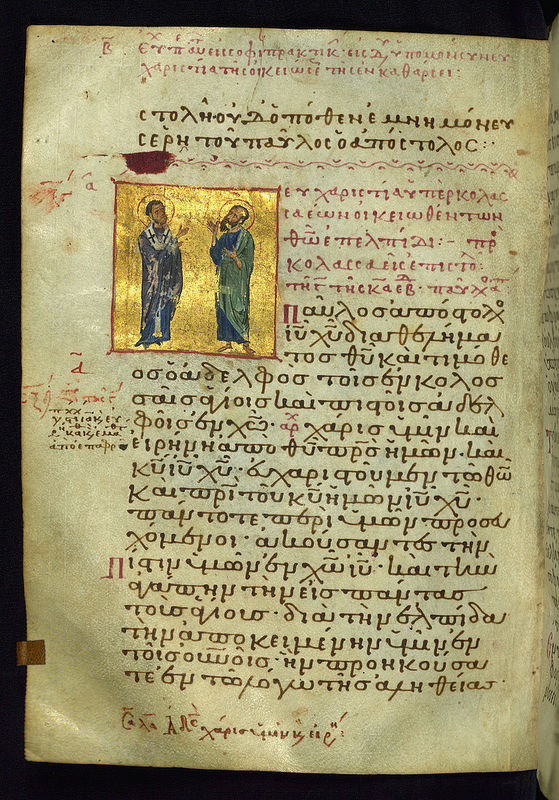
Colossians title pageFor those who like this stuff, as I do, a short, readable book with the nifty little title On Jesus, by Doug Groothuis, is worth reading. Groothuis, a professor of philosophy at Denver seminary, and an old friend, I should probably add, employed the classic philosophical areas of metaphysics, epistemology, and ethics to argue that Jesus was a unique kind of philosopher. But he concludes that the Gospel record does not present Jesus as merely a philosopher, or a healer, or exorcist, or a teachers, and so on.

A philosopher at heart with a passion for wisdom, I found myself challenged with the question around twenty-five years ago, when I began to get seriously into teaching and writing about a wisdom-based way of seeing life and living in it. (If you want a quick idea about a biblical use of the word “wisdom,” that is about as tight a one as you are going to get: a way of seeing life and living in it.) I became quite happy, and probably a bit conceited, when it occurred to me that the word philosophy means “love of wisdom.” But that does not come across in English as it does in the Greek: philo (love) + sophia (wisdom).

There are many ways we could take this, but let’s go this way. Follow me now. This is merely a short post on a fascinating idea, so I’ve got to cover a lot of ground quickly here. But at least you will have the start of a roadmap, which you can come back to, reflect on, and then go places yourself from here.

Let’s start with wisdom as “a way of seeing life and living in it”; or, alternatively: “a way of making sense of the creation in order to live in it effectively.” Now think of philosophy as “a love of wisdom.” There are only two places in the New Testament where philo+sophia is used. One is in Acts 17, where the apostle Paul debates Epicurean and Stoic “philosophers” (Acts 17:16-32). There, he relies on the resurrection of Jesus (although he does not use Jesus’ name) to radically challenge the religious ground motives of their philosophies. (Not unlike John’s challenge in his prologue, with his use of “Logos.”) The other is Colossians 2:8: “See to it that no one takes you captive through hollow and deceptive philosophy [philo+sophia], which depends on human tradition and the basic principles of this world, rather than on Christ.”

The passage in Colossians is often incorrectly interpreted to mean: Have nothing to do with philosophy whatsoever, when it is actually warning about a love for philosophy that is not based on Christ. The implication is: It’s okay to be taken captive by a love of wisdom that is based on Christ. But that meaning is hidden by the English word “philosophy” in the text. This conclusion is supported by previous verses, where the text explains that it is in Christ “in whom are hidden all the treasures of wisdom [sophia] and knowledge” (Col. 2:3), and that it is to proclaim this that the apostle is “admonishing and teaching everyone with all wisdom [sophia]” (Col. 1:28).

It would take much more space than we have, here, to explore the richness of this. But having started you down a road, I’ll leave you with a few more signposts. Make your own paths from here, by reflecting on the biblical addresses. Many people ask, What is philosophy? Here is my simple definition by way of comparison, which is a key category of the wisdom literature. “Theology is way of thinking about God; philosophy is a way of thinking about the world. ” This, I believe, is what the Bible typically means by its use of the word “wisdom.” And that squares with wisdom as “a way of seeing life and living in it,” “a way of making sense of the creation in order to live in it effectively.”

Try reflecting on the “wisdom” verses, above, and the following verses, by using the definition of wisdom just given. In 1 Corinthians 1-2, Paul repeatedly contrasts two ways of seeing the world and living in it; that is, he denigrates “the wisdom of the world” as opposed to “the wisdom of God.” And this is the place where Paul indicates that Jesus is “the wisdom of God” (1 Cor. 1:24), God’s way of seeing the world is Jesus’ way of living in it. What the apostles John and Paul are on about is having a love that sees life and lives in it consistent with Jesus as Logos.

©2014 by Charles Strohmer.

A note from Charles: If you want more of the perspectives that Waging Wisdom seeks to present, I want to invite you to follow this blog for a while to see if you like it. Just click here and find the “Follow” button in the right margin, enter your email address, and then click “Follow.” You will receive a very short email notice when I publish a new post. Thank you.

JESUS AS A TEACHER OF WISDOM IN ANCIENT PALESTINE part 6 of 7

wisdom traditionThe ways in which Jesus personally modeled his peaceable wisdom were almost always controversial, beginning with his choice of his twelve closest followers, a motley crew for sure. And it went on from there, nonstop. Jesus kept reaching out to include persons whom others had excluded. Here are some vignettes.

A crowd in Jericho complained when Jesus included a rich tax official, Zacchaeus – who really was up a tree. A Pharisee named Simon threw a dinner party for Jesus and was shocked when Jesus not only permitted a “sinful” woman to remain in their midst but let her participate in a ceremony.

In the stories of the Samaritan and the Syrophoneican women, the twelve disciples (who were all Jews) learned to open up their hearts as Jesus crossed boundaries of ethnic, religious, social, and gender otherness to express God’s love to two women who were citizens of cultures that most Jews found repulsive. In Jesus, the Samaritan woman found “a Jew who did not impose on her the Jewish stereotype of a Samaritan [or of] a woman.” And the Syrophoneican woman, a Greek (a Gentile) who lived in the region of Tyre, historically a non-Jewish enclave, found in Jesus a Jew who practiced mercy over exclusivism. In both narratives, a Jewish rabbi is willing to dialogue with these excluded others in ways that initiate them into the community of compassion. (Quoting Judith Gundry in the “Introduction” to Glenn Stassen’s Just Peacemaking: The New Paradigm for the Ethics of Peace and War, p. 28).

It may even be that the Syrophoneican woman’s clever appeal to Jesus, which seems to get him to change his mind, inspired him soon after he left that region to reach out with compassion to a huge gathering of probably chiefly Gentiles at the Sea of Galilee. There, Jesus clearly modeled for the twelve that Gentiles “are part of the community of compassion. God’s mercy had triumphed over ‘the prejudiced-based distance between nations and cultures.’” (Quoting Judith Gundry in Stassen, p. 29).

I am sure that those twelve Jewish men must have felt their faith was at great odds with itself many times seeing Jesus practice what he preached. Jesus was knocking their sectarian interests and exclusivist, social and religious ideologies to pieces.

And if you did not get it from the real-life travels of Jesus, you could get it from some of the parables. Parables are basic to the wisdom tradition and Jesus ingeniously supplied them. Some he told specifically in hopes of awakening his listeners to become agents on the gospel-shaped love of God that includes the excluded. In the parable of the dinner guests, for instance, social outcasts are brought in for fellowship with the rich. And in the often misunderstood parable of the good Samaritan, Jesus’ listeners are challenged to imagine themselves seeing a dying man who is in need of immediate mercy – and what would they do about it? Would they stop and provide for his well-being, reach out with shalom? Or would they leave him on the street corner to bleed to death because of their religious or other beliefs?

The parable, I believe, calls us to exercise impartial justice to one another even when we have religious and other basic differences. This a biblical principle of justice, through and through, from Leviticus 19:33-34 to 1 Timothy 5:21. “Wisdom is proved right by her actions,” Jesus said. The Samaritan man in the parable “proved” that wisdom by the impartial justice he exercised. He stopped what he was doing that day and reached out to save the dying man, whom two Jewish religious leaders in the parable would not help. And it cost him some coin to do it. All of this was to the dismay of another figure, the real-life Jewish religious leader, to whom Jesus directed the parable.

Decades after Jesus’ death and resurrection, this may have been on the mind of James, a Jewish Christian leader and step-brother of Jesus, who seems to have adapted the principle to a different problem. Writing in an Epistle that shows clear correspondence to a wisdom agenda, James has found a Christian synagogue guilty of showing favoritism, or partiality, to the rich, and embarrassing the poor in their synagogue in the process. They are not being impartial in their dealings with others, and James challenges them to treat rich and poor the same, lest they be found guilty of discrimination, having “become judges with evil thoughts” (James 2:1-4). Acts of favoritism, he notes, do not reflect well on “our glorious Lord Jesus Christ.”

street light crossFor us today, however, the parable is not poignant, not even outlandish. It doesn’t make us smart because we don’t live 2,000 years ago in ancient Palestine. We have not absorbed the social taboos and religious pressures that made Jesus’ parable so startling. I mean, something quite profound is going on, here, in the public imagination, when the religious figure to whom the parable was directed can’t even say “the Samaritan” in answer to Jesus’ question “Who was the injured man’s neighbor?”, but instead answers “the one.”

I think we need a parable of the good Samaritan for today. I wonder how Jesus would tell the parable today. It would certainly challenge our contemporary imaginations. I had an idea for one a few years ago, but I gave up trying to finish writing it when I read The Parable of the Good Palestinian, by Stephen Sizer, an English vicar.

Throughout the four Gospels, we see that in Jesus the peaceable way of the sages’ wisdom becomes the gospel-shaped way of loving outcast and adversary. Civic officials, religious leaders, government authorities, and ordinary people—his own followers, too—were being challenged with a wisdom-based praxis that emphasized not just shaking off dehumanizing habits of the heart as individuals. By following Jesus’ lead they would become agents of a wisdom that would rehumanize relationships amid their diversity.

The ultimate act of Jesus’ personal modeling of his peaceable wisdom was the crucifixion, when Jesus went so far as to die to be able to include even his enemies. More than any of his inclusive personal acts, however, this one became known in the early Church as “a stumbling block” to some, “foolishness” to others, and “the wisdom of God” to others still (1 Corinthians 1:23-24).

See next post for the conclusion of this series.

©2014 by Charles Strohmer.

A note from Charles: If you want more of the perspectives that Waging Wisdom seeks to present, I want to invite you to follow this blog for a while to see if you like it. Just click here and find the “Follow” button in the right margin, enter your email address, and then click “Follow.” You will receive a very short email notice when I publish a new post. Thank you.

JESUS AS A TEACHER OF WISDOM IN ANCIENT PALESTINE part 5 of 7

©2014 by Charles Strohmer.

At the start of his public ministry, Jesus chose twelve close followers, and most of them were so different that they would never have come together on their own in any sort of initiative. We do not know much about any of them from the Gospels, and some we don’t know anything about. But here are some things we do know.

There were four professional fishermen, a tax collector, a political zealot, a guy who was sort of the “nobody” of the group, a man who held huge doubts about who Jesus really was, and the guy who betrayed Jesus. Some of these guys would have had some pretty serious issues, if not hostility or enmity, with some of the others.

If there is any one thing this motley crew had to get to grips with early on, together, it was that Jesus didn’t start discipling them – his inner circle – by bringing a bunch of friends together. This would have been deliberate on Jesus’ part and disruptive for the disciples. On the road with Jesus, they were now not only away from their old friendships, family, and established careers; they were also traveling physically with the other in their midst, and for the express purpose of learning from Jesus about fleshing out, modeling, the life of the kingdom of God.

wisdom tradtionHere is why we should grasp this. In these current posts we have so far chiefly been focusing on ways in which Jesus taught his peaceable wisdom among the diverse peoples of ancient Palestine and counseled them to apply it, whomever they were. Stories and incidents in the four Gospels show different responses. Some got the vision and applied it. Some said, That’s interesting; I’ll think about it. And to others it was either foolishness or a stumbling block. At the very least, almost everyone was  surprised by Jesus’ way, even if they did not take that wisdom to heart.

Personally, I think many were surprised, if not shocked, by Jesus’ teaching when they understood, and at times saw in action, the shapes of that peaceable wisdom applied, for instance, in family, social, political, or economic life after folk took Jesus at his word and changed how they lived or worked. Jesus called to repentance those whose obedience to attitudes, ideologies, or actions were, through various ways and means, tearing apart the fabric of life. In the four Gospels many, though not all, of the narratives focus on this.

Mind you, Jesus was not putting this on others and not on himself. I think one of the most stunning things that the people of his time saw and learned about Jesus was that he wasn’t a hypocrite. He personally modeled his wisdom, quite publicly, in his own daily actions, from the get-go. It was by bringing together the twelve – with their diverse, and sometimes conflicting, interests and visions; with their grievances, fears, and biases; with their partialities, rivalries, and prejudices – that Jesus first gets everyone’s serious attention about what he is on about. It is the strange witness and potential of shalom amid diversity amid ancient Palestine with all of its strife, conflict, violence, oppression, conspiracies, and everything else that tears at the fabric of life and that has analogies today to which we may find ourselves in obedience.

Jesus deliberately stuck himself with twelve others into an ongoing initiative in which the thirteen of them had to grapple for three years with contradictions, competing interests, misunderstandings, personal issues, perceived lack of parity, and much more. And I  haven’t even mentioned, and won’t here, what the twelve must have thought about their teacher at times.

This motley crew of twelve diverse disciples had to learn to get along with each other. No, I did not say that right. It was more than that. They had to understand which values, ideas, and principle informed the choices they made that militated against expressing their diversity among one another peaceably everyday. This wasn’t about uniformity. It was about learn where and how to shake off the bogus stuff and follow Jesus in their diversity but a diversity focused on fleshing out Jesus’ vision of life, which was meant to become their normative public witness amid the cosmopolitan diversity of ancient Palestine. It would change them personally. And it was what Jesus himself, their teacher, was modeling. “A student is not above his teacher,” Jesus said, “but everyone who is fully trained will be like his teacher” (Luke 6:40).

Of course the twelve failed terribly at times. But Jesus was afterward always showing them what course corrections they then needed to make, if the were going to continue to follow him, Sar Shalom, the Prince of Peace (Isaiah 9:6). Sure, what  Jesus was modeling was controversial, and in the next post we will explore some of those narratives.

©2016 by Charles Strohmer

A note from Charles: If you want more of the perspectives that Waging Wisdom seeks to present, I want to invite you to follow this blog for a while to see if you like it. Just click here and find the “Follow” button in the right margin, enter your email address, and then click “Follow.” You will receive a very short email notice when I publish a new post. Thank you.

JESUS AS A TEACHER OF WISDOM IN ANCIENT PALESTINE part 4 of 7

©2014 by Charles Strohmer.

widsom traditionIt is becoming clear that when we think about Jesus as teacher of wisdom, this is not about someone who went around quoting the book of Proverbs. Something else was taking place. Jesus was teaching from a way of reasoning about life, relationships, and decision making. It was a peaceable way of reasoning that was wisdom-based, and it had strong similarities to the ancient Hebrew sages’ peaceable way of reasoning. We have been exploring some vital and often overlooked aspects of this wisdom – this way of seeing life and living in it – since the first post in this series.

To quickly recall one of those aspects, the Hebrew sages had a way of reasoning in which shalom played a vital role in cooperative human activity and decision making across the spectrum of life. In ancient Israel this provided a morally responsible means for peoples of different faiths and cultures not only to meet and greet but to negotiate peaceable initiatives and agreements across all sorts of perhaps otherwise unnegotiable boundaries.

However, as an authoritative form or mode of knowledge and instruction, Christianity today, whatever the reasons, has in some ways clipped this way of reasoning from its Bible. That is, we are big on the Law (Torah) and the prophets as authoritative. But wisdom? We see a clue to the problem in the book of Jeremiah. Some conspirators (they are not identified) are plotting against the prophet, and while doing that they summarize three sources of authoritative knowledge for ancient Israel: the teaching of the law by the priest, the counsel from the wise, and the word from the prophet (Jeremiah 18:18).

I like Walter Brueggemann’s treatment of this triad (The Creative Word, chapter 1). “Torah,” “counsel,” and “word” are three shapes of “Israelite authoritative knowledge,” and “the priest,” “the wise,” and “the prophet” are the three agents of that knowledge and instruction. Each form of knowledge, he argues, “has a special substance and a distinct mode in the life of Israel. And a faithful community must attend to all three, not selecting one to the neglect of the others” (p. 8, his emphases).

In all four Gospels, Jesus can be seen as the archetypal agent of all three of these forms of authoritative knowledge and instruction. What I am hoping for in these posts on Jesus as a teacher of wisdom is to help us think about the form that we have neglected for far too long.

Jesus’ way of reasoning squares with that of the Hebrew sages and their wisdom tradition, with its emphases on shalom as vital to cooperative and peaceable human relations amid their diversity (see the earlier posts). But in Jesus, the sages’ peaceable way of wisdom gets taken up in the love of God and transformed into the gospel-shaped wisdom for loving not only one’s neighbors but also one’s adversaries.

In the previous post, we looked briefly at some ways in which Jesus taught this peaceable wisdom in ancient Palestine amid that roiling diversity with its conflicting ethnic, social, political, and religious interests. But Jesus did not just teach it. He also personally modeled it. This we will see in the next post.

©2016 by Charles Strohmer

A note from Charles: If you want more of the perspectives that Waging Wisdom seeks to present, I want to invite you to follow this blog for a while to see if you like it. Just click here and find the “Follow” button in the right margin, enter your email address, and then click “Follow.” You will receive a very short email notice when I publish a new post. Thank you.