
RELIGION: A NECESSARY WORD

steel structure“You would love our church. It’s not religious.” In the previous post I said that we ought to ditch that widespread Christian slogan. Here I want to say explain why, by thinking about another common Christian slogan: “If Jesus is not Lord of all, he is not Lord at all.” This, of course, a way of stating from the negative that Jesus is Lord – has the final say – over all of life – not only over what we do on Sunday but throughout Monday to Saturday as well. Either he is Lord of those days too, or he is not Lord at all.

But what does it mean that Jesus is Lord of our lives outside the church walls? Simply said, it means that you are not just a student, or just a journalist, or just a math teacher, or just a single mom, or just a singer in a rock ‘n’ roll band. You are much more than “just” anything everyday.

To help Christ’s daily lordship seem more understandable and manageable, some Christian philosophers and theologians see life in terms of specific aspects, such as the physical, the biological, the aesthetic, the linguistic, the social, the economic, the ethical, the political, and so forth. This makes sense when you think about it, because we all function in these basic areas of life. I mean we have bodies (the physical), we eat to stay alive (the biological), we pay our bills (the economic), we vote (the political – to note vote is a political statement), and so on. So to claim that “Jesus is Lord” is to claim that he has the ultimate say over these and every other aspect.

Now here’s the thing. There is also the “religious” aspect of life. It is about one’s ultimate faith or confession. As we saw in the previous post, it denotes, for instance, how people express the commitment they have to God symbolically, such as during a church service or in the mosque or in the temple. Further, the religious aspect tops the list of all the aspects. This is because one’s ultimate faith commitment gives direction and shape to how the person will think and act in all the other aspects. So there is no “just anything” about our lives.

If we claim to be Christian, then our ethics, and our economics, and our communications, and our art, and how we treat your bodies, and how we treat others, and the way we are singers in rock ‘n’ roll bands are  directed and shaped (at least they should be!) by what we confess as our ultimate religious commitment – Jesus as Lord. No one does this perfectly, of course, but we ought to be doing it prayerfully, deliberately, and more consistently as disciples, that is to say, as a learners.

As well, if our religious commitment is to what the Old Testament person would call an idol, or a god, then our ethics, and our economics, and our communications, and our art, and the way we treat others and even our bodies, and all the rest of life too, will be directed and shaped by whatever that ultimate faith commitment is.

In the West today, of course, most people do not have shrines in their homes to Baal, or Dagon, or Mars, or Venus, or Whatever. Well, maybe to Steve Jobs. But the Western gods are mostly invisible. Nevertheless ultimate faith commitments exist to them under names such as Reason, Materialism, Scientism, Empiricism, Individualism, Collectivism, Secularism, Self, The Almighty Dollar. The list goes on.

If this stuff is making your head hurt, sorry about that. But try to stick this out. Just as our ultimate beliefs give direction and shape to our lives as individuals, nations are also shaped by their ultimate beliefs. We need to wise up about this. I’ll suggest why by wrapping up this theme of “religion” in the next two posts.

©2014 by Charles Strohmer

Image by Harry Cjr (Permission via Creative Commons)

RELIGION: A TROUBLING WORD

belief“You would love our church. It’s not religious.” Like the Energizer Bunny, that slogan just can’t be stopped among huge swaths of American Christianity. I used to tout it myself about a church I attended years ago. I eventually stopped saying it, but not because that church became religious. I became disabused of the notion that some churches were not religious. The truth is that all churches are religious, because they function in what is legitimately called the religious aspect of life.

Yet Christians may bristle at the mere thought of their churches being religious. For them “religion” is an offensive term because it smacks of dead ritualism on Sunday mornings, and they want no part of it. Look, I get it. That view took root in me during my childhood from an enforced church attendance and regimented liturgy every Sunday and during the week, not to mention the religious instruction in the Christian school until I was in my early teens. None of it spoke to me. Well, that’s not quite true. What spoke was: I can’t wait until I’m old enough to have a car and I’m outta here! Millions of Christians in America have their own versions of this story.

Nevertheless, there is a problem with treating the word “religion” as if it were always referring to a bad disease. Maybe in some ways and places it is. And that certainly would need to be addressed. But “religion” it is not fundamentally a bad thing.

Let me put it like this. The word “religion” simply refers to the way in which people express the commitment they have to God symbolically. It is about that aspect of life in which people explicitly express what God, or gods, they believe in, and how they approach that God, or gods, and the moral claims that God, or gods, makes on them.

So it is about rituals, sacred books, theology, explicit witness, devotional activities, such as prayer and worship, and the community that revolves around such things. Theologians, philosophers, sociologists, anthropologists, and in fact most people, use the word “religion” to describe such activities. And this is both an appropriate and legitimate use of the word. So it is about what Muslims do in their mosques or what Buddhists do in their temples or what Christians do in their churches. And so on.

The words “religion” and “church,” then, are in fact so hinged on mutual interests that to detest the former brings disservice to the latter. We really must get over our objections to the words religion and religious. This is hugely important. I’ll say why in the next post. And if you wonder what this has to do with blogging about wisdom, stick around. Sometimes you have to say a lot to say a little.

©2014 by Charles Strohmer

Image by Neil Girling (Permission via Creative Commons)

PERSPECTIVES: THE WISDOM OF TURNING THE HEAD

perspectivesI was recently with a group of friends and we were talking about how our perspectives limit our understanding of what we see going on around us everyday and in the news. Everyone in this room can experience the same event, one lady said, but we will all see it somewhat differently because of where we’re coming from. I will see something that “Tim” doesn’t see and he will see something that “Rick” doesn’t see. And I probably need to see what they see and listen to it, because I don’t see it all.

This of course is a fact of life that we are all aware of – just think of a traffic cop taking an accident report! But just as commonly we may not be aware of how much our individual perspective limits what we can imagine to be true. So someone says, You won’t believe what happened to me! And we may not believe it. Even if it’s true.

At the risk of oversimplifying this, let me say that our individual perspectives affect the way we relate to others and how we make decisions about things across the spectrum of life. How we vote. Where our children are schooled. What we think about the economy and our political leaders. The kind of entertainment we permit ourselves to enjoy. Who we turn to for counseling in crisis. Our views on spending and saving. What we think about climate change our nation’s foreign policy. The kind of church we attend, or why we don’t attend. What we drive, where we live, who our friends are. You get the picture. It’s your perspective on life and you are working it out all the time daily in the decisions you make.

The same principle holds true for how we experience the Bible and tell others about it. Just as I would tell that cop how I, myself, witnessed the car wreck, my perspective will also determine how I answer if someone asks What is the meaning of that Bible story? Of course, many people don’t experience the Bible at all. But even so, that is still a perspective. (A friend once told me that he had been talking to a guy who had never heard of Adam and Eve.)

For the past several weeks, we have been exploring the first half of the book of Daniel (chapters 1-6) through the perspective of the wisdom tradition. And here’s an important thing about that. That kind of engagement with the text has helped us to see a Daniel we may not have noticed before. Seeing Daniel through the lens of wisdom made possible insights into Daniel as a statesman/diplomat. Such insights do not emerge, in my experience, when one’s perspective is that of “Daniel the prophet.” You have to turn your head from looking at Daniel the prophet to see Daniel the diplomat.

As one recent commentator aptly said about the Daniel posts: They have “given me a great opportunity to look at him from a perspective that I have not considered. Our society and leaders could find a lot of value in the wise approach of Daniel.” To this I would just add that I hope it will also be of value to us lesser mortals every day, as we make decisions across the spectrum of life.

There is much more that can be said about Daniel the diplomat. But I want to move on now, to look further at what I often call “the diplomacy of wisdom,” as it is seen in other, perhaps surprising, places in Scripture. So let’s now turn our heads from “Ezra the priest” to see “Ezra the shuttle diplomat.”

©2014 by Charles Strohmer

Image by Aphrodite (permission via Creative Commons)

DIPLOMACY, TO BE OR NOT TO BE

Nobody would accuse the former president of Iran, Mahmoud Ahmadinejad, of being diplomatic. His bombastic and inflammatory rhetoric toward, in particular, Israel and the United States, was meant to keep Iran’s alienation from those nations intact. On the other hand, not a few voices in America wisdom wayaccuse President Obama of being too diplomatic. This was especially true when he formally reached out to Iran in 2009, in an effort to start building bridges, and in 2013, when he chose diplomacy over military action to rid Syria of its chemical weapons.

Ahmadinejad was following in the steps a long list of state ideologues who are blind to their coarse ignorance of the world. They have nothing to learn from adversaries. They know it all. For them it is: My way first, last, and always. End of story. When Obama reached out to talk in 2009, Washington and Tehran had not had embassy-level diplomatic relations with each other since 1979. Thirty years of formal diplomatic non-history is a “long time no talk,” and when adversarial states are not talking, gross misunderstandings arise.

So one of the parties chose to reach out diplomatically to get some face-to-face dialogue going to start clearing up misunderstandings. It was a wise gesture, skillfully done. Washington and Tehran still do not have an embassy in each other’s countries, but now that Obama has an interlocutor in the more diplomatic Iranian president, Hassan Rouhani, we my be seeing at least some thawing of relations.

Diplomacy, and its most important activity, negotiations, dates back to times of villages and tribes, when, even then, spaces for cooperation and the exercise of goodwill between them had to be built. Treaties and other forms of agreement were needed, and then those had to be managed, adjusted, and sustained if conflict and war was to be avoided and trade promoted. Later, with the rise of the so-called great states of the ancient Near East, such as Egypt, Babylonia, and Assyria, more formalized diplomatic relations developed. Although adequate to the times, we would see it as rudimentary, and perhaps not as developed as it could have been if travel and communications had been as easy as it is today.

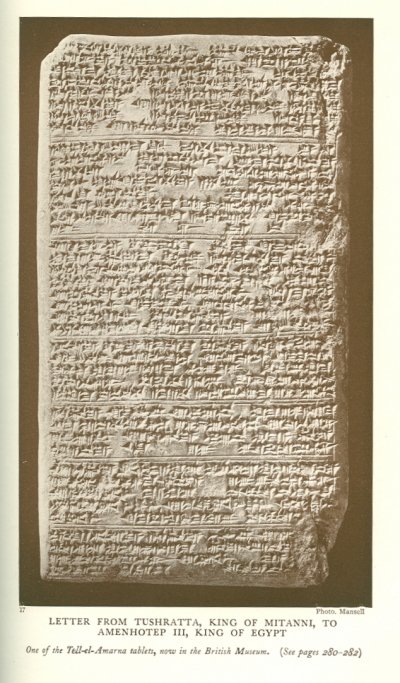
Amarna letterNevertheless, a fascinating work of scholarship, Armana Diplomacy: The Beginnings of International Relations, discusses an unusually large cache of diplomatic letters found in Egypt at the ancient royal city of Amarna. The letters detail a remarkably long period of cooperation among Egypt and other the great powers of the time, three to four centuries before the founding of the kingdom of Israel.

Today, as then, ambassadors, diplomats, negotiators, mediators, and relevant others need great skill in communications, a deep knowledge of each other’s cultures and politics, and a good handle on the actual problems if they hope to get the parties to Yes. They must, for instance:

  • exercise boundless sensitivity to the parties’ problems and exercise great tact and pacing when working toward an agreement of mutual benefit;
  • demonstrate a professionalism that submerges their own ideologies to the good of the negotiating parties;
  • show themselves evenhanded, gaining the confidence of all sides, while helping the parties see reality as it is and adjust to it;
  • help negotiations to reach midpoints that both sides can accept, often by challenging what has been called the parties “comfortable myths”;
  • show empathy for the suffering and needs of the parties, helping each side “get” the other’s grievances;
  • have enormous tolerance for frustration, take setbacks in stride, not make provocative statements, but stay focused and keep going.

In short, they must be diplomatic. Imagine, for instance, the disastrous outcomes if foreign minsters of adversarial states met in crises to vent polemically or demonize each other.

We do not generally explore the biblical text for diplomatic insights, but in this series of posts on the first half of the book of Daniel (chapters 1-6), we have been trying to do just that. As a high-level official in the royal court of Babylonia, Daniel’s political career takes places within the diplomatic culture of the great powers of the old-world Middle East.

Although the Daniel text does not show us a Daniel conducting negotiations for Babylonia with his counterparts in other nations, we have no reason to doubt that he functioned in that capacity from time to time during his decades of government service in successive Babylonian governments. What is explicit in the text, however, is Daniel’s diplomatic skill in the royal court, especially as a negotiator. These are skills he certainly would have taken with him on the road for the king, were he sent to negotiate treaties.

Key elements of Daniel’s skill as a diplomat and negotiator correspond to those in the above list. We have insights into them from his life amid the intrigue of the royal court. We will look at these in the next several posts.

©2014 by Charles Strohmer

WAR OR PEACE: YOU DECIDE

War and peace. We have lived with both since that day when brother first slew brother in the name of religion and third-party intervention set forth the terms of a settlement meant to prevent further violence. Fat chance of that. The surge from peace to adversarial relations to conflict and war had settled in as an enduringly lamentable fact of human affairs. History reveals a race whose preference for solving crises through nonviolence stretches just so far and then snaps.

war and peaceIn our day, the incendiary conduct of nineteen men aboard four aircraft on September 11, 2001 was the snap heard round the world. With it, the optimism of a fledgling international peace that was in the air following the end of the Cold War fell to earth. Since then, prospects trending toward furthering peace rather than conflict and war have seemed pretty hopeless.

In the previous post, a moving story from Rabbi Marc Gopin hinted at how inner attitudes of one individual toward another (in this case a Jew toward an Arab) can remain tense or adversarial or can ease up and back down. What we think about others who are not like us is going to betray itself in our words, gestures, and deeds. Multiply his story by millions and it is easy to see why individuals matter to war and peace. Domestic attitudes matter to the shape and conditions of international life.

The most formal way in which domestic attitudes and views affect international life is through a nation’s foreign policy. True, foreign policy decision making in the West is not particularly “democratic.” It is superintended by relatively small communities of presidents, prime ministers, and foreign policy elites who do not submit their policies to direct popular votes. Yet domestic attitudes can loom large in a nation’s international politics.

If, for example, a large percentage of American voters favor an easing of tensions with Iran, that attitude will carry weight inside White House policy, whether it is a Democrat or a Republican administration. And if the policy is to succeed in the long run, it must grip the consciences of a large majority of individuals in the nation. If, as the saying goes, all politics are local, then it is equally true that all international peacemaking begins with the individual, with me and you.

Formally, however, the task falls to the diplomats, international mediators, negotiators, special envoys, and relevant others. These are the men and women who get tasked with making things happen when leaders and their nations have determined to end adversarial relations, conflict, or war with other nations and enter into peaceable relations. But diplomats and others who are trying to bring the parties to Yes can get a bad rap. They get accused of waffling, of going too slow, of selling out, and of much more besides. The populations back home, however, usually have no idea of the insurmountable odds that can be stacked against diplomatic teams. This is why I have gained a huge amount of respect for them. They are really up against it, and few understand that.

The historic wisdom literature tradition is not silent on the subject of wisdom-based diplomacy as vital for international cooperation and peace. Beginning with the next post, we will start exploring key narratives that bring this out. And maybe along the way we will discover some lost tools to help in today’s task.

©2014 by Charles Strohmer

A RABBI WALKS INTO A SUK…, or, why you matter to the state of the world

Arab suk Rabbi Marc Gopin, who lives in America, often works between Washington and Middle East capitals as a seasoned practitioner of citizen diplomacy. I first met him around 2003 in Philadelphia at a conference on diplomacy and international relations. We were breakfasting in a noisy restaurant before the conference began that day, and I felt nervous and out of my depth. In the early stages of research for The Wisdom Project, I wanted to know what Marc, a rabbi familiar with the wisdom tradition and seasoned with years of diplomatic experience, thought about my thesis.

I was asking how he, Marc, thought that religious leaders and political actors in Washington and the Middle East – negotiators, mediators, policy advisers, relevant others – could benefit from the wisdom tradition. And how do you yourself do it, Marc, when at times it is like struggling in quicksand? To this veteran peacemaker I must have sounded like a babbling brook trying to explain my inchoate ideas about wisdom as a vital agency for creating peaceable Jewish / Muslim / Christian relations. But Marc patiently prodded, asked questions, and shared moving personal stories.

And I listened, hard. High-level initiatives of citizen diplomacy are hugely important to the crucial field of Track 2 diplomacy, which includes dialogue and problem-solving activities aimed at building relationships and encouraging new thinking that can inform Track 1, or official state to state diplomacy. In the best of both worlds, Track 1 and Track 2 initiatives and their diplomats intersect, talk to each other, and join their considerable resources to resolve adversarial relations, conflicts, and wars. At the conference I had already heard Marc speak about initiatives he had been engaged in at this intersection. Amid the bustle of waiters, the clatter of dishes, and the voices of other customers it struck me that I was hearing from someone whom Jesus meant when he spoke of blessed peacemakers.

Open, honest, and self-effacing, Gopin shares candidly in his talks and books about the personal struggles he has faced as a change agent in the Middle East, such as in dealing with the moral ambiguities involved in reaching peaceable agreements, the slow progress (when there is progress), the unexpected setbacks, the still unresolved issues. He has been a personal inspiration to me for the promise and potential of wisdom and resilience that people can draw on from deep within to overcome obstacles to peacemaking. Mind you, he wasn’t born that way. He had to get there, had to work hard at it, which for him included overcoming some a very real fear.

Arab sukSo, a rabbi walks into an Arab suk. It is the early 1980s, and this “newly-minted rabbi,” as Gopin calls himself in this story, is strolling through Jerusalem’s Old City to the Wailing Wall, when he enters the Arab suk (or souq), which looks like an old-world bizarre. There, he became fascinated with a small, alleyway shop that sold statues of Moses, Abraham, and other patriarchs. Those days, Gopin writes in Holy War, Holy Peace, he was at times “terrified, around Arabs,” so when the Arab shop owner approached him, hoping to make a sale, Marc wouldn’t speak to the man.

But Marc did not leave either. While he was handling an olive wood statue of Abraham, the elderly shop owner greeted him. Although he felt extremely nervous, Gopin “looked hard” into the elderly man’s smiling eyes and

saw something disarmingly familiar there, and it pained me in its gentleness. First I could not take my eyes off him, but then I refocused on the statues. I saw Moses. My name is Moses. I saw Abraham. And then I looked back at him intensely. The Arab man clearly could barely speak English but seemed not to value speaking very much anyway. I think he sensed I was in pain.

And then he did something that will stay with me for the rest of my life. He looked at me, just as I caressed the statue of Abraham, and he pointed up with his finger, and he said, with a heavy accent, “One father?” I nodded, feeling strangely commanded to do so, and I said quietly to him, “One father.” Overcome with emotion, and unable to speak, I said good-bye and walked on. I never saw him again.

Gopin later concluded that the powerful symbolic gesture broke down the wall of othering between them (Holy War, Holy Peace, pp. 25-26, for this and other stories). What we hold in our hearts about others is going to show up in our words, gestures, and deeds. As Jesus himself said, underlying attitudes will come out.

Marc’s poignant experience is just one of countless reasons why you and I matter to the shapes and conditions of of international life, including the foreign policies of our nations that we support or oppose. We’ll pick this up in the next post.

©2014 by Charles Strohmer

WISDOM IS BETTER THAN WEAPONS OF WAR

negotiationsI also saw under the sun this example of wisdom that greatly impressed me. There was once a small city with only a few people in it. And a powerful king came against it, surrounded it and built huge siegeworks against it. Now there lived in that city a man poor but wise, and he saved the city by his wisdom. But nobody remembered that poor man. So I said, ‘Wisdom is better than strength.’ But the poor man’s wisdom is despised, and his words are no longer heeded. The quiet words of the wise are more to be heeded than the shouts of a ruler of fools. Wisdom is better than weapons of war. Ecclesiastes 9:13-18

As this reflection from the wisdom literature implies, skill in wisdom is vital to diplomacy, negotiations, and similar other efforts that seek peaceable resolutions to adversarial relations, approaching hostilities, conflict, or war. Here, the value of wisdom as greater than both military might and royal authority is evident. A powerful king was backed down by a skilled negotiator who, although poor in this world’s goods, was rich in wisdom and thereby able to prevent his city and its inhabitants from being destroyed. Afterward, however, this negotiator’s wisdom, which saved the city, became despised, scorned, and was no longer heeded. One can’t help but wonder if the next generation picked up the implements and machinery of war and, professing themselves wise, destroyed the “much good.”

Beginning with this post we are making a transition to the historic wisdom tradition’s vital role in efforts that seek peaceable resolutions to adversarial relations, approaching hostilities, conflict, or war. Traditionally this takes us into the fields of diplomacy, negotiations, mediation, and relevant other areas. But so as not to get too wordy in these posts, I will often just use the word “diplomacy.” Unfortunately, the wisdom tradition’s connection to diplomacy has pretty much been lost to us today. It is a missing dimension in our contemporary understanding of the resources the tradition provides.

So far in this series of posts on the wisdom tradition, we have been concentrating chiefly on wisdom as a vital agency for peaceableness in local, community, and regional contexts where human diversity is normative, cooperation essential, and flourishing desired. And I have tried to present this with a fresh take on the sages and their wisdom that is faithful to the wisdom texts.

To briefly recap the previous posts, I tried to show that the sages offer us more than books of wisdom, such as Proverbs, Job, and Ecclesiastes. That is, they call us to much more than simply memorizing some interesting proverbs so we can have them at the ready to apply when situations call for it. As good as that can be, the sages call us to a particular way of reasoning about life. A close reading of the biblical wisdom literature can reveal the sages way of reasoning. The previous posts have been seeking to do that, as will this next series.

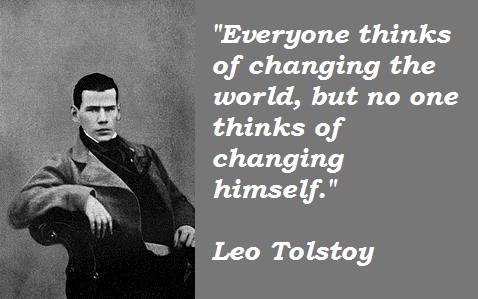
Tolstoy quoteLong story short, the books of wisdom, like all books, emerged from a way of reasoning about life. For instance, Leo Tolstoy, a strong believer in Jesus’ teachings, grounded his novels in a way of reasoning that he called “nonresistance to violence.” Charles Dickens, whose many writings are hard to classify, seems to have reasoned from a moral outrage at the many and widespread injustices of urban, nineteenth century England. The same holds true for nonfiction books, whose authors have their ways of reasoning about life. Regarding foreign policy, for instance, to read books by political neoconservatives is to get a much different way of reasoning than you will get in books by religious writers who are pacifists. The former is known to lead to militaristic foreign polices; the latter never does.

The sages, too, had a way of reasoning about life, out of which an oral wisdom tradition emerged and, later, writings such as we have in the wisdom books of the Bible. In the previous posts, I have been trying introduce, mainly in situations of local, community, and regional diversity, several “lost” but vital aspects of the sages’ way of reasoning. If applied, these can help us to build and sustain cooperation and peace in our pluralistic societies.

We of course must be careful here. We cannot know the mind of these ancients with certainty. But from a close engagement with the wisdom literature, some things seem pretty clear, and to that end in the previous posts we have been identifying a way of reasoning about life that is:

  • foundationally about a peace that the Hebrew Bible calls shalom;
  • not partisan, sectarian, or nationalistic but intercultural (for all peoples everywhere);
  • not about religious instruction but our activities outside of church, synagogue, and mosque;
  • does not present wisdom as ideological, or as any sort of abstraction, but as personal and relational;
  • reveals wisdom as a highly respected legal arbiter in places of authority in the old-world Middle East;
  • central to the teaching of Jesus in Roman-occupied Palestine.

These aspects of the sages way of reasoning about life can be identified (summarized) as the wisdom norms of “peaceableness(shalom) and (human) “mutuality,” which were briefly introduced in some of the previous posts. Beginning with the next post, we will continue to keep local, community, and regional contexts in mind, but we will start looking at how relationships and views in those contexts affect the shapes and conditions of international life. We will be exploring some truly fascinating wisdom narratives in the old-world Middle East that take us into areas of diplomacy, negotiations, and international affairs.

On this journey, shalom and mutuality will come with us, and we will meet other norms of wisdom, such as insight and skill, that are essential to ending adversarial international relations and building more cooperative ones. And as we go along, as in the previous posts, I will include contemporary illustrations. Some, like the next one, may surprise. So, a rabbi walks into a suk . . . .

©2014 by Charles Strohmer

A personal note from Charles: If you want more of the perspectives that Waging Wisdom seeks to present on important issues of the day, I want to invite you to follow the blog. Just click here and then find the “Follow” button in the right margin, enter your email address just above that button, and then click “Follow.” You will then receive a very short email notice whenever I publish a new article. And, hey, if you really like it here, tell some friends! Thank you.

“IF YOU SMILE AT ME, I WILL UNDERSTAND”

orchestra 3Gabe Lyons, the founder of Q Ideas, did a pretty outlandish thing for a Christian leader. He invited imam Feisal Abdul Rauf to a large Q Gathering in Portland, Oregon, in April 2011. Concerned about the heightened tensions between some Christians and Muslims in America that had not subsided since the previous summer, due to the ground-zero mosque controversy, Lyons knew that lack of understanding can be at the root of unnecessary relational problems. He simply wanted to interview the imam, a peaceable Sufi, and “get understanding” (Proverbs 4:5).

In a thoughtful article written in response to the ground-zero mosque controversy, Lyons had asked, “Can you imagine a future where Muslims and Christians would work alongside one another in our communities to fight for justice, care for the poor, and offer hope to those in need?” He cited the work of Eboo Patel, an Indian Muslim, American citizen, and founder of the respected Interfaith Youth Core, headquartered in Chicago, which works with Christians and Jews on community projects in many cities. Not long afterward, Lyons invited Eboo Patel to give the Q version of a TED talk.

To Christians who questioned his decision to hang with Muslims, Lyons in his article replied, “The longer I live the more I’m inspired by the life of Jesus and the way He was able to sit down and converse with people who were so unlike him.” Amen, brother. We need more such outlandish behavior.

An unspoken irony in these episodes is that if Muslims such as the Rauf and Patel can find justification in their religion to be peaceably engaged with Christians, can we Christians not find it in ours to be peaceably engaged with Muslims? After all, we are the ones who claim to follow the Prince of Peace (Sar Shalom).

In the series that just ended, we have looked at outlandish ways in which in Jesus the sages’ peaceable way of wisdom gets taken up in the love of God and transformed into the gospel-shaped wisdom for loving not only one’s neighbors but also one’s adversaries. It is a bold wisdom, one much easier to give the nod to than to personally practice, or at least practice without being misunderstood by co-religionists, as Lyons discovered even in the openly receptive audiences of Q. One reason for this, noted in a previous post, is because Jesus taught and modeled this wisdom in-person so long ago, in a culture so different than ours, that today, in twenty-first century America, the ways in which Jesus shocked their imaginations may not even startle us. If that is true, then much that is in the Gospel record may not even speak to us today.

wisdom traditionSo I have often wondered how Jesus as a teacher of wisdom would “stab us awake” [William Barclay] were he among us in the flesh in America today. What would he say, to us? How would he require us to conduct ourselves, today? Previously,  I hinted at one possible act with Stephen Sizer’s Parable of the Good Palestinian. You see, I think Jesus might, in his own wise way, want to call attention to how tightly, whether consciously or not, we hold to American attitudes and allegiances that conflict with his gospel-shaped peaceable wisdom. To put it in biblical language: How much of our social and political wisdom, for example, depends on the basic principles of this world rather than on the wisdom based on Christ?

Jesus liked to asked questions of his interlocutors, and I suspect that is a way Jesus would shock us today. Even to those of us who pride ourselves in being worldview sophisticates and Christians with a biblical worldview, Jesus, were he standing amid us today, might begin by asking something like: Through what grid, really, do you ultimately interpret domestic and international issues and events, or support policies, or engage with your political opponents or those of other faiths? Blue? Red? Liberal? Conservative? Democrat? Republican? Libertarian? Catholic? Orthodox? Protestant? The mainstream media? Talk radio? NPR? The blogosphere? American Exceptionalsim? Christian Zionism? Bashing others? I’m sure the questions would continue.

For those of us who stuck around to ask Jesus to help us work it through, we would find on offer a direction in life that deeply relied on his peaceable gospel-shaped wisdom. You want what’s best for your society? Then act on that, Jesus in effect said to his audiences in Palestine, and you will learn how to have community with people from different backgrounds. And perhaps someday you will even disciple nations this way. Is his message any fundamentally different today?

In our post-9/11 world, this certainly must mean exorcising from our praxis allegiances to the voices, values, and attitudes that conflict with that peaceable wisdom that comes from above (James 3:17). The red and the blue and so on. Does this seem strange to us today? I hope so. Upon hearing it and seeing it demonstrated in ancient Palestine, people “were amazed at his teaching, because he taught them as one who had authority, and not as their teachers” (Matthew 7:29). Dumbfounded, they asked, “Where did this man get this wisdom?” (Matthew 13:54). Where, indeed? And how may we today become agents of that wisdom ourselves?

©2014 by Charles Strohmer