CANNONBALL RACES

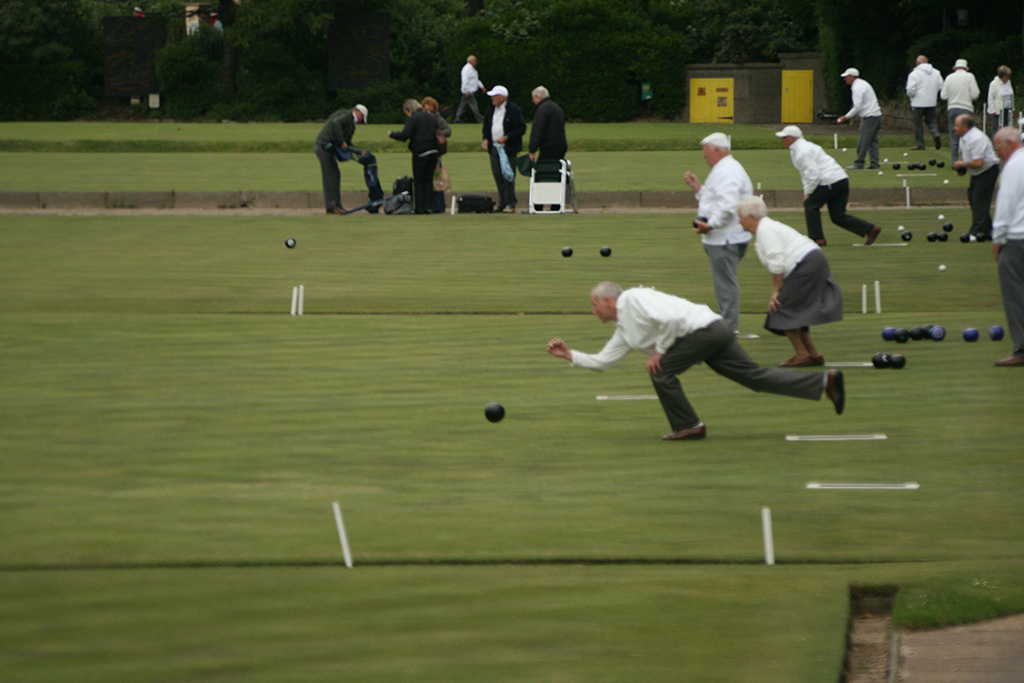
bowlsDuring one of my countless conversations with John Peck about “wisdom,” he told me a funny story about the leisurely British game of “bowls.” Since most Americans will find that game unfamiliar, I should first describe it so that John’s story, below, will make sense.

Bowls is usually played outdoors on a long rectangular patch of short-cut lawn called a green. A player – a bowler – starts the game by standing at one end of the green and rolling a small but fairly heavy and solid white ball, the jack, down the green to the other end. The jack is not rolled again during that game. A lot of sportsmanship ensues as bowlers take turns rolling their much larger and heavier black balls down the green to see who can get closest to the jack.

Sounds easy enough, but the larger balls are biased (with interior weights) and so do not travel in a straight line – they follow various degrees of arcs when bowled toward the jack, not unlike American fingertip bowling balls en route to the pocket. Once all the balls are bowled, the direction of play is reversed. To get points, bowlers must to get as close to the jack as possible by the end of the game, and to do that they employ various strategies, such as trying to knock an opponent’s ball out of the way.

Okay. Got it? Here’s John with the story:

Once as our family was driving through a park, one of the younger kids amused us by looking out of the back of the car and shouting, “Look, Dad, cannonball races!” Everyone looked around and saw a green with a leisurely game of bowls in play.

As my young son did, we all interpret any new phenomenon in terms of what we already know. So let’s pull the car into a parking space, watch the game closely, and imagine a discussion between me and my son.

I remark on the skill of a player who has rolled his ball just short of his opponent’s ball and so got nearer the jack. My son is puzzled by my statement, but that doesn’t stop him! He naturally responds, “What sort of a race is it where people only try to get even and not ahead?”

So I explain the concept of “getting close rather than getting ahead.” Rather dubiously he accepts the notion but suggests that the players start aiming better. “After all, Dad, the cannonballs are going all over the place. One almost went round in a semi-circle.”

So I try again. But by the time I get through explaining the concept that these balls have a bias in them, he’s now impatient with me and explodes, “Well, no self-respecting gunner would use ammunition that wouldn’t go straight!”

So I reply (fully assured and ever the expert!) that the bias is deliberately put into the balls during their manufacture. At this point my son gives up and mutters, “I can understand them using unbalanced ammunition if they have no choice, but actually making cannonballs like that…. They must be mad!”

You can find this story in our book Uncommon Sense: God’s Wisdom for Our Complex and Changing World (Chapter 7), and John’s point was to call my attention to the importance of the relationship of wisdom to theories.

People, however, can be terrified by the word “theory,” or they can’t be bothered with it because it doesn’t seem practical. It’s about ivory tower intellectuals, who never have to deal with Pampers, flat tires, or flu shots. But even diapers, radials, and injections have theories behind them. In other words, theories can be quite practical indeed. And if you bring a faulty theory to an experience or an issue, something is going to go wrong. Here’s how John put it in the book:

You could hardly blame my young son. I failed to address his basic assumption that these were cannonballs, and that this mistake resulted in a different theory about the game of bowls and its rules. Because I had a different theory about the game and failed to acknowledge that, he could not understand the game or my explanations of it.

What is more, in his attempt to make sense of what he was seeing in this new experience, his faulty theory meant that he asked the wrong questions. My answers, therefore, even though they were from the correct theory, were not helping him in the least, for they were not answering the questions that formed in his mind using the faulty theory.

It is, of course, a parable. In Uncommon Sense, John and I went on to discuss this at some length, such as to show how dad’s neglect of, or possibly ignorance of, the son’s faulty theory made communication and progress on the issue impossible. Of course, the problem in that situation was a trivial one and easily resolved in terms of the father and son’s common culture.
blastertheoryYet the form of the problem is similar for all of us with respect to bigger and crucial issues, such as come up in science, education, religion, politics, and elsewhere. In such areas, a new problem will not be easily defined or practically resolved when people bring different theories to it. And when contradictory theories are brought to it, you have a huge mess.

The form of the problem also exists in varying degrees between an ethnic minority and the dominant culture, or liberal and conservative Christians, or labor and management, or left wing and right wing politicians, or American Christians and Muslims in the Middle East – the list goes on.

As a culture increasingly fragments, as its structural problems present themselves more  intractably and its conflicts become more wide-ranging and more common, if they are not corrected, a culture ends like the Tower of Babel, if not in a civil war. And the principle holds true also for the international scene.

What we need, then, is a wisdom – a way of seeing life and living in it – a way of making sense of the creation and living in it effectively – that makes sound theories possible for coping with and communicating about life’s problems. What we are talking about is having theories that correspond, as much as it is humanly possible, to rightly understanding and stewarding the many and varied aspects of God’s world.

Lacking that, life goes terribly wrong. Therefore, seek wisdom. In the next post I want to share some clues from the Bible about that kind of seeking.

©2014 by Charles Strohmer

Images by Peter Labourne & Neural respectively (permission via Creative Commons)

JOURNEY TO CLARITY

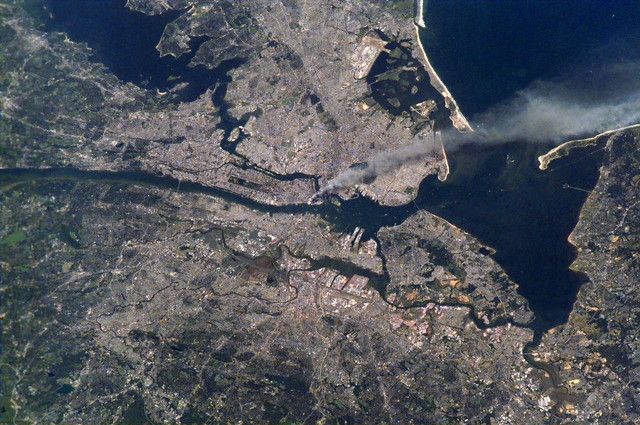
vision glassesThe monstrous dose of reality that would soon become known by the iconic shorthand “9/11” plunged America and its leadership into a collective worldview crisis, and many individuals and families suffered terribly as well. Although I did not suffer like many people did, my own experience of 9/11 was so unusual that I felt as if I had experienced it too much but missed it completely. Strange inner dissonance, that. The attack had taken place but I did not know that for many hours. I must have been one of the last people on the planet to learn about it. And when I finally did learn about it, the startling way that happened, and the next four days encamped at Shearwater Air Force Base, made 9/11 seem too much to me.

Despite being well-cared-for at Shearwater, I found it difficult to think, and though I consider myself a person of faith, I found it hard to pray. I often found myself with barely a thought in my head. I was pensive and, back home, became disoriented and could not concentrate to work. I had to postpone a speaking engagement and push two article deadlines further into the future.

But knowing myself, I knew that my only way out of the molasses – my back to “normal” – would be by gaining a good understanding of what had occurred and what responses would be wisest. I had too many questions that I needed answered. To ignore getting the answers would be, for me, like trying to live as if 9/11 had not occurred. And I could not go there. I had to understand. And I wanted to get it right. That would take time, but that path, I knew, would deliver me from the dissonance.

So I set out. I suppose this was quite a natural direction for me to go, given that I am a writer and that writers research their subjects. As well, the timing could not have been better. My seventh book had just come out, a co-author job with John Peck, and I had been wondering what the subject of my next book would be. In the interest of full disclosure, however, I should say that I felt more than a natural compulsion. For this new research and writing project I felt a very strong drive.

I should also say that, at the time, I had little interest in international relations and foreign policy. And I will embarrassingly admit to believing that it would only take several months, perhaps a year, to conduct the necessary research. I was foolishly mistaken about that. The most frequent question I get asked is: What’s going on in the Middle East? Unfortunately, many who ask are impatient. They want sound bites, as if sound bites could faithfully answer the persistent questions that have arisen. It takes time to understand how we got here, and why, and what are some wiser ways ahead. Most people reading this blog don’t have time for that amount of study, so I have done the homework for you, and want to offer it to you here.

Today we do not live in a time such as during the Cold War status quo, during decades when, although the United States and the Soviet Union made life interesting at times, international relations between the two super powers were nevertheless static enough. You pretty much knew what was what. Today, the “war on terrorism,” the war in Afghanistan, and the war about Iraq have not – to put it mildly – fulfilled anything even close to either Western or Middle Eastern expectations.

War is a wretchedly incompetent and perverse agent of change. No West – Middle East status quo has emerged. Instead, unexpected major events continue to surprise, and new violent realities emerge so often that it is impossible to put your finger in the script and conclude, “Ahh, this is where we are at. This is the reality. Now here’s what we can do.” So many analysts talk about “the long war.”

And you can forget about what you have heard on the evening news, or talk radio, or the blogosphere. You are not going to get three minutes of “in depth coverage” in the following posts, or sound bites, or cliches, or stereotypical or polemical answers.

We live in a dangerous period. If we do not know why, really why, and if we do not learn from the missteps, then we cannot formulate wiser ways ahead. I don’t claim infallible answers, but over the course of the next several months I am going to be sharing with you on this blog what I have learned from more than a decade of research, including taking you behind the scenes to hear from key people I have talked with on my travels. The unlearning and relearning has been a surprising journey to clarity. I hope it becomes that for you too.

©2014 by Charles Strohmer

Image by katerha (permissions via Creative Commons)

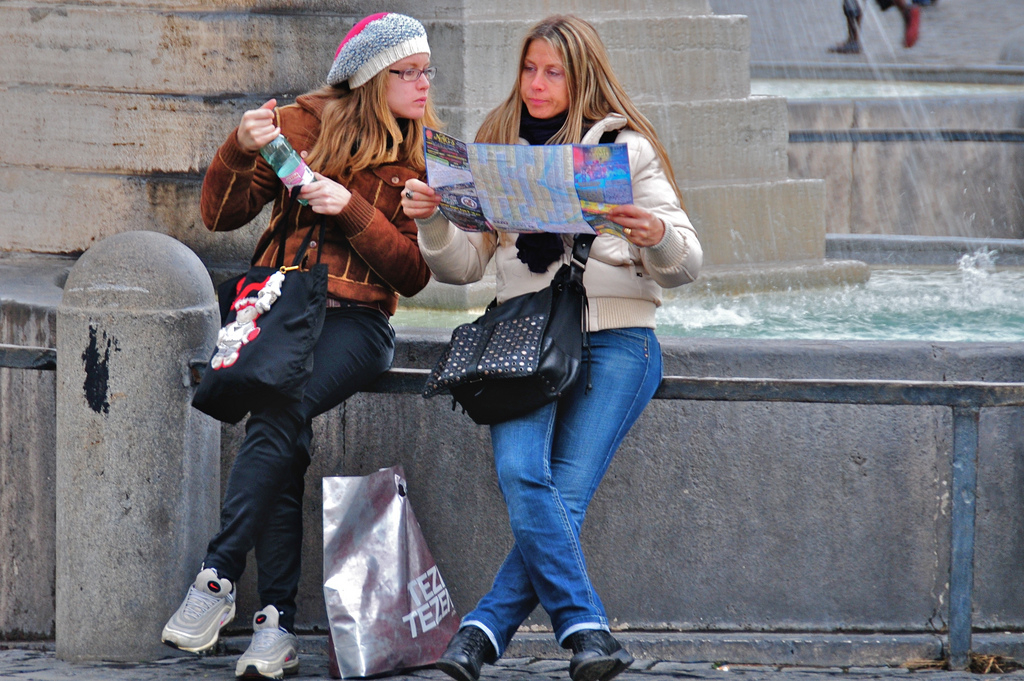
“A LITTLE BIT OF SYMPATHY”

map readingToday we have considerable understanding about what occurred on September 11, 2001, and why. We forget that at the time we all grappled in the dark for answers. The irony was palpable. What was being called a defining moment lacked clarity. Why was that? The jumble of mixed messages about the “attack on America” that was coming from Washington and the media those days, and from political analysts and religious leaders, indicated a terrible collective worldview crisis into which the nation had been plunged.

In our more humble moments today, we might be able to remember that America had suddenly been forced to deal with problems so revolutionary and intractable that there was a shaking of the foundations. National life had been going along fairly well for a pretty long period. The Cold War had ended in 1991 and we all hoped for a more durable peace. But suddenly life was no longer normal. Things that had been taken for granted were now being seriously questioned, even by the “experts.”

Although it was refreshing to hear such humility expressed by many political analysts, the hard truth of it was that answers those days were few and far between. A terrible unknown had knocked America off its stride and the nation was scrambling to make sense of what had occurred. The nation was processing one of those (fortunately) rare phenomenon called a national worldview crisis.

In recent posts we have been discussing how deeply the crisis effected our personal lives and worldviews, as individuals. But it was, of course, a collective worldview crisis as well, one that deeply effected Washington as a political entity, despite the public image it put forward as being in control. Washington’s treasured and basic ideas for understanding and responding to such a national emergency had suddenly been called into question, for there had never been one like this one.

It was, in my opinion, worse than that of another attack from the air sixty years earlier – on Pearl Harbor by the Japanese air force. Although that surprised the country and plunged it into a terrible national crisis, it was nevertheless understandable an act of war by one state, Japan, against another state, America. And as such Washington could immediately process what had taken place and lean on the traditional way of response: the war system.

In other words, Japan’s attack on Pearl Harbor emerged from the modern way of thinking about war – state versus state. It was easy for that generation both to understand what had occurred and to recognize the kind of response in kind that would follow. America would go to war and was able to do so. Everyone got this. The nation could be mobilized. Washington could be confident that America could effectively meet the challenge.

The attack on the United States from the air sixty years later was not a Pearl Harbor kind of surprise. It came not from a state but from a group of non-state actors called al Qaeda, led by the religious militant Osama bin Laden. It struck the nation with fundamental unknowns on both preparedness and response. This left the President and everyone else uncertain about why it had occurred and how to respond. Significant books have been written about this early period of ambiguity in the White House. It was amid this kind of national worldview crisis that Washington had to try to identify where the rough ride had landed the nation, and what the response should be.

Sans a reliable map by which sense could be made of the attack, or what the wisest response to it should be, I hasten to add that I had some sympathy for the White House, its advisers, and the Congressional committees responsible for America’s national security.

Story continued next post…..

©2014 by Charles Strohmer

Image by Ed Yourdon (permission via Creative Commons)

“TURN AND FACE THE STRANGE CHANGES”

going shoppingIn this current series of posts, begun here, I am trying to recall for us, as individuals and as a nation, what we were thinking on September 11, 2001 and in the days and weeks immediately following. As I have been writing this I have been wondering about how many people can actually recall how “the apocalyptic acts of fury” (Kanan Makiya) impacted them as individuals, and I have been thinking about the jumble of mixed messages that we were getting as a nation.

Further still were the selective ways that the White House and Congress chose to deal with the crisis. We are experiencing the ramifications of many of those decisions today, 12 years later, and I want us to consider the wisdom of these decisions in future posts. But here I want to talk about the jumble of mixed messages, which were pulling us is all sorts of different directions.

As individuals, we would never be the same – or so we said. Suddenly life was fragile and personal problems trivial. We would change – or so we promised ourselves, if not others. Such humility even from many talking heads was as refreshing as it was astounding. Those days, you could hardly watch seasoned journalists or foreign policy experts being interviewed and not hear them stop to recount an epiphany about why they would now be more caring toward family and others. Even interviewers would stop to say this about themselves. Not a few were even heard questioning cherished beliefs they held about God and the human race. The same was heard among us lesser mortals. We would no longer be selfish, or rude, or frivolous, or materialistic, or decadent. We would be warm not cold, real not pretentious, loving not ill-willed. We had changed.

Another message was that of war. The nation was at war, President George W. Bush announced to us and the world, a war on terrorism. “Our enemy,” the president explained, “is a radical network of terrorists, and every government that supports them…. And we will pursue nations that provide aid or safe haven to terrorism.  Every nation, in every region, now has a decision to make. Either you are with us, or you are with the terrorists.” Well, then, here was another way in which life would be different. But how, precisely?

globe above waterFurther, many thoughtful people were arguing that to describe the terrorist acts of 9/11 as an act of war might be a category mistake, and so we should be very careful, here, because the attacks were not carried out by a nation but by a militant group of non-state actors known as al Qaeda and led by Osama bin Laden, a terrorist and not the leader of a nation. As this argument went, a more useful metaphor than war is crime and, despite the enormity of the attack and the damage and loss of life, dealing with bin Laden and al Qaeda should be a police matter for the international community.

What was it, then, an act of war or a heinous crime? Deciding between the two would determine what response was just and what kind of sacrifices the nations would need to make. Either way, we all knew, carried with it some clearly dreadful implications about buckling up for the abnormal life that seemed sure to lie just ahead for us. Yet there was another message still. This message not only contradicted that of any sacrifices we were sure were now going to demanded of us by our leaders; it also subtly communicated that collective introspection and conversation about American itself, which had been slowly and cautiously emerging, should end.

President George W. Bush, who, in the days immediately following the attacks said and did some smart things, was also saying that America was “open for business” and asking for everyone’s “continued participation and confidence in the American economy.” At most other times, such rhetoric would go down well enough. But when heard during those days it was interpreted by many people, rightly or wrongly, as a call to “get back to normal” and “go shopping.” Pardon? The Times of London called the attack The Day that Changed the World. Yet we are to get back to normal? Are we being told to ignore the “war on terrorism” that had suddenly been declared and go shopping?

Thoughtful religious and non-religious commentators saw through that rhetoric. Here are just two poignant examples. Brian Walsh, Christian Reformed chaplain of the university of Toronto, in an editorial in re-generation, put it this way:

“America is open for business. Does this sounds like a callous and irrelevant comment under such circumstances? Not at all. You see, the forces of chaos will not triumph because the forces of salvation are stronger. And salvation is found in an ever expanding global economy…. The president knows, his cabinet knows, the guy on the street knows, and we all know, deep down, that things will never be the same again.”

The writer Susan Sontag penned this in The New Yorker:

“Our leaders are bent on convincing us that everything is O.K…. But everything is not O.K…. The unanimity of the sanctimonious, reality-concealing rhetoric spouted by American officials and media commentators in recent days seems, well, unworthy of a nature democracy…. Let’s by all mean grieve together. But let’s not be stupid together. ‘Our country is strong,’ we are told again and again. I for one don’t find this entirely consoling. Who doubts America is strong. But  but that’s not all America has to be.”

Story continue next post….

©2014 by Charles Strohmer

Image by r.nial.bradshaw (permission via Creative Commons)
A WATERY TRAIL

extreme kayakingThe scene that greeted us at Atlanta’s Hartsfield International Airport was as inappropriate as it was bizarre. At least to me it was. It took me by complete surprise. The comfortable numbness of the grace giving that I had experienced for four days while encamped at Shearwater Air Force Base had been replaced by deeply troubled feelings an hour earlier as we flew over the smoldering ruins where once the Twin Towers stood. I had become pensive and on edge and in no mood for a party. But a party it was that greeted us inside Hartsfield.

The large WELCOME HOME banner would have been enough, but no. As we lugged our tired selves and baggage into the main terminal, a large crowd began cheering and applauding. I looked around to see why but saw nothing unusual. And then it hit me. CNN and a knot of newspaper reporters were shoving cameras and microphones in our direction. Apparently some public officials were also present, given the hugging, glad-handing, and back-slapping given to the passengers who got caught up in the contrived celebration. I wanted no part and slipped quietly past.

Finally back home, I slid into a mild depression and could not concentrate on my work. I had to postpone a speaking engagement in Kansas City and get editorial permissions to push two writing deadlines further into the future. All I could think about was “Tuesday’s monstrous dose of reality” (Susan Sontag) and it left me searching for a metaphor by which I could talk to myself about what I was then strangely feeling. Here it is.

I rode out those early days like a person suddenly caught in a horrifying experience of extreme kayaking – someone who should not have been kayaking in the first place. I think it was like this for many Americans. We were plunging wildly downstream, alone with our own thoughts. Identifiable shoreline quickly receded as we dodged boulders and sped into regions unknown, spray hitting us in the face as we strained to remain upright amidst the fierce rapids, the ride taking us farther and further. Wherever each of us finally made shore, no one was sure where he or she had been deposited. Little ground appeared recognizable. What’s this? What’s that over there? And over here? History itself seemed to have split in two. Even today people, with conviction, still talk about “pre-” and “post-” 9/11 worlds.

Although rivers leave no footprints, they do leave a watery trail. Leaving it, I too made my way ashore in my own sorrow and amazement, and with deeply disturbing questions that were not being answered. On the morning of September 11, 2001, vaunted symbols of American wealth, power, and prestige were destroyed and damaged, nearly 3,000 persons died, families mourned, and we stared disbelievingly, as did the rest of the world, even those who then erupted into applause.

“Summer had ended in America,” Jonathan Alter wrote in Newsweek. “Apocalyptic acts of fury” (Kanan Makiya) had shaken the nation. You felt that. And it left you feeling that life was somehow now going to be quite different, but no one knew just how. This was complicated by the jumble of mixed messages we were telling ourselves, as individuals, as a nation.

Story continued next post…..

©2014 by Charles Strohmer

Image by Robbie’s Photo Art (permission via Creative Commons)
RITUAL OF THE VEILS

camerasIf you would have developed a picture of we stranded passengers at Shearwater Air Force Base – one thousand of us – you would have seen a ridiculously diverse encampment – Scots, English, French, Germans, Americans, Africans; blacks, whites, Asians, Indians; Canadian Air Force and Navy officers; males, females, children, teens, adults, marrieds, singles.

What really stood out to me during our four days together on the base was that our large, diverse flock did not let political persuasion, economic standing, or religious belief prevent us from pulling together to create a degree of flourishing in the crisis. Of course always there seems to be a squeaky wheel. But those days I was aware of only one person who caused a public stink, demanding changes to his situation that everyone agreed were completely unreasonable.

In Christian terms, giving grace to one another became our norm. This began while we were cooped up on the plane for fourteen hours on the tarmac after the emergency landing in Halifax, which I wrote about in the previous post. I also wrote, here, about how generously the Canadian military and the Dartmouth families and schools provided for us at Shearwater. But we passengers also looked after one another as best we could with the limited resources we had to hand. Here are a some vignettes.

For the first two days at Shearwater, giving grace often consisted simply in encouraging the disappointed strandeds. Narratives abounded even between the unlikeliest of persons. A shy 19-year old student from Oxford kneels beside the cot of a lonely 40-year old Kenyan woman, befriending and comforting her. Reverend Matthews and his wife counsel young newlyweds, whose honeymoon had been interrupted by the crisis. A middle-aged man from the States strolls the grounds alongside a twenty-something au pair from France, listening to her worries. A 25-year-old designer from Germany encourages a 60-year-old CEO from England, while they are queuing for dinner. A lone stranded emerges from the cafeteria line carrying a tray of food but can’t find an empty table; two Canadian Navy Lieutenants notice and make room for him at their table.

Everyday, small knots of people from different countries and races could be found sitting together on the lawn outside the gym or one of the barracks, catching some rays, passing time together, sharing their histories, exchanging contact info. Thursday morning I remembered that I knew a pastor who lived in Halifax. We had spent time together in Romania years’ earlier. Somehow I found his phone number. We met later that day at the base and he brought his Norelco – my first shave since Tuesday morning in London.

Individualism, selfish interest, and perceptions of inequality had somehow been transformed into opportunities for the kind of self-denial and cooperation among the different that gives witness to human unity in its diversity. A depth of compassion and caring had been awakened in us that I don’t think we knew was latent within us. Heaven seemed to have had broken in to our little world, collapsing barriers between races, professions, classes, and nationalities. Strangers became good neighbors. As a Christian, I understood that we were being allowed to taste something of the sweet saving grace of God.

Twin Towers smokingThe most stunning symbol of the transformation, to me, appeared on the plane itself during our three-hour flight on Saturday, September 15, when the FAA finally cleared us to fly from Halifax to Atlanta. Now I have flown considerably, and, not long after takeoff, it has always, but always, been the case that those long, dark curtains that separate first class from economy are always pulled closed. “Stay out!” But the dark blue curtains on this flight were left open. “Class” was not in the air with us. What we had gained on the ground was.

For the flight to Atlanta from Halifax, we no-longer-strandeds had not been given assigned seating. We were just left to it. Upon boarding we quite naturally returned to the seats we had been assigned on the flight from London the morning of September 11. On the flight to Atlanta, however, when we reached cruising altitude, we did get the obligatory announcement that we were “now free to move about the plane.” But that now had a completely new meaning. We were free to roam the entire plane. It gave a new take on “classless society.”

Relationships begun on the ground continued in the air as passengers searched out their new friends. The good neighborliness – between the well-heeled and the pedestrian and the flight crew – quite naturally sustained itself in the air. I don’t think that the ritual “pulling of the veils” – symbolic of old barriers – even occurred to the fight attendants. Our new reality needed a symbol: the open curtains.

See me, then, seated in first class peering out through a porthole at another gorgeous morning sky, bright and clear. Captain Williams is flying us down the Atlantic Seaboard and he now lets us know that we are starting to pass over Manhattan. I look closely and see, even now, on the fifth day, long plumes of smoke spiraling toward us from the huge, gray crater. Ground Zero. Nee: the World Trade Center. Time slows to a crawl. I take a photo and then stare at the ascending trails of tears until I could them longer see. So, it really had happened.

Story continued next post…..

©2014 by Charles Strohmer

Image by alexkerhead (permission via Creative Commons)
“TUESDAY AFTERNOON”

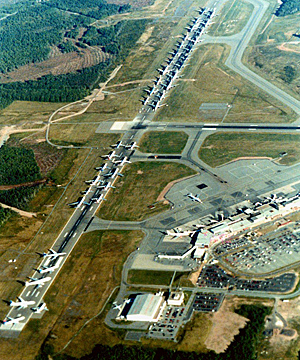
jets on Halifax runwayWe landed in Halifax around 1 p.m. on September 11, 2001, and only then got the news about the attacks, and then we waited aboard our plane hoping that the FAA would open the airspace up back in the United States to let us fly home. After two hours without even a hint of departing, it seemed unlikely that any of the forty-two stranded commercial jets were going anywhere soon. And our 777 was parked at the end of that queue. No one knew that it would be Saturday before we flew home.

But we had access to the pilots, so I put on my journalist’s hat and found a spot to stand unobtrusively near the open cockpit door. I looked in and was struck by the complexity of the massive instrument panel. I heard the scratchy, AM radio signal coming out of Halifax that was the pilots’ source of sporadic newscasts about the attack, much of it still rumor. The pilots said Hello to me and returned to their conversation. The atmosphere appeared busy but relaxed. A flight attendant occasionally walked up to check in with the pilots about life in the cabin.

There were stories in that cockpit, I knew, and I had a question. At an appropriate moment I introduced myself and asked Captain Williams why he had made such an indefinite announcement over the Atlantic. “Why not just tell us what had happened?” I asked. He didn’t hedge. He explained that after turning off the video screens, he and his co-pilot discussed what kind of announcement to make and what language to use. “We’ve got almost sixty years’ experience between us,” he revealed, “but neither of us has been in this kind of a situation before. But colleagues who have been have told us that, in the air, some passengers may panic when they hear the words ‘terrorist attack’ or ‘hijacking,’ so we talked for a long time about the right words to describe the urgency but not panic anyone.”

Two flight attendants arrived and explained that the cabin was getting stuffy and some passengers were getting ornery. Others need a smoke, one said. Water and snacks are running low and two infants need formula. Squeezed into my spot near the cockpit, I listened to nearly sixty years of experience process each problem and take wise decisions.

Captain Williams radioed the ground crew for water, lunches, and baby formula. He announced that the port side door would be opened for fresh air and the port rear door for those who needed a smoke. “But don’t crowd that rear area, please,” he said. “Take turns smoking. And try to keep your smoke outside the plane.” Such gestures lightened the mood and brightened outlooks considerably in our cloistered social microcosm. I later learned that decisions made by crews on some of the other grounded carriers had not been as wise.

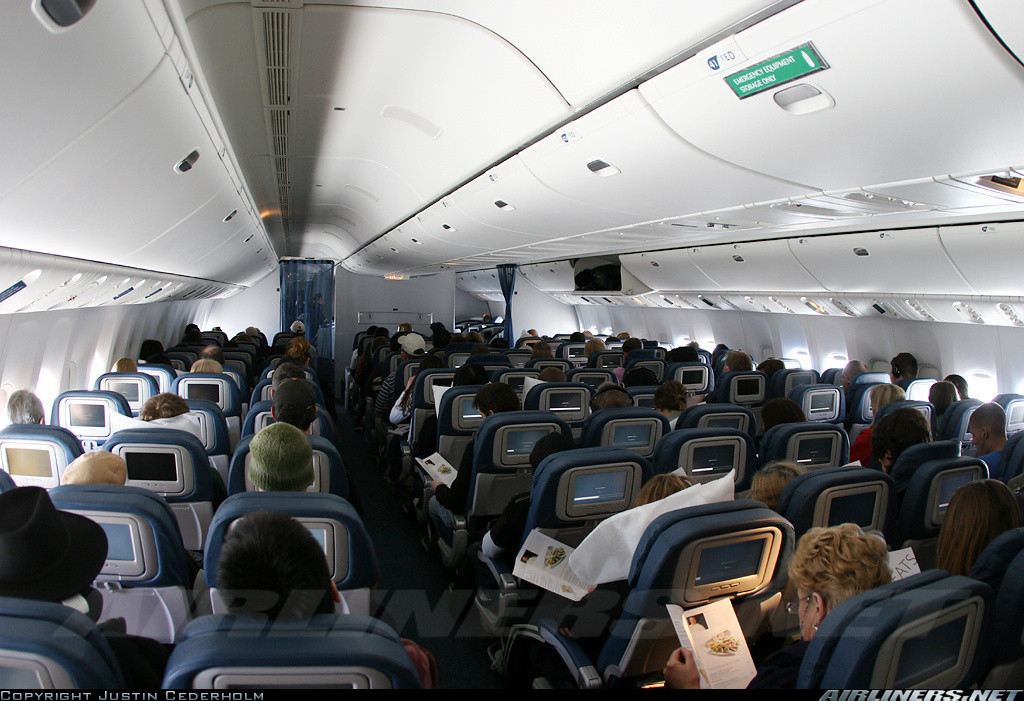
inside delta planeThere was still the crucial matter of reaching my wife. I had no idea if she knew where I was. After we landed in Halifax, a flight attendant had been letting me borrow her cell every so often, but it was impossible to get an open line each time I tried, so after two hours I stopped trying. Nodding to Captain Williams, I relinquished my space to another passenger and walked the narrow aisles a few times. From that brief reconnaissance I knew that it was still pointless to borrow “Terri’s” cell again. I saw only one or two passengers talking on their phones; others who had phones were still wearing out their resend buttons. I would wait.

There would be more stories on this plane. I kept my journalist’s hat on and stopped at the side port door to take in the fresh air. I struck up a conversation with a friendly couple who, apparently like me and many others, had no phone. They introduced themselves as Robert and Georgia, from Memphis. Robert, a Christian minister, explained that they had been in London for the opening ceremonies of a colleague’s church. While we were comparing notes about London, we heard the mike cue. Captain Williams announced that the FAA had decided not to reopen U.S. airspace today. “We might be here for another day,” he said.

As Robert and I were considering the implications of this development, his trouser pocket suddenly began beeping. His daughter in Memphis had been playing phone robotics herself and had finally beat the odds. Voilà! A connection. Nearby passengers were astounded. After he finished talking to his daughter, she took my wife’s number and promised to get hold of her to explain where I was and that I was okay. Lunches began arriving through the side port door. I moved off to get one.

What should strangers stuck in crisis do? Try to make their situation better. Somehow the Halifax ground crew, the crew of our Delta flight, and we passengers were all pulling together in that direction, helping one another cope as best we could, hour after hour aboard the 777, with the resources we had to hand. Jesus’ Good Samaritan was no longer a mere story to me. The collective pulling together for our common good continued at the base.

Story continued next post……

©2014 by Charles Strohmer

9/11 runway image by CBC News (permission via Creative Commons)
“WITH A LITTLE HELP FROM MY FRIENDS”

helping handWhat do strangers stuck in crisis do? They can make their situation worse or pull together to try to make it better. During our days as guests of Canada, the Nova Scotians generously pooled their resources to create a relatively flourishing reality for us, truly remarkable given the crisis. The story of how the Nova Scotians opened their lives to their 10,000 unexpected guests was made into a moving, PBS documentary called “Stranded Yanks,” which aired on the one-year anniversary of 9/11.

For those of us now encamped at Shearwater Air Force Base – one thousand of us – countless gestures of kindness were being extended, as I began to discover in the lobby of the base’s huge gymnasium. While we had been cooped up in the 777 on the tarmac the previous day, and unbeknownst to us, parents, teachers, and schoolchildren from the Tallahassee Community School of Dartmouth were arriving at the base with large boxes full of goodies: toothpaste, toothbrushes, soap, deodorant, shampoo, underwear, hair brushes, mousse, razors, bottled water.

The provisions seemed endless. Even ear plugs! Boxes were still arriving when I investigated the lobby at 8 a.m. after showering. “Take what you need,” a Red Cross worker told me. “It’s our gift to you.” Our hosts, to use a Christian expression, were giving grace. I was alone and disoriented but many of my concerns dissolved before the precise generosity.

We were given free roam of most of the huge base, including use of its recreational facilities and movie hall. We were fed three good meals a day from a wide-ranging menu in the large buffet restaurant. Wednesday evening, the officers’ mess was opened to us, where chefs grilled steaks and barbecued chicken in a terraced courtyard that included a well-stocked bar.

When they were off-duty, Navy personnel brought in to help run the base during our stay gave us lifts into town if we needed anything. That was a godsend because by Thursday my tight-fitting dress shoes were killing my feet from walking miles a day on the grounds. I copped a ride into Dartmouth with a Navy officer and bought a pair of comfortable walking shoes at Walmart. Some of us joked that “the service” here was better than what we would get at a four-star hotel – if we were offered that option, we decided we would stay at Shearwater.

Kathy, a passenger from Salt Lake City, told me, “It reminds me of Jesus saying, ‘I was a stranger and you took me in and fed me and clothed me.’” I thought about a time recorded in the Book of Acts, chapter 4, where the communal living in Jerusalem among Jesus’ followers is described as being that of “great grace” because everything was being shared and no one lacked any needed thing.

Even the weather was a grace to us. With the exception of two hours light rain one afternoon, blue skies and delightful temperatures prevailed – no small blessing, considering that hundreds of us spent many hours outside on the grounds.

This generous neighborliness, this shalom, at Shearwater had begun on the plane the previous day and I want to tell you about those fourteen hours in the next post.

©2014 by Charles Strohmer

Image by Mandajuice (permission via Creative Commons)