
Thinking about resolutions for the new year? Thinking: Nah, they never work for me?
Here’s a talk by John Peck that just might be your solution: http://revpeck.com/2016/12/29/good-resolutions/

Thinking about resolutions for the new year? Thinking: Nah, they never work for me?
Here’s a talk by John Peck that just might be your solution: http://revpeck.com/2016/12/29/good-resolutions/

Here’s a great take on Christmas by John Peck: Christmas – Just for Children? In this talk John helps us undomesticate Christmas and rediscover the reality behind it.
May the Light of Christ shine in 2017 evermore brightly than the stars in the darkness.
Thank you all for being part of this experimental blog about bringing the wisdom of God into our hearts, minds, passions, families, daily lives, careers, and everywhere else. I have no idea where we’ll go with this in 2017. Stay tuned!
John Peck: Christmas – Just for Children?
©2016 by Charles Strohmer
Image by pathlost
 I’ve never done this before on this blog and may never do it again, but I want to call your attention to some truly superb Christmas music and say, “Buy this album!” My wife and I were recently given it as a gift, and after we heard it we immediately moved it to #1 on our list of Christmas albums.
“Christmas Carols and Songs,” produced and arranged by David Clifton and Mark Russell, with the acclaimed choirs of Peterborough Cathedral, a full band, and the London Telefilmonic Orchestra. The full details of this special album, its history, and how to get hold of the album are available at Little Room Recordings.
You will find your own favorite carol or song on the album. Just to say that mine is the slightly jazzed up arrangement of “O Come, O Come, Emmanuel.” I also got a lot out of the well-researched booklet that accompanies the CD to give a brief history of the origin of each carol.
Link to iTunes download, name your price download, and CD mail order purchase: http://www.littleroom.com/artists/ikos/
Enjoy it for years to come. And Merry Christmas.
©2016 by Charles Strohmer
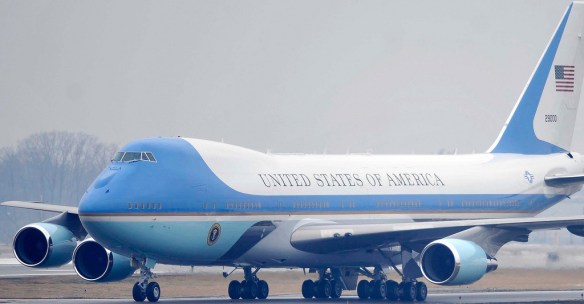 Among the three main points of my previous post, my first since Donald Trump was elected, I argued that there will be no flourishing political community in America if we do not humbly seek God, praying to become “vessels of civility, grace, and hope – to everyone.” That very general statement needs some particulars, and the little phrase “to everyone” is a key.
As Timothy Sherratt (Gordon College) has said, America is a diverse society, and in it we struggle to give that diversity political expression: Republican, Democrat, Libertarian, Progressive, and Green – to name just several. The problem is, we’ve stupidly turned our diversity into a house divided. We Christians contribute to this problem whenever we take our political cues from the world, so a big question we face is: how do we as Christians flex our political muscles in a way that – at this current time of discord and division – is biblically just.
This is a question that Sherratt takes seriously in very helpful, recent article in Capital Commentary. Arguing for what he calls re-constructive politics, Sherratt calls us to diversity conversations whose virtues are rooted in the fruit of the Spirit, which, he argues, “are correlates of the character of true power” as understood at Calvary. “Their utility for remaking relationship, both political and personal,” he writes, “is what commends them in the present circumstances.”
With that as a backdrop, Sharratt offers a biblical vision of the nature and purpose of politics in our diversity. I urge you to read this important article. It may surprise you.
©2016 by Charles Strohmer
Image via Creative Commons permission.
A personal note from Charles: My sincere thanks to those of you who follow this blog, and to other readers, who helped my previous post become very widely shared, read, and discussed.

Three Difficult Tasks Facing Christians
And just to be clear, I would have written the following even if Hillary had won.
(1) Drop the mocking spirit; instead, turn away anger.
Rising anger across in America – left and right, Democrat and Republican – has contributed to our country’s uncivil, graceless, and derisive political rhetoric. This has been normative during 2016 in the blogosphere and social media, on talk radio, in campaign ads, and even from our presidential candidates and many of their leading supporters.
Sadly, many Christians – to call out those in my own faith – have taken their rhetorical cues from these sources. I was on the receiving end of this earlier this year, when a Christian looked me in the face and said, “If you don’t vote for Trump, it’s a vote for the enemy,” after I told her I couldn’t vote for Trump. Well. I did not vote for Hillary Clinton either, but not because I saw her as my enemy (I abhor some of her political positions, as I do some of Trump’s). More recently, I heard the malicious ill will from a Christian woman who asked me in a Facebook comment if I had heard the latest news about “Killery.”
These are just private examples. Public examples abound in the above-mentioned sources, so well known that they need no mention here.
I don’t know why the Bible comes down so hard on mockers. Maybe it’s because mockers are said to have attitudes and actions that smack of pride and discord (Proverbs 21:24; 14:9). Maybe it’s because they get marque billing alongside fools, who hate knowledge, and even alongside the wicked (Proverbs 1:22; Psalm 1:1). Maybe it’s because they have become so angry that they “stir up a city,” rather than being like the wise, who “turn away anger” (Proverbs 29:8). But that’s not all:
“Penalties are prepared for mockers, and beatings for the backs of fools” (Proverbs 19:29; see also Proverbs 9:11 and Isaiah 29:20).
The Lord “mocks proud mockers but gives grace to the humble” (Proverbs 3:34).
“Blessed is the man who does not walk in the counsel of the wicked or stand in the way of sinners or sit in the seat of mockers” (Psalm 1:1).
“How long will you simple ones love your simple ways? How long will mockers delight in mockery?” (Proverbs 1:22). Yes. How long? How long will the poison of a mocking spirit continue to corrupt the political community of our country?
Right or left, Republican or Democrat, from sea to shining sea, Christians, of all citizens, should be leading the way to stop this decay of our national body. What way is that? The answer is also in the Bible.
“Let your speech be always with grace, seasoned with salt” (Colossians 4:6)
“Let no corrupt communication proceed out of your mouth, but that which is good to the use of edifying, that it may minister grace unto the hearers” (Ephesians 4:29).
In other words, let us no longer take our cues (or our cures) from the political rhetoric; instead, let us speak wisely: stop stirring up the city; instead be wise and start turning away the anger (Proverbs 29:8). There will be no flourishing political community in America if we do not repent of our mocking spirt and humbly seek God, praying to become vessels of civility, grace, and hope – to everyone.
(2) Recognize that America is not exceptional or indispensable.
The 2016 campaign season was also a time when the question of America’s greatness gave rise to all sorts of punditry surrounding the assertion that “America is an exceptional nation.” For some, this is a cruel joke; others tout it as a valued and trusted trope. The general impression I get is that you couldn’t even get elected dog catcher in this country if you didn’t believe it.
So it surprised me when Donald Trump said he dislikes the term. But if you read between the lines of what he said, he seems to be saying that if America were truly exceptional – if so many nations weren’t “eating our lunch” – he wouldn’t mind applauding the phrase. On the other hand, at the end of August, Hillary Clinton was in Cincinnati at the American Legion’s national convention giving a speech that lauded America exceptionalism and attacked Trump’s dislike of the term.
 Personally, I think America is a great nation that has in recent decades gone down some roads that aren’t great. But is America “exceptional?” In other words, is America “inherently different” than other nations and does it have a “unique” role to transform the world. This is the question we must answer truthfully. Words have to mean things. And the words “American exceptionalism” mean that America is inherently different than other nations, unique among nations.
But that fact is that America is like other nations. If it were not, it would not be a nation. It would be some other kind of entity and unsuited to be numbered among 194 other nations of the world. What kind of entity that might be, I don’t know. But if America were unique, it would be a stand-alone something. And it’s not that. It certainly is not, for instance, a school, or a church, or a business. It is a nation among nations.
There has been only one unique nation in the history of the world, exceptional because its founding began with the revelation of God – beginning with the call of Abram:
“The Lord had said to Abram, ‘Go from your country, your people and your father’s household to the land I will show you. I will make you into a great nation, and I will bless you; I will make your name great, and you will be a blessing’” (Genesis 12:1-2),
and continuing with the mission of Moses:
“The Lord did not set his affection on you and choose you because you were more numerous than other peoples, for you were the fewest of all peoples. But it was because the Lord loved you and kept the oath he swore to your ancestors that he brought you out with a mighty hand and redeemed you from the land of slavery, from the power of Pharaoh king of Egypt” (Deuteronomy 7:7-8).
America had no revelatory founding.
In 1776 (not 1620), the nation certainly began unlike other nations extant in the eighteenth century in that it was not birthed as a monarchy or as an extension of some other kind of dynastic line of rulers. The legal founding of the nation galvanized around what we could call a synthesis of big ideas such as Puritan Calvinism, Enlightenment rationalism, and Virginia deism (to be brief about it). But this beginning was not a revelatory founding.
This ought to make us not only humble but also fearful and prayerful about the future of America as a nation. Every time I hear a politician claim that America is “indispensable,” I cringe. This descriptive for our nation began with President Bill Clinton, as far as I can determine, and it was afterward noised about by his secretary of state Madeleine Albright. Hillary Clinton affirmed it, at length, as an essential feature of America’s role in the world in her speech to the American Legion.
This political hubris (see Clinton’s speech) ought to frighten us. If ancient Israel was uniquely and exceptionally founded, it was also not indispensable, as its true prophets knew full well. Brothers and sisters, where do we get off believing that the United States of America is indispensable? Let us humbly start looking more biblically at our nation. As the theologian John Peck taught many of us: “If you start from an unbiblical position in your analysis of a problem, you’re not going to come up with a biblical way ahead.”
(3) Admit that America is under judgment.
As an American who is also a Christian, this has been hard for me to swallow. It’s put me in a place of great personal dislocation, theologically. I had been thinking for some time that perhaps our nation is under some kind of divine judgment, although I quickly add that when this was on my mind I trotted out theological arguments to counter it. But after the number of presidential candidates dropped to two in 2016, I suddenly found myself without any theological defenses against a “judgment” narrative upon America. As a professor once said, “If the facts don’t fit your theology, change your theology.”
This is why I hav e plucked up my nerve to say that: (1) America has been under some kind of strange judgment for many years; (2) we ended up with Hillary Clinton and Donald Trump as our presidential candidates as part of that judgment (evidence: the unprecedented large number of people who concluded that both were horrible candidates); (3) it did not matter who got elected; the judgment continues. If so, the path that our country is traveling is going to get more perilous as we head to January 29, inauguration day, and into the new year.
I hope I am wrong, but it seems to me that this is the deep crisis of our nation. I have been in grief over this and haven’t a clue about how we get out from under it. It seems like it is not enough to say: Let us seek the Lord. Public action is also required. As much as possible let us strive to be vessels of civility, grace, and hope during this period of disorientation and dislocation. Who do we think we are, anyway? Who do we think God is?
“Who has understood the mind of the Lord, or instructed him as his counselor? Whom did the Lord consult to enlighten him, and who taught him the right way? Who was it that taught him knowledge or showed him the path to understanding? Surely the nations are like a drop in a bucket; they are regarded as dust on the scales; he weighs the islands as though they were fine dust… Before him all the nations are as nothing; they are regarded by him as worthless and less than nothing” (Isaiah 40:13-17).
©2016 by Charles Strohmer
All images, permission via creative commons.
A note from Charles: For more of the perspectives that Waging Wisdom seeks to present, I want to invite you to follow this blog for a while to see if you like it. Just click here and find the “Follow” button in the right margin, enter your email address, and then click “Follow.” You will receive a very short email notice when I publish a new post. Thank you.
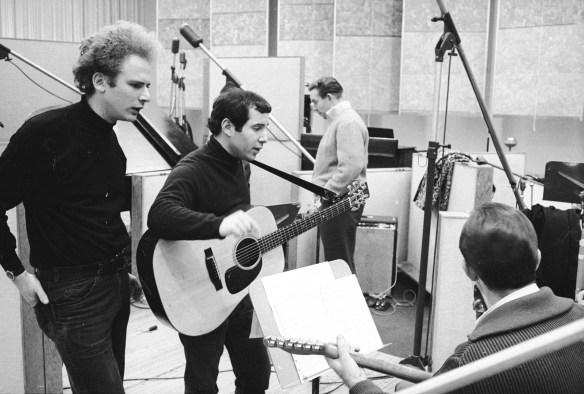 I’ve been wanting to write what may be my final post about the up-coming election, but I’ve felt a bit sluggish lately, not to mention being burned out from finishing a writing deadline. So for now I’m taking the lazy man’s, quick way out. I was recently humming these familiar lines by Paul Simon, from about 50 years ago.
Siting on a sofa on a Sunday afternoon.
Going to the candidates to date.
Laugh about it, shout about it
When you’ve got to choose.
Every way you look at this you loose.
To amend Mark Twain: “History may not repeat itself, but it sure does rhyme.” Take a break from the laughing and the shouting. Here’s the famous song. Enjoy: Mrs Robinson.
Image courtesy of Simon & Garfunkel website.
©2016 by Charles Strohmer
 Political pundits today want to know “who won the debate?” It’s the wrong question. Who lost the debate? That is the question. And the answer is? The American people lost the debate.
For this first of three debates, moderator Lester Holt framed the debate in three broad categories: “America’s Direction,” “Achieving Prosperity,” and “Securing America.” It sounded promising to me. In more normal times, the event would have entailed a rousing debate between two presidential candidates in which they contrasted their policy plans for those three areas so that the American people could have some clearer ideas by which to help them decide who to vote for on November 8.
But not between Donald Trump and Hilary Clinton. Oh no. In more normal times, a little sniping at each other between candidates is to be expected, and often couched in a little humor. But not this time. Oh no. Instead, Clinton and Trump spent most of the 90 minutes getting under each other’s skin, poking at raw, sensitive areas in each other’s lives, and then replying with cutting retorts to try to save the moment.
Both candidates have said so many horrible things about each other in the past and are implicated in so many very questionable activities, that this first debate became all about that stuff – i.e., about their personal lives – instead of about the America people – the very people they say they say want to represent and help when they set up shop in the Oval Office.
That’s all I want to say, really. We the people lost. That is the story of the first debate. It is the outcome of having the two most unpopular presidential candidates in modern history. It is sad, very sad. And sadder still is that it is a reflection of us, the American people. May God have mercy on us.
©2016 by Charles Strohmer
Image courtesy of scienceblogs.com
For other posts on this blog about Donald Trump and Hillary Clinton, see these, beginning with this one: To Boldly Go: anti-Trump Republicans Speak Out [June 11]; Donald Trump Is Wrong about the Founding of ISIS [Aug 12]; A Christian View of Not Voting for Donald Trump of Hillary Clinton [Aug 25]; Is Donald Trump Merely Lending His Name to “America”? [Sept 16]; Predicting Presidential Debates [Sept 23].
It has been said that only novelists know the future. Even so, I don’t think it’s much of a risk for us to to predict what the debates between Donald J. Trump and Hillary Clinton devolve into. The first of the three scheduled debates begins in a few days, on Monday evening, September 26. For one thing, they will be anything but presidential. Instead, they will be…, well, why wait for Monday? Here’s a sneak peek from the never predictable John Cleese and Michael Palin. This short video from a 1972 Month Python skit tells us what the debates will be like.
A segment from Monty Python’s “Argument Clinic.” Standard YouTube license.
For other posts about Donald Trump and Hillary Clinton, see these, beginning with this one: To Boldly Go: anti-Trump Republicans Speak Up [Jun 11]; Donald Trump Is Wrong about the Founding of ISIS [Aug 12]; A Christian View of Not Voting for Donald Trump or Hillary Clinton [Aug 25]; Is Donald Trump Merely Lending His Name to “America”? [Sept. 16]; Who Lost the First Presidential Debate? [Sept 26].
A note from Charles: If you want more of the perspectives that Waging Wisdom seeks to present, I want to invite you to follow this blog for a while to see if you like it. Just click here and find the “Follow” button in the right margin, enter your email address, and then click “Follow.” You will receive a very short email notice when I publish a new post. Thank you.
 Waging Wisdom