The News Media and the Middle East: An Indictment

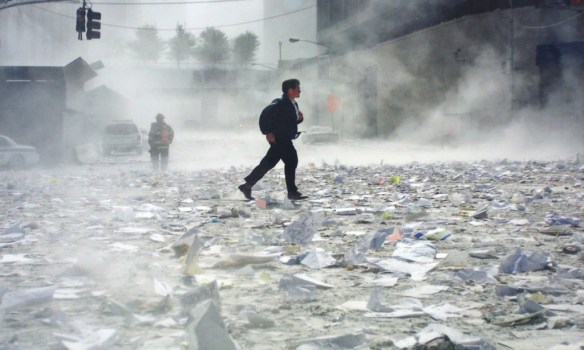
explosion 9/11The secularism of the foreign policy establishment of the United States and the religious influences coming out of the capitals of the Muslim Middle East can play adversarial roles in these state-to-state relations. That was the realistic picture painted by four posts on this blog in January, beginning with this one. Secularism vs. religion, of course, is not the only dynamic that makes these international relations difficult, if not conflicted. States asserting their identities, national interests, and political ideologies also contribute. But the secular / religious picture can seem gloomy indeed. Yet there is a hope.

During the past fifteen years, governments and their diplomatic teams, think tanks, NGOs, and high-level religious leaders have been pooling all sorts of resources to develop credible ways ahead for defusing tensions and peaceably negotiating the rough secular / religious intersection of U.S. – Middle East relations. In fact, there is now a large and steadily growing number of these successful initiatives, big and small. And yet even as I wrote that sentence I could hear readers thinking: What?! Are you nuts, Strohmer? That can’t possibly be true, given all the violence and war.

No, I’m not nuts, nor do I have my head buried in the sand. Of course violence and war is tragically a current fact of life in the Middle East, for any number of significant reasons, which national leaders are fully aware of and which any informed citizen can easily put names to. I don’t want to rehearse those reasons here. Instead, I want us think about a reason for the hopeless picture we have of the Middle East but that no one talks about, because we don’t know about it. It is as subtle as it is influential, and its neglect by us in public debate (in America if not elsewhere) is inexcusable.

I’ll get right to the point: I’m talking about the fact that many if not most Americans take their cues about U.S. – Mideast relations from the news, and the news is organized around the principle: if it bleeds, it leads. Of course, television journalists may say: “We are only mirroring what’s going on in the Middle East”; or, “These things need to be covered”; or, “We are only giving the public what they want.” Well, maybe this is what the public wants, but it is not the only thing the public needs. There are many other things going on in the Middle East other than atrocities, death, and war that ought to be covered, which the public needs to know. But they are not covered. As a result, the remarkable and diverse diplomatic initiatives of governments, think tanks, NGOs, and high-level religious leaders working to defuse adversarial relations and prevent violence and war seem non-existent. Even when an historic exception emerges on the world stage, such as the intensive years’-long struggle to negotiate the nuclear agreement with Iran, the pessimistic energy in America about the Middle East militates against its success.

Television news and Web reporting on the Middle East, with its perennial emphases on mayhem, bloodshed, atrocities, violent clashes, and war is a huge problem. If that is all we know about what’s going on, our understanding has been deceived and we are being made de facto contributors to the violence. We need to take a deep breath, push Pause, and think about this phenomenon.

It has now been over fifty years since Marshall McLuhan, a prescient philosopher of communications theory, introduced into public debate the now famous principle that “the medium is the message.” If so, then the only message in the American media about the Middle East during the past fifteen years is that it is a very violent place. During the past fifteen years, when it concerns the Middle East all of the dominant televison networks in the U.S. – CBS, ABC, NBS, CNN, and others – are constantly reporting on the latest atrocities and mayhem, and they cover these with a barrage of live images from the region.

Even if you don’t watch the national evening news programs, or CNN during the day, you will still get regularly hit with stories and images of Mideast violence on your local TV stations, who get their news feeds from the major networks; where else? (Of course reporting in magazines and newspapers also fans the flames.)

CNN HQWhen the only movie you watch about the Middle East is that of violent conflict, and when you have watched remakes of it for fifteen years, it affects your attitude, even your beliefs. If you are chatting with other parents after a PTA meeting and the topic turns to the Middle East what do you say? If you are working in a factory and talking during a lunch break with fellow workers and the conversation turns to the Middle East, what do you say? If you are a chiropractor working on a patient’s back and she brings up the Middle East, what do you say? If you are a lawyer or a sales clerk or a bricklayer, what do you say?

If television and Web news has determined our view of the Middle East, are we going to talk about the State Department’s Bureau of Conflict and Stabilization Operations (CSO), which was  formed to advance understanding of religiously motived conflict? Are we going to be able to say that Jerry White, a distinguished Christian thinker and Nobel Peace Prize recipient, served as the first Deputy Assistant Secretary of CSO?

Are we going to talk about the State Department’s Office of Religion and Global Affairs (ORGA), and say that it is currently run by the religiously savvy Shaun Casey, who advises the Secretary of State on policy matters as they relate to religion? Are we going to talk about how the ORGA complements the work of the U.S. Ambassador-at-Large for International Religious Freedom?

Are we going to talk about the State Department’s Religion and Foreign Policy Working Group, which launched the Office of Faith-Based Community Initiatives to partner with faith communities around the world to help solve global challenges. Are we going to talk about the Secretary of State’s engagement with Muslim communities in the Middle East on issues of mutual interest in support of shared goals? Are we going to talk about the National Strategy on Religious Leader and Faith Community Engagement, in which U.S. foreign policy people work with religious actors and institutions to promote sustainable development and more effective humanitarian assistance, protect religious freedom, and prevent and resolve violent conflict?

If television and Web news is our picture the Middle East, are we going to share with our friends, neighbors, and co-workers about even just one pioneering book that makes a wise case for peaceable ways ahead at the rough intersection of the religious and the secular in U.S. – Middle East relations? Probably not, because we haven’t read one.

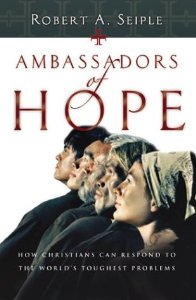
I’m thinking here of: Religion: The Missing Dimension of Statecraft (Douglas Johnston and Cynthia Sampson, eds.); The Global Resurgence of Religion and the Transformation of International Relations (Scott M. Thomas); Ambassadors of Hope: How Christians Can Respond to the World’s Toughest Problems (Robert A. Seiple); Faith-based Diplomacy: Trumping Realpolitik (Douglas Johnston, ed.); Holy War, Holy Peace: How Religion Can Bring Peace to the Middle East (Marc Gopin); The Sacred and the Sovereign: Religion and International Politics (John D. Carlson and Erik C. Owens, eds); Religion and Foreign Affairs: Essential Readings (Dennis R. Hoover and Douglas M. Johnston, eds); Religion and Security: The New Nexus in International Relations (Robert A. Seiple and Dennis R. Hoover, eds). I could list others.

If television and Web news has determined our view of the Middle East, are we going to be able to talk to people about how Track Two diplomats (e.g., initiatives by NGOs, high-level religious leaders, private individuals) labor intensively with Track One diplomats (traditional state-to-state diplomacy) to defuse adversarial relations and to prevent and end conflicts and wars? Are we able to talk about the “relational diplomacy” of the Washington DC-based, Christian-run Institute for Global Engagement? Time-tested and much respected in the foreign policy communities of the U.S. and the Middle East, IGE’s relational diplomacy is grounded in a commitment to first study, listen to, and understand the local context before seeking to create partnerships and practical agreements between governmental and religious communities that promote social and political stability.
Ambassadors of HopeWhat more shall I say? Time and space prevents me here from discussing the impressive, monthly Religion and Foreign Policy Conference Call series run by the Council on Foreign Relations, which gives religious and congregational leaders, scholars, and thinkers the opportunity to participate in nonpartisan, cross-denominational conversations on global issues; or the work of the Brookings Institution and the Carnegie Endowment for International Peace in the areas of religion and politics, faith based initiatives, legal protections of religious expression, and relations between Christians and Muslims; not to mention the quiet work of many stellar individuals and their small, dedicated teams, who have impressive track records and are risking much personally.

Do we talk about any of these things when we are on the phone, or waiting for our car to be serviced, or down at the pub, or driving a cab, or commenting on a blog post, or standing in the unemployment line, or having dinner with friends, or talking to a neighbor at Krogers? Probably not. We don’t talk about this picture because it doesn’t exist for us if all we know and believe about the Middle East has been determined by television and Web news.

There’s been an education of sorts taking place across our land by our news media about the Middle East. But we need to be re-educated. Look, I get it. You’re busy. Your time is taken up with a career, or course work, or the kids, or the parents, or ministry obligations – fill in the blank. So you only have time to catch the news on televison or the Web when you’re eating dinner, or on the radio when driving to work or to classes. Maybe once in a great while you have time to peruse a magazine article on the Middle East, but it too focuses on some new atrocity or explosion. I get it. Besides, where do you even look to see this other, non-violent picture of what’s taking place, if the only thing everyone else you talk to about the Middle East talks about the mayhem and violence? But even a busy person could take the following simple practical step.

First, you won’t see it or learn it from television and Web news. Second, if you have made it this far in this article, you now do know of many credible, respected, time-tested initiatives and projects – named above – where you can start to learn about this other picture. So, third, here’s your homework assignment for the next two months. Pick just one or two of the above initiatives or books or organizations and make it a priority to find half an hour here and there educating yourself about it. Afterward, take the next two months to educate yourself about one or two others, or learn more about the first one or two. And then repeat the process until your picture of the Middle East starts to change for the better. To grab an old word here, it behooves you to turn your eyes in this direction, to see the more hopeful picture. Finally, find the scene(s) in this picture where you can make a personal appearance as a supporting actor. Even if that support only appears in your conversations with people when the topic of the Middle East comes up, or only in your prayers, you will be doing a good thing.

If it is true that what we eat now can turn so sour, it is equally true that what we see uncritically is what we say believingly. If we don’t know about any Middle East reality other than the violence, what else is there for us to believe and say? We are then passively contributing to the violence, however unwittingly that may be, by talking only about that. I don’t expect the news media to change policy, to, say, eliminate two-thirds of its reporting on Middle East violence and replace it with he more hopeful picture.

But if we as individuals and communities re-educate ourselves by learning at least a few basic things about the groundbreaking initiatives discussed in this article (there are many others), and then if we tell others about them, rather than talking about the violence all the time, we will be actively helping these efforts, which are already in place, to change the picture for the better, toward defusing adversarial relations and ending violent conflict. This is a worthy goal.

The projects, books, and organizations discussed above are creating wise ways ahead for peaceably negotiating the rough secular / religious intersection of U.S. – Middle East relations. In a future article we will look at the role that the historic wisdom tradition plays, diplomatically, in this emerging picture.

©2016 by Charles Strohmer

Top image by Cliff, and all images via Creative Commons.

A note from Charles: If you want more of the perspective that Waging Wisdom seeks to present, I want to invite you to follow this blog. Just click here and then find the “Follow” button in the right margin, enter your email address just above that button, and then click “Follow.” You will then receive a very short email notice when I publish a new post. And, hey, if you really like this stuff, tell some friends! Thank you.

The Refugee Crisis: Make It Personal

refugee men and boys shelteed in a community centerRegular readers of this blog will know that I post periodically to raise awareness of a truly remarkable initiative called the Cradle of Christianity Fund, which focuses on bringing short, midrange, and long term aid and support to the neediest Middle East refugees (chiefly those who have not benefited from UN relief). I hope, then, that you will be as moved to action as I was with the following article by Phil Reinders. His wisdom and pastor’s heart have combined here to address what the UN has called the “mega-crisis” of our time, straining the world’s relief efforts. C.S.

The Refugee Crisis: Make It Personal
by Phil Reinders

I’m a follower of one who began his life as an asylum seeker. I’m a member of a family of faith whose history stretches back to Abraham, and is summarized in refugee terms: “my father was a wandering Aramean.” The God who has called me has this penchant of binding up his life with those who are on the margins, with the vulnerable and the weak. To take on the name of Christ, then, is to bind your life with the plight of those very same people.

So it is no surprise that Jesus calls people to a care and compassion for others, regardless of the differences and circumstances. Every person who takes on the name of Jesus isn’t afforded the option of turning away from outsiders. In fact, our very reputation and the name of Jesus is wrapped up in that sort of generous care. “Listen also to the immigrant who isn’t from your people Israel but who comes from a distant country because of your reputation … do everything that the immigrant asks.” (I Kings 8:41ff)

The plight of refugees has never been more stark, obvious and in your face. And, no doubt, the complexity of the situation is vexing: the instability of Eastern European and Middle-Eastern political climates, the risks and dangers of radicalized jihadists, the sheer scale of the need.

So what do we do? Listen to the refugee-Jesus, where we find the simplest, clearest of wisdom. “So in everything, do to others what you would have them do to you, for this sums up the Law and the Prophets.” (Matthew 7:12)

But that sounds too basic for this crisis, too simplistic for global geopolitical problems, right?

I’m convinced that the Jewish carpenter is actually the wisest, smartest being to live, and so I’m persuaded that his deceptively simple words are actually the wisdom of the ages, something that is meant to play out in personal relationships and between global neighbors.

It’s often called the Golden Rule, and thought to be another version of something repeated within different religious streams. And while a semblance of it is seen in other religious contexts, what Jesus says is unique and transformative. We see forms of this Golden Rule in eastern Confucianism, where Confucius urges, “do not do to others what you would not wish done to yourself.” Among Greek philosophers, the Stoic Epictetus said, “What you avoid suffering for yourself, seek not to inflict on others.” Socrates wrote: “What stirs your anger when done to you by others, that do not do to others.” And in rabbinic Judaism, Rabbi Hillel said, “What is hateful to you, do not do to anyone else.” These versions are both negative and passive. Avoiding or refraining from something I would not want done to me is a different standard of action than actively pursuing the thing I wish for myself for the sake of the other, which is the life Jesus invites into.

The brilliance of Jesus’ wisdom for how to respond pretty much to any situation is this: make it personal. The gold standard for moral action is to remove it from abstraction, from the pointed-finger deflection of “what others should do,” and from the resigned shrug of “it’s too complex so let’s leave it to the experts.” Instead, Jesus makes us the authority on how to respond to our friends, neighbors, and global, geopolitical issues: do to others what you would have them do to you.

Forget the professors, pundits and policy wonks; check your own heart.

Escher StairsFor a moment, as best as you’re able, enter into the story of a refugee. If it was your home that was riddled with bullets and bomb fragments, your neighborhood a rubble, with neighbors and extended family killed; if you had no money because the local economy was devastated due to the instability; if your children went to bed hungry; and if you made the sane but crazy decision to get out of Dodge and walk to wherever was safe, how would you want to be treated?

If you were stuck for years in the purgatory of a refugee camp, watching your children sink into the despair of a hopeless future, facing some Escher-like bureaucratic government approval process, how would you want to be treated? If you lacked all access to a flourishing life, far from any semblance of home, dependent upon the goodwill of others, how would you want to be treated? Think of the hopes refugees have for their lives and for their families. Imagine the fears that dominate their lives? Then think, “if I was in that person’s shoes, what would I want?” What would you hope for from foreign countries and governments when yours was corrupt or impotent to do anything to help you?

See what Jesus is doing? He taps into our own natural, God-given instinct to care for ourselves but then pulls the most liberating, redemptive move. He takes that inward-looking instinct but pivots us outward, redirecting all those good instincts for care and protection towards the other. Whatever we hoped and wanted others would do for us, he now commands us to go and do that for others.

And did you notice the first words: “in everything.” That’s a pretty comprehensive scope. Don’t try to limit this wisdom for small-scale issues. “In everything.” This is not a kindergarten lesson in niceness. It is the wisdom of the ages, saving us from inward-focused fear and self-absorption, aligning ourselves with the grain of the universe, which is God’s self-giving love, his fondness for the least, the last, and the lost.

A refugee is not a problem but God in disguise. They are a gift for anyone who carries the name of Jesus, helping us to know the meaning of that name and calling.

Phil Reinders, who pastors a church near Toronto, blogs here.

To support The Cradle Fund.

©2016 by Charles Strohmer

Top image courtesy of the Institute for Global Enagement.

Understanding the Religious–Secular Dilemma of U.S.–Middle East Relations, part 4 of 4

long winding roadPart one and part two of this article explained the history of the secularized U.S. foreign policy establishment. Part three looked at the diverse religious histories of Muslim majority countries in the Middle East in the context of their policy making. Parts one thru three were meant as a primer for anyone seeking to discover, in some detail, a realistic picture of why U.S. – Mideast relations have been so intractable, especially since 9/11. The secular – religious dilemma has foiled even many of the best plans and polices. Here in part four, I want to look very practically at several religious challenges In the Middle East that the United States has faced and responded to in recent decades – sometimes successfully for common good, sometimes not so much. Understanding these has greatly helped me to appreciate the ongoing struggle that our presidents and their advisors face at this tough religion/secular intersection.

Religion and the Secular:
The Foremost International Dilemma
of U.S.-Middle East Relations
by Charles Strohmer

Perhaps the most successful initiative occurred in 1978, when what may be called the faith-based peacemaking agreement orchestrated by President Jimmy Carter at Camp David. There, a peace agreement was reached between Egypt and Israel. It “would never have come about,” writes former U.S. Secretary of State Madeleine Albright, “if not for Carter’s ability to understand and appeal to the deep religious convictions of President Sadat and Prime Minister Begin.”[1]

During the 1990s, after the terrorist bombing of the North Tower of the World Trade Center in 1993, President Bill Clinton’s administration devoted time and resources to the issue of how to deal effectively with militantly religious terrorist groups, particularly al Qaeda. These groups were being increasingly implicated in large and deadly acts of violence overseas against various U.S. interests. Despite numerous “threat-and-response studies” considered by the Clinton administration, no consensus could be reached by the secularly institutionalized Washington concerning effective non-military policies for addressing and dispelling the appeal of the religious ideologies of these non-state, terrorist actors. Responses by the U.S. were mostly military ones, such as with the use of cruise missiles.

During the 2000s, the huge policy vacuum that remained in Washington toward engaging with relevant matters of religion in the Middle East meant that non-military policy had to be created on the run as they arose. Albright saw this personally in Iraq during the lead-up to Iraq’s first round of elections in January, 2005, when she chaired the National Democratic Institute for International Affairs (NDI), which works to strengthen and expand democracy worldwide. The organization is a nonpartisan and neutral NGO and as such cannot support one party over another.

In the lead-up to those elections, NDI was under Albright’s leadership, and at the time the nonprofit organization had been helping both the secular and religious Iraqi political parties to understand and implement the many aspects of a democratic electoral process. The Bush State Department, however, was seriously considering funneling tens of millions of dollars in material assistance to favored secular parties, in hopes of helping to defeat the religious parties.

It was a “dangerous idea,” Albright writes. “If we played favorites, we would confirm every suspicion about our intentions, make our rhetoric about democracy look foolish, and raise new questions about our attitude toward Islam. NDI warned that if the administration went forward with such a scheme, the institute would have to consider suspending its own programs, because its credibility would be destroyed and the security situation – already tense – would become intolerable.” It took months of serious debate before top officials at the State Department killed the proposal, but the Bush administration, she concluded, seemed “far more comfortable working with secular leaders than with Iraqi political parties for whom religion is central. This is true even when the religious leaders are moderate in orientation and generally accepting of U.S. goals.”[2]

Washington’s institutionalized predisposition to rely on a secular calculus for addressing religious issues in the Middle East may also have been evident in the Bush administration’s relationship with Grand Ayatollah Ali al-Sistani, the high-profile religious leader of Iraq’s large Shiite population. Due the country’s Shiite majority, Sistani immediately become Iraq’s most influential religious leader on political matters in the collapsed country, after the U.S.-led ouster of Saddam Hussein in March-April, 2003. (As we saw in part three of this article, Shias outnumber Sunnis in Iraq. Nevertheless, under the dictator Saddam Hussein, the secular Baathist Party, largely Sunni, governed the country.)

After Saddam’s removal, Sistani’s became the religious go-to voice guiding Iraq’s large Shia population through the troubled waters of the emerging political reconstruction of the government. And yet after Paul Bremer was appointed (May 2003) by President Bush to oversee reconstruction of Iraq, replacing Jay Garner, Bremer only ever managed to talk to Sistani through intermediaries, which took place when necessary. One would think that it would have been expedient, if not crucial, for Bremer to meet personally with the Grand Ayatollah on at least a somewhat regular basis during his year-long tenure as director of post-war planning in Iraq.

Sistani publicly supported the U.S. position on a number of vital political issues, but he opposed other issues vital to Washington. Face-to-face meetings have been known to lead to working through disagreements and reaching mutually accepted policies in a way that may not be possible when only using intermediaries. Of this, political essayist Paul Berman writes that the “Americans blamed the ayatollah for refusing to meet with them, [but with] a proper approach, any reasonable person will eventually yield to an insistent suitor. Sergio Vieira de Mello[3] succeeded in meeting with Sistani. The ayatollah was approachable.”[4]

We can see Sistani’s great sway with Iraq’s Shia population in the January 2005 legislative elections. It was because of Sistani’s edict instructing Shiites to vote in that election that President Bush, afterward, could trumpet the political event as one of his success stories in Iraq. Without Sistani’s edict authorizing them to vote, most Shia would probably have stayed home from the polls, being unsure if their religious beliefs permitted them to vote in that kind of election. An embarrassing turnout at the polls would have probably made it an historic embarrassment for the Bush White House (most Sunnis boycotted the elections and the Kurds represent a small percentage of the population). Further, the large Shiite vote that day won them a huge majority in the new 275-member Iraqi National Assembly.

children's tug of warThere are times, too, when a U.S. administration’s positive gesture toward religion in the Middle East will be criticized. In 2007, President Bush made a gesture which on the surface seemed so ordinary that many political analysts thought nothing of it. In July, President Bush called to congratulate Turkey’s Prime Minister Recep Tayyip Erdogan and his Justice and Development Party (the AKP), which had won a landslide reelection over its two closest rival political parties.
What was wrong with calling to congratulate the Prime Minister? After all, America and Turkey are allies, and Turkey had been implementing serious steps for more than two  decades to be able to enter the European Union. Besides, the gesture may have signaled an improvement in Washington’s approach toward religion in the Middle East. Also, since it came to power in 2002, the AKP had been seen by many analysts as modernizers who fully supported a pluralist and democratic Turkey.

Author Steven Cook, a Douglas Dillon Fellow at the Council on Foreign Relations, writes that the AKP has “presided over political and economic reforms that strengthened human rights, overhauled the penal code, improved parliamentary oversight, reined in Turkey’s powerful military establishment, and made Turkish economy the most dynamic in the region.” And with the July 2007 elections, the party returned to parliament with twenty-seven women (more than double any other party) and “scores of young liberal legislators who have joined because they want to live in a democracy.”[5]

What, then, could critics possibly have to complain about the congratulatory phone call? They fumed because the AKP is an Islamic party. President Bush, they said, should have commiserated with its two closest rivals, who lost, and who are secular. Although the AKP is what the Western media and press tend to call a “moderate” Islamic political party – to denote perceived differences to the aims of more militant political groups, such as Hamas and Hezbollah – some groups in the West nevertheless strongly oppose the AKP.

Cook concludes that despite some Western suspicions about the AKP’s long term aims, Bush was right to “welcome the Justice and Development win, [for] the Arab world has taken a keen interest in the way both Europe and the United States deal with Turkey’s Islamist government, seeing Turkey as a test case for the West, for much of the Arab world has branded Washington’s democracy promotion policy as little more than hypocrisy.” Thus at the time, Bush’s support of Erdogan’s reelection helped “undermine Arab accusations and signals that Washington is not opposed to Islamist power, but rather opposes certain kinds of Islamist groups.”[6][7]

I hope that the foregoing examples have provided a good, behind-the-scenes practical introduction for negotiating the complicated and challenging secular/religious intersection of U.S. – Mideast relations. In hopes of presenting a more manageable understanding of that, I focused on issues smaller than the big, often sensationalized, ones that make the media.

The Muslim Middle East has much longer history of, and therefore is much more practiced at, orienting its religious backdrop to a secularized Washington than latter has at orienting its secular self to the former. Whereas the modern West at the Peace of Westphalia (1648) began weaning itself from official ecclesiastical influence upon the state, the Muslim world has had fourteen hundred years of religious experimenting with varied and diverse political structures. If, then, the foreign policy of the Muslim Middle East remains for the foreseeable future tied to explicit religious interests (this does seem predictable), then both the U.S. and the Muslim Middle East must find wisdom suitable for peaceable cooperation when negotiating the secular/religious intersection of their international relations.

The realistic picture that this article (begun here) paints of the religion – secular dilemma of U.S. – Middle East relations can leave us feeling queasy. And well it should. Until a new, different, and better paradigm for these international relations becomes normative, we have to do the best we can with what we’ve got. But we’ve got more than what we’re stuck with. In a week or two I hope to have finished (and then to post) an article that details the fine work being done by high-level individuals, organizations, and the U.S. State Department as they struggle, often against great odds, to develop and implement wise ways ahead for peaceably negotiating the rough secular/religious intersection of U.S. – Mideast relations for common good.

FOOTNOTES

[1] Albright, The Mighty and the Almighty, cpts 5, 7.

[2] Ibid., p. 177.

[3] Sergio Vieira de Mello was the UN Secretary General’s Special Representative for Iraq. His death in Iraq in August 2003, from a massive truck bombing of the UN headquarters in Baghdad, led to the UN’s immediate withdrawal from Iraq.

[4] Paul Berman: Power and the Idealists (NY: W. W. Norton, 2007), pp. 264-265.

[5] Steven A. Cook, “Cheering an Islamist Victory,” Op-Ed in The Boston Globe, July 26, 2007.

[6] Ibid.

[7] In recent years, Turkey’s long path to EU membership has slowed to a crawl due to complication in negotiations that have yet to be resolved. Speeches made by Erdogan in 2015 reveal increasingly hardline rhetoric against the West. In Turkey’s 2015 general elections, the  AKP lost its long-standing parliamentary majority.

©2016 by Charles Strohmer

Top image by Peter Nijenhuis, other image by Jennifer L. Sovanski (permissions via Creative Commons)

A note from Charles: If you want more of the perspectives that Waging Wisdom seeks to present, I want to invite you to follow this blog. Just click here and then find the “Follow” button in the right margin, enter your email address just above that button, and then click “Follow.” You will then receive a very short email notice when I publish a new post. And, hey, if you really like this stuff, tell some friends! Thank you.

Understanding the Religious–Secular Dilemma of U.S.–Middle East Relations, part 3 of 4

Islam at night 2In part one and part two of this article we looked at the strong influence of secularism on the history of the foreign policy establishment of the United States. But Washington’s relations with the capitals of the Muslim Middle East is not a one-way street. In this post I want to offer an overview of the strong, yet varied, influence of religion in the capitals of the Middle East. This affects their international relations, and some insight into it is crucial for understanding the secular – religious dilemma of U.S. – Mideast relations.

Religion and the Secular:
The Foremost International Dilemma
of U.S.-Middle East Relations
by Charles Strohmer

U.S.– Mideast relations run both ways. Whereas Washington approaches the Middle East from a secularized orientation, the capitals of the Muslim Middle East rely on varying degrees of explicit religious belief, depending on the country in question. In other words, although everyone knows that Islam is that religion, it less commonly understood that there is no universal agreement in the Muslim world how each government should express Islam politically.

Saudi Arabia, for instance, is a monarchy based on Islamic law (shari’a) as it is interpreted and applied through the powerfully influential and well-instituted Wahhabi Sunni branch of Islam. In Saudi Arabia, Wahhabism controls and runs mosques, schools, and clerics, and preaches and enforces a strict Islamic fundamentalism that strongly influences all of areas life. This strict kind of Islam, for instance, has made constructing churches and synagogues in the country illegal.

Like Saudi Arabia, Sunni Islam is by far the most dominant religion in Jordan, Egypt, and Lebanon. But note some crucial differences. In Jordan, a monarchy, Islam is the state religion but, opposite of Saudi Arabia, Jordan is tolerant of non-Islamic religions. Egypt is an Arab republic (not a monarchy), with Islam as the state religion, and the country has significant Christian minorities in the Coptics and Roman Catholics. In Lebanon, the Arab country with the largest percentage of Christians, a unique political system is designed so that more that a dozen different religious groups, mainly Muslim and Christian, are structurally factored into the national government. “Parliamentary seats, ministries, governments jobs, and so on are apportioned according to these different confessional groups. So the political process formally recognizes these religious groups, that each one should have a share in the pie.”

Iran is different still. It is not a monarchy and Shia Islam is dominant, and for most of the mid-twentieth century, the government of Iran was secularized and practiced, in part, separation of mosque and state. Today, Iran a theocracy, constitutionally identified as an Islamic republic. The secularization of the government ended 1979, when Ayatollah Ruhollah Khomeini came to power in 1979 (he overthrew the country’s American-backed Shah). The contemporary determinacy between the religion of Islam and the politics of Iran dates back to the time. A religious Supreme Leader has since then been the head of the government (first Khomeini, now Ayatollah Ali Khamenei).

Besides the Supreme Leader, a twelve member Guardian Council, comprised of six jurists and six religious clerics (all must be highly-educated, dedicated Shia Muslims), oversees parliament. The Council can veto any piece of legislation that it deems to violate Islamic law (shari’a) or the Iranian constitution. The Council approves or disqualifies candidates wishing to run for any election. One of the more alarming ramifications of this for Western powers has been when Council at times disqualified nearly all reformist candidates who were seeking to run for political office, either for seats in parliament or for the presidency.

In this religious–political mix of government the Supreme Leader is thought by Iran’s ruling clerics to be God’s representative on Earth, in the sense of being directly answerable to God, and therefore not as susceptible to public opinion as are Iran’s president and members of parliament.  He is not elected by the public but selected by the Assembly of Experts. Under him is the president, who is elected by the people, and a parliament, also comprised of elected officials. Also, the Supreme Leader has been invested in the legal structure of the Islamic Republic with ultimate political authority. He has the final word on all matters of state, including foreign policy.

Iraqi girl at windowIraq is different still. Iraq’s system of government is constitutionally republican, representative, parliamentary, and democratic. Its constitution makes Islam the official religion of the state and “a foundation source of legislation” that “guarantees the full religious rights to freedom of religious belief and practice of all individuals such as Christians, Yazidis, and Mandean Sabeans.” Shias outnumber Sunnis in Iraq, but under the dictator Saddam Hussein, the secular Baathist Party, largely Sunni, ruled. After Saddam Hussein’s fall from power in 2003, a predominantly Shia government has ruled Iraq.

Syria is an Arab republic in which Islamic jurisprudence, as stated in its constitution, is “a major source of legislation. The State shall respect all religions, and ensure the freedom to perform all the rituals that do not prejudice public order. The personal status of religious communities shall be protected and respected.” The Sunni Baath Party controls every facet of Syria, including its military, even during the current horrific civil – religious war.

There are, of course, other Muslim countries in the Middle East. I have only noted some basic, mainly constitutional, religious features of the foregoing seven countries to indicate their governments’ different understanding of how Islam should be expressed politically. It is crucial to understand that there does not exist a single governmental pattern of Islam operating everywhere in the Middle East. This means that Washington cannot have, thus it does not have, a one-size-fits-all foreign policy for the Muslim Middle East. That is impossible.

Yet it is not unusual to find U.S. citizens talking as if “they’re all the same over there.” No, they are not. Foreign policy decision making for a secularly institutionalized White House and Congress in the political–religious diversity of the Muslim Middle East is complicated and challenging. The U.S. has diverse policies for these states.

In the Muslim Middle East, the official conjunction of religion and the state, often called political Islam, seems like a bad marriage to most Americans. In the Muslim world, the alliance is generally considered a good marriage (perhaps it is better to think in the plural, here, “marriages,” since there is no single way in which state politics and religion are wed in that region).

The governments of Muslim majority countries face complicated and challenging decisions. They struggle, for instance, each in its own way, with issues such as democracy, modernization, and globalization vis a vis what (they determine) faithfulness to Islam requires of them in such areas. One of the current crucial international decisions they grapple with is how much cooperation they ought to give to Western powers in dealing with ISIS (a radical Sunni organization). In this, the division between Sunni and Shia governments in the region has played a crucial role in influencing foreign policy. That is, just as Washington engages differently with the various capitals of the Middle East, the various capitals of the Middle East have different policies toward ISIS, and their interpretations of Islam plays a large role in this. Shia Iran and Sunni Saudi Arabia, for instance, have dissimilar policies toward ISIS.

One thing that does unite the varied religious expression of Islam is that they all face a common problem in the institutionalized, secular reductivism that controls the international relations of America and the rest of the West. This does not mean, however, that when, say, Iran’s foreign minister meets his American counterpart that the former talks like a theologian. He talks to his American counterpart, and seeks agreements, in the language of politics. But he will come to the table knowing that an explicit religious environment hovers over his head nearby.

Countries of the Muslim Middle East, then, face the equal opposite problem to that of the United States. Because their political governances formally recognize religious interests, albeit in varying capacities and with different theological interpretations of Islam, each one must contend from its religious point of view with how its relations should, or should not, develop with the United States, where religious authority is excluded from playing any official role.

Despite ongoing, serious attempts to solve it, the nub issue remains: finding peaceable and just ways to negotiate the secular – religious intersection of U.S. – Mideast relations. Part four of this article will look at ways in which the United States has in recent decades faced challenges at this crucial intersection, sometimes successfully, sometimes not so much.

FOOTNOTES

[1] “The Christian Message in Lebanon,” Christianity Today, Aug. 2007, journalist Rami Khouri interviewed by Charles Strohmer

©2016 by Charles Strohmer

Top image by Wajahat Mahmood; other image by dvidshub (permissions via Creative Commons).

Understanding the Religious–Secular Dilemma of U.S.–Middle East Relations, part 2 of 4

crescent moonIn Part 1 of this article I discussed why it seemed somewhat odd that the fledgling new nation of the United States of America decided not include a “department of religion” in its foreign policy structure. On the other hand, as a sign of the intellectual times, it seemed normal. But what were those times? Let’s look at that in this post. It was the end of the eighteenth century, and America’s founding fathers, politically, had drawn heavily from Enlightenment rationalism’s so-called secular way of doing politics. And that has had serious implications for U.S. foreign policy ever since. See what you think. Let’s have some conversation about this.

Religion and the Secular:
The Foremost International Dilemma
of U.S.-Middle East Relations
by Charles Strohmer

The secularization of U.S. foreign policy has been aptly explored by Scott Thomas in The Global Resurgence of Religion and the Transformation of International Relations. An international relations scholar from the London School of Economics who teaches at the University of Bath, Thomas asks us to think about the conceptual map of secularism that has informed U.S. foreign policy making since its beginning.

The map dates back to Enlightenment reasoning, and on it Thomas finds four primary contours that have historically shaped Washington’s approach to international relations. These contours suggest why it is difficult, if not unthinkable, for any presidential administration to seek the proper place of religion in U.S. foreign affairs. Briefly summarized here, the four contours are:

1) Secularization theory, which “helped to explain religion away, rather than to explain its significance in social action,” for it was “argued that the numbers of people who declare themselves to be believers and who regularly attend religious services will steadily decline as a country modernizes.”[1]

2) The civil war between Catholics and Protestants in France (1550-1650) and the Thirty Years’ War (1618-1648) had engulfed all of Europe. The treaties that ended these catastrophic wars brought about what has been called the Westphalian era, in which the rise of “the liberal or secular state” was going to “save us from the cruel and violent consequences of religion. The modern state, the privatization of religion, and the secularization of politics arose to limit religion’s domestic influence, minimize the affect of religious disputes, and end the bloody and destructive role of religion in international affairs.”[2] In the Westphalian system, political governance is organized around states’ so-called secular interests; religious toleration domestically, and religious noninterference in the domestic affairs of other states, are also guiding principles.

3) All of the different Western schools of international relations that have arisen since the seventeenth century have downplayed the study of religion upon international relations. Instead, each school in its own way (e.g., political realism and political idealism), have focused on aspects such as military power, national interests, the balance of power, international law, and international institutions.[3]

4) The Westphalian model has followed the dictates of the modern scientific method, whose twin controls of naturalism and materialism admit into its theories only one reality, the physical world. Here, religion is seen, at best, as a mere epiphenomenon, rather than as a basic instinct of human nature.[4]

To sum up…, Western political theory has explicitly followed secular contours. In so doing it has shaped and validated approaches to the study and practice of international relations and foreign policy in ways that have marginalized the legitimate interests and concerns of religious actors, religious belief, and religious institutions. After settling in, this political way of thinking has had more than 200 years to become second nature to specialists in U.S. foreign policy.

choicesSimilar to Thomas, Edward Luttwak, an international relations historian, attributes Washington’s basic foreign policy problem with religion to what he calls its secularizing reductivism. And he adds this, which helps explain why political analysts, journalists, and others were caught short on the religious implications of 9/11. Today, “Enlightenment prejudice … has remained amply manifest in the contemporary professional analysis of foreign affairs.” And with the sway of modern secularism, both politicians and journalists have often ignored “the role of religion, religious institutions, and religious motivation in explaining politics and conflict.” Instead, they have focused far too much on geographic, economic, social, political, or other non-religious primary causes. For Luttwak, this indicates “a learned repugnance to contend intellectually with all that is religion or belongs to it.”[5]
As I was thinking and writing about this one day back in 2007, I conducted a simple experiment. I pushed my chair back from my writing desk and took a break. I walked to my book shelves, where at the time I had fifty-two titles covering U.S. and Western international relations history, theory, and practice. Twelve of those titles were then in use in American university classrooms. (I ignored the other titles for this experiment.) I wanted to know how much attention the classroom texts (the twelve I knew about) gave to issues of religion in foreign policy. So I made some notes. Of the approximately 3,600 pages that comprise these twelve titles, only 76 pages addressed religious concerns, with many of the references limited to a short paragraph or less. And 61 of those pages appeared in one book![6]

Drawing from her personal experience as a foreign policy student, former U.S. Secretary of State Madeleine Albright confirms the systemic, academic disinterest in religion in university IR classrooms. In The Mighty and the Almighty, Albright reveals that her education in world affairs gave her quite a distaste for anything to do with religion in international relations. To some of her Georgetown students, she opened a window on her academic training:

My speciality was foreign policy, about which such icons as Hans Morganthau, George Kennan, and Dean Acheson theorized in almost exclusively secular terms. In their view, individuals and groups could be identified by the nations to which they belonged. Countries had governments. Governments acted to protect their nations’ interests, at least to the point where wars did not break out and the world did not blow up. Foreign policy was commonly compared to a game of chess: cerebral, with both sides knowing the rules. This was a contest governed by logic; its players spoke in the manner of lawyers, not preachers…. Religion was not a respecter of national borders; it was above and beyond reason; it evoked the deepest passions; and, historically, it was the cause of much bloodshed. Diplomats in my era were taught not to invite trouble, and no subject seemed more inherently treacherous than religion. This was the understanding that guided me while I was serving as President Clinton’s ambassador to the United Nations and as secretary of state. My colleagues felt the same. [7]

Like many in her field, Albright moved off this position after 9/11. Now when teaching in university classrooms she explains to students that learning about world affairs “cannot be done without taking religious tenets and motivations fully into account.”[8]

U.S foreign policy, of course, is not a one-way street. The formal role that religion plays in foreign policy toward America by Muslim majority countries in the Middle East is the other horn of the dilemma in U.S. – Mideast relations. Part 3 of this article delves into this much misunderstood area.

FOOTNOTES:

[1] Scott M. Thomas, The Global Resurgence of Religion and the Transformation of International Relations: The Struggle for the Soul of the Twenty-First Century (Palgrave Macmillian, 2005), pp. 50, 52.

[2] Ibid., p. 22; see also pp. 54-55.

[3] Ibid., pp. 55-58.

[4] Ibid., pp. 59-63.

[5] Johnston and Sampson, Religion: The Missing Dimension of Statecraft; Luttwak, “The Missing Dimension,” pp. 8-10.

[6] The twelve titles: The Twenty Years’ Crisis: 1919-1939; The Anarchical Society; Explaining the History of American Foreign Relations; Paths to Power; Ideology and U.S. Foreign Policy; Neorealism and Its Critics; Anarchy, State, and Utopia; Understanding International Conflicts; Power and Independence; Politics Among Nations; American Diplomacy; Promised Land, Crusader State (the title with the 61 pages). For complete title information, see this Bibliography on the Web.

[7] Madeleine Albright, The Mighty and the Almighty: Reflections on America, God, and World Affairs (HarperCollins, 2006), p. 8.

[8] Ibid., p. 11.

©2016 by Charles Strohmer

Images: Crescent moon by NASA’s Marshall Space Flight Center; two paths by William Ward (permissions via Creatve Commons).

Understanding the Religious–Secular Dilemma of U.S.–Middle East Relations, part 1 of 4

Common GroundI was in a fascinating conversation recently with a very sharp political science student, talking about the secular and religious intersection of U.S. – Middle East relations. An intricate and intractable problem, I have not said much about it on this blog. Inspired by the help that my student-friend said he got from our long conversation, I went back to my files on The Wisdom Project for the following, informative article I wrote on the subject years ago. Slightly updated, I’m posting it here in four parts over the next two weeks. See what you think, and let’s have some conversation about it.

Religion and the Secular:
The Foremost International Dilemma of
U.S.–Middle East Relations
by Charles Strohmer

At the start of the diplomatic history of the United States, it is curious that the founding fathers of the new nation did not include something akin to a “Department of Religion” in its foreign policy structure. After all, the fathers knew full well that their near-ancestors had acutely experienced negative influences from religion upon political decisions in sixteenth and seventeenth century England and Europe. And even after gaining its independence from England, the fledgling nation of America had ample reason to think about including some sort of religion bureau in its diplomatic toolkit.

Religion and U.S. foreign policy
In 1784-1785, John Adams and Thomas Jefferson were trying to negotiate an end to a foreign policy crisis between the new America and the so-called Barbary states (Morocco, Tripoli, Tunis, and Algiers), which were under Muslim rule. Ships of Barbary pirates were attacking and plundering American trade ships and selling their crews into slavery. It was young America’s “first acute foreign policy threat,” writes historian Michael Oren. U.S. negotiations to end the crisis were taking place, chiefly in London, with a shrewd foreign minister from Tripoli, a Muslim nobleman. In March, 1785, Jefferson joined Adams in London “for one last attempt to prevent ‘a universal and horrible War’ and reach an agreement with Tripoli.”[1]

Instead, the foreign minister from Tripoli reiterated to Adams and Jefferson that the United States must pay the nearly one million dollar sum that, he said, a peace treaty with the Barbary states would cost the new nation. It was an impossible demand, being nearly one-tenth of America’s annual budget. To further exacerbate the negotiations, the Muslim nobleman shocked the two American negotiators by citing that in the Qu’ran it was written that “all Nations who should not have acknowledged their [the Muslims] authority were sinners, [and] that it was their right and duty [then] to make war upon [them] and to make Slaves of all they could take as prisoners, and that every Mussulman who should be slain in battle was sure to go to Paradise.” Oren writes that Adams and Jefferson left the negotiations aghast.[2] (Two wars ensued (1801-1805 and 1815.)

Afterward, the diplomatic toolkit of the United States and the Cabinet remained without any sort of department of religion. It was a sign of the intellectual times. The European treaties of 1648, known as the Peace of Westphalia, had divided up and redistributed political power in Europe. With it, a tremendous worldview shift had begun that would fundamentally alter the relation of religion to European governments. The rise and institutionalization of the modern, western sovereign state had begun, in which the political life of the nation is divorced from any exercise of religious control. The so-called “secular state” emerged.

One result 125 years later was what international relations scholar Douglas Johnston calls “the rigorous separation” of church and state in America. Writing in Religion: The Missing Dimension of Statecraft, some eight years before 9/11, Johnston notes that the long and serious history of “separation” in the United States has by our day “desensitized many citizens to the fact that much of the rest of the world does not operate on a similar basis. Foreign policy practitioners, for instance, are often inadequately equipped to deal with situations involving other nation-states where the imperatives of religious doctrine blend intimately with those of politics and economics. At times, this has led to uninformed policy choices, especially in our dealings with countries in the Middle East.”[3]

the better angels of our natureThis conclusion from 1994, the year the book was published, would need to be footnoted today, to note some modifications in U.S. foreign policy that have slowing been occurring. In its international relations, Washington has been taking more systemically the roles that religious concerns, religious institutions, and religious actors may have in starting, sustaining, or ending international political tensions or conflicts.

That footnote has, in fact, become an entire book. Writing in 2003, Johnston and a team of scholars researched start-up initiatives begun by Washington to give religion a more official place in conflict analysis and political solutions. One such major initiative of the State Department was to establish the Office of International Religious Freedom in 1998, making Robert Seiple the first U.S. Ambassador for International Religious Freedom.[4]

Nevertheless, turning the ship of state in the direction of religion goes slowly and is understandably tentative. Although “such measures show a growing awareness of religion’s political importance,” Johnston concludes, “religious imperatives have yet to be incorporated as a major consideration in U.S. foreign policy. They should be.”[5] Turning this corner, however, Washington cannot expect, nor can we as participating citizens expect, in just a few years to wisely overcome two hundred years of institutionalized predisposition against religious concerns in its foreign policy structure.

In order for this institutional shift in Washington to work itself out into normative foreign policy practice, the momentum must be sustained through concerted effort. Meanwhile, a clear understanding of this secular-religious problem in America’s relations with Middle East states is the first step toward solving it.

(See Part 2 here.)

FOOTNOTES

[1] Michael B. Oren, Power, Faith, and Fantasy: America in the Middle East: 1776 to the Present (W.W. Norton & Company, 2007), pp. 18-27, citing letters written by Adams and Jefferson.

[2] Ibid.

[3] Douglas Johnston and Cynthia Sampson, Religion: The Missing Dimension of Statecraft (Oxford University Press, 1994), pp. 4-5.

[4] Douglas Johnston, Faith-based Diplomacy: Trumping Realpolitik (Oxford University Press, 2003), p. 3.

[5] Ibid.

©2016 by Charles Strohmer

Images via permissions from Creative Commons.

The Star of Bethlehem and the Message of the Magi

star in blue skyAs the Nativity story gets retold year after year and acted out in manger scenes across the world, the Star of Bethlehem and the Magi who saw it have fascinated adults and children alike for 2,000 years.

Astronomers since the time of Copernicus have offered different theories about the Star. It was, they say, a nova, a comet, a meteor, or a supernova. It was a completely new star or a conjunction of the planets Jupiter and Saturn in the constellation Pisces. The new book Colin Nicholl, The Great Christ Comet, argues that the Star was a great comet.

The physical sciences, however, including astronomy, are notoriously incapable of explaining things that are not seen. And when it comes to the Star of Bethlehem, there is more going on than meets even the eye of the telescope. The Magi knew this.

Take a careful look at the Nativity story, in chapter two of Matthew’s Gospel. Apparently, the Star had a mind of its own. It “appeared” and “went ahead of” the Magi “until it stopped.” And it did not stop randomly anywhere; it “stopped over the place where the child was.” These facts suggest that, whatever it was, it was something other than a phenomenon governed exclusively by physical laws. To the Magi, the Star of Bethlehem must have seemed as supernatural an event as the angelic visitation announcing Jesus’ birth was to the country shepherds.

This clears up another common misunderstanding. Many people, especially astrologers, believe that the Magi were following the stars. But the Magi were not following the stars. They were following the Bible. To know where to go first, Jerusalem, the Magi relied on a prophecy found in the book of Numbers. Given hundreds of years before Christ’s birth, it predicts the advent of “a star,” which in ancient Israel was interpreted as a messianic prophecy about the divine Ruler to come.

After arriving in Jerusalem, the heart of ancient Israel’s religious life, the Magi again follow the Bible. The rabbis read from the prophet Micah to show the Magi that this Ruler Messiah will be born in Bethlehem. Taking their cues again from Scripture, not from astrology, the Magi head south to Bethlehem.

After their long, arduous journey from the East, these guys must have breathed a sigh of relief to find out that they had only six more miles to go! But on the road south, they suddenly face a problem. They have the name of the city but not the address. It’s unlikely that Mary and Joseph would still have been camped out at the manger when the Magi finally arrived, months after Jesus’ birth.

But God knows Jesus’ address. Star of wonder. It “went ahead of them until it stopped over the place where the child was.” The Magi are overjoyed. They worship the Savior, leave their expensive gifts with the family, and, being warned by God in a dream, they do not travel home by the way they came, through Jerusalem. They return by “another way.” Their lives had been changed.

Thirty years later, Jesus is walking the roads of Judea and Galilee, healing the sick and preaching the gospel, and still most people don’t know what the Magi knew about the Jesus’ identity. If asked, most give wrong answers. So one day Jesus asks his closest followers, Guys, who do you say that I am? When Peter replies that Jesus is “the Messiah, the Son of the Living God,” Jesus explains that “flesh and blood” has not revealed that to him, “but my Father in heaven” has revealed it. And “blessed are you” because of that, Peter.

Jesus the Messiah, the Savior, has been born. That was the message of Magi to the world 2,000 years ago. It is the message of the Star of Bethlehem to us today. Flesh and blood cannot reveal it, neither can astronomy or astrology. It takes divine revelation. And once it’s yours, dear reader, blessed are you. It will change the course of your life. You will go home by another way.

©2015 by Charles Strohmer

(Charles Strohmer is the author of several books, including of America’s Fascination with Astrology: Is It Healthy? This article first appeared in The Mountain Press, December 20, 2015.)

See also The Snow Forgives Us: A True Story.

Image by Riccardo Francesconi, permission via Creative Commons.

A note from Charles: If you want more of the perspectives that Waging Wisdom seeks to present, I want to invite you to follow the blog. Just click here and then find the “Follow” button in the right margin, enter your email address just above that button, and then click “Follow.” Whenever I publish a new post, you will then receive a very short email notice. And, hey, if you really like this blog, tell some friends! Thank you.


The Artist and the Baby

baby & adult handsA young couple brought their new baby, a boy, home from the hospital. He was their second child; the other was a 4-year-old girl. After the new baby had been home for a couple of weeks, the 4-year-old told her parents that she wanted to see the baby alone.

“Okay,” said the mother, “I’ll take you to see him.”

“No,” said the little girl. “I want to see him alone.”

The parents looked at one another. They had been warned of this. The older child gets jealous of the attention being paid to the baby and finds a way to strike back.

“I’ll take you in to see him,” said the father.

“Nooo. I want to see him alone!”

“Well, maybe later,” the mother said.

The next day, the mother started to take her daughter to see the baby, but the child pulled back, refusing, saying she would only see the baby alone. This went on for two weeks. Finally one evening, the parents made the momentous decision. They did not tell their daughter, but they would listen closely on the intercom while she was in the room with the baby, and they would be ready to act immediately if necessary.

“Promise you won’t come in,” the daughter said.

“We promise,” said the parents.

The little girl stepped cautiously into the baby’s room, looking back at her parents, who watched attentively from the hall. They quietly shut the door and quickly retreated to their bedroom, where they fixed their ears on the intercom. They heard nothing for a few seconds. Then there was the soft noise of their daughter making her way toward the baby in the crib. Then silence. There was a small chair in the baby’s room, and the parents heard what they took to be the sound of their daughter moving the chair to the side of the crib. And then silence.

The parents didn’t see their daughter sit down in that chair next to the crib. But they did hear her say to the baby, “Tell me about God. I’m forgetting.”

The artist is like the baby.

(I heard Sean Penn tell this story to Charlie Rose on the “The Charlie Rose Show,” PBS-TV.)

Image permission via Creative Commons.