SNUBBING IRAN: THE WORST FOREIGN POLICY DECISION IN THE HISTORY OF THE UNITED STATES?

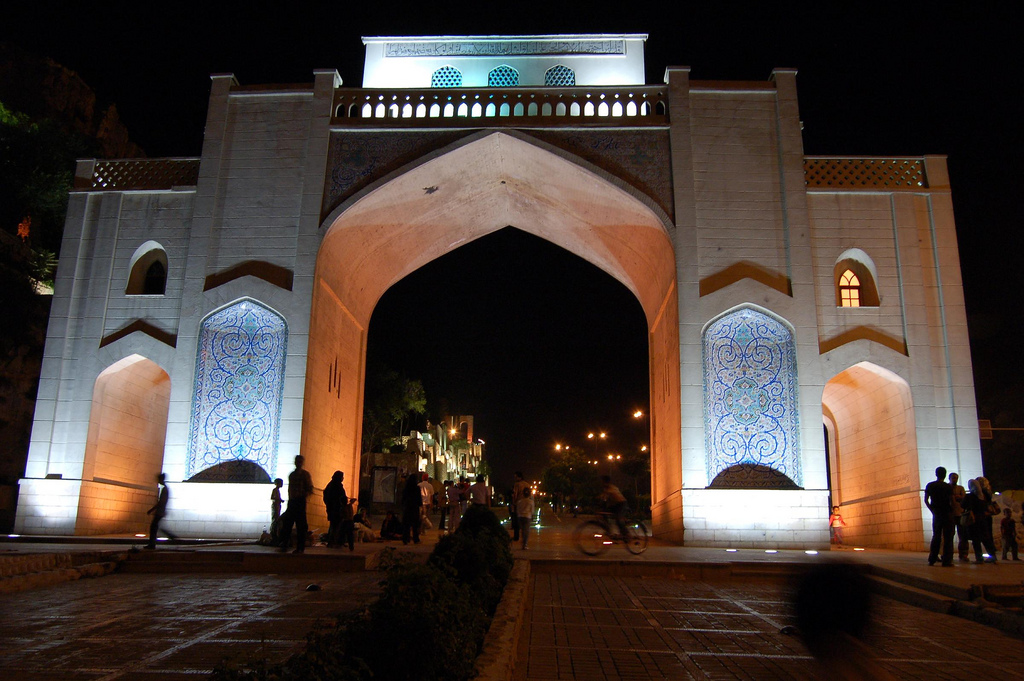
Iran architecture (ali reza parsi)Most Americans are unaware that in May 2003, the Iranian regime formally reached out to the United States to hold high-level talks. That serious and detailed offer was immediately and soundly rebuffed by the George W. Bush White House. The magnitude of opportunity to alter U.S. – Iran relations for the better was lost. We have been seeing consequences of the snub playing out in Iran’s nuclear program, which every American is aware of – an issue that may take the wisdom of Solomon to prevent from becoming an international disaster.

In this series of posts I want to explore why the Bush administration’s snub of Iran was uncalled-for, and why I believe that the West’s negotiations with Iran about its nuclear program must succeed if the snub is not going to down as the worst foreign policy decision in U.S. history. This topic is of great significance to the broader issues of stabilizing and improving relations between Western and Middle East nations. This topic has been of particular interest to me over many years because it goes to fundamental issues in the region of war and peace and diplomacy, which are crucial to The Wisdom Project.

Well-known among the foreign policy establishments of the West and the Middle East, the story of the ill-advised decision remains ignored by the media. I wrote a few paragraphs about it here. When I have talked publicly about it, people have been surprised to discover that the depiction of U.S. – Iran relations that is typically in the media and on the lips of many politicians is misleading. Here’s that story in depth. Knowing it puts us in a better position to judge what is wise or foolish policy toward Iran.

Let’s start with early 2003. Although not so long ago, it may seem like very long ago, if not referring to a different universe, when I say that at the time America and the George W. Bush White House were flying high. For a year and a half, team Bush had been greatly impressing much of the world. It had ridden the crest of its swift victory in Afghanistan into Iraq, and on May 1, after less than a month of the U.S.-led war on Iraq, the bannered motto “Mission Accomplished” hung unashamedly across the deck of the USS Abraham Lincoln, while President Bush signaled to all the world America’s precise, speedy, and bold defeat of the largest military in the Middle East.

A huge upside for Washington was finding itself breathing the air most envied and unobtainable by world capitals: extraordinary diplomatic negotiating power with capitals of the Muslim Middle East. Tehran was one of those capitals. In January 2002, in his State of the Union address, Bush included Iran with Iraq and North Korea in his “axis of evil.” Bush had now knocked off Iraq. Would Iran be next? If so, when? Was the regime in Tehran nervous? Whether or not it was, it reached out to Washington diplomatically. Since there has been no embassy-level relations between the U.S. and Iran since 1979, Iran sent a formal letter to the Bush administration through the Swiss embassy, requesting high-level talks. In the letter it named what it deemed the most pressing issues for both parties. It then awaited a response.

The offer to talk was not a low-level trial balloon, easily dismissed as such by the White House. For it to be taken seriously, the letter would have to have been endorsed by Ali Khamenei, the Supreme Leader, who holds tremendous authority over Iran’s major state institutions and has final say in Iran’s foreign policy. The letter was signed by Khamenei.

It was taken by Colin Powell, Richard Armitage, and Condoleezza Rice to the president just days after he landed on the deck of the Abraham Lincoln. Suddenly and unexpectedly faced with an exemplary moment in which to act on the humbler American foreign policy that he had promised the world in his pre-election campaign speeches, what would Bush do?

In the next post we will look the amazing contents of the letter and why Bush chose not to start talks.

©2014 by Charles Strohmer

Image by ali reza parsi (permission via Creative Commons)

THE DIPLOMACY OF WISDOM: AGENCY OF PEACEFUL CHANGE

Swords into plowshares“Wisdom is better than weapons of war.” Ecclesiastes 9:18

The Diplomacy of Wisdom: Agency of Peaceful Change
by Charles Strohmer

In recent decades, the strong, religious-like faith that we have placed in the state to solve all of our social problems has given political ideologies an unprecedented authority to control how these problems are defined and solved. The same is true when it comes to ideological analyses of international problems. This ideological control over foreign policy thinking painfully limits what political imaginations consider wise or foolish analysis and policy, and greatly strains the foreign relations between states with conflicting ideological checklists.

In this second of two articles on wisdom and foreign policy, I want to introduce some ideas about the non-ideological nature of the agency of wisdom by considering three norms of wisdom – personalness, peaceableness, and mutuality – as understood from the biblical wisdom literature. These norms were vital to the diplomatic skills of royal court officials who had been educated in the wisdom tradition, and they offer us insight into a historically sound, realistic, and non-ideological way of reasoning for analyzing and potentially resolving IR conflicts.

The personal. The most frequent image of wisdom in the literature is feminine, particularly in the book of Proverbs. There, a woman of nearly divine stature is portrayed as attractive, prudent, virtuous, competent, and speaking in the first person, offering sage advice in public squares, in noisy streets, and at city gates. Lady Wisdom explains that she has been with God since the beginning of creation, and we see her engaging with people, crying out to them, insisting on a hearing. She is a “me,” writes Alan Lenzi, “a personal presence” in the world. Here, wisdom is portrayed not as a platonic Form (see part 1), or as any kind of an abstract body of thought, but as a personal-relational agency in human affairs.

The peaceable. Wisdom’s nature as “peaceable” appears in James 3:17, in a New Testament book that Ben Witherington, in Jesus the Sage, argues is “heavily indebted” to the wisdom material found in the Hebrew Bible. And in Proverbs 3:17, the Hebrew Bible indicates that the paths of wisdom are paths of shalom, that is, of the kind of peace committed to producing social, economic, and political well-being, or flourishing. Importantly, as Rabbi Arnold Resnicoff once explained to me, the opposite of shalom is not violence or war but disorder and brokenness. “There is no shalom,” he said, “even if bullets are not flying, if hearts, minds, and souls, are still broken.” The paths of shalom, then, take us beyond cease fires and peace treaties to repairing social, economic, and political brokenness.

The mutual. Simply stated, since time immemorial everyone on the planet has participated in the same creation, shared the bond of what it means to be human, and held the same basic interests, such as to provide for their families, to see their children raised safely and educated, to be healthy, to enjoy economic well-being, to ease sufferings, and to live peacefully with others. People everywhere are so constituted, and the agency of wisdom draws our attention to this human mutuality, that is, to the deep interests, concerns, and goals shared by the human family as a whole before distinctions are made about ethnicity, nationality, or core belief.

global commomsThe wisdom tradition, then, has a vital interest in seeing relationships (domestic and international) established on mutual ground for mutual good amid their diversity (often discussed today using the adjective “common”). The agency of wisdom is normatively committed to the development of peaceable attitudes, forms of communication, and individual and institutional behaviors, arrangements, and agreements that are essential to human flourishing amid its diversity.

Nearly ten years ago, in With or Against the World?, James Skillen wrote that the “American people need to gain a deeper understanding of what it means that the world’s people and states share a single global commons, the governance of which is becoming more and more difficult with each passing year.” He then reminded us: “American failure to think and act cooperatively over the long term for the international common good is part of what threatens even America’s future.”

It will be evident to those who work to ease adversarial international relations and build more cooperative ones that nothing completely new is being introduced in this article. Seeking wisdom, however, might help us to imagine and obtain peaceable arrangements and agreements that we might not intuitively perceive as possible from within ideological frames that have become second nature to us. Even against great odds, that might at least help governance of the global commons to become a little less difficult along the paths toward shalom.

©2014 by Charles Strohmer

This article was first published in Capital Commentary, here.

WISDOM: THE MISSING AGENCY OF FOREIGN POLICY

“Problems cannot be solved by the same level of thinking that created them.” Albert Einstein

waiting to changeWisdom: The Missing Agency of Foreign Policy
by Charles Strohmer

In The Mighty and the Almighty, Madeleine Albright writes that in university she was taught that religion had no part in shaping the world of foreign policy. Hans Morgenthau, George Kennan, and Dean Acheson, she writes, theorized in almost exclusively secular terms. Religion wasn’t rational. To talk about it invited trouble and diplomats were taught not to invite trouble. “This was the understanding that guided me while I was serving as President Clinton’s ambassador to the United Nations and secretary of state.” Because of the events of September 11, 2001, however, “I have had to adjust the lens through which I view the world.”

Wisdom has suffered a fate similar to that of religion, and an adjustment is needed. The seeking of wisdom for foreign policy decision making often gets been trumped by rigid a priori reliance on forms of ideological thinking, such as American exceptionalism or political realism, idealism, or neoconservatism. Wisdom is often the first casualty when an ideological frame becomes the only grid through which leaders and their advisers analyze events and take decisions.

Part of the reason why wisdom gets such short shrift can be found in the universities. The philosophical starting point for studies in international relations and foreign policy can be traced historically to the roughly one-hundred-and-fifty-year period of classical Greek philosophy and its highly abstract thinking during the fifth and fourth centuries before the time of Christ. From this period, IR scholarship relies heavily on Thucydides, Plato, and Aristotle, especially Plato. As Alfred North Whitehead once quipped, “All Western philosophical thinking consists of footnotes to Plato.”

This starting point is understandable given the foundational indebtedness that Western intellectual life owes to Plato’s theory of Forms, or Ideas, as archetypal ideals, including the array of Western political ideologies for shaping the state, for instance, or for what justice should be. Political ideologies affect analyses and decisions in many areas, such as the way leaders make sense of international relations and forge relationships with one another; the way one nation perceives another; the way states act toward one another; the momentum, or lack of it, in negotiations; and much more besides, including decisions about peace and war.

But IR studies do not go back far enough. There is much insight to be gained by going back to the wisdom tradition of the Ancient Near East, to a time when royal court officials were educated in the wisdom tradition and the agency of wisdom played a vital diplomatic role in creating and sustaining peaceable international periods. This area of research has been sorely neglected by IR scholarship. Even impressive works such as Amarna Diplomacy and Brotherhood of Kings do not consider the vital role of wisdom in ANE diplomacy. That role, however, is seen in many of the political narratives of the Bible and in its wisdom literature, as well as in the wisdom literature of other ANE cultures.

Granted, the Bible frequently shows ancient Israel and her neighbors at war with one another, and the prophets often criticize Israel and its kings for their failures to do justice. Also, the nations of the ANE were no less religiously ideological, for instance, than those of today’s Middle East. Nevertheless, in the wisdom literature, and in some of the Psalms, and in numerous political narratives elsewhere in the Bible, there is preserved for us evidence of the peaceable counsel of wisdom that rulers, their advisers, and the peoples should heed.

This has been the focus of my research on The Wisdom Project, part of which has included trying to approximate the sages’ wisdom-based way of reasoning about life, which is not the same as ancient Israel’s priestly or prophetic actors. One of the most remarkable discoveries has been to find that wisdom is not abstract, ideological, or theoretical, nor is it sectarian. Instead, the agency of wisdom is personal (relational), peaceable, and committed to the mutual good of all humankind within its diversity.

In the second article of this 2-part series, I want to consider three norms of the wisdom tradition: personalness, peaceableness, and mutuality. These norms were vital to the diplomatic skills of royal court officials who had been educated in the wisdom tradition, and they offer insight into an historically sound, realistic, and non-ideological way of reasoning for analyzing and potentially resolving our thorny IR conflicts.

©2014 by Charles Strohmer

This article was first published in Capital Commentary, here.

SPYING ON FRIENDS: FACT & FICTION

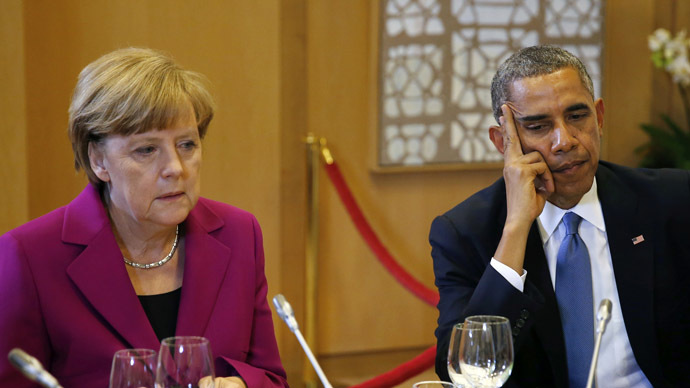
U.S. President Barack Obama and German Chancellor Angela Merkel listen during the G7 Summit working dinner in BrusselsThis week, Germany expelled the CIA’s top spy in Berlin. It was called an “extraordinary escalation” in the espionage confrontation between two close allies, which began with last summer’s revelation that the NSA was spying on its European allies (No!). Thank you very much Ed Snowden, whose cache of stolen NSA documents may possibly outlast the staying power of the Energizer Bunny®.

Shock. Anger. Breach of trust. All of this and more was felt by the German public last year. A formal investigation was launched, and now the expulsion, apparently for political reasons surrounding lingering public outrage in Germany at the United States.

What shocked me when the original story broke last year, and no doubt it shocked you too, was the disingenuous outrage of the European leaders themselves. Friends and allies spying on each other? That’s a surprise? To those in the corridors of power? Come on. They’ve read their John LeCarré.

The scene is the paneled library of Sarratt, LeCarré’s fictional school for British spies, who this evening, in candlelight, are being regaled by true stories from the guest of honor, the inimitable George Smiley, once Britain’s top spy, now retired. It’s the end of the Cold War. The students are graduating, and the usually secretive Smiley is being an exception his own rule, revealing instructive incidents from his legendary career – mind you, in a room where no recorders are running, no notes are being taken, and no official reference afterward my be made to what was said.

It’s now after dinner. Smiley’s introductory remarks about the globe and its spies are going down with the port, and now the questions are coming – about interrogations, about loyalties, about colonialism, about running joes, about espionage …. Then a challenge from Clare, seemingly about journalists but really a hint that spying may be a dying profession now that the Cold War has ended. Why bother with spying at all? she asks Smiley. Nine times out of ten a good journalist can tell us quite as much as the spies can.

True, says Smiley, “very often they’re sharing the same sources anyway. So why not scrap the spies and subsidize the newspapers? It’s a point that should be answered in these changeable times. Why not? It’s perfectly true that most of our work is either useless, or duplicated by overt sources. The trouble is, the spies aren’t there to enlighten the public, but governments. And governments, like everyone else, trust what they pay for, and are suspicious of what they don’t.”

Then quickly to the deeper issue. “Spying is eternal,” Smiley continues. “If governments could do without it, they never would. They adore it. If the day ever comes when there are no enemies left in the world, governments will invent them, so don’t worry. Besides – who says we only spy on enemies? You’re chosen profession is perfectly secure, I can assure you.”

©2014 by Charles Strohmer

Sarratt story from John LeCarré’s The Secret Pilgrim

Image from Reuters

MOSES AND THE ROLE OF WISDOM

Moses BridgeCenturies after the Joseph narrative, along come Moses, an Israelite who, soon after birth, becomes the adopted son of a pharaoh’s daughter and is raised and educated in the Egyptian royal court. Commenting on Moses’ schooling in Egypt, the New Testament book of Acts explains that “Moses was educated in all the wisdom of the Egyptians” (Acts 7:22). This statement squares with the findings of modern scholarship, that Egypt’s royal court was where gifted and chosen young men were formally educated in Egypt’s  wisdom tradition. And such an educations would have included both religious and political instruction. (See this post and also this post, both about Daniel, for brief descriptions of the wisdom schools of the old-world middle East.)

Decades later, however, Moses has switched national allegiances. He is now a patriotic Israelite and, now also commissioned by Yahweh, he becomes a clear and present danger to Egypt’s national security (Exodus 2-12). In hopes of thwarting the looming existential threat, pharaoh summons his “wise men” [the Hebrew word is hakamim”] to seek advice (Exodus 7:11). You know the outcome. Pharaoh loses the war. Perhaps a million people or more, mostly Israelites but many non-Israelites as well, have been freed from oppression and slavery, while much of Egypt lies devastated and pharaoh’s army has been decimated.

Some months afterward, Moses appoints hakamim from each of the twelve tribes of Israel as advisers and judges to keep order over the roiling multitude, which is now stuck in a hot desert, where temperatures are flaring and arguments and fights are breaking out everywhere. These newly appointed officials, with Moses as the sort of Supreme Court Justice over them, become a defacto governing structure of the nascent society that is now in the process of being formed out of Egypt (Exodus 18; Deuteronomy 1). In a future post I want us to take some time with this absolutely fascinating narrative, but here I am merely continuing what we began in the previous post, which is to briefly acquaint us with some biblical addresses where the role of wisdom in the governments of the old-world Middle East, although clearly evident, has often been unseen by contemporary Christians.

To continue, then. In Persia, King Xerxes, in the delicate matter of deciding Queen Vashti’s fate, sends for his “wise men” [hakamim] for advice on the legal issues he will face when devising a policy to deal with this sensitive matter of the nation’s domestic life (Esther 1:13). The same language, hakamim, is also used in the book of Esther for the officials who advise Haman, King Xerxes treacherous courtier (Esther 6:13).

There are numerous other examples that could be cited of what we may call the diplomatic corps of the Middle East. For anyone seeking wisdom for international affairs and foreign policy, a close reading of these narratives will yield many gems. Women, too, were notable for their wisdom. In the next post we will look at two fascinating stories of women who were diplomatic figures.

©2014 by Charles Strohmer

Image by timtom.ch (permission via Creative Commons)

JOSEPH AS A WISE EGYPTIAN DIPLOMAT

ancient Egypt in Legos (Colin Keigher)The story of Joseph in Egypt is the first place in Scripture where the role of wisdom and foreign policy is clearly apparent in the politics of an old-world Middle East nation. Egypt is in fact a super power with an expanding empire. There, a young man named Joseph, an Israelite, serves as a high-level political and diplomatic official in pharaoh’s government. I don’t want to spend a lot of time on this multi-dimensional story, which, as someone has aptly said, reads like a coherent novella, with a subtle a well-crafted plot (Genesis chapters 37; 39-50). Instead, I want to draw attention briefly to the roles of Joseph and wisdom in the Egyptian royal court.

In the Joseph narrative we have a kind of precursor, or Egyptian equivalent, to the stories of Daniel in Babylon and Ezra in Persia. In the book of Daniel we see diplomatic wisdom in the skill whereby Daniel handles, with grace and aplomb, severe personal threats from political enemies. In the book of Ezra we see the role of wisdom in Ezra’s role as a shuttle diplomat implementing a foreign policy of King Artaxerxes of Persia. In the book of Genesis we see Joseph appointed by pharaoh to a very high political office among the hakamim of his royal court.

Now a little wordplay before we continue.

(1) “Hakamim” appears many times in the Hebrew Bible to denote a respected class of high-level officials and advisers to a king. These were usually government officials whom today we would call ambassadors, diplomats, foreign ministers, secretaries of state, international negotiators and mediators, and so forth.

(2) The word “hakam” appears frequently in the Hebrew Bible to denote a wise and very skilled individual, often a high-level official in a royal court.

(3) “Hokma” is the principal Hebrew word for “wisdom.”

Note that these three words derive from the Hebrew root word “hkm,” which has meanings such as: be wise, become wise, act wisely. Vowels are added to hkm to help with pronunciations and to add nuances of meaning. The suffix “īm” is added to hakam to indicate the plural, the class, the group, in contrast to the individual hakam.

The earliest biblical clues about the hakamim and the role of wisdom in ancient Egypt are found in Joseph’s ascension from prison to politics. As described in Genesis 41:8, an unnamed pharaoh summons the “wise men” (hakamim) of Egypt to interpret an ominous dream he has had. But, as with king Nebuchadnezzar in the book of Daniel, pharaoh’s elite court councilors cannot interpret the dream and pharaoh hears rumors of someone who may be able to. In a fit of desperation he summons this unlikely person, a Hebrew slave of his, who, having been framed for a crime he did not commit, is serving a lengthy prison term. Joseph is taken from prison, cleaned up, and brought before pharaoh, who is wasting no time over petty details. Joseph interprets the dream, and, like Daniel standing before Nebuchadnezzar, gives God the credit.

The dream forebodes a long and catastrophic economic period for Egypt that will have both domestic and international ramifications for the empire. In his back-and-forth with pharaoh about this, Joseph suggests that pharaoh find a discerning hakam (41:33) who can create and implement a policy that will preserve Egypt’s national interests during. Joseph even outlines a policy that pharaoh might want to follow.

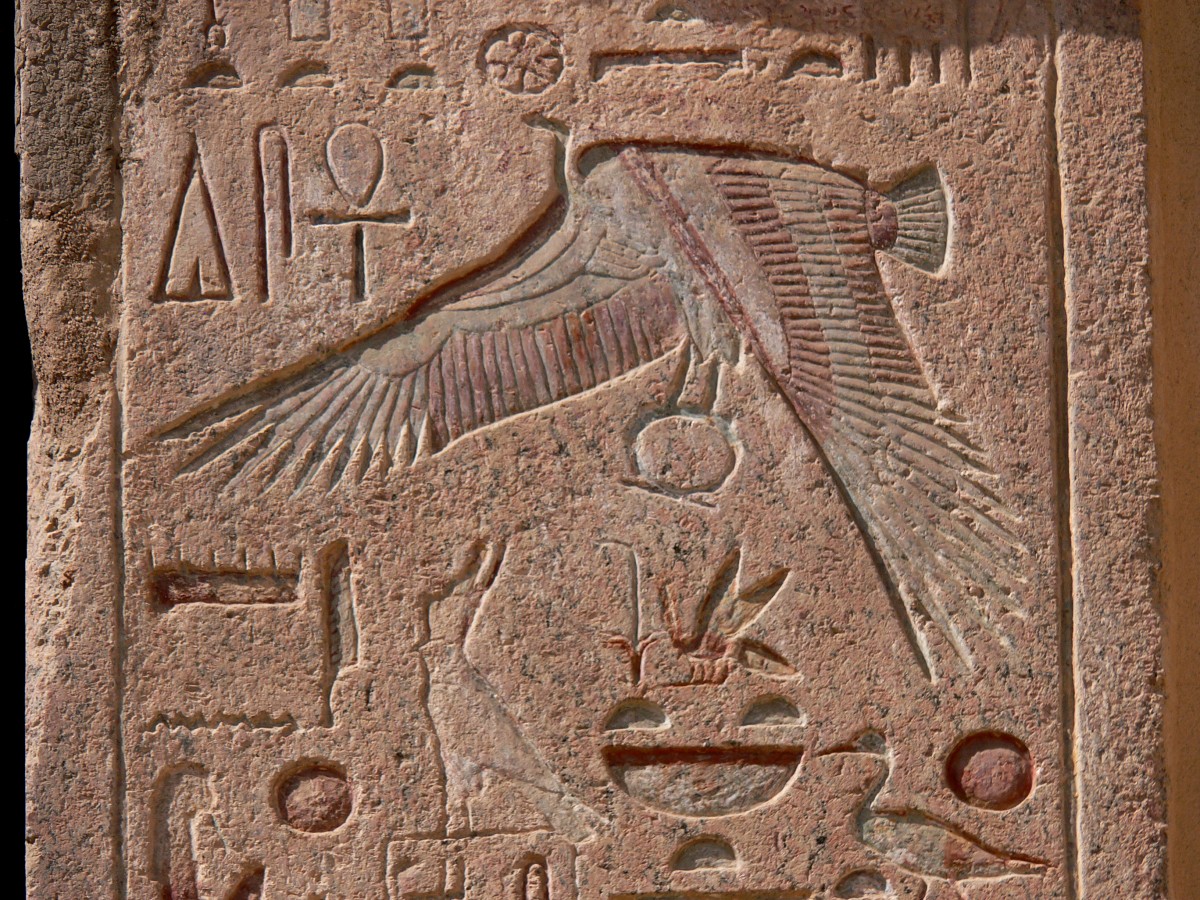
Detail doorway to chapel of Amun - Temple of HatshepsutBoth pharaoh and his officials approve the policy, and pharaoh goes so far as to attribute the policy to the Spirit of God in Joseph – implying Joseph’s divine wisdom and insight – not unlike Nebuchadnezzar’s testimony about Daniel. Pharaoh then identifies Joseph as a gifted hakam, saying “Since God has made all this known to you, there is no one so discerning and wise [hkm] as you” (41:39). Pharaoh then caps it all off by appointing Joseph as second-in-command of the nation, giving Joseph carte blanche over the nation’s domestic and international economic policy.

The details of the policy, its implementation, and its domestic and international implications spanned more than a decade but do not concern us here. I only wanted to draw out the overlooked fact of Joseph’s role as a hakam among the hakamim of the Egyptian government. In that role Joseph was at times policy maker, diplomat, foreign minister, and negotiator. In other words, he was a high-level official in the diplomatic corps of the old-world Middle East. The policy was seen as a great success by many, including by Joseph, who implicates God in it and explains that its purpose was to save, or preserve, lives (Genesis 45:7). As we might say today, it was a policy for the common good, both domestically and internationally.

Aside: In the interest of full disclosure, I should say that not all theologians see the policy in a positive light. Walter Brueggmann, for one, is deeply critical of it. He considers pharaoh’s Egypt as “the paradigmatic enemy of the common good.” As such, he sees Joseph as administrating a policy designed to manipulate the Egyptian economy, increase its wealth, and thereby gain greater control over the Egyptians and further expand the tentacles of its empire. You will find this assessment in the early pages of Brueggemann’s Journey to the Common Good. The argument, however, is based on selected texts. Because of texts that he omits, such as Genesis 45:7, and because a negative view of wisdom in the story informs his comments, I cannot agree with him on this one.

In the next post I want us look briefly at two or three more Old Testament narratives about wisdom and diplomacy.

©2014 by Charles Strohmer

BECOMING A NATION AMONG NATIONS

dominoesOne of the great tipping points in the history of ancient Israel was its choice to become a formal nation among nations (a monarchy among monarchies). Israel’s process toward national self-determination, to what today we call statehood, began with the establishing of organized settlements throughout the land of Canaan. The process culminated a few centuries later when Israel the people became Israel the state – that is, they became like the nations around them – a monarchy state – and Saul was made its first king (1 Samuel 8–10).

This historical tipping point affected the entire society, including, and perhaps especially, its domestic and international political life. Books have been written about this. But here I just want to consider an often overlooked fact. On becoming a formal nation, and to be accepted as such by the regional powers, it was necessary for Israel to make the kind of governmental changes whereby it could formally participate in the international system of the old-world Middle East. The newly established monarchy therefore had to enter into that international monarchial system, that is, into the established way that international politics and foreign policy was being conducted – think of how a new state today joins the United Nations.

By becoming a state (I’m using that term in a general political sense), old-world Israel had turned a political corner, one that demanded significant changes to its existing political structure. The new state established the governmental apparatus and bureaucracy necessary to gain an international footing and acceptance like the other nations.

This meant, for instance, enthroning a king, picking a cabinet, establishing a capital, and drafting and institutionalizing new domestic laws, such as for raising an army and the taxes to fund both it and the new and growing government bureaucracy. As William McKane put it: “Israel became a state with a new political structure which demanded the creation of a cadre of royal officials through whom the king governed this people” (Prophets and Wise Men, 42.) But it also entailed political changes whereby the new state could enter formal relations with the other regional powers, such as Egypt.

What needs to be recognized and acknowledged is that Israel the state could not create a foreign policy structure that was, so to speak, completely foreign to the existing international paradigm. Now that existing regional paradigm, of course, was not perfect, and the nations in it were often adversarial due, in no small part, to their conflicting religious-political ideologies.

But that international system was also hugely informed, as we noted in previous posts, by the wisdom tradition and the royal court officials who (prior to becoming government officials) were educated in that tradition’s peaceable way of reasoning. In other words, once Israel rounded the corner, it would be formally participating in an international system that had been in play in the region long before “Israel the state” entered it. We should therefore not be surprised to see many governmental similarities between Israel the state and the other regional powers.

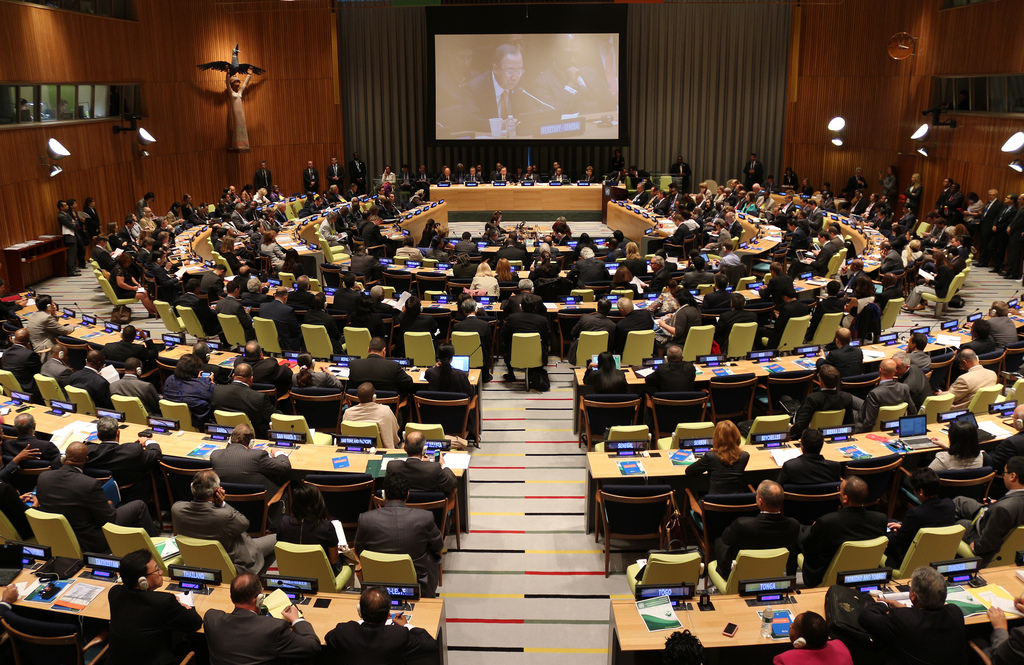
UN meeting (UN Info Centers)Think of the founding of the United States. Although the nation was not established after the order of a European monarchy, but as a republic, it nevertheless had to function within the existing international systems of its period. To put it crudely, the United States could not say, We’re not going to play the game because we’re a republic and not a monarchy. The United States, then, beginning with its first president, George Washington, engaged in diplomatic missions, negotiations, treaty agreements, and so forth. These took place across the Atlantic in European and north African nations and in  islands in the Pacific, including Hawaii, with a view toward engaging with China.

So too with ancient Israel. There is a pretty solid consensus among scholars, for instance, that during the long reigns of Israel’s second and third kings (David and Solomon), “Israel was in the Egyptian … sphere of influence,” and that in the close relations between Solomon and Egypt, “we ought to seek there for the models of Solomon’s bureaucracy” (Ibid., 23.) Citing the period during Solomon’s commercial enterprises with Hiram, king of Tyre, and Solomon’s alliance with Egypt through marriage, McKane concludes that “the Israelite state was modeled on the great states of the ancient Near East and so acquired a structure similar to that of Egypt.” It was a “political structure” in which there was associated with the king “a class of royal officials who had to do with the army, finance, foreign embassies and administration. Such officials were a ‘people of the king’ and had a common interest with him in maintaining the regime and suppressing popular resistance and discontent” (Ibid, 43).

The wisdom tradition played a vitally huge role in all of this, especially internationally. We have already considered the significant point that the wisdom tradition was cross-cultural and transnational in the old-world Middle East. Further, it was taken for granted in the corridors of power throughout the region that royal officials, especially those working internationally, would have been educated in their countries’ wisdom traditions. This seems to have been such an accepted part of international political life that it was unquestioned. It was a given. I want to call attention to two upsides to this.

(1) A ruler such as a Babylonian or a Persian king could feel comfortable and confident to include religious outliers, such as a Daniel or an Ezra, in his government, even as an official at the highest levels. This was an accepted norm in the international system of the region.

(2) A believer in Yahweh, such as a Daniel or an Ezra, could serve in a “pagan” government with a clear conscience.

Neither of these facts may seem a big deal in the context of today’s western nations, in which people of different faiths may serve in their nation’s government. But it is not a universal international norm today. In many Middle East governments, for instance, such as Iran or Saudi Arabia, Jews and Christians need not apply.

In the next post I want us to consider this international norm in the life of Joseph, an Israelite who served as a high-level diplomatic official for many years in Pharaoh’s Egypt.

©2014 by Charles Strohmer

Images by Great Beyond and UN Info Centres, respectively (permissions via Creative Commons)

THE DIPLOMATIC COMMUNITIES OF THE OLD-WORLD MIDDLE EAST

light at end of tunnellBeginning with this post some months ago, we began looking at the wisdom tradition’s close, albeit the forgotten, relationship to cooperation, peace, and diplomacy in the old-world Middle East. A few weeks later I began to illustrate those ideas, and this surprised people, on the diplomatic roles that were hiding in plain sight in the narratives of  Daniel and Ezra.

Now it is never good procedure to rest a case for the recovery of a lost way of seeing – in this case wisdom and the diplomatic – on one or two narratives – even if they are as impressive and convincing as Daniel and Ezra. Fortunately, the theme of wisdom and diplomacy is not an irregularity in the Scriptures. Daniel and Ezra are merely two narratives of many disclosing political actors, in one way or another in the old-world Middle East, functioning as part of what today we today would a regional foreign policy community.

In these narratives, the two most prominent classes of high-level officials that we see in the diplomatic corps were known in the Hebrew Bible as the hakamim and soperim. In brief, the former served chiefly as what we today would call ambassadors, diplomats, foreign ministers, secretaries of state, international negotiators and mediators, and so forth. The latter included diplomats, royal secretaries, master secretaries (usually professional writers whom English translators usually call scribes), and even, occasionally, high-level ecclesiastical figures and civil servants.

These two classes of high-level officials would have been educated in the wisdom traditions of their royal courts, they worked alongside each other, and their their roles could overlap. Both the hakamim and the soperim, along with other kinds of royal court officials, were indispensable to a nation’s domestic politics and international relations.

One of our difficulties is that we may be so familiar with reading the Bible in certain ways that we don’t see the wisdom-diplomatic connection and the vital insights that this way of seeing Scripture has to offer for today. For instance, if we are reading chiefly for our devotional life and personal moral development, and perhaps for help with our families and our finances, it will probably take a deliberate turning of the head to see wisdom in its diplomatic role.

There is of course nothing wrong with engaging with Scripture in those other ways, and we wouldn’t want to ignore them. But on this blog we are turning to Scripture, “reading” it, in a way that asks different, yet importantly relevant, kinds of questions.

I began getting a buzz on how significant wisdom and the diplomatic corps of the old-world Middle East was many years ago, when I was researching the period when “Israel the people” became “Israel the state.” In other words, when ancient Israel became a nation among the nations (a monarchy among monarchies) and was recognized internationally as such. There are some telling clues about this in the Scriptures, which may help us in furthering our understanding of the diplomacy of wisdom. I want to look at those clues in the next post.

©2014 by Charles Strohmer

Image by Silver Rose (permission via Creative Commons)