
The Wisdom of Old Books & Original Sources

old books“There is a strange idea abroad that in every subject the ancient books should be read only by the professionals, and that the amateur should content himself with the modern books.” That’s C. S. Lewis, from his Introduction to a classic text, St. Athanasius on the Incarnation. Lewis wrote that Introduction seventy years ago, and it’s well worth hearing the rest of his admonition today.

He continues: “Thus I have found as a tutor in English Literature that if the average student wants to find out something about Platonism, the very last thing he thinks of doing is to take a translation of Plato off the library shelf and read the Symposium. He would rather read some dreary book ten times as long, all about ‘isms’ and influences and only once in twelve pages telling him what Plato actually said.

“The error is rather an amiable one, for it springs from humility. The student is half afraid to meet the great philosophers face to face. He feels himself inadequate and thinks he will not understand him. But if he only knew, the great man, just because of his greatness, is much more intelligible than his commentator. The simplest student will be able to understand, if not all, yet a very great deal of what Plato said; but hardly anyone can understand some modern books on Platonism. It has always therefore been one of my main endeavors as a teacher to persuade the young that first-hand knowledge is not only more worth acquiring than second-hand knowledge, but is usually much easier and more delightful to understand.

ancient library (Duke edu.)“This mistaken preference for the modern books and this shyness of the old ones is nowhere more rampant than in theology…. Now this seems to me topsy-turvy. Naturally, since I am a writer, I do not wish the ordinary reader to read no modern books. But if he must read only the new or the old, I would advise him to read the old. And I would give him this advice precisely because he is an amateur and therefore much less protected than the expert from the dangers of an exclusive contemporary diet. A new book is still on its trial and the amateur is not in a position to judge it. It has to be tested against the great body of Christian thought down the ages, and all the hidden implications (often unsuspected by the author himself) have to be brought to light…. It is a good rule, therefore, after reading a new book, never to allow yourself another new one until you have read an old one in between. If that is too much for you, you should at least read one old one to every three new ones.

“Every age has its own outlook. It is specially good at seeing certain truths and specially liable to make certain mistakes. We all, therefore, need the books that will correct characteristic mistakes of our own period. And that means the old books.”

I have been thinking about Lewis’s admonition in the context of presidential speeches – the original sources where we hear the actual words of a President and make up our own minds – one-to-one, in an unmediated way – about what a President has actually said, rather than relying on a second- or third- or fourth-hand interpretation. As Lewis might have said, we have a mistaken preference for listening to how our political analysts interpret a President rather than listening ourselves the President.

It is a good rule, therefore, never to allow yourself to listen to an analyst, or a political challenger, or a pundit on talk radio until you have first heard the President describe a problem and explain a solution to end the problem. I began doing this myself much more often since the 1990s, beginning with President Bill Clinton, and it has been very surprising to me to see how distorted a view analysts, challengers, and others, with their rigid ideological agendas, can have of a President’s actual words and meanings.

Let us remember Lewis’s admonition as we here in the States now head into a year-and-a-half of political campaigning for the November 2016 elections. Heeding Lewis will make us not only wiser citizens and voters but greater respecters of truth.

©2015 by Charles Strohmer
The Pain of the Victim: Extending the Reach of Gospel

The Confession: Frank DickseeIn the previous post I told a personal story about the healing potential of a public apology from a Christian to a nonChristian. I didn’t realize how deeply that story was going to resonate with readers. As they responded with stories of their own, I thought that it might be worthwhile today to share a thought about why I see that kind of apology as a missing jewel in Christianity.

It’s a blind spot that we have, theologically. Christian doctrines of sin and salvation are big on the moral agency of the sinner and his or her standing before God as guilty, and our pulpits ensure that we get this. It’s a good thing. If we are unwilling to accept that we are sinners, we never make it to the first step of salvation. So far, so good.

But we have an “I-me-mine” problem. If our pulpits are only pounding out a theology of sin, guilt, and reconciliation with God in which I am sole subject and object, the concerted focus on my own sin and my own guilt and pain can easily leave me inadequately prepared to deal with the sufferings of the victims of my sin.

The Wounded Heart of GodBy being fixated on “the sinner saved by grace,” the church truncates the reach of the gospel by overlooking the person sinned against. The church, therefore, has precious little salve for the pain of the victims of sin. This is the theme of The Wounded Heart of God, a book by Andrew Sung Park, which I think should be read by every Christian.

Park, a Korean American theologian, argues that the church throughout its history has almost unilaterally focused on “the sinner’s” sin, repentance, and forgiveness when thinking about the problem of human evil. As a result, we Christians have an inadequate understanding of sin and guilt if we fail to include the sufferings of the victims of sin.

Most of the book, however, discusses the pain of the victim by exploring the Asian concept of han. I found this approach hugely helpful in getting rid of my own “I-me-mine” problem. Han, Park writes, is the ineffable experience of deep bitterness and helplessness suffered by victims of various types of wrongdoing, whether it is the han of individuals or of groups, and it may be conscious or unconscious.

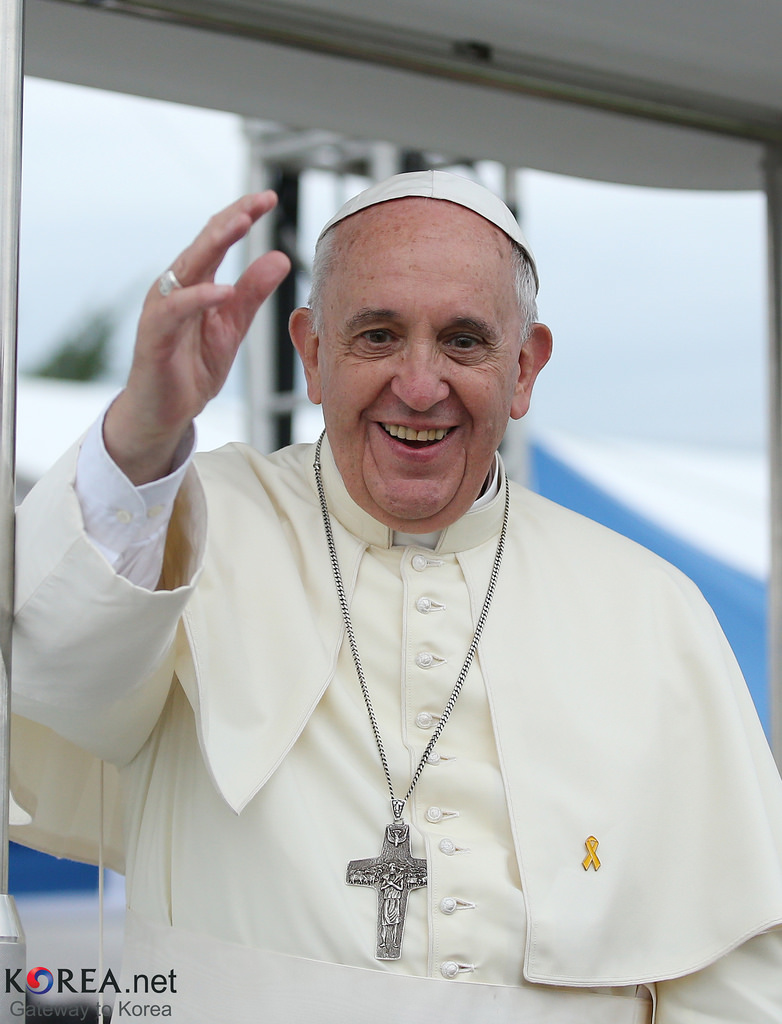
Pope Francis in KoreaPark’s discussion of han ranges from that of exploited workers, to holocaust and incest victims, to racial and cultural discrimination, and to the ruling power of capitalism in the developing world. He offers many other illustrations as well, all with the purpose of showing where the resolution or dissolution of han is needed, whether individually or collectively. (He even includes a short discussion about the han of animals and nature, based on Romans 8:19-23).

“Han is frozen energy,” Park writes, “that can be unraveled either negatively or positively. If it explodes negatively, the han-ridden person may seek revenge, sometimes killing oppressors. If han implodes negatively, the han-ful person can slip into fatalism that might develop into mental disorders or suicide. If han is unraveled positively, it can be converted into the fuel for transforming the social injustices which cause han in the first place and for building up a new community.”

The Wounded Heart of God seeks to redress a theological imbalance with practical admonitions to the church to understand the pain of the victim in its view of sin and the gospel. This is essential to the good news. Have we missed extending that saving grace to others?

©2015 by Charles Strohmer

Top Image by Free Parking and bottom image by Korea Net (permissions via Creative Commons)

Our Confession is Good for Their Souls

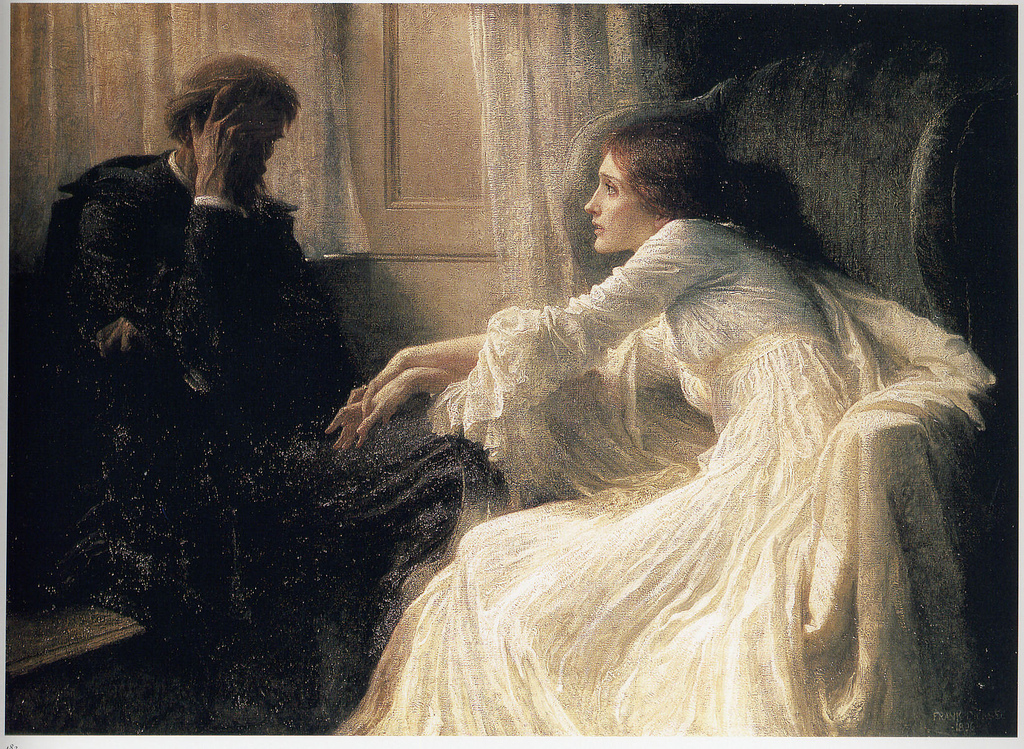
sorry skywritingLike many people who would not consider themselves Christian, I as a Christian have grown to dislike much of what passes as Christianity. If it’s not one thing, it’s another. Talk-radio clichés parroted by the Christian right; the ideological liberalism of the Christian left – both seem to me as different from a gospel-shaped wisdom as night is from day. And far too much privatized pietism and the Hellenistic dualism remain to be swept from our minds.

Inside various kinds of church leadership for decades, I have seen churches run more like business enterprises, psychology sessions, entertainment centers, or political enclaves rather than as sacrificial, life-giving biblical communities working for justice. I have worked in the Christian publishing industry for thirty years and been burned more than once by publishers increasingly organized around the gods of gold and silver more than the God implied in their founding principles. Like churches that follow a similar path, staying committed to “staying in business at all costs” is costing them dearly: the fear of the Lord.

People who are not Christians are not stupid. They pick up on this stuff that we try to pass off as Christian, and they see through it. All sorts of bad rumors about Christianity – many are deserved – have lodged in people’s minds as obstacles to seeking a gospel-shaped wisdom for the ills of the world. When nonChristians see us as hypocritical, irrelevant, simplistic, offensive, or even comic, we have stripped ourselves of our prophetic calling in the realities of contemporary life and end up with little public relevance.

Rather then being voices and samples of biblical truth, healing, and justice to a nation of drifting sinners, exhausted ideologies, and failing structures we too easily take our cues from the world system (already judged by our Lord). What is a transforming vision organized around the principle of a sacrificial life to us? We Christians thus deprive our communities and nations of true insights into their problems. Are we not, then, “wretched, pitiful, poor, and blind”?

Alternatives will have to arise, and many are, but the extent of what needs to take place often seems like a pipe dream to some of us. However, I have been talking in broad categories and abstractions here, but those are not what one meets in real life. There, it is people we meet. People with wounds from Christians. I believe that before we will ever be able to get a fair hearing from such people for whatever truly Christian alternatives we have on offer, we ought to start apologizing publicly for doing so badly. And I think that those of us who are public Christians have a special responsibility here. I have personally seen such wounds healed through a public apology.

Some years ago while traveling and teaching about a Christian view of the New Age Movement, I met two “readers,” as the women called themselves, who turned up at a Davis-Kidd bookstore where I was signing my recent book, a Christian criticism of a New Age subject. They were professional psychics and we had an interesting conversation. It became clear to me that the two women represented the class of non-Christian spiritual seekers who saw through Christian dopiness about the New Age. “A friend said you might be different,” they told me. “So we’ve come to see.”

Their honesty was refreshing, and they were not being petty or cynical or ever bitter as they described some Christian failings they had encountered. They just wanted to think out loud with me about why some Christians don’t seem to know any better. Even though I’m a professional gasbag I really didn’t know what to say to them. But as I listened I began to sense that, as a Christian minister, I ought to offer some sort of apology for the church’s failing of them. But what to say?

Then the penny dropped and I swallowed my pride and said, “I’m also disillusioned about much of the current state of Christianity. In fact, I feel so strongly about this that I wrote about it in my new book. May I read a couple paragraphs to you?” They were good with that, so I picked up one of my books from the table and read from it.

What I read wasn’t a formal apology, but it showed them a public face of Christianity that they had not encountered before. It acknowledged their concerns and commiserated with them, instead of fobbing off their legitimate criticisms and going for the juggler and, say, rebuking them for being psychics.

I don’t know what happened to those two ladies afterward, but we continued to talk and eventually they left. But not before they bought two of the books. Now I had some tough love in that book about the New Age. Did my “apology” lay the groundwork for that to speak to them later? I don’t know. But I do know that they wanted some honest conversation.

on air radioElsewhere during those same years, but now in Nottingham, England, near the legendary Sherwood Forest, I participated in a live, radio debate with a popular spirit medium (I’ll call her Sheila). Just minutes into the gave-and-take it was obvious to both me and the presenter that Sheila was being unjustifiably antagonistic toward me. You could feel the tension in the air of that quiet radio studio. Of course the presenter saw the makings of a real dustup, but I wanted to reach the woman’s heart. And something was definitely in the way. I had a hunch, looked to Heaven, and took a risk.


“This is off the subject,” I said gently, ignoring the presenter’s next question to me. “You seem upset with me. Have I offended you in some way?” When she said no, I asked if she had been hurt by other Christians. “Yes,” she said. “I’ve had some pretty bad experiences. I wasn’t even going come here today when they told me that a Christian would also be here. I’ve learned to stay away from Christians.”

Now what? I was acutely aware that this was going out live – who knows how many were listening – and that the presenter wanted to control what took place. And he wasn’t expecting Sheila to suddenly be talking about some of the wounds she had received from Christians. I was getting nervous and wondered where this was headed. Who ever heard of a debate like this?

I looked to Heaven and took another  risk. “I don’t know if this will make sense,” I said, “but as a representative of Christianity, I want to apologize to you on behalf of those Christians.”
In the air and on the air things changed dramatically. It was one of those golden moments. Her animosity melted away. I remember her brightening and saying how nice it was finally to be talking “to a Christian who understands.”

The presenter, bless him, after sidelining himself for a few minutes, reentered the conversation and we improvised for the remaining few minutes. Outside the studio afterward, Kris astonished me. “What are you doing this afternoon?” she asked. “If you’re not busy, how would you like to see some of the historic sights around Nottingham? My daughter and I could show you Sherwood Forest or take you to see the cathedral.” Or take you to see the cathedral? My. What had happened? Unfortunately, I had another commitment, but I probably would have taken her up on the offer otherwise.

An appropriately sincere apology to a nonChristian by one Christian on behalf of Christian failures can be an intercession that warms an offended heart and closes the gap between that person and Jesus. Confession is good for the soul. It may be good for others’ souls too.

©2015 by Charles Strohmer

Images by Butupa and Radio Caravane respectively (permissions via Creative Commons)

Christ the Editor

pen, poem, and inkI’ve been thinking again about a peculiar collection of poems that God is writing, and about how great poems get written.

Just as every note in a musical score is significant, every word in a poem tells, and tells significantly. And it does not line up that way by chance or sloth. Poetry, with its compact, exact language and precise punctuation, may be the most carefully crafted and painstakingly written, and edited, form of communication. Poets will fight tooth and nail with a publisher over placement of a comma. And long before that, poets, at least the best of them, may die a thousands deaths over just one poem. Without a will to erase, add, move, or revise lines, to puzzle perhaps for hours over the right word, image, or phrase – then decide to leave it as is – and then to run through the process again, and then again, you just don’t get ascending poetry.

Back in the days of the Greek epic poet Homer (eight centuries before Christ), pieces crafted from metal were called poiēma, a word derived from poiēo, which was a basic term for all kinds of craftsmanship. Within a few centuries, around the time of Plato, poiēma in Greek literature had developed into a word that often denoted what we today would call artistic work, including the work of someone who wrote a book or a play. Plato and others after him also used poiēma especially of poetical works. Quite easily, then, the early church pressed poiēo into service in New Testament Greek to indicate God’s works as creator and redeemer and Jesus’ works and deeds.

So along comes the literate St. Paul, apostle to the Greeks, or Gentiles (as he is called). Paul has a knack for raising the stakes of the common language of his day, as he does with poiēma. In the context of what it means for the believer to be saved by grace through faith in Christ, Paul says, “We are God’s poiēma,” which English translators typically render: “We are God’s workmanship,” or God’s “handiwork,” or God’s “masterpiece.” (I think the latter is the most accurate rendering in this context, Ephesians 2:10.)

The apostle has involved us in a little wordplay here. I don’t mean that we should get all sentimental and call for a new translation: “We are God’s poems.” But we do get our English word “poem” from poiēma. So we have good reason for meditating on the implications of what it means by God’s grace to be God’s poems. You can bet Paul was.

For God’s poiēma, the editorial process began when we submitted our stories to Jesus the Editor, for consideration to be published. Submission is the hard part. We have worked so terribly hard, and for such a long time, on our own stories. And we’re so proud of them. If anyone tries to touch them, look out! So we’re deathly afraid of editors. There may be too much we are going to have to part with, or they may not even like our stories. Never mind that, as any seasoned writer will tell you, working with a skilled editor makes for the emergence of an ascending story.

antique penAfter submission, the editor says, “I like what you’ve got in mind, but there’s stuff we’ve got to work on, correct a few lines, polish it up here and there, if you want to publish with us. Still interested?” Crumbs. More hard work! But what other choice is there if you you want to get published and read. Sure, you could submit elsewhere, but you’ve already done that and nobody else has come even close to the contract that this publisher has offered.

What to do? “Don’t worry,” the editor says. “I’ll save your story for you. I know what to do. I’ve been at this for a long time. I’ll get those flaws out of it. But you’ll need to leave it with me for a while. I’ll get to work on it and then send it back to you for some revisions. But you may need to delete some bits and add some new material, change a few things around here and there, which, by the way, may take you some time. But we will be working on this together. Don’t worry. And thanks for the submission.”

When your story arrives back in your hands you nearly faint dead away. You had no idea! Such extensive surgery. This is going to take time. Yet as you follow the Editor’s guidelines and margin notes, you start to gain a new intuition, which says, yes, this makes perfect sense now. This is the way it should be.

You make the changes and resubmit it. Further drafts of your story then pass back and forth, and you’re sometimes elated at the editor’s work, sometimes deflated. Man, this is taking longer than I thought. When will it be finished? When will it be published so that everyone can read it?

“Patience,” Christ the Editor responds. “You’re making good progress, but we’ve still got a few wrinkles to iron out. You have a tendency to get ahead of yourself or fall behind or forget about a change that’s been made. And your still inclined to insist on keeping material from the old story.

“I know it’s slow and painful at times. I get that. But keep in mind that I’ve already been sending parts of your story around for reviews and, as you know, they’re being well-received. So hang in there. You want that masterpiece I promised, don’t you?

“So when will you have that next draft ready for me?”

©2015 by Charles Strohmer

Images by Jonathan Blocker and Fantomette, respectively (permissions via Creative Commons)

A note from Charles: If you want more of the perspectives that Waging Wisdom seeks to present, I want to invite you to follow the blog. Just click here and then find the “Follow” button in the right margin, enter your email address just above that button, and then click “Follow.” Whenever I publish a new post, you will then receive a very short email notice. And, hey, if you really like this blog, tell some friends! Thank you.

“WAR NO MORE”

skill in wisdom

“When a maestro conducts a symphony, which of course the composer ‘heard’ in his or her head first, the symphony depends on each instrument doing its own work in keeping with its own distinctive character, and as close to a perfected art as possible. There can be no reduction of all instruments to some homogeneous totality. The very nature of musical meaning is that it is precisely many distinctive sounds (on the scale) and many distinctive kinds of instruments (playing with each other), blending, doing counterpoint, and all the rest to produce something greater than the sum of the parts.”

Those words are from Jim Skillen. Some years ago we were talking about the kind of justice that must exist between peoples internationally if peace among nations is to be achieved. Jim said that he had been thinking about this, “trying to find an image to capture the sense of a larger communal whole.” He came up with symphonic justice.

With so much war ongoing in our world for thirteen straight years, and which shows no signs of ending but of becoming increasingly worse, it almost seems abnormal to think about orchestrating peace. But we must. We must. And we must not only think about it. We must engage in orchestrating peace sans weapons of war if there is to be any hope of reversing the trend.

Sometimes when I get overwhelmed by it all, I turn to music, so I leave you today with this, an exceptional five-minute music video: War/No More Trouble.

Someone heard it in his head first, saw the possibilities, arranged it with like-minded others, and then put it out there for all to learn what is possible. I hope it inspires you as it always does me. (Heads up – You actually need to watch the video, not just listen to the song, if you want to experience the full force of what is possible.)

©2015 by Charles Strohmer

Image via permission of Creative Commons.

A personal note from Charles Strohmer: If you want more of the perspectives that wagingwisdom.com seeks to present, I want to invite you to follow the blog. Simply click here wagingwisdom.com, find the “Follow” button in the right margin, enter your email address just above that button, and then click “Follow.” You will then receive a very short email notice whenever I publish a new article. And, hey, if you really like it, tell some friends! Thank you.

“AMERICA SHALL BE SAVED”

SunsetThe evangelist Reinhard Bonnke recently ran a full-page, color advert in Christianity Today. He’s going to be preaching the gospel at a large stadium in Houston, and a headline for the ad read “America Shall Be Saved.” More gospel preaching across our land? I, for one, welcome this counter to the winds of unjust change that blow in. But I had to ask: Can “America” be saved? Advertising can be deceptive, promising what it cannot fulfill. An advert for the gospel should not do that. But this advert is misleading. Here’s why.

Years ago, when my wife and I were hosting a well-traveled British evangelist and his European wife in our home, Alan (not his real name) and I stepped outside into the warm air, where we wandered the yard and caught each other up on our doings. I heard about his evangelistic work in Africa and the modest success he was having there getting people saved. He heard about the “worldview and wisdom” teaching and writing I was doing those years. Eventually, as can happen with old friends on a lazy sunny day, we got to solving the world problems, and the conversation turned beefy for both of us.

I had been complaining about injustice and corruption in politics and went off on a rant about some law or other Congress had passed. “Not much anyone can do about it now,” I said. Sensing his moment, Alan had the answer: “I’d love to preach the gospel in Washington, DC. Just think how cool it would be to get all those guys saved.”

“But that wouldn’t solve the political problems,” I said. “Leaving aside the fact that we can’t save anyone, sure, what a miracle if suddenly they all got saved tomorrow! But let’s think about this for a minute. Let’s say that one Friday evening you held an evangelistic event for a full session of Congress, had an altar call, and everyone there now had their fire insurance. My question is: What do these pols do on Monday?”

“They go back to work.”

“Right. And what do they go back to work with? Pretend you had been preaching to all the teachers and principals of an entire school district or to all the journalists and editors that work for a corporate news network. They all got saved. Next day they would return to work in the same school system or the same broadcasting organization as the day before. What would have changed in either system?”

Here’s the dilemma. In our thought experiment, the pols themselves would have been changed deeply morally as individuals but the political system itself would have remained largely untouched. Sure, most likely some moral transformations in some of the characters would have resulted in some immediate changes. The Speaker of the House might have repented of adultery. A Senator might have resigned after confessing he stole campaign funds. A legislator might have stepped down because he suddenly felt a call to the poor.

But personal individual moral transformations, crucial as they are, do not remove corruption or injustice from the existing system that is its seedbed. So the pols in Congress would simply return to work with the same old system – the good, bad, and ugly of it – that was previously in place. What else is there? God forbid the government should come to a halt and force us to rethink it! No. No. A thousands time No. Just throw more money at it. Keep it going.

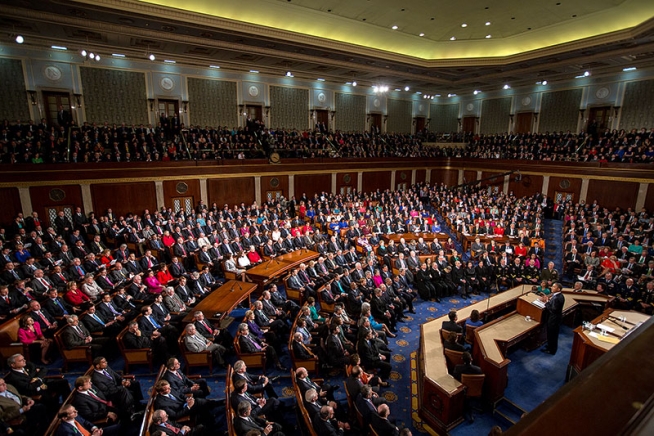
Congress in sessionIn an article he wrote many years before I was thinking about this issue, Jim Skillen nailed it: “Just laws and good public policies will not automatically flow from a renewal of individual ethical concern, and public justice will not automatically take care of itself if we simply concentrate hard enough on our families and schools and churches.”

Gospel-shaped moral transformations of individuals must lead to degrees of moral recovery not only of our homes, schools, and news rooms but of all aspects of society. If not, godly obedience is found wanting and the winds of corruption and injustice will blow into every quarter with increasing strength. In other words, a gospel-shaped wisdom will only influence society “by way of dedicated, purposeful action fit for each arena” – including law and politics.

“A republic,” Skillen concludes, “cannot be reformed apart from action by citizens prepared to serve their civic neighbors through laws and policies that do justice to all. Political renewal requires political action. Legal reform requires wise juridical acts and judgments. No shortcuts are available. Nothing human automatically cares of itself.”

Those saved school teachers and journalists and pols would have to move on from individual moral change to the long hard work of going back to the Book, and finding other wise resources as well, for helping to make the systems less corrupt and more just for all. But especially back to the Book.

Scripture, of course, doesn’t carry encyclopedic knowledge for answering every question that will come up. Not even close. But as a professor friend of mine likes to say: “Scripture may impinge on whatever is being tackled, so the right way to begin any investigation is to start by seeing what God might have to say about it.”

Will America itself be saved? Not just its people? Not by what takes place in Houston. Get everyone saved night after night there, and the song remains the same: “What happens the next day when?”

©2014 by Charles Strohmer

Beyond the Mysterious Star of Bethlehem

star in blue skyI forsook casting horoscopes many decades ago when I became a Christian. Never once have I regretted that change of life, which began the day that I was transformed from being a worshiper of the stars to a worshiper of the God who made the stars. As a Christian, however, I took a serious interest in one star, the star of Bethlehem. Astrologers have all sorts of esoteric views about that star. So as a Christian who accepts the authority of the Bible, I made it a point to try to understand from Matthew’s Gospel just what was going on with this star.

Many people, including many Christians, typically seek to understand the star from strictly naturalist theories, which we considered in the previous post. But naturalism, we saw, is not enough. Theories to explain the star of Bethlehem that depend solely on novas, comets, conjunctions of planets, or on any other natural phenomenon, do not and cannot account for the faith to worship Christ the King that explains the experience of the magi.

But something else often niggled me and I could not put my finger on it. Then it occurred to me. From a close reading of Matthew chapter two, it became clear that naturalism cannot explain the ontology of the star itself, which seems almost personal. It seems to have a mind of its own. In other words, any strictly naturalistic explanation is inadequate because it cannot account for certain “unnatural” characteristics of the star.

In Matthew 2:7-9, for example, the star “appeared” at a particular time to the magi while they were in their homeland (probably Persia). Later, while the magi were on the road from Jerusalem to Bethlehem, the star “went ahead” of them “until it stopped.” And it did not stop randomly anywhere, like a car running out of fuel. It “stood over “ (AV) “the place where the child was.” Within the story of the miraculous birth of Jesus, it seems reasonable to conclude that this kind of behavior cannot be attributed to a strictly natural phenomenon. Here is a kind of personal agency, one that sets the star off as something quite “other” than any heavenly phenomenon governed exclusively by natural laws. As described in Matthew, the star seems as supernatural as the angels who appeared to the shepherds at Christ’s birth (Luke 2:8-15).

Personal agency of the star can also be deduced from the original language quoted in the above paragraph. The New Testament Greek word for “appeared” includes meanings associated with a shining light and, occasionally, for the appearance of an angel, such as to Joseph (Matthew 1:20; 2:13, 19). It is a term, therefore, that can be used of forms of luminous bodies other than literal stars. The word is also used of Jesus when he “appeared,” seemingly from nowhere, to his closest followers after his resurrection (Mark 16:9, 12, 14).

The verb “went ahead” is a peculiar construction in the Greek, used only a half dozen times in the New Testament, usually for “to lead” in a deliberate way. For example, a crowd is leading Jesus into Jerusalem (Matthew 21:9) or Jesus is leading his disciples to Jerusalem (Mark 10:32). And the word “stopped” is used numerous times in the New Testament to describe people who have made a conscious decision to stop whatever they were doing to stand still (Matthew 20:32; 27:11; Mark 10:49). All of this is to say that the idea of personal intention and purpose is implied in the nature of the star.

Just as faith is part of the magi’s experience, so is the personal ontology of the star of Bethlehem. Both are necessary aspects. Both are keys to making sense of the story, from first to last.

The star appears in the East and gets the magi going to Jerusalem. It is probable that these wise men knew, or had access to, the Hebrew scriptures, and upon seeing the unusual star they referenced it to Balaam’s prophecy about the Messiah, recorded in the book of Numbers, hundreds of years before Christ’s birth: “I see him, but not now; I behold him, but not near. A star will come out of Jacob; a scepter will rise out of Israel” (24:17). Traditionally, this was treated as one of Israel’s messianic prophecies about the divine Ruler to come. (See also Jeremiah 23:5-6.)

Arriving at Jerusalem – the heart of Israel’s religious life – the magi receive further biblical instruction, as their announcement about a new king of the Jews having been born raises havoc throughout the ancient city. Eventually, in King Herod’s presence, the rabbis tell the magi that anyone knows where this king is to be born. Why, what’s the big deal, they ask? Well, we saw his star in the East, they reply, and we’ve come to worship him. But we don’t know where to find him.

Mdina streetSo the rabbis crack the books and point out a prophecy in Micah: “But you, O Bethlehem Ephrathah, though you are small among the clans of Judah, out of you will come for me one who will be ruler over Israel, whose origins are from old, from ancient times” (5:2). From the Bible they now have the name of the town, which is just several miles south of Jerusalem.

But there’s a huge problem. They don’t have the address. A close reading of the story seems to indicate that Jesus may not have been at the birth-manger by the time of the magi’s arrival. It could have been days or weeks, if not months, or even a year or two, later. There is not scholarly consensus on this. So who knows where Jesus is? The star knows. From a close reading it also seems likely that the star had disappeared for a while and now appeared again to lead the magi to the very place where Jesus was. And there they worshiped him.

Another often overlooked important point is that to get to Jesus the magi are following Scripture, not the stars. They followed Balaam’s prophecy to Jerusalem. They followed Micah’s prophecy to Bethlehem. And then after they find Jesus they take instruction directly from God. Which brings us to a final thought.

Having been warned by God in a dream that they should not go back to Jerusalem to see Herod, they return to their country “another way.” This little phrase – ”another way”– is for me a third key on the ring, with faith and the star’s personal ontology, to the mystery of the message. The message of the magi and the star of Bethlehem is that of “another way” (AV), the way of Christ. To enter that way, faith and divine revelation are required. The wise are no exception.

©2014 by Charles Strohmer

Images by Riccardo Francesconi & M. Peinado respectively (Permission via Creative Commons)

The Star of Bethlehem + Faith = Worship

KONICA MINOLTA DIGITAL CAMERAStories about the magi and the star of Bethlehem (Matthew’s Gospel, chapter two) have fascinated people for two thousand years. Theories have abounded since the rise of modern astronomy in the seventeenth century. It was a very bright light – a supernova, or a comet, or a meteor, or a rare conjunctions of the planets Jupiter and Saturn in the constellation Pisces. Whatever it was, the magi saw an unusual heavenly phenomena and interpreted it to mean that Jesus Christ, the King of the Jews, had been born.

Is it just me, or does there seem to be more interest in the star this year than ever before? There are even some documentaries on the Web making the rounds, dedicated to the “science” of the star. Speaking of which, I just read a news story in Christianity Today (Dec. 2014) about yet another astronomer, Michael Molnar, who claims to have really figured it out. Molnar is also a coin collector who had only a mild interest in the star until he was investigating the symbolism of an ancient coin he had purchased, minted in Antioch in the early first century.

After sussing the coin’s symbolism, Molar had a hunch that a serious rethink was needed about the star of Bethlehem. The research then spun him off into both the astronomical and the astrological heavens, where the star, it seemed to him, was not any sort of bright heavenly light or a conjunction of planets. Instead, it was a much more modest phenomenon, albeit a rare one: The moon, viewed from Earth, was passing in front of Jupiter in the astrological sign of Aries. Molnar concluded that the magi, upon seeing that and knowing that Jupiter symbolized royalty, and knowing Micah 5:2 – out of Bethlehem a ruler of Israel will come – pulled all these threads together to mean the birth of Christ, the king of the Jews. They then set out on their arduous journey, far from Jerusalem, to worship him.

I’m not knocking astronomical theories. After all, it is the job of astronomers to investigate heavenly phenomenon; someday a consensus may emerge on the science of the star of Bethlehem. Who knows? But even if that consensus is reached, it will not be the science that accounts for the experience and actions of the magi. Science cannot account for the “Aha!” moment of divine revelation that awakens a person to the recognition of who Jesus Christ is.

star in blue skyEven the best of science will leave us at sixes and sevens about Jesus’ identity. Even when Jesus himself was present on earth – when he was heard, seen, and touched – when his doctor could examine him – even that to-hand physicality was not what revealed his identity, about which all sorts of views abounded. Who do people say that I am?, Jesus once asked his disciples. Some say you’re John the Baptist, they said. Some say Elijah. Others say Jeremiah or another prophet. Ask people today and they will say he was a good man, or a wise man, or a teacher, or a healer and miracle worker.

“But what about you?” Jesus asked them. “Who do you say I am?” Simon Peter, having one of his better days, answered: “You are the Messiah, the Son of the living God.” Jesus replied, “Blessed are you, Simon son of Jonah, for this was not revealed to you by flesh and blood, but by my Father in heaven” (Matthew 16:15-17).

It was this divine revelation about Christ’s identity to the magi that explains their experience and actions upon seeing the “star of Bethlehem.” Divine revelation was part of the mix. Apart from that, the star, or whatever it was, would certainly have been a fascinating phenomenon to the magi, but no way do they make the arduous journey hundreds of miles to Jerusalem to worship Christ (Matthew 2:2).

It takes that revelation of God to worship Christ the King, as people have discovered for themselves down through the centuries in countlessly varied contexts in which the physical science is secondary. Rabbi Saul of Tarsus, on the road to Damascus. St. Augustine, in a garden in Milan. John Wesley, in a church meeting in Aldersgate. Alexander Solzhenitsyn, while imprisoned in the Gulag. C. S. Lewis, in his digs at Magdalen College. Mine, in a hotel room in southern California.

Where are you, physically, today, in this season of the star? Worshiping Christ the King or unsure of his identity? If the latter, the experience and actions of the magi awaits you through faith. I invite you to pray for that divine revelation.

Concluded in the next post

©2014 by Charles Strohmer

Image by withrow & Riccardo Francesconi respectively (permission via Creative Commons)