
SNUBBING IRAN: THE WORST FOREIGN POLICY DECISION IN THE HISTORY OF THE UNITED STATES?

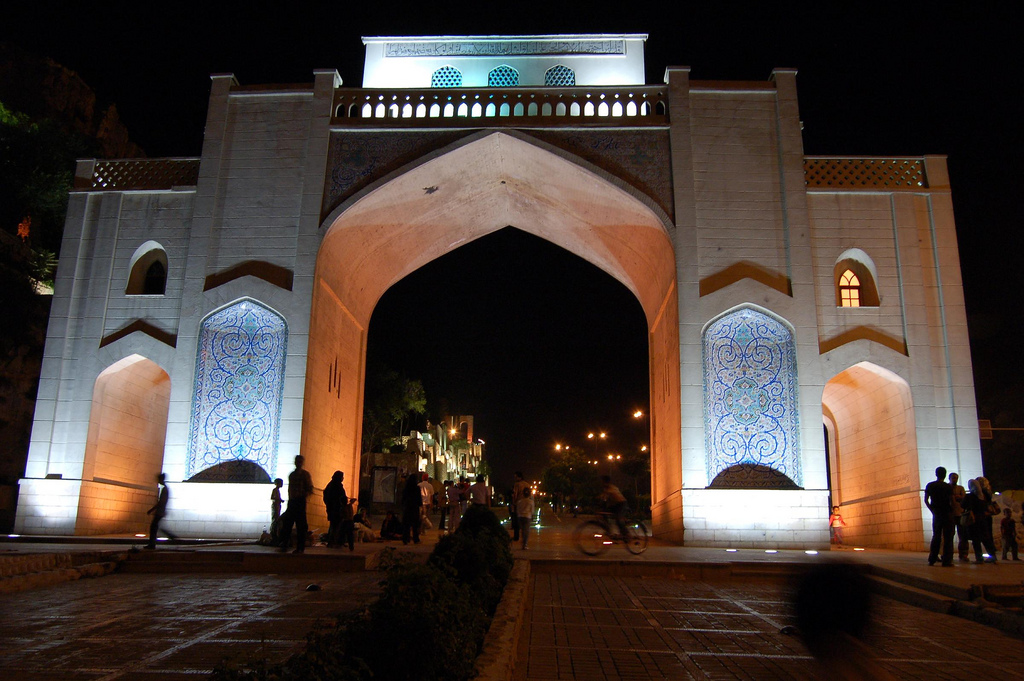
Iran architecture (ali reza parsi)Most Americans are unaware that in May 2003, the Iranian regime formally reached out to the United States to hold high-level talks. That serious and detailed offer was immediately and soundly rebuffed by the George W. Bush White House. The magnitude of opportunity to alter U.S. – Iran relations for the better was lost. We have been seeing consequences of the snub playing out in Iran’s nuclear program, which every American is aware of – an issue that may take the wisdom of Solomon to prevent from becoming an international disaster.

In this series of posts I want to explore why the Bush administration’s snub of Iran was uncalled-for, and why I believe that the West’s negotiations with Iran about its nuclear program must succeed if the snub is not going to down as the worst foreign policy decision in U.S. history. This topic is of great significance to the broader issues of stabilizing and improving relations between Western and Middle East nations. This topic has been of particular interest to me over many years because it goes to fundamental issues in the region of war and peace and diplomacy, which are crucial to The Wisdom Project.

Well-known among the foreign policy establishments of the West and the Middle East, the story of the ill-advised decision remains ignored by the media. I wrote a few paragraphs about it here. When I have talked publicly about it, people have been surprised to discover that the depiction of U.S. – Iran relations that is typically in the media and on the lips of many politicians is misleading. Here’s that story in depth. Knowing it puts us in a better position to judge what is wise or foolish policy toward Iran.

Let’s start with early 2003. Although not so long ago, it may seem like very long ago, if not referring to a different universe, when I say that at the time America and the George W. Bush White House were flying high. For a year and a half, team Bush had been greatly impressing much of the world. It had ridden the crest of its swift victory in Afghanistan into Iraq, and on May 1, after less than a month of the U.S.-led war on Iraq, the bannered motto “Mission Accomplished” hung unashamedly across the deck of the USS Abraham Lincoln, while President Bush signaled to all the world America’s precise, speedy, and bold defeat of the largest military in the Middle East.

A huge upside for Washington was finding itself breathing the air most envied and unobtainable by world capitals: extraordinary diplomatic negotiating power with capitals of the Muslim Middle East. Tehran was one of those capitals. In January 2002, in his State of the Union address, Bush included Iran with Iraq and North Korea in his “axis of evil.” Bush had now knocked off Iraq. Would Iran be next? If so, when? Was the regime in Tehran nervous? Whether or not it was, it reached out to Washington diplomatically. Since there has been no embassy-level relations between the U.S. and Iran since 1979, Iran sent a formal letter to the Bush administration through the Swiss embassy, requesting high-level talks. In the letter it named what it deemed the most pressing issues for both parties. It then awaited a response.

The offer to talk was not a low-level trial balloon, easily dismissed as such by the White House. For it to be taken seriously, the letter would have to have been endorsed by Ali Khamenei, the Supreme Leader, who holds tremendous authority over Iran’s major state institutions and has final say in Iran’s foreign policy. The letter was signed by Khamenei.

It was taken by Colin Powell, Richard Armitage, and Condoleezza Rice to the president just days after he landed on the deck of the Abraham Lincoln. Suddenly and unexpectedly faced with an exemplary moment in which to act on the humbler American foreign policy that he had promised the world in his pre-election campaign speeches, what would Bush do?

In the next post we will look the amazing contents of the letter and why Bush chose not to start talks.

©2014 by Charles Strohmer

Image by ali reza parsi (permission via Creative Commons)

“TURN AND FACE THE STRANGE CHANGES”

going shoppingIn this current series of posts, begun here, I am trying to recall for us, as individuals and as a nation, what we were thinking on September 11, 2001 and in the days and weeks immediately following. As I have been writing this I have been wondering about how many people can actually recall how “the apocalyptic acts of fury” (Kanan Makiya) impacted them as individuals, and I have been thinking about the jumble of mixed messages that we were getting as a nation.

Further still were the selective ways that the White House and Congress chose to deal with the crisis. We are experiencing the ramifications of many of those decisions today, 12 years later, and I want us to consider the wisdom of these decisions in future posts. But here I want to talk about the jumble of mixed messages, which were pulling us is all sorts of different directions.

As individuals, we would never be the same – or so we said. Suddenly life was fragile and personal problems trivial. We would change – or so we promised ourselves, if not others. Such humility even from many talking heads was as refreshing as it was astounding. Those days, you could hardly watch seasoned journalists or foreign policy experts being interviewed and not hear them stop to recount an epiphany about why they would now be more caring toward family and others. Even interviewers would stop to say this about themselves. Not a few were even heard questioning cherished beliefs they held about God and the human race. The same was heard among us lesser mortals. We would no longer be selfish, or rude, or frivolous, or materialistic, or decadent. We would be warm not cold, real not pretentious, loving not ill-willed. We had changed.

Another message was that of war. The nation was at war, President George W. Bush announced to us and the world, a war on terrorism. “Our enemy,” the president explained, “is a radical network of terrorists, and every government that supports them…. And we will pursue nations that provide aid or safe haven to terrorism.  Every nation, in every region, now has a decision to make. Either you are with us, or you are with the terrorists.” Well, then, here was another way in which life would be different. But how, precisely?

globe above waterFurther, many thoughtful people were arguing that to describe the terrorist acts of 9/11 as an act of war might be a category mistake, and so we should be very careful, here, because the attacks were not carried out by a nation but by a militant group of non-state actors known as al Qaeda and led by Osama bin Laden, a terrorist and not the leader of a nation. As this argument went, a more useful metaphor than war is crime and, despite the enormity of the attack and the damage and loss of life, dealing with bin Laden and al Qaeda should be a police matter for the international community.

What was it, then, an act of war or a heinous crime? Deciding between the two would determine what response was just and what kind of sacrifices the nations would need to make. Either way, we all knew, carried with it some clearly dreadful implications about buckling up for the abnormal life that seemed sure to lie just ahead for us. Yet there was another message still. This message not only contradicted that of any sacrifices we were sure were now going to demanded of us by our leaders; it also subtly communicated that collective introspection and conversation about American itself, which had been slowly and cautiously emerging, should end.

President George W. Bush, who, in the days immediately following the attacks said and did some smart things, was also saying that America was “open for business” and asking for everyone’s “continued participation and confidence in the American economy.” At most other times, such rhetoric would go down well enough. But when heard during those days it was interpreted by many people, rightly or wrongly, as a call to “get back to normal” and “go shopping.” Pardon? The Times of London called the attack The Day that Changed the World. Yet we are to get back to normal? Are we being told to ignore the “war on terrorism” that had suddenly been declared and go shopping?

Thoughtful religious and non-religious commentators saw through that rhetoric. Here are just two poignant examples. Brian Walsh, Christian Reformed chaplain of the university of Toronto, in an editorial in re-generation, put it this way:

“America is open for business. Does this sounds like a callous and irrelevant comment under such circumstances? Not at all. You see, the forces of chaos will not triumph because the forces of salvation are stronger. And salvation is found in an ever expanding global economy…. The president knows, his cabinet knows, the guy on the street knows, and we all know, deep down, that things will never be the same again.”

The writer Susan Sontag penned this in The New Yorker:

“Our leaders are bent on convincing us that everything is O.K…. But everything is not O.K…. The unanimity of the sanctimonious, reality-concealing rhetoric spouted by American officials and media commentators in recent days seems, well, unworthy of a nature democracy…. Let’s by all mean grieve together. But let’s not be stupid together. ‘Our country is strong,’ we are told again and again. I for one don’t find this entirely consoling. Who doubts America is strong. But  but that’s not all America has to be.”

Story continue next post….

©2014 by Charles Strohmer

Image by r.nial.bradshaw (permission via Creative Commons)