
BECOMING A NATION AMONG NATIONS

dominoesOne of the great tipping points in the history of ancient Israel was its choice to become a formal nation among nations (a monarchy among monarchies). Israel’s process toward national self-determination, to what today we call statehood, began with the establishing of organized settlements throughout the land of Canaan. The process culminated a few centuries later when Israel the people became Israel the state – that is, they became like the nations around them – a monarchy state – and Saul was made its first king (1 Samuel 8–10).

This historical tipping point affected the entire society, including, and perhaps especially, its domestic and international political life. Books have been written about this. But here I just want to consider an often overlooked fact. On becoming a formal nation, and to be accepted as such by the regional powers, it was necessary for Israel to make the kind of governmental changes whereby it could formally participate in the international system of the old-world Middle East. The newly established monarchy therefore had to enter into that international monarchial system, that is, into the established way that international politics and foreign policy was being conducted – think of how a new state today joins the United Nations.

By becoming a state (I’m using that term in a general political sense), old-world Israel had turned a political corner, one that demanded significant changes to its existing political structure. The new state established the governmental apparatus and bureaucracy necessary to gain an international footing and acceptance like the other nations.

This meant, for instance, enthroning a king, picking a cabinet, establishing a capital, and drafting and institutionalizing new domestic laws, such as for raising an army and the taxes to fund both it and the new and growing government bureaucracy. As William McKane put it: “Israel became a state with a new political structure which demanded the creation of a cadre of royal officials through whom the king governed this people” (Prophets and Wise Men, 42.) But it also entailed political changes whereby the new state could enter formal relations with the other regional powers, such as Egypt.

What needs to be recognized and acknowledged is that Israel the state could not create a foreign policy structure that was, so to speak, completely foreign to the existing international paradigm. Now that existing regional paradigm, of course, was not perfect, and the nations in it were often adversarial due, in no small part, to their conflicting religious-political ideologies.

But that international system was also hugely informed, as we noted in previous posts, by the wisdom tradition and the royal court officials who (prior to becoming government officials) were educated in that tradition’s peaceable way of reasoning. In other words, once Israel rounded the corner, it would be formally participating in an international system that had been in play in the region long before “Israel the state” entered it. We should therefore not be surprised to see many governmental similarities between Israel the state and the other regional powers.
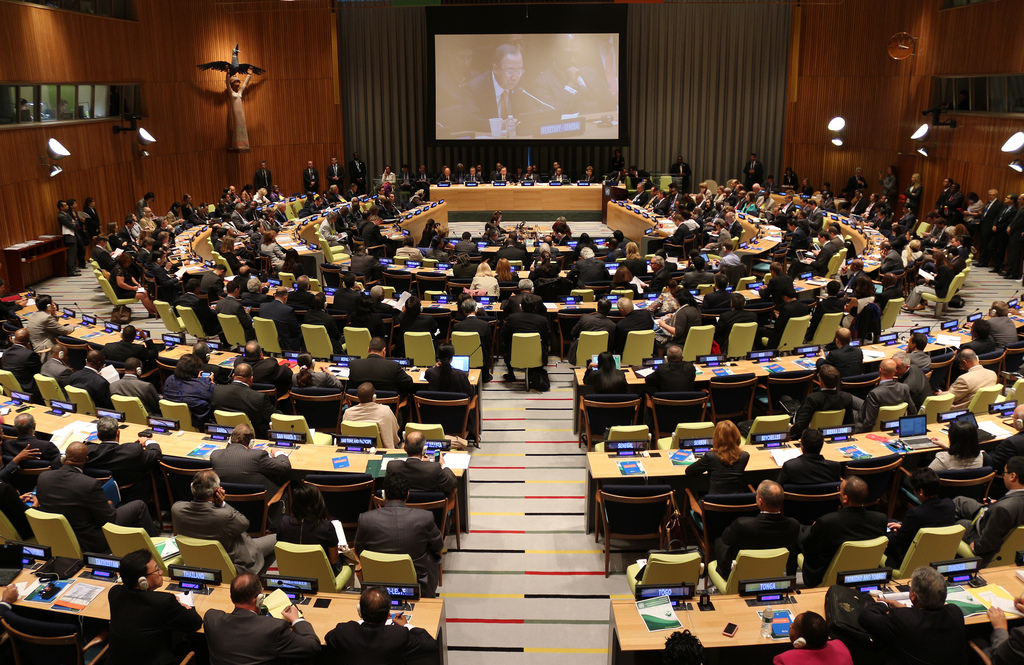
UN meeting (UN Info Centers)Think of the founding of the United States. Although the nation was not established after the order of a European monarchy, but as a republic, it nevertheless had to function within the existing international systems of its period. To put it crudely, the United States could not say, We’re not going to play the game because we’re a republic and not a monarchy. The United States, then, beginning with its first president, George Washington, engaged in diplomatic missions, negotiations, treaty agreements, and so forth. These took place across the Atlantic in European and north African nations and in  islands in the Pacific, including Hawaii, with a view toward engaging with China.

So too with ancient Israel. There is a pretty solid consensus among scholars, for instance, that during the long reigns of Israel’s second and third kings (David and Solomon), “Israel was in the Egyptian … sphere of influence,” and that in the close relations between Solomon and Egypt, “we ought to seek there for the models of Solomon’s bureaucracy” (Ibid., 23.) Citing the period during Solomon’s commercial enterprises with Hiram, king of Tyre, and Solomon’s alliance with Egypt through marriage, McKane concludes that “the Israelite state was modeled on the great states of the ancient Near East and so acquired a structure similar to that of Egypt.” It was a “political structure” in which there was associated with the king “a class of royal officials who had to do with the army, finance, foreign embassies and administration. Such officials were a ‘people of the king’ and had a common interest with him in maintaining the regime and suppressing popular resistance and discontent” (Ibid, 43).

The wisdom tradition played a vitally huge role in all of this, especially internationally. We have already considered the significant point that the wisdom tradition was cross-cultural and transnational in the old-world Middle East. Further, it was taken for granted in the corridors of power throughout the region that royal officials, especially those working internationally, would have been educated in their countries’ wisdom traditions. This seems to have been such an accepted part of international political life that it was unquestioned. It was a given. I want to call attention to two upsides to this.

(1) A ruler such as a Babylonian or a Persian king could feel comfortable and confident to include religious outliers, such as a Daniel or an Ezra, in his government, even as an official at the highest levels. This was an accepted norm in the international system of the region.

(2) A believer in Yahweh, such as a Daniel or an Ezra, could serve in a “pagan” government with a clear conscience.

Neither of these facts may seem a big deal in the context of today’s western nations, in which people of different faiths may serve in their nation’s government. But it is not a universal international norm today. In many Middle East governments, for instance, such as Iran or Saudi Arabia, Jews and Christians need not apply.

In the next post I want us to consider this international norm in the life of Joseph, an Israelite who served as a high-level diplomatic official for many years in Pharaoh’s Egypt.

©2014 by Charles Strohmer

Images by Great Beyond and UN Info Centres, respectively (permissions via Creative Commons)

THE DIPLOMATIC COMMUNITIES OF THE OLD-WORLD MIDDLE EAST

light at end of tunnellBeginning with this post some months ago, we began looking at the wisdom tradition’s close, albeit the forgotten, relationship to cooperation, peace, and diplomacy in the old-world Middle East. A few weeks later I began to illustrate those ideas, and this surprised people, on the diplomatic roles that were hiding in plain sight in the narratives of  Daniel and Ezra.

Now it is never good procedure to rest a case for the recovery of a lost way of seeing – in this case wisdom and the diplomatic – on one or two narratives – even if they are as impressive and convincing as Daniel and Ezra. Fortunately, the theme of wisdom and diplomacy is not an irregularity in the Scriptures. Daniel and Ezra are merely two narratives of many disclosing political actors, in one way or another in the old-world Middle East, functioning as part of what today we today would a regional foreign policy community.

In these narratives, the two most prominent classes of high-level officials that we see in the diplomatic corps were known in the Hebrew Bible as the hakamim and soperim. In brief, the former served chiefly as what we today would call ambassadors, diplomats, foreign ministers, secretaries of state, international negotiators and mediators, and so forth. The latter included diplomats, royal secretaries, master secretaries (usually professional writers whom English translators usually call scribes), and even, occasionally, high-level ecclesiastical figures and civil servants.

These two classes of high-level officials would have been educated in the wisdom traditions of their royal courts, they worked alongside each other, and their their roles could overlap. Both the hakamim and the soperim, along with other kinds of royal court officials, were indispensable to a nation’s domestic politics and international relations.

One of our difficulties is that we may be so familiar with reading the Bible in certain ways that we don’t see the wisdom-diplomatic connection and the vital insights that this way of seeing Scripture has to offer for today. For instance, if we are reading chiefly for our devotional life and personal moral development, and perhaps for help with our families and our finances, it will probably take a deliberate turning of the head to see wisdom in its diplomatic role.

There is of course nothing wrong with engaging with Scripture in those other ways, and we wouldn’t want to ignore them. But on this blog we are turning to Scripture, “reading” it, in a way that asks different, yet importantly relevant, kinds of questions.

I began getting a buzz on how significant wisdom and the diplomatic corps of the old-world Middle East was many years ago, when I was researching the period when “Israel the people” became “Israel the state.” In other words, when ancient Israel became a nation among the nations (a monarchy among monarchies) and was recognized internationally as such. There are some telling clues about this in the Scriptures, which may help us in furthering our understanding of the diplomacy of wisdom. I want to look at those clues in the next post.

©2014 by Charles Strohmer

Image by Silver Rose (permission via Creative Commons)

DISTURBING QUESTIONS

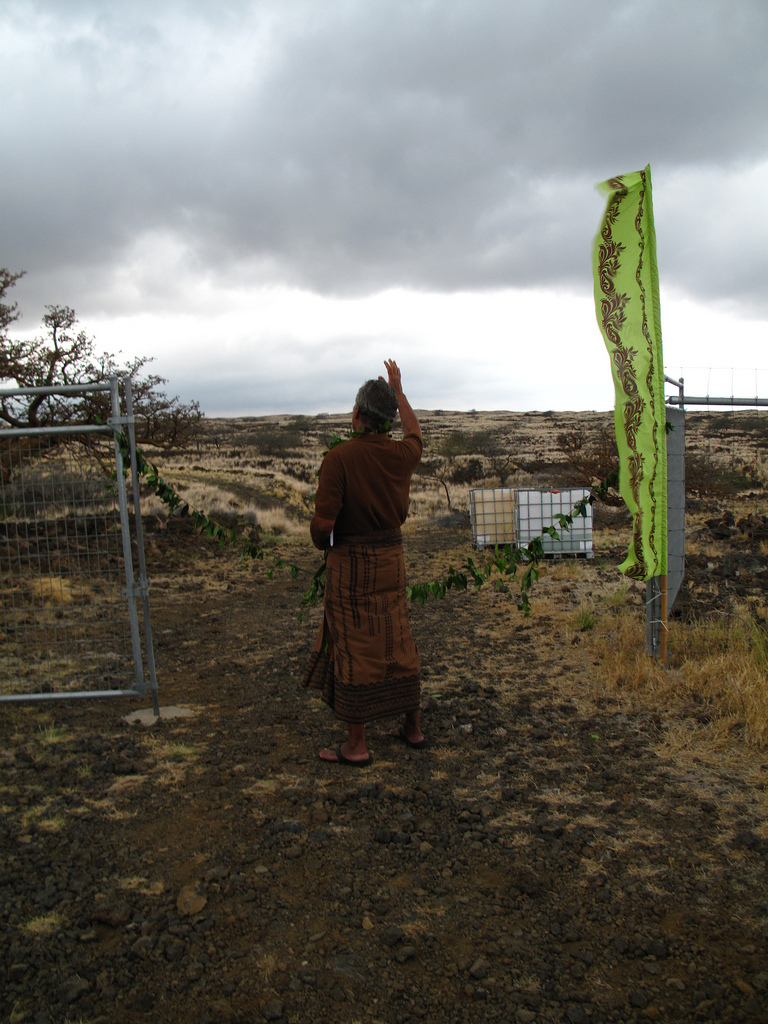
blessing the landWe have been dealing with some disturbing questions in recent posts about the theology of Christian Zionism as a foreign policy in sharp contrast to the ethic of Jesus. These questions challenge us at the core of our being, and in utterly practical ways. This post concludes the topic with more questions we may not have considered.

The ethic of Jesus challenges us:

To consider whether we are following the government policies of the state of Israel more than we are following Jesus.

To consider whether we are giving unqualified support to the policies of the modern state of Israel, as if they were always and only and perfectly just. We know from the Scriptures that in ancient times God judged the nation when it habitually followed unjust policies. Has God changed? Do we think that the modern state of Israel is incapable unrighteous behavior?

To consider whether we are endorsing, however unintentionally that may be, a chain reaction of violent events that encourage adversarial relations and conflict leading to the general ruin of the region. Or are we engaged, as individuals, groups, and churches in prayers and practical efforts to ease adversarial relations and stem the flow of violence?

Our ideas about Israel and the Palestinians ultimately serve either the way of war or the peaceable way of Jesus. Many American Christians who are huge supporters of Israel will be shocked to know that, as a theology of war, Christian Zionism favors a military solution as radial as Armageddon. For that is the inviolable direction of its teleology.

Caveat. Because I have been solely focusing in these current posts on the violent potential of Christian Zionism, in hopes of sparing followers of Jesus from going there, I have not had space to declare my opposition to Palestinian violence against Israelis. On the other hand, I understand why it takes place.

“If you’ve been driven from [refugee] camp to [refugee] camp, if you’ve had the living daylights persecuted out of you by your own people – by the Israelis but above all by your brother Arabs – I can understand that you would turn to violence.”

That’s John Le Carré being interviewed about the time he spent in the Middle East researching Little Drummer Girl. Since I began these posts on Christian Zionism with reference to that book, I thought I would close with him. He visited Palestinian camps talking with refugees. He met with Israeli generals and had help from Israeli special forces to speak with their Palestinian prisoners. He spoke to Palestinian commanders and their “fighting kids.” He even met Arafat, who asked, “Why have you come, what do you want?” “Well, Mr. Chairman, I’m trying to put my hand on the Palestinian heart.” Taking Le Carré’s hand and holding it to his own heart, Arafat replied, “Sir, it is here, it is here.”

“Many people,” Le Carré again, “who have [a] clichéd vision of the Palestinians would themselves, if they had been subjected to the same harassment and persecution and humiliation, if they had no passports, no friends, no permanent home, if they’d been bombed out of one place after another all through their lives, from the age of practically nothing – many of those people would have taken the violent path…. If you are a displaced people, and you’ve got to make the world listen, that is the Palestinian argument.”

That was in the early 1980s. But the solution is not a military one. It is a political one that comes through diplomacy. And today we must add this. When we look at the steadily rising and spreading bloody conflicts of the broader Middle East, it is easy to throw up one’s hands and say, “It’s hopeless.”

But hopelessness is not a gift of the Spirit. It does not excuse the followers of Christ from following him into the darkness with olive branches in hand. Jesus traveled that road ahead of us. We are called to follow him. If God had enough grace for Jesus – and God did – God has grace enough for Jesus’ followers to go and do likewise today. The Cross is the great stopping place in the universe that examines and judges all things, good and bad, even our theologies.

©2014 by Charles Strohmer

Image by UrbanWanderer (permission via Creative Commons)

“Land for Peace” in the Middle East

attached to the landAs a foreign policy, the theology of Christian Zionism is counterproductive to a negotiated Middle East peace. It is tone deaf to the cries of a large majority of Israelis and Palestinians, who, hoping against hope, continually strive for an equitable peace in the land through a political solution. The land is one of the four recognized keys to a political solution between Israel and the Palestinian government. The others are the settlements, Jerusalem, and the return of the Palestinian refugees. Let’s briefly consider just the land.

Palestinians and Jews have a profound sense of historical and religious attachment to the land. At extreme ends of the spectrum are Jews and Palestinians who claim the land completely for themselves. In between these extremes are the majorities of both peoples who, favoring a political agreement, are willing to share the land in a just and equitable way.

For nearly half a century, UN Security Council Resolution 242, shorthanded as “Land for Peace,” has been a central tenet of negotiations in final status peace agreements between Israel and its neighbors. It was a crucial principle in Israel’s peace treaty with Egypt in 1979 and with Jordan in 1994. A “land for peace” formula is also a basic political tenet in Israeli – Palestinian negotiations. I do not want to enter, here, into the critical debate that surrounds this principle in those negotiations. (It will be obvious, however, that a land for peace formula is unacceptable to those who want the land solely for Israel or solely for the Palestinians. Equally obvious is the monkey wrench thrown into the works by that Israel’s ongoing West Bank settlements.)

Instead, I want to point out that insight from the Bible from Israel’s point of view and with Yahweh’s blessing is available for wisdom-based negotiations about the land. I want to stress this for Christian Zionists, for whom the Bible is the ultimate source of authority in this world.

In the book of Ezekiel, the prophet, in the spirit of jubilee, is recorded as speaking Yahweh’s intention for the land. The Israelites are to “allot it [the land] as a heritage for yourselves and for the strangers who reside among you, who have begotten children among you. You shall treat them as Israelite citizens; they shall receive allotments along with you among the tribes of Israel. You shall give the stranger an allotment within the tribe where he resides – declares the Lord God” (Ezekiel 47:22-23; The Jewish Study Bible: Tanakh Translation). (I want to thank Calvin Seerveld for drawing my attention to this passage, but the following thoughts are mine, not his, so any mistakes are my bad.)

blessing the land (wdfi)The significant phrase “treat them as Israelite citizens” – the NIV has “consider them as native-born Israelites” – indicates that allotments of land are to be given – with God’s blessing – to those who reside in the land who cannot meet a requisite qualification of first being an Israelite. The line about the progeny of the non-Israelites is equally significant. (1) It protects them by clarifying and strengthening the thought of settlements in the land held well into the future by “strangers” (Hebrew: gerim). And (2) it precludes land-grabbing by Israelites from the non-Israelites who reside in the land. Today we might call this something of a housing market policy.

In short, the text establishes the principle of permanent settlements in the land by both Israelites and non-Israelites, and with God’s blessing. Aside: Ezekiel may be expanding on Leviticus 19:33-34: “When a stranger (ger) resides with you in the land, you shall not wrong him. The stranger who resides with you shall be to you as one of your citizens; you shall love him as yourself; for you were strangers (gerim) in the land of Egypt: I am the Lord your God.” Note that this text, too, ends with the signature of Yahweh. As a Levitical priest, Ezekiel was certainly skilled in the use and application of Leviticus.

I’m just thinking out loud here, but with some creative thinking from today’s religious and political leaders in the Middle East Israel, would not the acceptance and outworking of this text in the Middle East help to eliminate the psychology of exclusionary othering that hinders the land for peace formula?

Of course, of course. This is not to wave a magic wand over the peace process. I have merely wanted to point out to Christian Zionists just one illustration of how the Bible may be legitimately relied on to support a policy that does not oppose the ethic of Jesus, which is clearly evident in the life of Jesus as a teacher of wisdom in ancient Palestine. In my view it is much wiser to spend one’s time pondering creatively with the Bible in this way, rather than destructively with Christian Zionism as a theology of war.

©2014 by Charles Strohmer

Books on “the land” that you might want to read: The Land: Place as Gift, Promise, and Challenge in Biblical Faith, Walter Brueggemann; Whose Land? Whose Promise?: What Christians Are Not Being Told about Israel and the Palestinians, Gary M. Burge; Whose Promised Land?: The Continuing Crisis over Israel and Palestine, Colin Chapman.

Images by Frank M. Rafik & wdfi, respectively (permissions via Creative Commons)

THE UNITED STATES AND IRAN: AN ALLIANCE OF CONVENIENCE

Surprised? Friday night (June 13) on the Charlie Rose television program, Richard Haass, the president of the Council on Foreign Relations, laid out a case for the United States and Iran to work together to fight back ISIS (the Islamic State of Iraq and Syria) in Iraq. Saturday, Iranian president Hassan Rouhani publicly announced that Iran would consider joining forces with the United States to combat ISIS in Iraq. Today (June 16), Secretary of State John Kerry said that the United States is open to “any constructive process here that could minimize the violence, hold Iraq together.” Despite the core ideological differences between the two governments and their heated polemics toward each other in recent times this should not be happening, right? Frenemies? Iran and America? But this is not the first time in recent years that the two have worked together. Let me tell you a story.

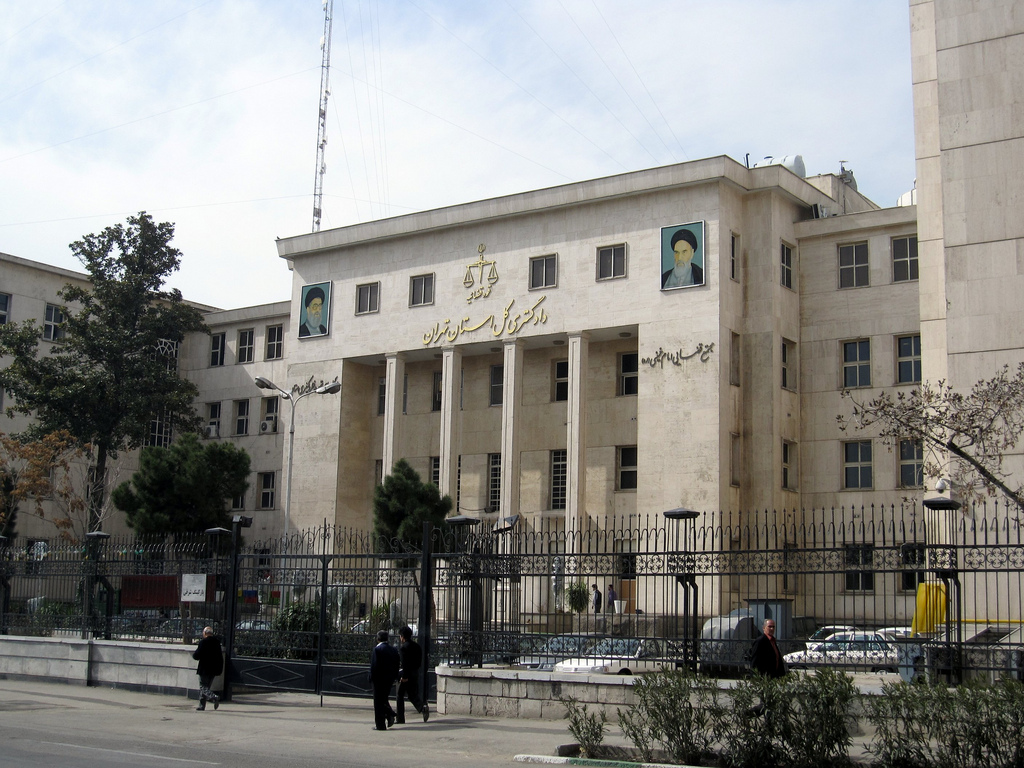
Iran governemt buildingQuietly begun by the UN in 1997, the so-called Six plus Two talks included Iran, Pakistan, China, Tajikistan, Turkmenistan, and Uzbekistan, plus the United States and Russia. The purpose of the talks was to quietly discuss dealing with the Taliban’s solidification of power over Afghanistan and the increasing violence among warring factions in that country. Shiite Iran, in particualr, had a deep stake in these talks. The Taliban movement, not to mention Osama bin Laden and his al Qaeda network in Afghanistan, were ultrafundamentalist Sunni Muslims who posed a real and present danger to neighboring Iran, with its very long eastern border with Afghanistan. Also,  droves of Afghan refugees were fleeing Taliban rule for Iran.

The Iran – U.S. narrative now begins to sound like a John LeCarré novel. Soon after 9/11, Iran, in definitive way through its considerable resources, began helping the CIA and the U.S. military to oust al Qaeda and the Taliban from Afghanistan. Iran was a major supporter of the Northern Alliance, a motley group of anti-Taliban forces who were already at war with the Taliban and who now became the chief U.S. ally in Afghanistan against al Qaeda and the Taliban. A tentative partnership that already existed between Iran and the Northern Alliance was helpful to the U.S. in its own partnership with the NA. Iran also agreed to allow any U.S. pilots who were in distress to land on Iranian soil, if necessary, and it agreed to all the U.S. to perform search-and-rescue missions for downed American pilots on its soil. Iran also increased its troop strength along the long Iran – Afghanistan border and, according to Trita Parsi, it sent a dossier to UN Secretary-General Kofi Anan on hundreds of al Qaeda operatives Iran had detained (Treacherous Alliance: The Secret Dealings of Israel, Iran, and the U.S.).

In October or November 2001, the Six plus Two forum had discreetly spun off one on one talks between Tehran and Washington to focus on closer cooperation about Afghanistan. Barbara Slavin writes that more than a dozen secret meetings were held among a small, select group of high-level U.S. and Iranian diplomats until the Bush administration rudely snubbed Iran in May 2003. These secret meetings, she writes, were cordial and professional and alternated between Geneva and Paris, often taking place in a hotel bar where the diplomats would chat over nonalcoholic drinks and potato chips. Parsi notes that the talks were dubbed the Geneva Channel and that the discussions were bilateral and at the highest level between officials of the two countries since the Iran-Contra scandal (Bitter Friends, Bosom Enemies: Iran, the U.S., and the Twisted Path to Confrontation). The talks included U.S. ambassadors Ryan Crocker and Zalmay Khalizad (both were senior Bush officials) and high-level Iranian diplomats.

Meanwhile, on November 12, 2001, the Six plus Two group happened to be meeting at the UN in New York City when American Airlines flight 587 crashed into a densely populated neighborhood in Queens shortly after taking off from JFK airport. Slavin writes in Bitter Friends that the assembled diplomats at first assumed another terrorist attack. She also reports that Karmal Kharrazi, Iran’s foreign minister, handwrote onto his prepared remarks the following words to a member of the U.S. delegation: “‘The United States should know that the Iranian people and the Iranian government stand with the United States in its time of need and absolutely condemn these violent terrorist attacks’.” Iranian president Mohammad Khatami, in New York City attending the annual UN General Assembly meetings, told reporters that he hoped “this bitter event will be the last we will have, and that terrorism and hate will be replaced by coexistence, empathy, logic, and dialogue.”

Iran then proved to be crucial to the success of the Bonn Conference in December 2001, where, under UN auspices, an international delegation met with prominent Afghan leaders to decide on a plan for governing Afghanistan, which had been without a nationally-agreed upon government since 1979. According to Parsi in Treacherous Alliance, Washington and Tehran had laid the groundwork for the conference weeks in advance, and that at the conference it was the Iranian not the U.S. delegation which pointed out that the draft of the Bonn Declaration, which would create the new government, as yet contained no language on democracy. Slavin agrees that Iran played a very supportive role at the Bonn Conference in the diplomatic area. It was Iran, she writes, that suggested that the draft communiqué call for democracy in Afghanistan and declared that the new government should not harbor terrorists.

Parsi concludes that it was Iran’s influence over the Afghans, not America’s threats and promises, that moved the negotiations forward right up to the end of conference. This was a crucial moment because of a final sticking point with the Northern Alliance about the high number of seats it should hold in the new government. This could not be resolved and nearly scuttled reaching a final agreement, Parsi writes, then noting that it was Iran’s lead negotiator, Javad Zarif, who broke the deadlock, but only by taking the Afghan delegate aside and whispering to him in Persian. A few minutes later they returned to the table, the Northern Alliance inexplicably having agreed to give up two of the seats it wanted in the new government. (Zarif is now Rouhani’s foreign minister.)

the white houseFor Iran, its enemy the Taliban had been defeated. For the United States, its relations with Iran had become less adversarial. Both governments had demonstrated to each other how they could benefit from an improved bilateral better relationship. This historic season of cooperation between the two adversaries, which had been taking place in other ways since 1997, did not go unnoticed at the Powell State Department, where it was hoped that the common interests that both countries had shared in Afghanistan could be expanded to other areas.

Then Secretary of State Colin Powell was arguing for this at the White House, against adamant opposition from then Secretary of Defense Donald Rumsfeld. The evening of September 11, 2001, for instance, Powell and a team of close advisors had worked through the night to produce a diplomatic strategy for Afghanistan. It immediately became central to U.S. plans in its war on terrorism. Parsi writes that the plans included initiating the kind of cooperation with Iran that would be used as a platform for persuading Tehran to move beyond its tactical help into a positive strategic relationship with Washington. Iran’s tactical help in Afghanistan after 9/11 had made its strategic help at least something worth talking about with Iran.

With Iran’s tactical help in Afghanistan paying off, the Powell State Department pushed for a strategic opening with Iran. Powell, Richard Armitage (Powell’s deputy), and Larry Wilkerson (Powell’s chief of staff) had been trying to build a proactive policy toward Iran, but, as Slavin writes, the three faced continual ferocious opposition from Rumsfeld, Vice-president Dick Cheney, and Deputy Secretary of Defense Paul Wolfowitz. President George W. Bush however, would begin to scotch that possibility in his 2002 State of the Union address, when he included “Iran” in his “axis of evil” (with Iraq and North Korea).

In May 2003, the Cheney, Rumsfeld, Wolfowitz cabal had succeeded in killing the Powell strategy. President Khatami, despite Bush’s axis of evil speech, was still trying to build better relations with the U.S., and he had persuaded the Iranian regime to take a huge risk in the direction. The regime sent a formal diplomatic letter to the Bush administration seeking the start of direct high-level talks on a wider array of issues crucial to improving the bilateral relations.

The unprecedented offer was immediately rebuffed by the Bush White House, and the ultrafundamentalists in Tehran quickly used the snub to undermine the credibility of Khatami, his team, and other reformist politicians who had been sticking their necks out since 1997 for friendlier relations with the United States. And the rest, as they say, is history, beginning with another surprise election, that of the radical and controversial Mahmoud Ahmadinejad as president of Iran in June 2005.

“This is where things get into the land of the unbelievable,” Haass admitted to Rose.
“We’re going to be on the same side as Iran helping the Iraqi government…. As crazy as this sounds, the moment may have come.” Or, as that great political prophet Mark Twain once said, “History may not repeat itself but it sure does rhyme.” The question is, What is the end rhyme?

©2014 by Charles Strohmer

Images by Stefan Krasowski and Adam_Inglis, respectively (permission via Creative Commons)

THE ETHIC OF JESUS & THE PLIGHT OF THE PALESTINIANS

Palestine Sun Bird Christians have a revelation of Israel. What is needed is a revelation of the plight of the Palestinians. In the previous post we considered why the political theology of Christian Zionism can be used to support a terribly disturbing political militancy against the Palestinian population in the Middle East, a population that includes Palestinian Christians. This alone should give American Christians pause. Do they want to endorse a theology of brother against brother? Further, Palestinian Christians of all denominations in Palestine stand united against the theology, which they consider a “false teaching that corrupts the biblical message of love, justice and reconciliation” (from: The Jerusalem Declaration on Christian Zionism).

God’s call to “love, justice, and reconciliation” is, of course, central to the entire biblical narrative. It is such a huge area human responsibility – the subject of countless books and seminary courses, for example – that we cannot possibly delve into it here, in a short blog post. But let’s look at it in its most concentrated form, in the ethic of Jesus in the Gospels, especially in the Sermon on the Mount. (You may want to see the posts on Jesus’ way of reasoning as a teacher of wisdom in ancient Palestine, for I am trying to think from within that way here.) And let’s make it practical.

When Jesus called peacemakers blessed, when he emphasized turning the other cheek, when he commanded love of enemies, when he required sheathed swords of those who would follow him –  Jesus was talking about self-sacrifice. That is, he was throwing down the gauntlet to us at the deepest depths of our being.

The one whom the New Testament calls the wisdom – not the theology – of God was challenging his listeners at the core of their being: What do you want to live by? he was in essence asking them. Do you want to feed off of the desires in you that can alienate, hate, make enemies, fuel violence? Or do you want to live by my gospel-shaped wisdom, by inner motivations of love and reconciliation? What interests you, an ontology of violence or an ontology of peace?

Jesus’ ethic challenges the heart because it is deeply personal and utterly practical. True, no one lives consistent with it, but those who accept Jesus at his word must make a start and keep going. Many of us today, however, have restricted the ethic of Jesus to his audiences in ancient Palestine. We keep it filed “back there,” in that historical period. After all, it might get rather uncomfortable for us if we try to live it today, as individuals and churches, toward the peoples of Palestine.

Let’s think just about Jesus’ peacemakers, or peaceworkers. Christian Zionism as a theology of war opposes this norm of the ethic of Jesus. Peacemaking is about reconciliation, and reconciliation may be the most fundamental characteristic of the gospel of Jesus. I imagine Jesus asking: What are you doing to help reconciliation move forward between the Palestinians and the Jews in the Middle East?

Let Us Beat Our Swords into PloughsharesPeople go to war against enemies. I do not see how anyone who supports Christian Zionism as a war theology is not counting the Palestinians as hated enemies. I imagine Jesus asking comfortable American supporters of Christian Zionism: What did the Palestinians ever do to you? Can you pick up a gun against them? No? Then why are you in league with a theology that is on that trajectory?

Even if they were personal enemies, turning the other cheek is part of an ethic that calls its followers to eschew a traditional principle of self-defense and then to go further and love enemies. We may want to rationalize it away – it’s an exaggeration, it’s impractical, it was for another time – yet there it is in the ethic of Jesus. I imagine Jesus asking Christian Zionists: What are you doing about loving the Palestinians?

Maybe you can’t go this far, yet, on the path of self-sacrificing love. But you can make a start by choosing to stop mentally supporting a theology of war. Loving actions will eventually follow that decision. In the meantime, a huge step has been taken.

Turning from Christian Zionism is not about hurting Israel or bringing a curse on you. It is about leveling the playing field, raising the Palestinian issue on a level with Israel. The ethic of Jesus calls for showing the same kind of impartiality to friends and enemies that God shows all to all peoples everywhere in his distribution of sun and rain. With this posture we give further witness to our lives as followers of Jesus. To love one’s enemies is to express in the worst of conditions the best of the love of the Father in heaven.

©2014 by Charles Strohmer

Image of the Palestinian Sun Bird by David King (permission via Creative Commons)

CHRISTIAN ZIONISM: A THEOLOGY OF WAR?

little drummer girlI remember what unbolted me from being held to some aberrant views of the Middle East. It was the power of a good story well told. I’m talking about John LeCarré’s The Little Drummer Girl. This was in the early 1990s. I had asked a literary friend to recommend just one seriously intelligent contemporary storyteller. I was, you see, in a novel-slump. At the time, nothing but the classics were working for me. Where was the power of a good contemporary story?

Ever read John LeCarré? my friend asked. No. Where should I start? Try The Perfect Spy. I did. I was hooked and began reading LeCarré regularly (thank you David). Sometime around then I read Drummer Girl. The novel, first published in 1983, opened my eyes to the Jewish – Palestinian conflict in a way that nonfiction had never done. That troubling story was so masterfully told that I knew there had to be a good deal of truth behind it. I felt compelled to find out what that was, so I set out on a path of research that unexpectedly faced me with a lot of difficult choices.

Central to them was this one. I could either keep believing ideas about the Middle East that I was beginning to see were bogus or I could ditch them. You might say, Well, Charles, what was the problem? We should always ditch our faulty beliefs. But it’s not always so easy as flipping a switch, is it? I had picked up those ideas over the years from the American media and, in the interest of full disclosure, from some Christian pulpits and books as well. I had trusted those sources, especially the latter one, and it was hard to admit they could have been wrong. Besides, what would friends think of me, or colleagues, or people at work, if I could no longer agree with such popularly held views?

This blog is not the place to take you through an exploration of the jungle of my mind to show you why I eventually ditched faulty ideas I held about the Middle East. (I admit that there may be more to go.) I just want to do two things here. One is to acknowledge that it was the power of a good story well told, The Little Drummer Girl, that set me on that path. Having now done that, I want to say a few words about the political theology of Christian Zionism. This was an idea about America and the Middle East I had been flirting with, but eventually left to other lovers.

Christian Zionism is hugely popular in many American churches and institutions, even though it is most likely that the ordinary person in the pew – those not part of the leadership – have never heard of the phrase “Christian Zionism.” Or if they have heard it, they probably know little, if anything, about it as a political theology. To them, it is most likely just a way to “support Israel,” such as through good works programs and monetary donations.

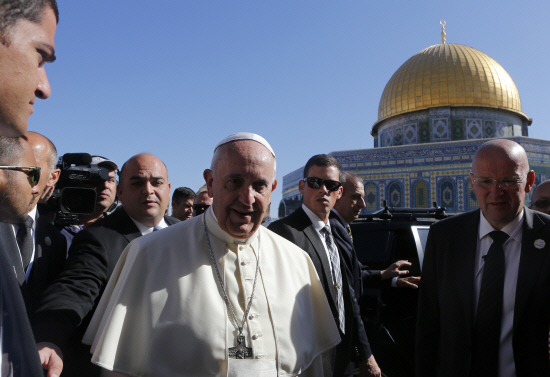
Popre Francis Dome of the RockTo hastily simplify here, the theology is comprised chiefly of a variety of Old Testament verses from the prophets and from God’s promises to Abraham. These verses are used by pastors, ministers, and other Christian leaders to argue that the modern state of Israel absolutely must get all the support it can from the United States and that Christians faithful to the biblical narrative will support this effort. The linchpin used to defend the theology is Genesis 12:3: I will bless those who bless you, and whoever curses you I will curse.

A great debate among Evangelicals has been whether the theology is biblical. Stephen Sizer’s book Christian Zionism: Road-map to Armageddon?, published by IVP, is the most definitive critical engagement with the theology that I know of. Anyone interested a very detailed history of the theology, and its religious and political implications, should read it. We could spend many posts unpacking all the existing pros and cons. Instead, after having done an extensive amount of research, here is the conclusion I came to:

Christian Zionism can easily become a theology of violence and war, and as such it has no space for diplomacy and negotiations to bring peace in the Middle East.

This was tough to admit, and it may be even tougher for Christians and churches that support Israel with good works projects. The problem is not in good works – where they are good works indeed.

The problem is in the theology when it tries to become a foreign policy, for there is a terribly disturbing political militancy at work in theology of Christian Zionism, and ordinary Christian supporters of Israel may not be aware of this or of its looming, tragic implications. That is, the theology is always on the lookout for signs that history is nearing Armageddon.

The most dramatic of these signs to date, according to the theology, has been the return of the Jews to their biblical homeland. The next major turning-point event would be the second coming of Christ. So the history of the world, again, according to the theology, is currently experiencing the time between these two events.

The question must then be asked: What, according to the theology, needs to be occurring during this in-between period? Since conflict and war in the Middle East need to be increasing preceding the second coming of Christ exist, the modern state of Israel and its neighbors need to be at war with each other, leading up to Armageddon. In the next post I will explain why I believe followers of Jesus should steer clear of this foreign policy.

©2014 by Charles Strohmer

IN AND OUT OF LOVE WITH THEOLOGY

wisdom traditionI have a love-hate relationship with theology. I understand its importance, but I’ve seen and experienced too many ways in which it has be used to injure rather than to heal. For instance, people may treat the Bible as if it were a book of theology. Or they may fold up life, and their own lives, and that of others too, to fit inside their theology. I’ve witnessed others, and I’ve been guilty of this too, hauling out theological views like Job’s counselors – as if they answered the mysteries of life’s irregularities, human suffering, theodicy, and the sovereignty of God.

More personally still, it’s probably due to being born a wisdom guy. Hey, I couldn’t help that. You’ll have to take that up with my Maker. Also, wisdom has a family resemblance closer to philosophy than to theology, and my interests and reading have always been strongly more inclined to the former. You may imagine, then, how much I felt confirmed in my existence the day I discovered that a prominent meaning of “philosophy” is “love of wisdom” (in Greek, philos refers to “love” and sophia to “wisdom”).

I don’t want to push wisdom and theology into a dichotomy, nor do I mean that the two disciplines don’t influence each other. But I do find some distinctions helpful, which I share here because this is, after all, a blog dedicated to wisdom and to what may be called the diplomacy of wisdom.

For one thing, whereas wisdom is an agency for motivating diverse peoples to build cooperative and peaceable relations, a theology, because it falls within the purview of a particular religious community, unites only those who believe its particular dogmas. And some theologies make enemies of believers of different religious traditions.

Also, when confronted by a problem, whereas theology tends to bring ready-made answers to the discussion, as did Job’s friends, wisdom tends to arrive with questions seeking insight, as we noted in recent posts. I like the way Abraham Joshua Heschel put the distinction: “Theology starts with dogmas, philosophy begins with problems. Philosophy sees the problem first, theology has the answer in advance” (God in Search of Man, 4).

Further, theological studies (like traditional apologetics) make wide the gulf of dissimilarities between different religions and the peoples who hold to them; wisdom seeks to bring even different religious people together on common ground for mutual good. Immediately we see a great problem that theology presents to the diplomatic corps. Theology in its dogmatic role and wisdom in its diplomatic role have contrasting starting points when approaching problems of international relations and foreign policy.

I have been known to joke with Christian friends that you won’t find the word “theology” in the Bible, but you will find “wisdom” hundreds of times. Scripture explains that God founded the world on wisdom, and it advises us not only to seek wisdom but that wisdom is more precious than gems, silver, and gold, and that nothing we desire can compare with her (Proverbs 3:14-15; 4:5-7). Further, according to the Bible, and as we are considering on this blog, it is in the historic wisdom tradition that we find tremendous resources for discovering how to ease adversarial tensions, prevent violence and wars, and build more cooperative peaceable foreign relations.

The differences between theology and wisdom that I am suggesting come into sharp relief if we consider how some Christians approach the problem of peace in the Middle East. Rather than taking their cues from the biblical emphasis on wisdom, they have relied on a theology called Christian Zionism. In the next post I want us to look at how serious a category mistake that is.

©2014 by Charles Strohmer