THE BATTLE OF THE BUSH GIANTS OVER IRAN part 1 of 2

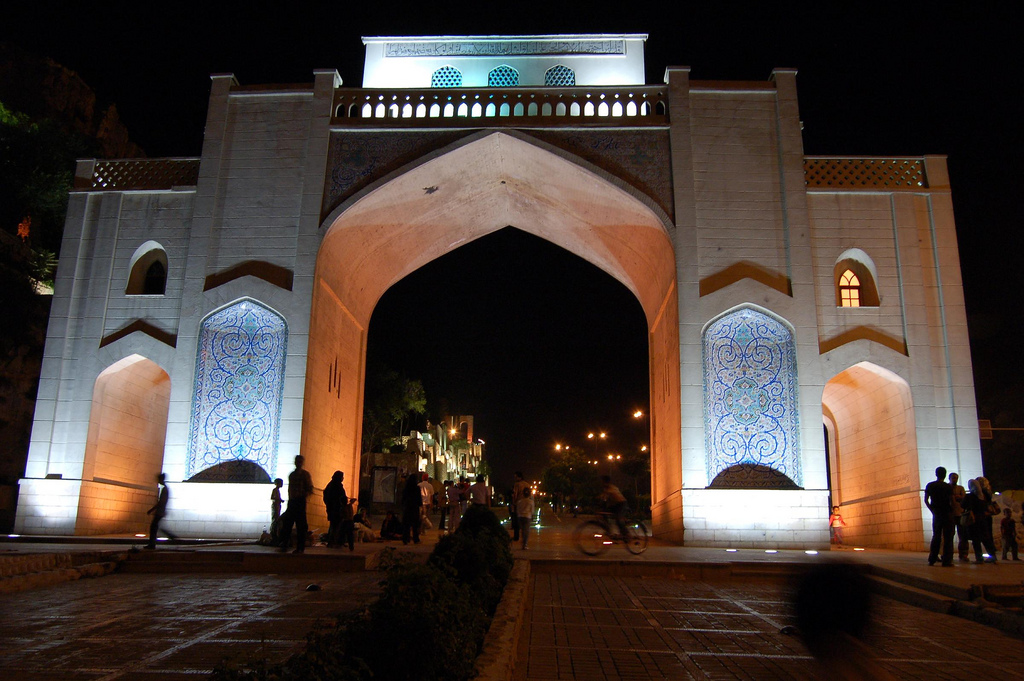
town at nightIn the previous two posts we looked at the fascinating yet fairly secretive years of gingerly cooperation between the United States and Iran that began in 1997 and ended abruptly in 2003. Much of this history remains unknown to most Americans, including how in 2001 Colin Powell, as George W. Bush’s Secretary of State, sought and got Iran’s tactical help to work with the CIA, the U.S. military, and the Northern Alliance to oust al Qaeda and the Taliban from Afghanistan.

If you were the president of the United States, wouldn’t you to try to keep building on that cooperation? After all, President Khatami of Iran had seriously proposed to do just that. But when Iran formally reached out to President Bush in May 2003 to do just that, President Bush crudely snubbed Iran. In this current series of posts, begun here, I am arguing why I believe that the snub could go down in history as the worst foreign policy decision in the history of the United States. It was a needless decision, the outcome of a battle of giants over Iran that had been brewing inside the Bush White House since 9/11.

The evening of September 11, 2001, Secretary Powell and a team of his closest advisors worked through the night to produce a diplomatic strategy for Afghanistan, which became instrumental in getting Iran’s tactical help in Afghanistan to go after Osama bin Laden, al Qaeda, and the Taliban. Beyond that tactical help, Powell wanted to persuade Iran to move into a positive strategic relationship with Washington.

Trita Parsi, in Treacherous Alliance: The Secret Dealings of Israel, Iran, and the U.S., writes that Powell, Richard Armitage (Powell’s deputy), Larry Wilkerson (Powell’s chief of staff), and Ryan Crocker (a seasoned Middle East diplomat) had been working to build a proactive policy toward Iran, and they had incentive to push for a strategic opening with Iran after Iran’s tactical help in Afghanistan had paid off. But on Iran the Powell team faced ferocious opposition from Vice-president Dick Cheney, Secretary of Defense Donald Rumsfeld, and Deputy Secretary of Defense Paul Wolfowitz (a staunch neoconservative ideologue).

Flash forward to 2014.This year, President Obama has been chided from many quarters, including from his former Secretary of State Hillary Clinton, for what many are calling his “Don’t do stupid stuff” foreign policy. We can’t enter that discussion here, but I mention it because “Don’t do stupid foreign policy stuff” is an apt descriptor for what happened to Iran policy inside the Bush White House in 2002-2003.

Despite the successes of Powell’s diplomatic initiatives in getting get Iran’s help with Afghanistan after 9/11, President Bush began leaning increasingly on the advice about Iran from  Cheney, Rumsfeld, and Wolfowitz – all adamantly opposed to Powell’s push to get Iran into a strategic relationship with the United States. Bush himself would begin to scotch that possibility big time, when, in his January 2002 State of the Union address, he included Iran, with North Korea and Iraq, as part of his “axis of evil.”

Needless to say, the Iranians were shocked. In his book Confronting Iran, Ali Ansari writes that “few Iranians could reconcile themselves with the notion that they belonged in the same category as their old foe Saddam Hussein or the totalitarian regime in North Korea.” And what then took place inside the Iranian government ensured the break in relations. For there was a battle of political giants playing out in Tehran just as there was in the Bush White House. And, just as occurred in the White House, the diplomats in Tehran lost to the hardliners.

We’ll pick the story up there in the next post.

©2014 by Charles Strohmer

Image by Olgierd Pstrykotworca (permission via Creative Commons)

IRAN & THE U.S., THE SECRET YEARS OF DIALOGUE & COOPERATION part 2 of 2

doorway to autumnConcurrent with the mutual charm offensive from 1997-2003 between Washington and Tehran was the fascinating period of the so-called Six plus Two talks. Tentatively begun by the UN in 1997, Iran, Pakistan, China, Tajikistan, Turkmenistan, and Uzbekistan, plus the United States and Russia, were quietly meeting to discuss dealing with the Taliban’s solidification of power over Afghanistan and the increasing violence among warring factions in that country. As well, Osama bin Laden and his al Qaeda network had recently been given safe haven there by the Taliban and were now working in various capacities with the Taliban government.

None of this bodes well for Shiite Muslim Iran. The al Qaeda network and the Taliban movement are radical Sunni Muslim Islamists, which meant that Iran had a deep stake in the Six plus Two talks. In 1998, Iran nearly went to war with the Taliban, and more than one million Afghan refugees had fled Taliban rule and were in the safekeeping of Iran, which has a very long eastern border with Afghanistan.

Iran helps the U.S. The Iran – U.S. narrative now begins to sound like a John LeCarré novel. After 9/11, Iran, in definitive ways through its considerable resources, began helping the CIA and the U.S. military to oust al Qaeda and the Taliban from Afghanistan. Iran was a major supporter of the Northern Alliance (NA), a motley group of anti-Taliban forces who were already at war with the Taliban, and through Iran’s help the NA now became the chief U.S. ally in Afghanistan against al Qaeda and the Taliban.

Iran also agreed to allow any U.S. pilots who were in distress to land on Iranian soil, if necessary, and it agreed to allow the U.S. to perform search-and-rescue missions for downed American pilots on its soil. Iran also increased its troop strength along the long Iran – Afghanistan border and, according to Trita Parsi, it sent a dossier to UN Secretary-General Kofi Anan on hundreds of al Qaeda operatives Iran had detained (Treacherous Alliance: The Secret Dealings of Israel, Iran, and the U.S.).

In October or November 2001, the Six plus Two forum had discreetly spun off one-on-one talks between Tehran and Washington to focus on closer cooperation about Afghanistan. Barbara Slavin (Bitter Friends, Bosom Enemies: Iran, the U.S., and the Twisted Path to Confrontation) writes that more than a dozen secret meetings were held among a small, select group of high-level U.S. and Iranian diplomats (until the Bush administration rudely snubbed Iran in May 2003).

These secret meetings, Slavin writes, were cordial and professional and alternated between Geneva and Paris, often taking place in a hotel bar where the diplomats would chat over nonalcoholic drinks and potato chips. Parsi notes that the talks were dubbed the Geneva Channel and that the discussions were bilateral and at the highest level between officials of the two countries since the Iran-Contra scandal (mid-1980s). The talks included high-level Iranian diplomats and U.S. ambassadors Ryan Crocker and Zalmay Khalizad (both were senior Bush officials).

UN building (Jeffrey)Meanwhile, the Six plus Two group happened to be meeting at the UN in New York City just two months after 9/11, when American Airlines flight 587 crashed into a densely populated neighborhood in Queens shortly after taking off from JFK airport. Slavin writes that the assembled diplomats at first assumed another terrorist attack. She also reports that Karmal Kharrazi, Iran’s foreign minister, handwrote onto his prepared remarks the following words to a member of the U.S. delegation: “‘The United States should know that the Iranian people and the Iranian government stand with the United States in its time of need and absolutely condemn these violent terrorist attacks.’” Iranian President Mohammad Khatami, in New York City attending the annual UN General Assembly, told reporters that he hoped “this bitter event will be the last we will have, and that terrorism and hate will be replaced by coexistence, empathy, logic, and dialogue.”

Iran then proved to be crucial to the success of the Bonn Conference in December 2001, where, under UN auspices, an international delegation held meetings with prominent Afghan leaders to decide on a plan for governing Afghanistan, which had been without a nationally-agreed upon government since 1979. According to Parsi, Washington and Tehran had laid the groundwork for the conference weeks in advance, and at the conference it was the Iranian not the U.S. delegation which pointed out that the draft of the Bonn Declaration, which would create the new government, as yet contained no language on democracy. Slavin agrees that Iran played this key diplomatic role at the Bonn Conference, writing that Iran suggested that the draft communiqué call for democracy in Afghanistan and also declare that the new government should not harbor terrorists.

Parsi concluded that it was Iran’s influence over the Afghans, not America’s threats and promises, that moved the negotiations forward right up to the end of conference, when a crucial moment arose around a final sticking point with the NA about the high number of seats it should hold in the new government. Parsi writes that the issue seemed unresolvable and nearly scuttled reaching a final agreement until Iran’s lead negotiator, Javad Zarif, broke the deadlock by taking the NA delegate aside and whispering to him in Persian. A few minutes later they returned to the table, the NA inexplicably having agreed to give up two of the seats it wanted in the new government. (Zarif is currently Iran’s Minister of Foreign Affairs under President Rouhani.)

For Iran, its enemy the Taliban had been defeated. For the United States, its relations with Iran had become less adversarial. The two governments had demonstrated to each other how they could benefit from improved bilateral relations. Apparently the historic season of cooperation, ongoing since 1997 in various ways, was creating a thaw between the two adversaries. This did not go unnoticed at the Powell State Department, where it was hoped that the common interests that both countries had shared in Afghanistan could be continued and expanded to other areas. But that would soon be scuttled by the neoconservatives in the George W. Bush White House, despite Powell’s best efforts. We’ll take a look at that part of the history in the next post.

©2014 by Charles Strohmer

Image by raffacama & Jeffrey respectively (permission via Creative Commons)

IRAN & THE U.S., THE SECRET YEARS OF DIALOGUE & COOPERATION part 1 of 2

red and green building patternThe history of U.S. – Iran relations has traveled rough and tumble roads since 1979, when direct bilateral diplomatic relations ended with the seizure of the U.S. embassy in Tehran. But between 1997 and 2003, those relations were becoming a bit smoother. Unknown to most Americans, U.S. – Iran relations had been quietly, albeit gingerly, becoming slightly more cooperative during the closing years of the Clinton presidency when Madeleine Albright was U.S. Secretary of State.

This cautiously improving context was the one in which the George W. Bush White House snubbed the Iranian diplomatic reachout to the U.S. in May 2003. It soon became commonplace to blame that decision on the strong neoconservative element in the Bush administration. That seems right, and I want to explain why in a future post. But many people do not see the snub as foolish, largely, I think, because they are unaware that beginning in 1997 certain events and decisions taken by the U.S. and Iran were starting to thaw their relations. So I want us to look at that larger context here. We’ll return to the neoconservatives afterward.

Before there was the ranting sixth president of Iran, Mahmoud Ahmadinejad, there was the peaceable reformist politician and fifth president, Seyyed Mohammed Khatami (1997-2005). A surprise landslide election (70% of the vote) carried him into office and changed the tenor of Iranian politics.

Dialogue of civilizations. Khatami shaped a foreign policy around a remarkable initiative that he called “a dialogue of civilizations” and reached out regionally to the Sunni Arab world. As that began to lessen tensions between Shiite Persian Iran and Arab states, Khatami then too his dialogue farther afield and reached out to Europe and America. EU – Iranian relations improved, and a number of public speeches and warm comments from Khatami about the United States were reciprocated by President Clinton and Secretary of State Albright.

The signals being sent by both states were noteworthy, even if they indicated only the possibilities of a new beginning. But small practical steps ensued, although, as diplomatic correspondent Barbara Slavin puts it, Iran and the U.S. remained out of sync. In her book Bitter Friends, Bosom Enemies Slavin discusses this wobbly dance between the U.S. and Iran during the Clinton – Khatami years.

Early in 1998, when he was unveiling his dialogue of civilizations, Khatami, in a major interview with Iranian-born CNN reporter Christiane Amanpour, proposed cultural exchanges with the U.S. to chip away at what he called “the bulky wall of mistrust” between the two nations. In response, writes Slavin, the Clinton administration gave visas to Iranian filmmakers and university professors, and, wrestling being a popular sport in Iran, a team of U.S. wrestlers and their coaches flew to Tehran to compete in an international competition.

autumn cathedralIn September 1998, when Khatami was visiting America for the first time, attending the annual UN General Assembly, he praised President Clinton and got everyone’s attention when he said that the Iranian government would not carry out the death sentence (issued nearly ten years earlier by Ayatollah Khomeini) against Salman Rushdie. The Rushdie affair, he said, should be regarded as “completely finished.” Some commentators questioned why Khatami, as president, did not rescind the fatwa, or religious order, until they learned that since Khomenei had issued the fatwa only he could rescind it, and he had died shortly after he had issued it.

In 1999, the Clinton administration softened some U.S. sanctions on Iran, and on St. Patrick’s Day 2000, four days before the Persian New Year, Secretary Albright stunned the Iranians in a major speech in which she apologized for the role of the CIA in overthrowing Iran’s democratically-elected Prime Minister Mossadegh in 1953 and reinstalling the shah. She also said that U.S. support for Saddam Hussein [in the Iran – Iraq war, 1980-1989] had been “regrettably short-sighted,” and she hinted at a further easing of sanctions.

Albright also listed areas of mutual interest to the United States and Iran and hoped that the two nations could put aside their differences and “plant the seeds for anew and better future.” Although Albright also carefully include U.S. grievances against Iran, the speech, as Slavin writes, was “a major attempt to turn” Khatami’s dialogue of civilizations between America and Iran “into a true reconciliation.”

A number of Iranian gestures toward America ensued. Tehran stopped helping Baghdad smuggle oil in violation of UN sanctions. It toned down its anti-Israel rhetoric. It agreed to accept whatever final agreement the Palestinian leadership hammered out with Israel. The latter item was huge. By implying that it would in principle recognize a two-state solution, should that be the case, Khatami’s government was indirectly granting Israel recognition. Slavin recounts a conversation in which Javad Zarif, Iran’s then UN ambassador, and currently Iran’s Minister of Foreign Affairs under President Rouhani, affirmed that very point. Zarif said that although Iran does not officially recognize Israel, “We believe that that position is not incompatible with accepting whatever solution the Palestinians come up with.”

Ever hear the media or the pundits on talk radio discussing this stuff? I didn’t think so. I don’t want to give the impression that the picture turned rosy. Many thorny issues remained. But the progress was noteworthy enough that the gingerly improving bilateral relations, believe it or not, continued with President George W. Bush. We will pick up that part of this fascinating wobbly dance in the next post.

©2014 by Charles Strohmer

Images by Ars Electronica & Nick Kenrick respectively (permissions via Creative Commons)

AN AMAZING IRANIAN PROPOSAL

Iranian schoolboysIn this current series of posts, begun last time, we are exploring the broad arena of U.S. – Iran relations by calling attention to its narrower areas. By looking at the narrower questions, problems, and decisions we gain wisdom and insight for understanding the larger context. Following this method has given me a much different, and I hope a wiser, perspective of U.S. – Iran relations than the one I had many years ago.

I’ve chosen to begin the exploration by looking at the George W. Bush administration’s  uncalled-for diplomatic snub of Iran in May 2003. I said last time why this might one day be known as the worst foreign policy decision in the history of the United States. Why do I say that? Partly because of what was in the Iranian proposal. That’s a crucial question I want us to consider here. It wasn’t just a cordial letter from Tehran asking after the President’s health, and by the way, How’s the first lady?

A copy of the letter has been helpfully included by Trita Parsi as an Appendix in his book Treacherous Alliance: The Secret Dealings of Israel, Iran, and the U.S. Parsi, president of the National Iranian American Council, writes that the Iranians had prepared a comprehensive proposal. It had been drafted and known only to a closed circle of decision-makers in Tehran and approved by the highest levels of clerical and political authorities, especially Ayatollah Ali Khamanei, the supreme leader, who has the final say in all matters of state.

Apart from Khamanei’s imprimatur, the proposal would not be taken seriously by the Bush White House. Most significantly, then, the proposal was authoritative. Thus the Americans, Parsi writes, were stunned by the proposal, which called for a dialogue of “mutual respect” and listed major points of contention that Iran was willing to discuss with the U.S. When you think about how highly volatile U.S. – Iran relations were during the Ahmadinejad presidency (2005-2013), it seems unbelievable what Iran actually put on the table in May 2003. In the letter, Iran declared itself willing to:

  • talk about its nuclear program;
  • increase its cooperation with the U.S. on al Qaeda;
  • help stabilize Iraq;
  • end Iranian “material support to Palestinian opposition groups” (Hamas, Islamic Jihad, et al.) and pressure them “to stop violent action against civilians”;
  • lean on Hezbollah “to become a mere political organization within Lebanon”;
  • accept the Arab League’s Beirut Declaration for a two-state solution.

Of course bilateral negotiations are a two-way street, so the proposal also spelled out what Iran would like to see on the table in return from the U.S.:

  • the removal of Iran from the “axis of evil”;
  • an end of sanctions and impediments to international trade;
  • “full access to peaceful nuclear technology”;
  • recognition of “Iran’s legitimate security interests in the region”;
  • U.S. help against anti-Iranian terrorists.

The letter closed by suggesting mutual next steps, including public statements, the establishment of parallel working groups, and hammering out a timetable for implementation. Given that Washington and Tehran had had no embassy-level bilateral relations for a quarter of a century, the offer was unprecedented. How would the Bush administration respond?

Let’s think about this for a minute. As with all initial foreign policy proposals, this one was but a starting point. Both sides would know that the proposal was not set in stone. It was merely the potential beginning of the international game of give-and-take and of eventually getting to Yes. But first the waters needed to be tested by both parties. If they liked the temperature, then some next steps would include discussing the items. If the process continued, long story short, many items and issues in the original proposal would probably hit the cutting room floor, with the potential that remaining items might then be taken to an agreement, years down the road.

Iranian boyBut my point here, given the unprecedented nature of the proposal, is that it would be an exceptionally irrational move if the recipient did not engage with the sender to at least test the waters, perhaps by eliminating two or three items or issues while emphasizing one or two others that it was willing to consider as talking points.

The ball would then be in the other’s court. What would it think about the modifications? How would it reply? And so on. If the two parties kept at it, the history of foreign policy negotiations tells us that solid linkages would likely be forged on one or two issues. Somewhere around this point in a long tedious process, if an appropriate framework were found whereby the parties could sit down to work out a mutually beneficial arrangement, then seriously formal talks could begin toward signing an agreement.

This may seem like the wrong kind of compromise to some, but it is simply fundamental to successful foreign policy negotiations. Further, it would not be unusual to see the items and issues that made it through to Yes become, over time, ground for trust to increase between the parties, perhaps leading to the start of talks about new important items or about some on the cutting room floor. The Iranian proposal, in fact, seems to have been sent in such a spirit, having these words tucked into the middle of the letter: “We have always been ready for direct and authoritative talks with the US/with Iran in good faith and with the aim of discussing – in mutual respect – our common interests and our mutual concerns based on merits and objective realities….”

All of this the Bush White House knew. Yet it refused to test the waters. “An opportunity for a major breakthrough had been willfully wasted,” Parsi concluded. Larry Wilkerson, Secretary of State Colin Powell’s chief of staff at the time, believed the mistake was huge. According to BBC News security correspondent Gordon Corera, Wilkerson afterward said, “In my mind, it was one of those things” about which you say “I can’t believe we did this,” especially at a time when Iranian vulnerability was at its greatest and Washington at its most triumphalist.

In a future post we will look at the battle of rivals in the Bush White House that led to the decision to snub Iran. But that battle must be seen in the larger context of U.S. – Iran relations that had been gingerly improving and becoming slightly more cooperative in the years preceding the snub. That fascinating story will be subject of the next post.

©2014 by Charles Strohmer

Images by 350.org & Original Normal Boy respectively (permissions via Creative Commons)

SNUBBING IRAN: THE WORST FOREIGN POLICY DECISION IN THE HISTORY OF THE UNITED STATES?

Iran architecture (ali reza parsi)Most Americans are unaware that in May 2003, the Iranian regime formally reached out to the United States to hold high-level talks. That serious and detailed offer was immediately and soundly rebuffed by the George W. Bush White House. The magnitude of opportunity to alter U.S. – Iran relations for the better was lost. We have been seeing consequences of the snub playing out in Iran’s nuclear program, which every American is aware of – an issue that may take the wisdom of Solomon to prevent from becoming an international disaster.

In this series of posts I want to explore why the Bush administration’s snub of Iran was uncalled-for, and why I believe that the West’s negotiations with Iran about its nuclear program must succeed if the snub is not going to down as the worst foreign policy decision in U.S. history. This topic is of great significance to the broader issues of stabilizing and improving relations between Western and Middle East nations. This topic has been of particular interest to me over many years because it goes to fundamental issues in the region of war and peace and diplomacy, which are crucial to The Wisdom Project.

Well-known among the foreign policy establishments of the West and the Middle East, the story of the ill-advised decision remains ignored by the media. I wrote a few paragraphs about it here. When I have talked publicly about it, people have been surprised to discover that the depiction of U.S. – Iran relations that is typically in the media and on the lips of many politicians is misleading. Here’s that story in depth. Knowing it puts us in a better position to judge what is wise or foolish policy toward Iran.

Let’s start with early 2003. Although not so long ago, it may seem like very long ago, if not referring to a different universe, when I say that at the time America and the George W. Bush White House were flying high. For a year and a half, team Bush had been greatly impressing much of the world. It had ridden the crest of its swift victory in Afghanistan into Iraq, and on May 1, after less than a month of the U.S.-led war on Iraq, the bannered motto “Mission Accomplished” hung unashamedly across the deck of the USS Abraham Lincoln, while President Bush signaled to all the world America’s precise, speedy, and bold defeat of the largest military in the Middle East.

A huge upside for Washington was finding itself breathing the air most envied and unobtainable by world capitals: extraordinary diplomatic negotiating power with capitals of the Muslim Middle East. Tehran was one of those capitals. In January 2002, in his State of the Union address, Bush included Iran with Iraq and North Korea in his “axis of evil.” Bush had now knocked off Iraq. Would Iran be next? If so, when? Was the regime in Tehran nervous? Whether or not it was, it reached out to Washington diplomatically. Since there has been no embassy-level relations between the U.S. and Iran since 1979, Iran sent a formal letter to the Bush administration through the Swiss embassy, requesting high-level talks. In the letter it named what it deemed the most pressing issues for both parties. It then awaited a response.

The offer to talk was not a low-level trial balloon, easily dismissed as such by the White House. For it to be taken seriously, the letter would have to have been endorsed by Ali Khamenei, the Supreme Leader, who holds tremendous authority over Iran’s major state institutions and has final say in Iran’s foreign policy. The letter was signed by Khamenei.

It was taken by Colin Powell, Richard Armitage, and Condoleezza Rice to the president just days after he landed on the deck of the Abraham Lincoln. Suddenly and unexpectedly faced with an exemplary moment in which to act on the humbler American foreign policy that he had promised the world in his pre-election campaign speeches, what would Bush do?

In the next post we will look the amazing contents of the letter and why Bush chose not to start talks.

©2014 by Charles Strohmer

Image by ali reza parsi (permission via Creative Commons)

ISIS & JIHAD: INEVITABLE WAR

red light of warIslam, like Judaism and Christianity, is not monolithic. As there different kinds of faithful Jews and Christians, there are Muslims, and many are opposed to what ISIS is doing and regard it as un-Islamic. Many of these are Muslim reformers who see Islam as a flexible, nondogmatic religion adaptable to the modern world. They might call themselves moderates, liberals, or progressives, or even secularists. They would consider themselves devout Muslims even though they typically hold to nonfundamentalist approaches to the Qur’an and sharia. I have talked with some and read others. (See: Change Agents.)

But in this series of posts, begun here, the focus has been on key religious beliefs of the militant Sunni groups of al Qaeda and ISIS (the self-styled Islamic state), and they consider the reformers as enemies of true Islam. To understand what drives their extremist religious-political ideology we have been considering the writings of the Egyptian intellectual Sayyid Qutb, whose views spread widely in the Middle East after his death in 1966. We have also looked at the various roles of jihad in Islam in contrast to Qutb’s unorthodox view of jihad. Here I want to finish this series on the Sunni militants by considering Qutb’s stunning view of war, or military jihad.

In his militant-sounding book Milestones, Qutb does not see preaching as particularly effective in changing people’s behavior to conform to Islamic law. It may. But if not, force will have to be sanctioned whenever preaching fails:

“The establishing of the dominion of God on earth … and the bringing about of the enforcement of the Divine Law (Shari‘ah) and the abolition of man-made laws cannot be achieved only through preaching. Those who are oppressing God’s creatures are not going to give up their power merely through preaching.”

Here is his rationale for that, worth quoting at length from his book Social Justice in Islam:

“Islam reckons itself to be a worldwide religion and a universal religion; therefore it could not confine itself to the limits of Arabia, but naturally desired to spread over the whole world in every direction. However, it found itself opposed by political forces in the Persian and Roman Empires, which were its neighbors; these stood in the way of Islam…. Therefore it followed that these political forces had to be destroyed…. The Islamic conquests, then, were not wars of aggression…. They were simply a means of getting rid of the material and political opposition that stood between the nations and the new concept that Islam brought with it. They were an ‘intellectual war’ with respect to the people and a physical war with respect to the powers that held these people [captive to idolatries], and which denied them access to the new religion through the exercise of power and coercion…. Three possibilities are placed before the people of a conquered country, one of which everyone must choose – Islam, the poll tax, or war…. For to refuse both Islam and the poll tax indicates clear insistence on maintaining the material forces that intervene between Islam and the minds of men. Hence this insistence must be removed by physical force, which is ultimately the only way.”

It’s a clever sleight-of-mind way of reasoning with subtle nuances, not the least of which is his euphemistic way objectifying the actual people who are on the receiving end of Islamic wars (“They were simply a means of ….”) But what I want to call attention to is that Qutb turns his new breed of Muslims – those he often calls his vanguard or Muslim warriors – into the non-aggressors; thus the peoples they conquer are not victims of aggression. Qutb’s attitude toward war, here, is not in the same moral universe as just war tradition. But, then, Qutb’s way of reasoning is not Western. It is a radical Islamic way that has reversed the roles of aggressors and their victims.

In Milestones Qutb is quite clear about this: “The Islamic Jihaad has no relationship to modern warfare, either in its causes or in the way in which it is conducted. The causes of Islamic Jihaad should be sought in the very nature of Islam and in its role in the world.” Thus the “reasons for Jihaad” are: “to establish God’s authority on earth; to arrange human affairs according to the true guidance provided by God; to abolish all Satanic forces and Satanic systems of life; to end the lordship of one man over others.”

woman and childrenIn all of this Qutb’s warriors are let off the hook. They are not to think of themselves as the aggressors because Qutb sees jihad as a “defensive war,” by which he seems to mean the right of his vanguard, if necessary, if preaching fails, to attack those who resist their efforts to implement God’s authority in their lands. In other words, a people’s resistance to having their country overrun and ruled by Islamic militants is viewed by Qutb as an attack on Muslims who are simply trying to implement God’s rule. This stunning example of doublethink – turning the victims of an attack into the aggressors and the aggressors into those transgressed against – would have made the rulers of the Oceania superstate proud.

In Milestones Qutb discusses reasons for conducting jihad, and he includes these lines, which clearly show the radical difference he posits between his view of jihadist war theory and that of just war theory:

“If [early Muslim warriors] had been asked the question, ‘Why are you fighting?’ none would have answered, ‘My country is in danger; I am fighting for its defense’ or ‘The Persians and the Romans have come upon us,’ or, ‘We want to extend our dominion and want more spoils.’ They would have answered … ‘God has sent us to bring anyone who wishes from servitude to men into the service of God alone, from the narrowness of this world into the vastness of this world and the Hereafter, and from the tyranny of religions into the justice of Islam.’”

Conclusion
I have been greatly encouraged during this series by everyone who, each in their own way, whether via email, social media, or in-person has explained why these posts were important to them. One of the most frequent was the comment “I now understand why they think and act like they do.” I get that, because these things are not discussed by our politicians and the media. Another omission is the underbelly of U.S. – Iran relations, which is another key area of discovery that must be made by anyone seeking to make sense of the role of religion in the Middle East. This may be the subject of the next series of posts.

Meantime, as I was pondering how to end this series, I happened to read this recently:

“There are men who will kill and maim with a tranquil conscience under the influence of the words and writings of some of those who are certain that they know perfection can be reached. Let me explain. If you are truly convinced that there is some solution to all human problems, that one can conceive of an ideal society which men can reach if only they do what is necessary to attain it, then you and your followers must believe that no price is too high to pay in order to open the gates of such a paradise. Only the stupid and malevolent will resist once certain simple truths are put to them. Those who resist must be persuaded; if they cannot be persuaded, laws must be passed to restrain them; if that does not work, then coercion, if need be violence, will inevitably have to be used – if necessary terror, slaughter.”

That timely piece of wisdom comes from a short speech by the political philosopher Isaiah Berlin, in 1994, recently printed in the New York Review of Books. I would just add this. Any and all attempts to rule over the world by oppression, violence, or war are inevitably doomed to failure, no matter how long they have been at it, for their ultimate defeat has been guaranteed by the One who rules from the throne of the universe: the Lamb of God. By rejecting, not accepting, the devil’s offer of rulership over all the kingdoms of the world, Jesus Christ, on his way to Calvary not a caliphate, demonstrated that God’s kingdom does not come via the sword.

©2014 by Charles Strohmer

Images by sokhar and The Iglesia’s respectively (permission via Creative Commons)

ISIS AND SOCIAL JUSTICE IN ISLAM part 2 of 2

Continued from the previous post.

justice statueOn one level in his writings Sayyid Qutb is reacting to what he sees as the West’s moral decadence. No doubt many Christians, and others as well, who see the West as morally decadent would sympathize both with that assessment and with a political program that seeks to redress it. A Christian way of redress, however, would not square with Qutb’s program in his book Social Justice in Islam.

We can’t take time here to go into a Christian program for social justice, but to those who are interested I highly recommend the decades-long work in public policy of the Center for Public Justice, which, like Qutb, opposes the idea of a sacred/secular dichotomy that would confine religions to a private sphere, but, unlike Qutb, opposes the public establishment of any religion.

Further, although Qutb would agree with CPJ that “Religions are ways of life and not merely ways of worship,” he would contest a central CPJ tenet, that we can “do justice to diverse religions and points of view while keeping the public square open to people of all faiths and points of view. This is the challenge that the Center believes can best be met from a Christian-democratic starting point.” See this article on the CPJ site. (In the interest of full disclosure, I am a visiting research fellow with CPJ.) And for a Christian idea of social justice, see this piece of wisdom from James Skillen, about what he calls symphonic justice.

Qutb’s theory of social justice, discussed here, creates a religious-political soil for propagating radical Islamist programs, such the Taliban’s in Afghanistan (1996-2001) and the one that ISIS (the Islamic state) is implementing in parts of Iraq and Syria. And Qutb is not the only go-to Sunni Islamist ideologue. Hasan al-Banna, discussed here, is another.

Other prominent figures include the Palestinian Qutbist Abdullah Azzam, an influential representative of the Palestinian arm of the Muslim Brotherhood in the 1960s and 1970s, who later became Osama bin Laden’s ideological mentor. In his book Jihad: The Trail of Political Islam, Gilles Kepel writes that bin Laden was one of Azzam’s university students in Saudi Arabia and the two later became partnership leaders in Afghanistan as they fought the Soviets.

Another key figure is the Pakistani intellectual Mawlana Mawdudi (sometimes “Maududi”). Kepel writes that “Mawdudi and Qutb thought along similar lines and exercised influence among Sunni Muslims.” Further, when bin Laden lived and traveled in Pakistan among the jihadi-salafists around Peshawar in the late 1970s and early 1980s, he would have been with followers of Mawdudi, whose extremist writings, in which “religion was turned into an ideology of political struggle,” were well established throughout the region.

It should also be noted that many fighters have apparently joined groups such as al Qaeda and ISIS not so much for ideological reasons but because of deep resentments they hold toward America and European nations. As well, many devout Muslims around the world are opposed to Qutb’s views and regard them as a distortion of Islam.

What I have been focusing on in this series of posts, however, is the extremist religious roots of Qutb’s worldview and the direct or indirect debt that militant Sunni groups such as ISIS and al Qaeda owe to Qutb’s religious-political writings. I don’t mean that you would find his books calling for suicide bombings, beheadings, and similar other horrors. But it’s clear that “the religion Islam vs. the world” is an organizing principle of his worldview, that its overall ideology lends itself to the starting of military jihads, and that jihadist organizations such as ISIS and al Qaeda can be understood withing Qutb’s worldview.

The most troubling aspect of all of this, it seems to me, is that Qutb’s religious-political ideology supports a view of jihad as inevitable war. This will be the topic of the next post.

©2014 by Charles Strohmer

Image by Vvillamon (permission via Creative Commons)

ISIS AND SOCIAL JUSTICE IN ISLAM part 1 of 2

sword of justice statueAs we have seen in recent posts, for Sayyid Qutb the core problem of the world’s many and diverse societies is their secular / scared dichotomy, or the hideous schizophrenia. He sees this as a deep spiritual disorder within the trajectory of human history. It has prevented all societies, with rare and short-lived exceptions, from implementing God’s rule over all of life. The solution, as Qutb writes in Islam: The Religion of the Future, is to implement “the religion of God,” by which he means “the Islamic way of life.” “Only then will the hideous schizophrenia come to an end…. The religion of Islam is the Savior.”

As we saw here, Qutb wrote prolifically in 1940s-1960s Egypt and called for a new breed of Muslim leadership – a purified, or cleansed, vanguard movement – that would implement the religion of God. In a major work titled Social Justice in Islam (SJI), first published in 1949, Qutb expounded the “features and properties” of what his view of the Islamic way of life would look like in a society. The book, which expounds his theory of social justice and the public policies of that theory, is much too densely detailed to discuss in a short blog post, so all I want to do here is summarize its basic idea.

Qutb writes that his theory of social justice is based on “the general lines of Islamic theory on the subject of the universe, life, and mankind,” and that the authoritative source for this is “the Qur’an and the Traditions,” which provide a “general scheme” that must be grasped before one can begin to implement social justice (of the kind that Qutb promotes). Early in the book he lays out this general scheme, which I summarize here in six points:

1.    Allah (God) is, a priori, an absolute unity.
2.    “The Active Will” of Allah, from which “all creation” is “issuing,” or “emanating,” and is sustained and ordered, implies an “all-embracing unity” in nature and in the world of man.
3.    The Creator gives “direct care and constant attention” to nature and the world of man, and because of that all “aspects [of life] are interconnected [politics, economics, faith, history, conduct, work, jurisprudence, etc.] so that one cannot possibly be separated from another.”
4.    Mankind, however, had “lived through long ages without arriving at any comprehensive theory” by which to unite himself and the aspects of life to the essential unity, having developed and followed human creeds that militate against life’s “fundamental solidarity.”
5.    This produced a perennial struggle in which individuals and societies have differentiated between “spiritual and material powers” and either “denied one of these in order to strengthen the other, or … admitted the existence of both in a state of opposition and antagonism”; thus “the struggle between the two types of power continued, with men continually uncertain and perplexed and without any definite assurance as to the true solution.”
6.    Then “came Islam, bringing with it a new, comprehensive, and coherent theory in which there was neither this tension nor this opposition, neither hostility nor antagonism. Islam gave a unity to all powers and abilities, it integrated all desires and inclinations and leanings, it gave a coherence to men’s efforts. In all these Islam saw one embracing unity which took in the universe, the soul, and all human life. Its aim was to unite earth and Heaven into one world; to join the present world and the world to come in one faith; to link spirit and body in one humanity; to correlate worship and work in one life. It sought to bring all these into one path – the path which leads to Allah.”

Legislating justice. Having set out this theoretical backdrop, which Qutb invariably calls “this universal theory, or “Islamic philosophy,” or simply “the Islamic concept,” he then states three principles that “are the foundations on which Islam establishes justice”:

1.    “Absolute freedom of conscience” [he means conscience in submission to Allah alone].
2.    “The complete equality of all men” [women are equal to men not in a liberal Western sense but in a qualified sense he develops called “difference in responsibility”].
3.    “The firm mutual responsibility of society” [everyone, but everyone, is responsible for the welfare, or lack of it, of a community].

In the remainder of the book, beginning with chapter three, Qutb articulates his policies for legislating social justice in Islam. These policies are not possible without the public establishment of Islam in a society. And he ties the policies to long discussions about political theory and economic theory in Islam, while throughout the book interpreting many dozens of surahs in ways that he believes lend support to his views.

SJI covers many areas of legislating justice, including specific public policies for human rights, taxation, banking, debt, inheritance, charity, hunger prevention, theft, murder, property ownership, and courtroom testimony. And some of his policy prescriptions intrude into areas of overt moral conduct – places where Western jurisprudence dares not go publicly – such as adultery, fornication, mocking, flogging, drinking alcohol, hoarding, frivolous spending, overindulgence, and wastefulness.

Continued in the next post.

©2014 by Charles Strohmer