
DANIEL’S WISDOM EDUCATION IN JERUSALEM & BABYLON part 2 of 4

diplomacyIn this series of posts on Daniel we are looking not at “Daniel the prophet” but at Daniel as a devout Jew and statesman-diplomat in the empire of Babylonia. Here, I want to finish talking about the kind of wisdom education he received, which we began in the previous post. We know from the text that Daniel received three years of formal tutoring in the city of Babylon, and that it was overseen by Ashpenaz, who ran an elite school of Chaldean instructors for the king. I’ll come back to that in a minute.

But first a question: How was the new pupil, Daniel, able to meet the requirements? Most likely, their education in wisdom did not start in Babylon but in Jerusalem before their capture and exile to Babylon. Daniel 1:4 states that King Nebuchadnezzar ordered Ashpenaz “to bring [to Babylon from Jerusalem] some Israelites of royal descent and nobility [who were] proficient in all wisdom, knowledgeable and intelligent, and capable of serving in the royal palace – and teach them the writing and the language of the Chaldeans” (Jewish Study Bible). Four such Israelites are then named in verse six: Daniel, Hananiah, Mishael, and Azariah.

A number of things are being indicated here. One is that they were “proficient” in wisdom before going to Babylon. They had to be, in order to get into the Chaldean school. Proficiency implies a thorough competence that has been learned by training and practice, such as when we think of someone who is proficient in a foreign language. Ashpenaz must have had some kind of test for that, and the four passed it. Where did these young Israelites become proficient in wisdom? We find a clue, I believe, in the phrase “of royal descent and nobility.”

According to modern scholarship, the royal courts of the old-world Middle East (in Egypt, Israel, Babylonia, and elsewhere) ran both temple schools and wisdom schools, the latter probably usually connected with the former. Not to draw too strict a line in this, but a temple school, as its name implies, educated students in a nation’s religious ritual and ceremonial life, while wisdom schools covered what today we might call the liberal arts, where one would become “knowledgeable and intelligent” in many areas. (There is some indication that a wisdom school would ensure that its pupils had some instruction in a nation’s religious beliefs and system, although they were not being trained for its priesthood.).

Further, enrollment in a wisdom school was typically limited to those with royal and noble blood. It seems likely that Daniel and his three Jewish friends were young wisdom scholars at “Jerusalem College,” where they did their undergraduate work. My guess is that in Jerusalem Asphenaz learned of them, tested them, and found them at the top of the class. He then took them back to Babylon with him for three years (1:6) of graduate studies in wisdom, which included the “writing [literature] and the language of the Chaldeans.”

Having accredited Daniel and his three friends as standout scholars from “Jerusalem College,” Ashpenaz admits them to a specialized course of studies in the Chaldean Institute at “King’s University” in Babylon. There, they would receive the specialized tutoring requisite for holding positions of responsibility and power in the state. It would be a move from being proficient in wisdom to being highly skilled in wisdom.

Next time we will finish our brief exploration of Daniel’s wisdom education in Jerusalem and Babylon by looking at what it most likely consisted of.

©2014 by Charles Strohmer

DANIEL’S WISDOM EDUCATION IN JERUSALEM & BABYLON part 1 of 4

wisdom traditionDaniel, a devout Jew, held a highly distinguished political career in the nation of Babylonia. He served at the highest levels of that government throughout successive administrations and was numbered among an elite class of advisers to the king. These advisers were known as maskilim, which is the Chaldean-Babylonian equivalent of hakamim, a Hebrew word to designate “the wise.”

What I have seen in the book of Daniel is a Daniel with an advanced degree of skill in wisdom that enabled him to function consistently diplomatically with a peaceably relational approach to people and situations. This was true even when he faced political enemies and death threats. Here is a statesman / diplomat whose response to adversarial relations, injustice, and conflict was quite unlike what is typically heard in the polemics of a biblical prophet. It is certainly different than the polarizing rants, if not the demonizing of the other, that can be heard coming out of some quarters in America and the Middle East today. Daniel’s was a peaceable, albeit a personally challenging, wisdom. It gained him the respect and favor of the kings he served. And it was instrumental in effecting deep changes of mind in the kings and in some of their policies.

But Daniel did not become an elite adviser because someone waved a magic wand over him. He paid his dues. And what dues they were! They began with the privileged, wisdom-based education he received in the Babylonian royal court. Here are some facts about that, often glossed over or ignored because their implications are rather astounding.

In the opening scene of the book, Daniel and three other promising young Israelite scholars (Hananiah, Mishael, and Azariah) are captives being taken into exile from Jerusalem to the city of Babylon by King Nebuchadnezzar. Immediately we learn that

The king ordered Ashpenaz, his chief officer, to bring some Israelites of royal descent and nobility – youths without blemish, handsome, proficient in all wisdom, knowledgeable and intelligent, and capable of serving in the royal palace – and teach them the writing and the language of the Chaldeans…. They were to be educated for three years, at the end of which they were to enter into the king’s service. (Daniel 1:4-5, Jewish Study Bible)

Here is my understanding of that text, starting with a word about “the Chaldeans.” Unlike the Jewish Study Bible, most contemporary English translations have “the Babylonians” in Daniel 1:4. This is unfortunate. Babylonia (the empire not the city) comprised a very heterogenous population, and the Chaldeans, like the Israelites and many others, had been absorbed by Babylonia when it was a regional superpower.

Daniel 1:4 is not about the Babylonian population in general, with its mixed and conquered peoples, although that is the context in places such as Daniel 5:30 and 9:1, where “Babylonian” is the correct word. In Daniel 1:4, however, the context is an elite group of Chaldean officials in the royal court. Thus “Chaldean” is necessarily used for this more restrictive sense to qualify the phrase “the writing [literature] and the language” (of the Chaldeans). What is being referenced is a class of priests and learned (wise) men, or magi, in the Babylonian royal court.

In our text, Ashpenaz is tasked with examining the four young Hebrew men to see if they qualify for what we could call the “Chaldean Institute of King’s College.” If admitted, they would enter an elite tutoring program leading to prestigious positions as the king’s councilors. The four budding scholars met the admission requirements for that higher education.

Question: How were they able to meet the requirements? Apparently their education in wisdom did not start in Babylon. We will consider why in the next post in this series, where we look more closely at Daniel 1:4.

©2014 by Charles Strohmer

DANIEL: PROPHET OR DIPLOMAT?

diplomacyThe book of Daniel is popularly known for its bizarre visions, puzzling symbolism, supernatural creatures, and strange events. As such, the book is often considered “apocalyptic,” with Daniel, the main character, being identified as an apocalyptist. (The Greek apokalypsis means: to uncover, to disclose, to bring revelation; an apocalyptist is someone who received such revelations and claimed insight into them from God. Other apocalyptic literature in the Bible includes chapters of Isaiah, Ezekiel, Zechariah, and the book of Revelation.)

More commonly, however, at least to Christians, is Daniel’s identity as a prophet. For Christians, this is understandable, given the book’s well-known placement in a section of the Christian Bible called “the Prophets.” And both identities typically focus on the second half of the book (chapters 7-12). Interestingly, the Jewish Bible gives Daniel a different status. The Jewish Bible has three main sections, the Law, the Prophets, and eleven books called the Writings, and Daniel has been placed in the latter. Jewish scholarship has placed only those biblical characters in the Prophets who are called nābî̓ (prophet); the only person called a prophet in Daniel (9:2) is Jeremiah.

Although the New Testament does, once, call Daniel a prophet (Matthew 24:15), and although the Old Testament notes that prophets receive visions and dreams from God (Numbers 12:6), as Daniel did, I nevertheless prefer the book’s placement in the Jewish Bible. For “the Writings” include books of the wisdom literature, such as Proverbs, Job, and Ecclesiastes, and books such as Ruth, Esther, Ezra, Nehemiah, and Chronicles that carry political and other narratives in which wisdom is either implied or stated as an agency in the analyses and decision making of high-level officials who were facing tough political, economic, or social predicaments.

The book’s placement in the Writings calls attention to the wisdom tradition and to Daniel’s vital role as a statesman and diplomat par excellence. That prominent role has been ignored, if not completely unseen, by the Christian teaching tradition, due to what I believe has been an inordinate interest in “Daniel the prophet.” But it is precisely Daniel’s role as a statesman and diplomat that affords a wealth of insight for today’s world of diplomacy, negotiations, and mediation.

All of this is by way of introduction to say that for the next several posts we will be looking at Daniel’s skillful wisdom as a statesman-diplomat. Over many years, what has interested me about the book has not been what has interested those who see Daniel as a prophet. I have tried to puzzle out different questions, those important to Daniel’s diplomatic skill. Insights in the following posts will be gleaned from these areas:

  • how a wisdom-based education in both Jerusalem and Babylon equipped Daniel with political and diplomatic skills;
  • Daniel’s meteoric rise to renown in the Babylonian royal court as a devout Jew serving with distinction at the highest levels of government;
  • his esprit de corps with colleagues who worshiped Babylonian gods;
  • how his wisdom-based way of reasoning bore fruit in political-religious controversies within the royal court;
  • Daniel’s irenic attitude and style of communication;
  • his non-retaliatory actions toward his political enemies;
  • his respect not only for the king but for those advisers called astrologers;
  • his relationship with his three Israelite colleagues, who were schooled in wisdom alongside Daniel;
  • the diverse, possibly contradictory, sticking points between each of these four devout Jews in Babylon.

©2014 by Charles Strohmer

WAR OR PEACE: YOU DECIDE

War and peace. We have lived with both since that day when brother first slew brother in the name of religion and third-party intervention set forth the terms of a settlement meant to prevent further violence. Fat chance of that. The surge from peace to adversarial relations to conflict and war had settled in as an enduringly lamentable fact of human affairs. History reveals a race whose preference for solving crises through nonviolence stretches just so far and then snaps.

war and peaceIn our day, the incendiary conduct of nineteen men aboard four aircraft on September 11, 2001 was the snap heard round the world. With it, the optimism of a fledgling international peace that was in the air following the end of the Cold War fell to earth. Since then, prospects trending toward furthering peace rather than conflict and war have seemed pretty hopeless.

In the previous post, a moving story from Rabbi Marc Gopin hinted at how inner attitudes of one individual toward another (in this case a Jew toward an Arab) can remain tense or adversarial or can ease up and back down. What we think about others who are not like us is going to betray itself in our words, gestures, and deeds. Multiply his story by millions and it is easy to see why individuals matter to war and peace. Domestic attitudes matter to the shape and conditions of international life.

The most formal way in which domestic attitudes and views affect international life is through a nation’s foreign policy. True, foreign policy decision making in the West is not particularly “democratic.” It is superintended by relatively small communities of presidents, prime ministers, and foreign policy elites who do not submit their policies to direct popular votes. Yet domestic attitudes can loom large in a nation’s international politics.

If, for example, a large percentage of American voters favor an easing of tensions with Iran, that attitude will carry weight inside White House policy, whether it is a Democrat or a Republican administration. And if the policy is to succeed in the long run, it must grip the consciences of a large majority of individuals in the nation. If, as the saying goes, all politics are local, then it is equally true that all international peacemaking begins with the individual, with me and you.

Formally, however, the task falls to the diplomats, international mediators, negotiators, special envoys, and relevant others. These are the men and women who get tasked with making things happen when leaders and their nations have determined to end adversarial relations, conflict, or war with other nations and enter into peaceable relations. But diplomats and others who are trying to bring the parties to Yes can get a bad rap. They get accused of waffling, of going too slow, of selling out, and of much more besides. The populations back home, however, usually have no idea of the insurmountable odds that can be stacked against diplomatic teams. This is why I have gained a huge amount of respect for them. They are really up against it, and few understand that.

The historic wisdom literature tradition is not silent on the subject of wisdom-based diplomacy as vital for international cooperation and peace. Beginning with the next post, we will start exploring key narratives that bring this out. And maybe along the way we will discover some lost tools to help in today’s task.

©2014 by Charles Strohmer

WISDOM IS BETTER THAN WEAPONS OF WAR

negotiationsI also saw under the sun this example of wisdom that greatly impressed me. There was once a small city with only a few people in it. And a powerful king came against it, surrounded it and built huge siegeworks against it. Now there lived in that city a man poor but wise, and he saved the city by his wisdom. But nobody remembered that poor man. So I said, ‘Wisdom is better than strength.’ But the poor man’s wisdom is despised, and his words are no longer heeded. The quiet words of the wise are more to be heeded than the shouts of a ruler of fools. Wisdom is better than weapons of war. Ecclesiastes 9:13-18

As this reflection from the wisdom literature implies, skill in wisdom is vital to diplomacy, negotiations, and similar other efforts that seek peaceable resolutions to adversarial relations, approaching hostilities, conflict, or war. Here, the value of wisdom as greater than both military might and royal authority is evident. A powerful king was backed down by a skilled negotiator who, although poor in this world’s goods, was rich in wisdom and thereby able to prevent his city and its inhabitants from being destroyed. Afterward, however, this negotiator’s wisdom, which saved the city, became despised, scorned, and was no longer heeded. One can’t help but wonder if the next generation picked up the implements and machinery of war and, professing themselves wise, destroyed the “much good.”

Beginning with this post we are making a transition to the historic wisdom tradition’s vital role in efforts that seek peaceable resolutions to adversarial relations, approaching hostilities, conflict, or war. Traditionally this takes us into the fields of diplomacy, negotiations, mediation, and relevant other areas. But so as not to get too wordy in these posts, I will often just use the word “diplomacy.” Unfortunately, the wisdom tradition’s connection to diplomacy has pretty much been lost to us today. It is a missing dimension in our contemporary understanding of the resources the tradition provides.

So far in this series of posts on the wisdom tradition, we have been concentrating chiefly on wisdom as a vital agency for peaceableness in local, community, and regional contexts where human diversity is normative, cooperation essential, and flourishing desired. And I have tried to present this with a fresh take on the sages and their wisdom that is faithful to the wisdom texts.

To briefly recap the previous posts, I tried to show that the sages offer us more than books of wisdom, such as Proverbs, Job, and Ecclesiastes. That is, they call us to much more than simply memorizing some interesting proverbs so we can have them at the ready to apply when situations call for it. As good as that can be, the sages call us to a particular way of reasoning about life. A close reading of the biblical wisdom literature can reveal the sages way of reasoning. The previous posts have been seeking to do that, as will this next series.

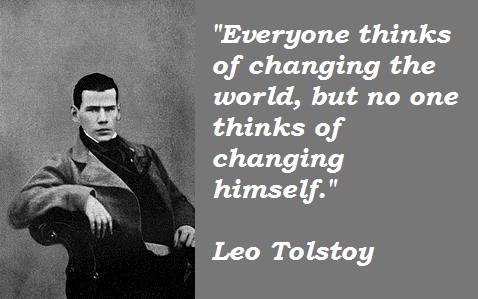
Tolstoy quoteLong story short, the books of wisdom, like all books, emerged from a way of reasoning about life. For instance, Leo Tolstoy, a strong believer in Jesus’ teachings, grounded his novels in a way of reasoning that he called “nonresistance to violence.” Charles Dickens, whose many writings are hard to classify, seems to have reasoned from a moral outrage at the many and widespread injustices of urban, nineteenth century England. The same holds true for nonfiction books, whose authors have their ways of reasoning about life. Regarding foreign policy, for instance, to read books by political neoconservatives is to get a much different way of reasoning than you will get in books by religious writers who are pacifists. The former is known to lead to militaristic foreign polices; the latter never does.

The sages, too, had a way of reasoning about life, out of which an oral wisdom tradition emerged and, later, writings such as we have in the wisdom books of the Bible. In the previous posts, I have been trying introduce, mainly in situations of local, community, and regional diversity, several “lost” but vital aspects of the sages’ way of reasoning. If applied, these can help us to build and sustain cooperation and peace in our pluralistic societies.

We of course must be careful here. We cannot know the mind of these ancients with certainty. But from a close engagement with the wisdom literature, some things seem pretty clear, and to that end in the previous posts we have been identifying a way of reasoning about life that is:

  • foundationally about a peace that the Hebrew Bible calls shalom;
  • not partisan, sectarian, or nationalistic but intercultural (for all peoples everywhere);
  • not about religious instruction but our activities outside of church, synagogue, and mosque;
  • does not present wisdom as ideological, or as any sort of abstraction, but as personal and relational;
  • reveals wisdom as a highly respected legal arbiter in places of authority in the old-world Middle East;
  • central to the teaching of Jesus in Roman-occupied Palestine.

These aspects of the sages way of reasoning about life can be identified (summarized) as the wisdom norms of “peaceableness(shalom) and (human) “mutuality,” which were briefly introduced in some of the previous posts. Beginning with the next post, we will continue to keep local, community, and regional contexts in mind, but we will start looking at how relationships and views in those contexts affect the shapes and conditions of international life. We will be exploring some truly fascinating wisdom narratives in the old-world Middle East that take us into areas of diplomacy, negotiations, and international affairs.

On this journey, shalom and mutuality will come with us, and we will meet other norms of wisdom, such as insight and skill, that are essential to ending adversarial international relations and building more cooperative ones. And as we go along, as in the previous posts, I will include contemporary illustrations. Some, like the next one, may surprise. So, a rabbi walks into a suk . . . .

©2014 by Charles Strohmer

A personal note from Charles: If you want more of the perspectives that Waging Wisdom seeks to present on important issues of the day, I want to invite you to follow the blog. Just click here and then find the “Follow” button in the right margin, enter your email address just above that button, and then click “Follow.” You will then receive a very short email notice whenever I publish a new article. And, hey, if you really like it here, tell some friends! Thank you.