DANIEL’S WISDOM EDUCATION IN JERUSALEM & BABYLON part 4 of 4

Ancient sagesI want to close this discussion on Daniel’s wisdom education by calling attention to what was most likely included in the tutorial process. I have found William McKane’s seminal, little book Prophets and Wisdom Men wonderfully helpful in this.

In his work, which includes the large and dense volume Proverbs: A New Approach, McKane has shown that Egyptian, Assyrian, Babylonian, and Israelite political officials and advisers would have been trained in the wisdom tradition. And of the wisdom literature itself, McKane has concluded that it was for the most part “a product not of full-time men of letters and academics, but of men of affairs in high places of state.” Further, “the literature in some of its forms bears the marks of its close association with those who exercise the skills of statecraft” (Prophets and Wise Men, p. 44).

This is “particularly evident,” he writes, “in the case of the Egyptian ‘Instruction’ whose aim is to lay down the first principles of statesmanship and to define the fundamental intellectual attitudes which are [to be desired] for the aspiring statesman or administrator” (p. 4-5). That seems like an apt job description for Ashpenaz, the lead tutor in the Chaldean school of wisdom where Daniel (and his three Jewish friends) studied. Previously, we considered the likelihood that Ashpenaz would have first tested the four devout Jews in Jerusalem, to see if they had the “intellectual attitudes” essential in anyone aspiring to be a royal court official. When Ashpenaz found them to be budding scholars, he took them back to Babylon for three years of graduate studies in wisdom, which included the “writing [literature] and the language of the Chaldeans” (Daniel 1:3-6).

ancient wisdom schoolTo return to the Egyptian scene, McKane also found evidence that its wisdom literature was associated “with the practice of government.” This “is underlined by the circumstances that the authors of these pieces are sometimes represented as having spent a lifetime in the service of the state in the highest offices.” Further, the Egyptian system was largely a tutorial process conducted in government departments by senior officials who made “available a bank of practical wisdom accumulated from the experience of those have who have in the past shown themselves to be the most shrewd and perceptive men of affairs” (p. 45).

McKane and other scholars have also concluded that these schools were only open to the children of royal families and other elites. And the apprenticeships, to summarize McKane, included familiarization with the functions of bureaucracy, mastering competence in government administration, cultivating proper mores and intellectual attitudes, studying the cultures and politics of surrounding nations, and becoming skilled in protocol. It was through this educational process that “intellectual probity and fastidiousness and a maturity of judgment” was gained for dealing wisely with complicated domestic and international situations (p. 45).

McKane suggests that we envisage the kind of schools “where the fundamental disciplines of reading and writing were mastered” as well as more advanced institutions “where the various subjects of a more specialized higher education were pursued” (p. 39). And since this was not religious instruction per se, it was “not authoritative in the sense of recommending a doctrinaire approach to politics or in prescribing a simple set of rules” (p. 45).

The Egyptian history is significant. McKane sees Israel as taking some cues for its political bureaucracy from the Egyptian system, especially during the long reigns of David and Solomon (Israel’s second and third kings), when Israel was often closely in the Egyptian sphere of influence (p. 23). Citing, for example, Solomon’s alliance with Egypt through marriage, McKane writes that “the Israelite state was modeled on the great states of the ancient Near East and so acquired a structure similar to that of Egypt.” It was a “political structure” in which there was associated with the king “a class of royal officials who had to do with the army, finance, foreign embassies and administration. Such officials were a ‘people of the king’ and had a common interest with him in maintaining the regime and suppressing popular resistance and discontent” (p. 43).

All of this gives us a general idea of what the education of Daniel, Hananiah, Mishael, and Azariah in Babylon most likely encompassed (this is supported by a host of other scholarship). It also gives further credence to the assumption we made, that the four devout Jews, who were from royal or noble blood (Daniel 1:3), were taking, or had finished, their undergraduate classes in wisdom education in Jerusalem to prepare them to serve as officials in the royal court of Judah (before Judah was destroyed by King Nebuchadnezzar’s army). Ashpenaz thus finds them “proficient in wisdom” (Daniel 1:4, Jewish Study Bible) and hauls them off to Babylon, where he admits them to a specialized course of studies in the “Chaldean Institute at King’s University” in Babylon. There, they received the specialized tutoring requisite for holding positions of responsibility and power in the state.

This educational regimen, from both Jerusalem and Babylon, was huge in the various kinds of skill in wisdom that Daniel acquired as a diplomat-statesman. Beginning with the next post we will start to identify those skills.

©2014 by Charles Strohmer

DANIEL’S WISDOM EDUCATION IN JERUSALEM & BABYLON part 3 of 4

wisdom traditionThis is the third of four posts that consider Daniel’s wisdom-based education in Jerusalem and Babylon. The approach I am taking is not that of “Daniel the prophet” but of “Daniel the statesman-diplomat.” In this post we will consider some little known, but highly significant, aspects of his wisdom-based training.

When people, especially Christians, think about how Daniel was educated they typically think “Babylon,” where his education would most likely have included gaining knowledge of what today we call occult, or esoteric, or irrational, beliefs and practices. In the old-world Middle East, professionals in astrology, divination, magical customs, and dream interpretation were integral to the royal court and its politics. Their opinions were turned in to the king as commonly and normally as any cabinet secretary today would send in his or her reports to a president or a prime minister.

This is not the place to enter into that discussion, except to acknowledge that an array of scholarship makes that conclusion credible. Apparently, then, Daniel and the three other budding Jewish scholars from Jerusalem were put through a course of studies in the Babylonian royal court that no card-carrying Evangelical today would entertain!

(The sarcastic polemic against the entire government of Babylon in Isaiah chapter 47 implicates the esotericists whom the king of Babylon relied on to shape the policies that Isaiah denounced. This indicates how systemic the irrational sciences were in the policies of that government.)

There is another view, which I have only heard from Christians. As devout Jews, Daniel and his three friends would never have allowed themselves to be taught “occult” subjects – given the stern warnings in the torah against such practices. But that conclusion is not supported by the Daniel chapter 1 text nor indicated by modern scholarship. This, I think, has to do with their sticking points, a topics to be explore in a future post.

The Jewish and Christian way to understanding this situation can be found in the fact that the book of Daniel never shows any of the four, at any time, practicing what their Scripture condemns. That is, it is one thing to know something about “the occult,” as many respected Christian apologists do; it is quite another thing to put what you know into practice as a believer in it. In short, as the book makes clear, Daniel’s guidance comes not from divination or the stars but from God. In other words, Daniel and his three Jewish friends did not have faith in the esoteric practices, as their Chaldean colleagues would have had.

What is not usually known, however, but what is in fact highly significant, is that their studies in wisdom, in both Jerusalem and Babylon, would have included foreign languages and literature and what today we call public affairs, political science, military history, international relations, and much more. Of course we cannot know infallibly what they were taught, but modern scholarship has reached consensus on a number of areas. We will explore these important areas of their wisdom education in the next post. Their relevance to today is pretty amazing.

©2014 by Charles Strohmer

DANIEL’S WISDOM EDUCATION IN JERUSALEM & BABYLON part 2 of 4

diplomacyIn this series of posts on Daniel we are looking not at “Daniel the prophet” but at Daniel as a devout Jew and statesman-diplomat in the empire of Babylonia. Here, I want to finish talking about the kind of wisdom education he received, which we began in the previous post. We know from the text that Daniel received three years of formal tutoring in the city of Babylon, and that it was overseen by Ashpenaz, who ran an elite school of Chaldean instructors for the king. I’ll come back to that in a minute.

But first a question: How was the new pupil, Daniel, able to meet the requirements? Most likely, their education in wisdom did not start in Babylon but in Jerusalem before their capture and exile to Babylon. Daniel 1:4 states that King Nebuchadnezzar ordered Ashpenaz “to bring [to Babylon from Jerusalem] some Israelites of royal descent and nobility [who were] proficient in all wisdom, knowledgeable and intelligent, and capable of serving in the royal palace – and teach them the writing and the language of the Chaldeans” (Jewish Study Bible). Four such Israelites are then named in verse six: Daniel, Hananiah, Mishael, and Azariah.

A number of things are being indicated here. One is that they were “proficient” in wisdom before going to Babylon. They had to be, in order to get into the Chaldean school. Proficiency implies a thorough competence that has been learned by training and practice, such as when we think of someone who is proficient in a foreign language. Ashpenaz must have had some kind of test for that, and the four passed it. Where did these young Israelites become proficient in wisdom? We find a clue, I believe, in the phrase “of royal descent and nobility.”

According to modern scholarship, the royal courts of the old-world Middle East (in Egypt, Israel, Babylonia, and elsewhere) ran both temple schools and wisdom schools, the latter probably usually connected with the former. Not to draw too strict a line in this, but a temple school, as its name implies, educated students in a nation’s religious ritual and ceremonial life, while wisdom schools covered what today we might call the liberal arts, where one would become “knowledgeable and intelligent” in many areas. (There is some indication that a wisdom school would ensure that its pupils had some instruction in a nation’s religious beliefs and system, although they were not being trained for its priesthood.).

Further, enrollment in a wisdom school was typically limited to those with royal and noble blood. It seems likely that Daniel and his three Jewish friends were young wisdom scholars at “Jerusalem College,” where they did their undergraduate work. My guess is that in Jerusalem Asphenaz learned of them, tested them, and found them at the top of the class. He then took them back to Babylon with him for three years (1:6) of graduate studies in wisdom, which included the “writing [literature] and the language of the Chaldeans.”

Having accredited Daniel and his three friends as standout scholars from “Jerusalem College,” Ashpenaz admits them to a specialized course of studies in the Chaldean Institute at “King’s University” in Babylon. There, they would receive the specialized tutoring requisite for holding positions of responsibility and power in the state. It would be a move from being proficient in wisdom to being highly skilled in wisdom.

Next time we will finish our brief exploration of Daniel’s wisdom education in Jerusalem and Babylon by looking at what it most likely consisted of.

©2014 by Charles Strohmer

Why Did Putin Grab Crimea?

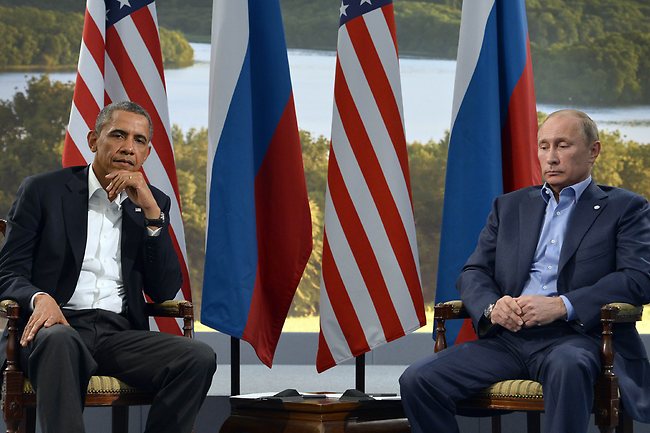
international relationsRight after the Russian military invaded Crimea, seasoned diplomat Nicholas Burns  described Vladimir Putin as yet another of Russia’s innumerable chess grandmasters – it’s just that Putin is moving an army around in a real game. Burns, a presidential adviser as far back as the George H. W. Bush White House, sees it geopolitically as “chess showdown.” He then suggests long-term strategic moves that President Obama and his European allies can make to counter Putin’s move into Crimea. His hope is these moves will outmaneuver Putin “from domination of the Ukraine by the match’s end.”

I disagree, however, with his view that the “Ukraine crisis has become the most complex and dangerous international challenge of Obama’s presidency.” Not Iran? With Syria, possibly Pakistan, a close second? And why does he believe that Putin’s move into Crimea was the “opening gambit” in this particular game? It seems likely that Putin has been trying to figure out a way to gather Crimea back under the wings of mother Russia for a long time. (Khrushchev gave Crimea to Ukraine in 1954.) If so, and if Putin is indeed a chess grandmaster, then surely he has been making quiet moves in that direction for some time.

So let’s look at the board. Putin’s first calculated, very open move seems to have taken place last autumn when he was exerting a ton of public pressure on Ukraine’s President Yanukovych not to sign Ukraine’s association of unity agreement with the EU. But Yanukovych succumbed, huge protests arose in Ukraine, and he was voted out of office in February. Suddenly Crimea’s large Russian population was in an uproar and looking to Putin for a response to the unfolding situation, and Washington then amped up its grumbling about Putin’s designs on Ukraine.

But Crimea had wanted to secede from Ukraine for two decades. Does anyone really believe that Putin had not been talking quietly to the leaders of Crimea about annexation? The Russian military invasion of Crimea in March and Russia’s immediate subsequent annexing of Crimea, I believe, were a good many moves into Putin’s game.

But what game are we talking about? Putin wanted Crimea and calculated he could use Ukraine as a feint to get it – that game. But why this game? The chess metaphor may be useful to a degree, but like its cousin, the so-called billiard ball theory of international relations, it cannot answer why. Insofar as the game does show where a piece ends up positioned on the board, it shows the logic of how this particular game of the power politics is being played, in this case by Putin, but the other player does not know, at least not in any but the most obvious next moves, what moves will next be made before they are made or why Putin wanted to play this game in the first place.

Of course, no man knoweth the thoughts of man except the spirit of a man that is in him. But here is my best guess about why play this game now. It is about perceptions.

  1. As a Russian, Putin has deep sympathies with Russian societies, not just in Russia but throughout Eurasia, and he perceives them in need of a big bear hug from mother Russia.
  2. He perceives the international distribution of power since the end of the Cold War as terribly one-sided and Russia must rectify this imbalance of power;
  3. He has what may be an unresolvable uncertainty about NATO expansion, whereby he perceives a security dilemma for Russia from the West that he must remedy;
  4. He perceives Russia must must tackle such problems however and whenever it can.
  5. And perhaps most significantly, Putin as a state leader has perceived that the time has come to do just that.

In 2008, Russia invaded Georgia knowing that the United States, then bogged down in two wars, could not respond militarily. No doubt Putin has been bolstered to act again by the fact that America is now weary and worn from ten years of war and that Europe is struggling amid weak economic times. In March, as former Secretary of Defense Robert Gates has told television journalist Charlie Rose and others, Putin is not delusional; he is a rational actor who knows exactly what he is doing and is playing a long game.

By hugging – exercising restrained amounts of military power with the support (this is key) of Russian outpost societies – Putin perceives that he can create his Eurasian Union of former Soviet states. The delivery date for this chiefly economic and political organization is scheduled for birth on January 1, 2015.

It is currently unclear what constellation of states will join with Russia. But if it comes to term and afterward thrives, Putin perceives that it will at least be a strong geopolitical force to compete economically with the EU and at best a political sign to America that Russia is back, powerful and secure. We hope for “a powerful supranational association capable of becoming one of the poles in the modern world,” Putin wrote in an op-ed in 2011.

That seems to be a primary strategy in the game, the long game, Putin has in mind. The Ukraine / Crimea moves being his latest ones. But now with the United States, the EU, and other nations acting increasingly negatively to Putin’s game, the irony may already be emerging for both sides. The problem with perceptions is optical illusions.

©2014 by Charles Strohmer

DANIEL’S WISDOM EDUCATION IN JERUSALEM & BABYLON part 1 of 4

wisdom traditionDaniel, a devout Jew, held a highly distinguished political career in the nation of Babylonia. He served at the highest levels of that government throughout successive administrations and was numbered among an elite class of advisers to the king. These advisers were known as maskilim, which is the Chaldean-Babylonian equivalent of hakamim, a Hebrew word to designate “the wise.”

What I have seen in the book of Daniel is a Daniel with an advanced degree of skill in wisdom that enabled him to function consistently diplomatically with a peaceably relational approach to people and situations. This was true even when he faced political enemies and death threats. Here is a statesman / diplomat whose response to adversarial relations, injustice, and conflict was quite unlike what is typically heard in the polemics of a biblical prophet. It is certainly different than the polarizing rants, if not the demonizing of the other, that can be heard coming out of some quarters in America and the Middle East today. Daniel’s was a peaceable, albeit a personally challenging, wisdom. It gained him the respect and favor of the kings he served. And it was instrumental in effecting deep changes of mind in the kings and in some of their policies.

But Daniel did not become an elite adviser because someone waved a magic wand over him. He paid his dues. And what dues they were! They began with the privileged, wisdom-based education he received in the Babylonian royal court. Here are some facts about that, often glossed over or ignored because their implications are rather astounding.

In the opening scene of the book, Daniel and three other promising young Israelite scholars (Hananiah, Mishael, and Azariah) are captives being taken into exile from Jerusalem to the city of Babylon by King Nebuchadnezzar. Immediately we learn that

The king ordered Ashpenaz, his chief officer, to bring some Israelites of royal descent and nobility – youths without blemish, handsome, proficient in all wisdom, knowledgeable and intelligent, and capable of serving in the royal palace – and teach them the writing and the language of the Chaldeans…. They were to be educated for three years, at the end of which they were to enter into the king’s service. (Daniel 1:4-5, Jewish Study Bible)

Here is my understanding of that text, starting with a word about “the Chaldeans.” Unlike the Jewish Study Bible, most contemporary English translations have “the Babylonians” in Daniel 1:4. This is unfortunate. Babylonia (the empire not the city) comprised a very heterogenous population, and the Chaldeans, like the Israelites and many others, had been absorbed by Babylonia when it was a regional superpower.

Daniel 1:4 is not about the Babylonian population in general, with its mixed and conquered peoples, although that is the context in places such as Daniel 5:30 and 9:1, where “Babylonian” is the correct word. In Daniel 1:4, however, the context is an elite group of Chaldean officials in the royal court. Thus “Chaldean” is necessarily used for this more restrictive sense to qualify the phrase “the writing [literature] and the language” (of the Chaldeans). What is being referenced is a class of priests and learned (wise) men, or magi, in the Babylonian royal court.

In our text, Ashpenaz is tasked with examining the four young Hebrew men to see if they qualify for what we could call the “Chaldean Institute of King’s College.” If admitted, they would enter an elite tutoring program leading to prestigious positions as the king’s councilors. The four budding scholars met the admission requirements for that higher education.

Question: How were they able to meet the requirements? Apparently their education in wisdom did not start in Babylon. We will consider why in the next post in this series, where we look more closely at Daniel 1:4.

©2014 by Charles Strohmer

DANIEL: PROPHET OR DIPLOMAT?

diplomacyThe book of Daniel is popularly known for its bizarre visions, puzzling symbolism, supernatural creatures, and strange events. As such, the book is often considered “apocalyptic,” with Daniel, the main character, being identified as an apocalyptist. (The Greek apokalypsis means: to uncover, to disclose, to bring revelation; an apocalyptist is someone who received such revelations and claimed insight into them from God. Other apocalyptic literature in the Bible includes chapters of Isaiah, Ezekiel, Zechariah, and the book of Revelation.)

More commonly, however, at least to Christians, is Daniel’s identity as a prophet. For Christians, this is understandable, given the book’s well-known placement in a section of the Christian Bible called “the Prophets.” And both identities typically focus on the second half of the book (chapters 7-12). Interestingly, the Jewish Bible gives Daniel a different status. The Jewish Bible has three main sections, the Law, the Prophets, and eleven books called the Writings, and Daniel has been placed in the latter. Jewish scholarship has placed only those biblical characters in the Prophets who are called nābî̓ (prophet); the only person called a prophet in Daniel (9:2) is Jeremiah.

Although the New Testament does, once, call Daniel a prophet (Matthew 24:15), and although the Old Testament notes that prophets receive visions and dreams from God (Numbers 12:6), as Daniel did, I nevertheless prefer the book’s placement in the Jewish Bible. For “the Writings” include books of the wisdom literature, such as Proverbs, Job, and Ecclesiastes, and books such as Ruth, Esther, Ezra, Nehemiah, and Chronicles that carry political and other narratives in which wisdom is either implied or stated as an agency in the analyses and decision making of high-level officials who were facing tough political, economic, or social predicaments.

The book’s placement in the Writings calls attention to the wisdom tradition and to Daniel’s vital role as a statesman and diplomat par excellence. That prominent role has been ignored, if not completely unseen, by the Christian teaching tradition, due to what I believe has been an inordinate interest in “Daniel the prophet.” But it is precisely Daniel’s role as a statesman and diplomat that affords a wealth of insight for today’s world of diplomacy, negotiations, and mediation.

All of this is by way of introduction to say that for the next several posts we will be looking at Daniel’s skillful wisdom as a statesman-diplomat. Over many years, what has interested me about the book has not been what has interested those who see Daniel as a prophet. I have tried to puzzle out different questions, those important to Daniel’s diplomatic skill. Insights in the following posts will be gleaned from these areas:

  • how a wisdom-based education in both Jerusalem and Babylon equipped Daniel with political and diplomatic skills;
  • Daniel’s meteoric rise to renown in the Babylonian royal court as a devout Jew serving with distinction at the highest levels of government;
  • his esprit de corps with colleagues who worshiped Babylonian gods;
  • how his wisdom-based way of reasoning bore fruit in political-religious controversies within the royal court;
  • Daniel’s irenic attitude and style of communication;
  • his non-retaliatory actions toward his political enemies;
  • his respect not only for the king but for those advisers called astrologers;
  • his relationship with his three Israelite colleagues, who were schooled in wisdom alongside Daniel;
  • the diverse, possibly contradictory, sticking points between each of these four devout Jews in Babylon.

©2014 by Charles Strohmer

WAR OR PEACE: YOU DECIDE

War and peace. We have lived with both since that day when brother first slew brother in the name of religion and third-party intervention set forth the terms of a settlement meant to prevent further violence. Fat chance of that. The surge from peace to adversarial relations to conflict and war had settled in as an enduringly lamentable fact of human affairs. History reveals a race whose preference for solving crises through nonviolence stretches just so far and then snaps.

war and peaceIn our day, the incendiary conduct of nineteen men aboard four aircraft on September 11, 2001 was the snap heard round the world. With it, the optimism of a fledgling international peace that was in the air following the end of the Cold War fell to earth. Since then, prospects trending toward furthering peace rather than conflict and war have seemed pretty hopeless.

In the previous post, a moving story from Rabbi Marc Gopin hinted at how inner attitudes of one individual toward another (in this case a Jew toward an Arab) can remain tense or adversarial or can ease up and back down. What we think about others who are not like us is going to betray itself in our words, gestures, and deeds. Multiply his story by millions and it is easy to see why individuals matter to war and peace. Domestic attitudes matter to the shape and conditions of international life.

The most formal way in which domestic attitudes and views affect international life is through a nation’s foreign policy. True, foreign policy decision making in the West is not particularly “democratic.” It is superintended by relatively small communities of presidents, prime ministers, and foreign policy elites who do not submit their policies to direct popular votes. Yet domestic attitudes can loom large in a nation’s international politics.

If, for example, a large percentage of American voters favor an easing of tensions with Iran, that attitude will carry weight inside White House policy, whether it is a Democrat or a Republican administration. And if the policy is to succeed in the long run, it must grip the consciences of a large majority of individuals in the nation. If, as the saying goes, all politics are local, then it is equally true that all international peacemaking begins with the individual, with me and you.

Formally, however, the task falls to the diplomats, international mediators, negotiators, special envoys, and relevant others. These are the men and women who get tasked with making things happen when leaders and their nations have determined to end adversarial relations, conflict, or war with other nations and enter into peaceable relations. But diplomats and others who are trying to bring the parties to Yes can get a bad rap. They get accused of waffling, of going too slow, of selling out, and of much more besides. The populations back home, however, usually have no idea of the insurmountable odds that can be stacked against diplomatic teams. This is why I have gained a huge amount of respect for them. They are really up against it, and few understand that.

The historic wisdom literature tradition is not silent on the subject of wisdom-based diplomacy as vital for international cooperation and peace. Beginning with the next post, we will start exploring key narratives that bring this out. And maybe along the way we will discover some lost tools to help in today’s task.

©2014 by Charles Strohmer

A RABBI WALKS INTO A SUK…, or, why you matter to the state of the world

Arab suk Rabbi Marc Gopin, who lives in America, often works between Washington and Middle East capitals as a seasoned practitioner of citizen diplomacy. I first met him around 2003 in Philadelphia at a conference on diplomacy and international relations. We were breakfasting in a noisy restaurant before the conference began that day, and I felt nervous and out of my depth. In the early stages of research for The Wisdom Project, I wanted to know what Marc, a rabbi familiar with the wisdom tradition and seasoned with years of diplomatic experience, thought about my thesis.

I was asking how he, Marc, thought that religious leaders and political actors in Washington and the Middle East – negotiators, mediators, policy advisers, relevant others – could benefit from the wisdom tradition. And how do you yourself do it, Marc, when at times it is like struggling in quicksand? To this veteran peacemaker I must have sounded like a babbling brook trying to explain my inchoate ideas about wisdom as a vital agency for creating peaceable Jewish / Muslim / Christian relations. But Marc patiently prodded, asked questions, and shared moving personal stories.

And I listened, hard. High-level initiatives of citizen diplomacy are hugely important to the crucial field of Track 2 diplomacy, which includes dialogue and problem-solving activities aimed at building relationships and encouraging new thinking that can inform Track 1, or official state to state diplomacy. In the best of both worlds, Track 1 and Track 2 initiatives and their diplomats intersect, talk to each other, and join their considerable resources to resolve adversarial relations, conflicts, and wars. At the conference I had already heard Marc speak about initiatives he had been engaged in at this intersection. Amid the bustle of waiters, the clatter of dishes, and the voices of other customers it struck me that I was hearing from someone whom Jesus meant when he spoke of blessed peacemakers.

Open, honest, and self-effacing, Gopin shares candidly in his talks and books about the personal struggles he has faced as a change agent in the Middle East, such as in dealing with the moral ambiguities involved in reaching peaceable agreements, the slow progress (when there is progress), the unexpected setbacks, the still unresolved issues. He has been a personal inspiration to me for the promise and potential of wisdom and resilience that people can draw on from deep within to overcome obstacles to peacemaking. Mind you, he wasn’t born that way. He had to get there, had to work hard at it, which for him included overcoming some a very real fear.

Arab sukSo, a rabbi walks into an Arab suk. It is the early 1980s, and this “newly-minted rabbi,” as Gopin calls himself in this story, is strolling through Jerusalem’s Old City to the Wailing Wall, when he enters the Arab suk (or souq), which looks like an old-world bizarre. There, he became fascinated with a small, alleyway shop that sold statues of Moses, Abraham, and other patriarchs. Those days, Gopin writes in Holy War, Holy Peace, he was at times “terrified, around Arabs,” so when the Arab shop owner approached him, hoping to make a sale, Marc wouldn’t speak to the man.

But Marc did not leave either. While he was handling an olive wood statue of Abraham, the elderly shop owner greeted him. Although he felt extremely nervous, Gopin “looked hard” into the elderly man’s smiling eyes and

saw something disarmingly familiar there, and it pained me in its gentleness. First I could not take my eyes off him, but then I refocused on the statues. I saw Moses. My name is Moses. I saw Abraham. And then I looked back at him intensely. The Arab man clearly could barely speak English but seemed not to value speaking very much anyway. I think he sensed I was in pain.

And then he did something that will stay with me for the rest of my life. He looked at me, just as I caressed the statue of Abraham, and he pointed up with his finger, and he said, with a heavy accent, “One father?” I nodded, feeling strangely commanded to do so, and I said quietly to him, “One father.” Overcome with emotion, and unable to speak, I said good-bye and walked on. I never saw him again.

Gopin later concluded that the powerful symbolic gesture broke down the wall of othering between them (Holy War, Holy Peace, pp. 25-26, for this and other stories). What we hold in our hearts about others is going to show up in our words, gestures, and deeds. As Jesus himself said, underlying attitudes will come out.

Marc’s poignant experience is just one of countless reasons why you and I matter to the shapes and conditions of of international life, including the foreign policies of our nations that we support or oppose. We’ll pick this up in the next post.

©2014 by Charles Strohmer