“WAR/NO MORE TROUBLE” playing for change

diplomacy or warWhen a war is being waged, diplomacy gets shushed in the corridors of power and marginalized by the media. Wars running concurrently intensify the quietism. When those wars are running a long time – the war on terrorism, the war about Iraq, the war in Afghanistan – one may be forgiven for concluding that diplomacy has been completely scrubbed from the nation’s lexicon. Sans diplomacy, the next logical step would be perpetual war. Although there are ideologues in America subtly arguing for that next step, there has been a great sense of relief across America the past few years to see diplomacy making a resurgence in Washington.



Rumors of wars will continue, and more wars will occur, but those who are discerning that this is a time for peace, and may it be a long time, please God, are wiser than those who want war. Rather than me rambling for a few more minutes on this, jump to this song, “War/No More Trouble.” A brilliant production, musically and lyrically. Enjoy. And be inspired.

©2014 by Charles Strohmer

WISDOM AND INSIGHT part 3 of 3

wisdom and insightAbraham Joshua Heschel was a seminal rabbinic figure in twentieth century religious studies and also a serious civil rights activist who worked with Dr. Martin Luther King Jr. Like King, Heschel personally encountered many outrageous events and experiences as a civil rights activist in the America south during the 1950s and 1960s. As well, Heschel had also faced tragic experiences in Nazi Germany until he escaped.

I call attention to this part of the good rabbi’s personal narrative because in these current posts we are talking about insight, especially the insight that comes from asking questions about events and experiences that are new to us or exceptional. We ask the questions, especially why, because we want to know in a special way. “What’s that all about?” we wonder. In other words, we want insight.

Over many decades Heschel encountered the kinds of events and experiences that no doubt deeply challenged and at times changed his thinking and doing, as they would anyone seeking insight. I have wondered if the deeply challenging personal experiences of his life were not in the back of his mind when he wrote in The Prophets:

“Insight first requires much intellectual dismantling and dislocation.” For he then adds that the process “begins with a mental interim, with the cultivation of a feeling for the unfamiliar, unparalleled, incredible. It is in being involved with a phenomenon, being intimately engaged to it, courting it, as it were, that after much perplexity and embarrassment we come upon insight – upon a way of seeing the phenomenon from within. Insight is accompanied by a sense of surprise. What has been closed is suddenly disclosed. It entails genuine perception, seeing anew” (xxv).

For his part, the theologian Walter Brueggemann, in The Creative Word, speaks of a “great brooding” process (71-73). It is a process of discovery, of seeing anew. In this process we are

“in touch with a mystery that cannot be too closely shepherded, as in the Torah, or protested against, as in the prophets. There is here a not-knowing, a waiting to know, a patience about what is yet to be discerned, and a respect for not knowing that must be honored and not crowded. This way does not seek conclusions for immediate resolutions. It works at a different pace because it understands that its secrets cannot be forced” (71).

Wisdom and insight, he continues, are found in the kind of engagement with events and experiences in the world that entail

“fascination, imagination, patience, attentiveness to detail, and finally, observation of the regularities which seem to govern. Wisdom is found in the experience of the specific, concrete experiences which individuals discern for themselves. . . . That is where wisdom shall be found – in the stuff of life, the world, our experience. . . . It holds for the patient, diligent observer what needs to be known” (72-73).

Intellectual dismantling and dislocation. Great brooding. Discerning what is not evident. A sense of surprise at seeing anew. Such is both the cost and the yield to the people seeking what the wisdom literature calls “understanding words of insight” (Proverbs 1:2).

©2014 by Charles Strohmer

Image by Sadiq Alam (permission via Creative Commons)

WISDOM AND INSIGHT part 2 of 3

It has been said that the first lesson of history is that we don’t learn from it. Perhaps the second lesson is Mark Twain’s witticism that history may not repeat itself but it sure does rhyme. In any case, one of the things I am assuming on this blog is that with the agency of wisdom there is an ineluctable sense both of the timeless and of the timely. We have considered the former here. In this post I want us to consider the latter in terms of history, especially as wisdom engages with the practical, everyday purposes in human activity. That is, she lives and moves and has her being where people interact and events are manifested. There, wisdom desires the present to write the future by learning wisely from the past.

wisdom insightInsight is vital to the process of wise historical development, and thus to gaining wisdom. In the Hebrew Bible insight is as inseparable from wisdom as a river is from water. The word “insight” denotes the kind of perceiving, discerning, or understanding that comes through focused observation and learning from history. It is often indicated by the word bina. Proverbs 1:2, for example, explains that the proverbs of Solomon are good for attaining bina (insight) and hokma (wisdom). Proverbs 4:5 reads: Get bina, get hokma, and verse seven reads: Hokma is supreme; therefore get hokma. Though it cost all you have, get bina.” Proverbs 2:2-3, 5:1, 21:30, and other passages in the wisdom literature also insist on this marriage of wisdom and insight.

What I want to call attention to is that we gain wisdom from insight about learned lessons. Much, if not most, of the wisdom writings that we have today, whether of Egypt, Israel, or elsewhere from the old-world Middle East, originated in an oral tradition that resulted from the sages lengthy investigations into creation/nature and human relationships and experience. From this in-depth research, the sages (wisdom teachers) gained insight about creational laws (laws of nature, to some), about patterns of human behavior,and about historical developments.

By “using their powers of observation and the ability to think rationally,” writes Leo Perdue, “the sages sought to understand God, social institutions, and the moral life through their reflections on creation and human experience, including their own” (In Search of Wisdom; 76). For our gaining of wisdom, then, insight, we may conclude, with its depths of discernment, takes effort; it is not usually gained though leisurely thinking.

From their studied observations, the sages gained insight into the regularities of life and the act-consequence connection. Simply stated: What you sow, you reap. Over time, such insights were developed into wisdom instruction on a wide variety of topics, such as as are found in the book of Proverbs: gaining further knowledge about the created order of things; cultivating moral conduct, prudent behavior, and virtue; recognizing principles for living well; understanding the outcomes (foolish or wise) not only of an individual’s but also of a government’s choices; and recognizing contrasts, as between the wise and the foolish, the just and the unjust, the good and the bad.

Insight about such matters in the book of Proverbs is often artfully crafted in pithy sayings of wisdom, such as maxims, epigrams, adages, or proverbs, intentionally brief in length, compact in meaning, easily intelligible to their audience, memorable, and every now and then delivering a graphic kick; e.g., Like a gold ring in a pig’s snout is a beautiful woman who shows no discretion; food gained by fraud tastes sweet to a man, but he ends up with a mouth full of gravel; righteousness exalts a nation, but sin is a disgrace to any people (Proverbs 11:22; 20:17; 14:34).

The sages also honestly accounted for the hard facts of life’s irregularities and contradictions. For instance, Proverbs indicate that a crook may prosper, that a good person may suffer, that a bad person may rule, that a person with wisdom may not act wisely, and so forth. The entire book of Job, in fact, we could say, is about when the rules don’t apply.

In the next post we will discuss what has been called the “great brooding” process that is necessary for insight to emerge and to help us to gain wisdom.

©2014 by Charles Strohmer

Image by archer 10 Dennis (permission via Creative Commons)

WISDOM AND INSIGHT part 1 of 3

Twin Towers smokingWisdom and insight go together like soup and water. Here’s what I mean. Everyone remembers those terrible images on television of the Twin Towers smoldering and collapsing in clouds of dust. We gaped not just because of the shock but because we did not know why that extraordinary thing had happened. We all wanted to know why. Of course we gape at all sorts of dramatic events, as, for instance, when seeing a bad car wreck or a capsized ferry or special police units surrounding a high school campus. We gape. But we also ask why.

When I was working in Massachusetts many years ago near an old warehouse district, I stood transfixed watching a massive four-story warehouse – it covered nearly an entire square block – become engulfed in flames and burn to the ground. I had never seen such a huge, out-of-control fire, and neither had the dozens of other gawkers who were watching it burn. But we we not just gaping at the sight. We were also trying to find out why it was burning. We even asked the cops and some fire personnel. We wanted to know.

It was many years before I understood what is really going on in us at such times. We ask questions about the experience because we want to know about it in a special way. That is, we want insight. And insight comes from asking questions about an experience, especially one that is new to us or exceptional. Insight is what we want when we hear that a friend has divorced or that the stock market has plunged or that our CEO is under federal investigation. We want insight, so we ask why.

Insight is what everyone one in America wanted on September 11, 2001, everyone from the president on down. No one knew why two passenger jets full of human beings and plenty of fuel had disappeared with a metallic burr into the Twin Towers and never came out. Why?

The president, his staff, and his political and military advisers, of course, were asking questions, questions, and still more questions, because they needed to arrive at clear judgments in order to make decisions – official decisions that would have far-reaching ramifications for the country.

Further, clear judgments, especially for responding to complex exceptional events or experiences, are not possible without gaining insights into insight, so to speak. And to get those you must ask questions about the initial insights. As David Ford once explained to me, you’re checking out your initial insight with more questions leading to additional insight in order to arrive at a wise judgment for making a decision. And wisdom is precisely the point. You need wisdom, and wisdom emerges with insight.

All of this is by way of introducing what I want us to consider next. In the Hebrew Bible insight is as inseparable from wisdom as a river is from water. In the next post, then, we will begin looking at this fifth norm of wisdom, the norm of insight. So far on this blog many posts have discussed and illustrated four other wisdom norms, what I call the norms of peaceableness, relations, mutuality, and skill. The wisdom norm of insight is the final one we will consider. All five norms are vital to the foundation I am attempting to lay about (1) the ancient sages wisdom-based way of reasoning and (2) its relevance for international relations and foreign policy decision making today. I hope to finish (1) soon because I am psyched to post about (2).

©2014 by Charles Strohmer

Image by Globovision (Permission via Creative Commons)

TRANSITIONS

transitionsI ended the previous post by saying that if a nation is not run on a gospel-directed and -shaped wisdom, it is by default run on some other wisdom, on some other way of seeing national life and expressing it, on some other way of trying to analyze and solve its problems. What I am ultimately pleading for on this blog is the developing of a gospel-shaped wisdom that informs the analyses and policy making of international relations, and of relations between the United States and Middle East states in particular.

If you have recently begun to get into this blog, thank you for that, and welcome to the neighborhood. What you need to know, however, is that, except for some brief examples, I have not yet begun posting in any developed way about what a gospel-shaped wisdom for U.S. – Mideast relations might entail. This is because of the limitations of publishing an existing book manuscript post by post on a blog. That is what I am doing on this blog (see here), but in a somewhat revised way so that the material makes sense post by post. Tricky, that.

Unfortunately, however, this means that readers have not been able to start with the entire book in their hands or on their Kindles, so they cannot jump ahead a few chapters, so to speak, if the nudge strikes, to see what I say about U.S. – Mideast relations. I wish it were not so, but you can blame the technology! It has forced me choose what material from the manuscript to put before your eyes first and then keep going from there. This was a hard choice, believe me.

I thought I might start posting by jumping straight into U.S. – Mideast narratives and policies, but I eventually concluded that that approach would leave far too many crucial questions unnecessarily unanswered because I had not said much about the wisdom tradition. So I decided that, first, I better give readers insight into key ideas from the wisdom tradition that inform my thinking about international relations and foreign policy and related matters. Since a wisdom-based way of thinking about these areas is a different than how we hear about them from the media and our politicians, I thought that this starting point would be best. Then once that foundation was laid, I felt that what I wanted to say about U.S. – Mideast and related matters would make more sense.

This approach has stretched my thinking, but it seemed like a win-win approach for all of us. For instance, when I begin writing in later posts on international events, narratives, and policies, I can link one of those posts to one of the earlier ones where I discuss a related matter in the wisdom tradition. If I think that will help spare us all the time of dealing with unnecessary questions, I will do that. But necessary questions – bring ’em on!

Believe me when I say that it has been very hard for me to forebear jumping into the contemporary international scene. But that should begin soon. You can also believe me when I say that it won’t be what you are used to hearing. This is why I hinted in the recent posts about the significance of religion and the faith of nations. But now we will turn again to explore some further, often overlooked, ideas in the historic wisdom tradition.

©2014 by Charles Strohmer

Image by ecstaticist (permission via Creative Commons)

THE ODDITY OF ANOTHER WAY

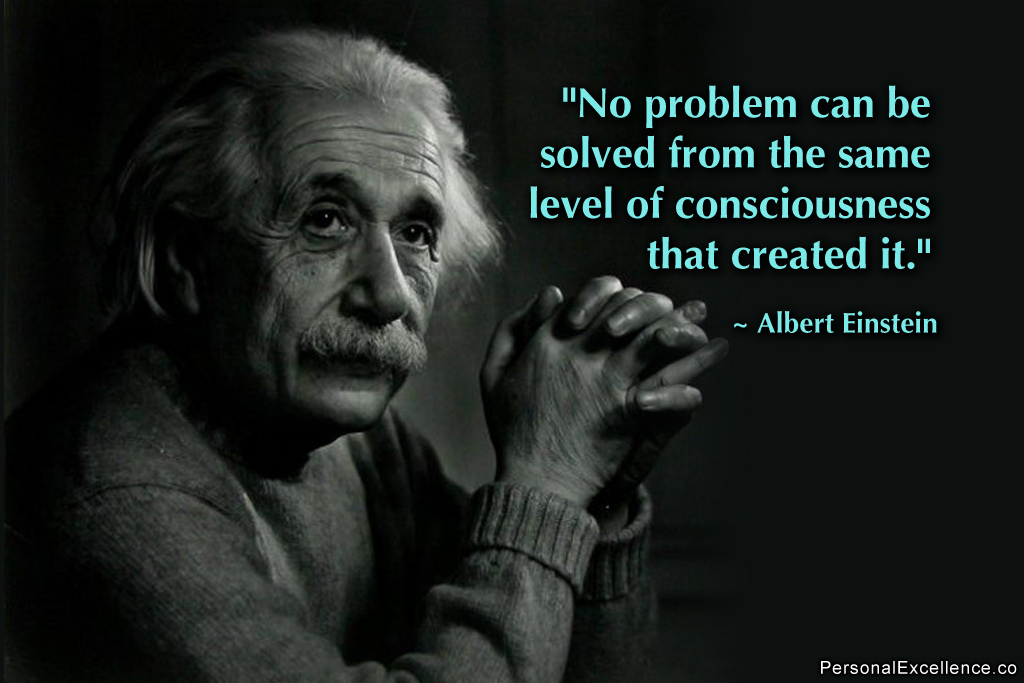
problems solvingPolitics, science, education, economics, society, and every other basic aspect of a nation’s life – in the long run these are not neutral subjects. The way in which these areas develop in the minds of individuals or communities is determined by the kind of god that governs the thinking of those individuals or communities. And that determines how collective problems are analyzed and solutions enacted.

This is vitally important to get into our heads, at least for anyone who wants to see a nation directed by a gospel-shaped wisdom: because the way the gospel thinks is different from other ways of thinking about sociology and politics and economics and foreign policy and so forth. A gospel-shaped wisdom is going to have different ways of analyzing such problems and offering solutions for them.

The difficulty is that a gospel-directed and -shaped wisdom for a nation’s problems may seem terribly odd to both individuals and communities. The reason for this is because the gospel doesn’t seem to fit in anywhere; it is different than the ways people are used to thinking about problems and solving them. (For an introduction to this phenomenon, refer to the series on Jesus as a Teacher of Wisdom in Ancient Palestine.)

Here I want to note some apt examples from theologian and philosopher John Peck, whom, I should add, was also my tutor. From a lecture many years ago, Peck’s observations about the oddity of gospel answers to the collective problems of a nation remains pertinent today:

“We are in a society which, since Freud, has been pleading increasingly diminished responsibility. Well, that makes the gospel assumption of human guilt seem pretty silly. And our politics is torn between individualism and collectivism and a lot of uneasy compromises in between. That makes the concept of the Trinity – a God of individuality in community – one God – an unbelievable God. puzzledIt makes the God-man Jesus an impossibility, logically anyway. And our economics is obsessed by the two alternatives of breakneck progress or stagnation. So that the idea of slowing up for the sake of the helpless seems an unrealistic idealism. It hasn’t got any space. And our education is so devoted to scientific measurables, that faith and hope and love sound a bit daft – because you can’t mark them on a dial.”

This is equally true in areas of interest to this blog, such as diplomacy, international relations, and foreign policy. In the U.S., foreign policy analysis and decision making, for instance, is deeply rooted in ideological thinking. This makes the idea of constructing international relations based on what the gospel would have to say about peace and human mutuality seem ridiculous.

If a nation is not run on a gospel-directed and -shaped wisdom, it is by default run on some other wisdom, on some other way of seeing national life and expressing it, on some other way of trying to analyze and solve its problems.

©2014 by Charles Strohmer

Boy image by Daniel (Permission via Creative Commons)

RELIGION: A HIDDEN WORD

search for Chr AmerA nation’s conception of itself and of the way it should be run is derived from its faith. In other words, there is a direct link between a nation’s ultimate conception if itself and the utterly practical ways in which it get things done. Consider a common slogan: “America is a Christian nation.” Many people deploy it to mean: “America has to get back to being a Christian nation.” That is, America’s founding faith was Christian, the country has let that slip, and so the answer to its ills is to recover Christianity as the nation’s guiding light.

Reputable, patient, historical scholarship, however, has shown that it is a misleading reading of the history of the United States to conclude that it was founded as a Christian nation. See, for example, The Search for Christian America (Noll, Hatch, and Marsden) or the more recent Founding Faith (Steven Waldman). No one, of course, can honestly deny the Christian influences, which were many, widespread, and deep, in the early American narrative. Puritan, Quaker, Baptist, Anglican, and Roman Catholic settlements, for instance, all confessed Christianity and exemplified variants of it. However, these were settlements and colonies. They were not about the founding of a nation, of the United States. The distinction is significant.

The founding document of a nation is its constitution. If, for instance, you read the constitutions of Pakistan, Iran, and Afghanistan you will immediately see that they are “Islamic republics.” This can leave no question in anyone’s mind about the ultimate religious faith of those nations – their conception of themselves – which then directly influences the practical ways in which they go about their business. As Pakistan’s constitution puts it: “the principles of democracy, freedom, equality, tolerance and social justice, as enunciated by Islam, shall be fully observed” (my emphasis).

Now there is no such overt faith or religious statement in the constitution of the United States of America, or even in the Declaration of Independence, about Christianity. It is true the Declaration gives a nod to “God” and to “divine Providence,” each once. But the Declaration is not the Constitution. It did not found the nation. It declared the thirteen colonies to be independent from the British empire. Twelve years later the Constitution was written and signed, and there is no mention of Christianity in it, nor any God-language either. The closest the Constitution gets to God-language is the Preamble’s ambiguous phrase “to secure the blessing of liberty to ourselves and our posterity.”

So is American a Christian nation? Not according to its founding, legal document. This is not to suggest that there were no Christian ethical, social, economic, political, and other insights contributing to the founding. But it is much closer to the actual reality, I believe, to sum up the founding faith of the United States of America as an admixture of Puritan Calvinism, Enlightenment rationalism, and Virginia deism.

These sources play huge roles in America’s ultimate conception of itself, that is, its faith. They informed the thinking that went in to U.S. Constitution. They account for the way the nation goes about its business today, such as its social, political, economic problems, as well as its analyses of and responses to its foreign relations headaches.

In the next post I will conclude these thoughts on “religion” by considering why a gospel-directed and -shaped wisdom seems an odd way to address America’s collective problems.

©2014 by Charles Strohmer

RELIGION: A NECESSARY WORD

steel structure“You would love our church. It’s not religious.” In the previous post I said that we ought to ditch that widespread Christian slogan. Here I want to say explain why, by thinking about another common Christian slogan: “If Jesus is not Lord of all, he is not Lord at all.” This, of course, a way of stating from the negative that Jesus is Lord – has the final say – over all of life – not only over what we do on Sunday but throughout Monday to Saturday as well. Either he is Lord of those days too, or he is not Lord at all.

But what does it mean that Jesus is Lord of our lives outside the church walls? Simply said, it means that you are not just a student, or just a journalist, or just a math teacher, or just a single mom, or just a singer in a rock ‘n’ roll band. You are much more than “just” anything everyday.

To help Christ’s daily lordship seem more understandable and manageable, some Christian philosophers and theologians see life in terms of specific aspects, such as the physical, the biological, the aesthetic, the linguistic, the social, the economic, the ethical, the political, and so forth. This makes sense when you think about it, because we all function in these basic areas of life. I mean we have bodies (the physical), we eat to stay alive (the biological), we pay our bills (the economic), we vote (the political – to note vote is a political statement), and so on. So to claim that “Jesus is Lord” is to claim that he has the ultimate say over these and every other aspect.

Now here’s the thing. There is also the “religious” aspect of life. It is about one’s ultimate faith or confession. As we saw in the previous post, it denotes, for instance, how people express the commitment they have to God symbolically, such as during a church service or in the mosque or in the temple. Further, the religious aspect tops the list of all the aspects. This is because one’s ultimate faith commitment gives direction and shape to how the person will think and act in all the other aspects. So there is no “just anything” about our lives.

If we claim to be Christian, then our ethics, and our economics, and our communications, and our art, and how we treat your bodies, and how we treat others, and the way we are singers in rock ‘n’ roll bands are  directed and shaped (at least they should be!) by what we confess as our ultimate religious commitment – Jesus as Lord. No one does this perfectly, of course, but we ought to be doing it prayerfully, deliberately, and more consistently as disciples, that is to say, as a learners.

As well, if our religious commitment is to what the Old Testament person would call an idol, or a god, then our ethics, and our economics, and our communications, and our art, and the way we treat others and even our bodies, and all the rest of life too, will be directed and shaped by whatever that ultimate faith commitment is.

In the West today, of course, most people do not have shrines in their homes to Baal, or Dagon, or Mars, or Venus, or Whatever. Well, maybe to Steve Jobs. But the Western gods are mostly invisible. Nevertheless ultimate faith commitments exist to them under names such as Reason, Materialism, Scientism, Empiricism, Individualism, Collectivism, Secularism, Self, The Almighty Dollar. The list goes on.

If this stuff is making your head hurt, sorry about that. But try to stick this out. Just as our ultimate beliefs give direction and shape to our lives as individuals, nations are also shaped by their ultimate beliefs. We need to wise up about this. I’ll suggest why by wrapping up this theme of “religion” in the next two posts.

©2014 by Charles Strohmer

Image by Harry Cjr (Permission via Creative Commons)