ISLAM: IS IT OR IS IT NOT THE PROBLEM?

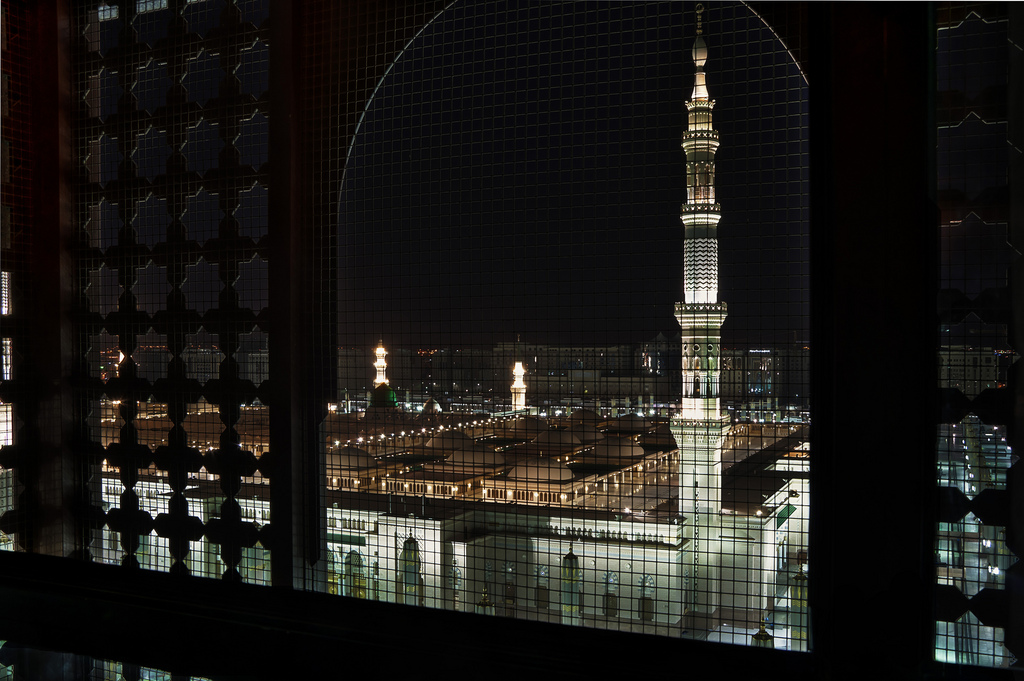
Islam at nightIn the wake of the terrorist attack on Charlie Hebdo in Paris that left 12 persons dead, Manuel Valls, the French Prime Minister, declared, “It is a war against terrorism, against jihad, against radical Islam.” President  Hollande, Valls’s boss, was more measured. “Those who committed these terrorist acts, those terrorists, those fanatics, have nothing to do with the Muslim religion,” he said during preparations for the Paris solidarity March.

There is more going on in the two comments than at first meets the eye. It is not just that Hollande’s is more accommodating to Islam. The two French leaders contradicted each other. From 9/11, to the London Underground bombing, to al Qaeda in Yemen and Boka Haram in Nigeria and the beheadings by ISIS in Iraq, two incompatible views about the role of Islam have saturated political views, the world media, and local coffee bars. Islam is the problem. Islam is not the problem. The horrific and well-planned Paris attack has made this serious bone of contention hugely public again, including comments by leaders such as Hollande and Valls.

Broadly speaking, behind the contradictory views lies, on the one hand, the organizing principle of “inclusion” found in multiculturalism, which too often makes excuses for jihadist violence, and, on the other hand, a religious, political, and social fundamentalism, such as is found in strains of American Evangelicalism, which has a complete and uncomplicated identification of Islam as a violent religion. In the former view, Islam is not the problem. In the latter, Islam is the problem.

The real problem, however, is that neither argument fits the facts. At the end of the day, both leak like a sieve. They lazily avoid the hard and time-consuming work of acknowledging and addressing all of the relevant facts. That’s half of my conclusion after more than a decade of work in the areas of Christian – Muslim relations and U.S. – Middle East foreign policy. The other half is this: Although it is wrong to say that Islam is the problem, it certainly is true that Islam has a problem.

Part of my work has entailed extensive research into this problem, and I recently began feeling brave enough to collect my thoughts about it in a formal essay. Besides writing deadlines and related pressing work, however, I hesitated to start the essay because, heart on sleeve, it would not be easy to write, to aptly cover what needs to be said. I also thought that someone wiser ought to tackle this.

And then I breathed a sigh of relief after reading John Azumah’s essay in First Things. Well written, tightly argued, amply illustrated, and covering all the cardinal issues in just a few thousand words, the essay ought to be required reading. Azumah is associate professor of World Christianity and Islam at Columbia Theological Seminary, and his essay, “Challenging Radical Islam, An Explanation of Islam’s Relation to Terrorism and Violence,” brilliantly subverts both the “Islam is the problem” and “Islam is not the problem” arguments.

Another crucial service Azumah performs for us is this. He deconstructs the is / is not arguments in a way that leaves us at the end of the essay taking away a fair, balanced, and clear understanding of the problems that Islam has, and he explains why only Muslims can solve them. Further, he is well aware that when you point a finger, three more point back at you. So I appreciated his humility, which at the end of the essay addresses ways in which we Christians also need reform.

Enough said. Read Azumah’s essay. He’s spared me a lot of work. And as a fellow writer, I can tell you he worked hard on this one.

©2015 by Charles Strohmer

Image permission of flickr.com.
President Obama, Symbolic Power, Paris, and Public Perception

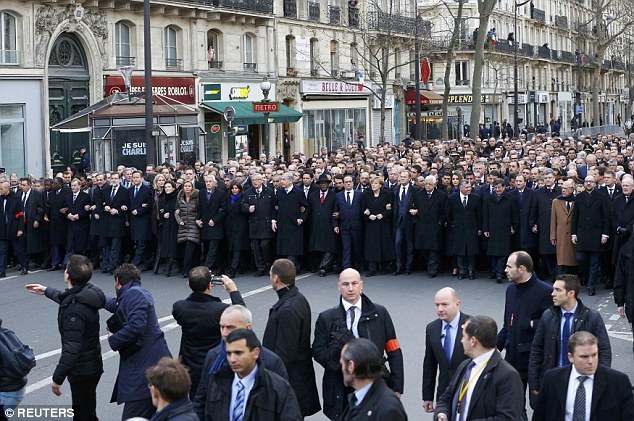
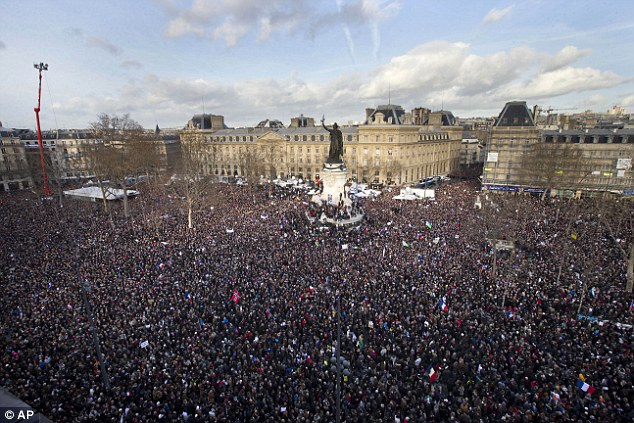
Paris march millions Every picture tells a story. Finally, instead of more excuses from the Obama administration about why the President was MIA among the world leaders at the Paris unity-against-terrorism March on Sunday, White House Press Secretary Josh Earnest said Monday afternoon that “we should have sent someone with a higher profile to the event.”

All day long Monday, images poured into and out of the media of the million+ people who had quietly gathered in the Place de la Nation Square to show the world’s solidarity for the victims of the Paris terrorist attack. At the head of the marching throng were pictured 40 world leaders walking arm-in-arm. But what many saw was: Where is the President of the United States?

Too short of a notice to get the President there, said the White House, given all the high security measures that would have been needed. It would have disrupted this important event.

And yet, there was British Prime Minister David Cameron, and German Chancellor Angela Merkel, and Israeli Prime Minister Benjamin Netanyahu, and Palestinian Authority President Mahmoud Abbas, and the King Abdullah II of Jordan, and Russian Foreign Minister Sergey Lavrov, and the others. Their security teams pulled off their attendance on short notice.

Paris march world leadersWorse, the scene lacked the presence of any top U.S. officials. That also stared everyone in the face. No U.S. Vice-President. No Secretary of State. Even Attorney General Eric Holder, who had been at a summit on terrorism in Paris that morning, did not take part. There were no senior cabinet officials either. Only U.S. Ambassador to France Jane Hartley and her staff were present.

Fareed Zakaria, host of CNN’s “Global Public Square,” called the absence of top U.S. officials a “pathetic” mistake. I agree. “I thought this was why God invented Vice-Presidents,” Zakaria quipped.

It’s true that the states represented their by their leaders at the Paris march don’t give a wit about the symbolic “message of the missing president.” The U.S. has been, is now, and shall remain adamantly united with them in their anti-terrorism policies. These leaders know that. Certainly France isn’t fussed about the symbolic message. After the Paris attack last week, President Obama made it a point to reassure French President Hollande of America’s solid partnership with its old ally France on the anti-terrorism front.

Nevertheless, emotional symbols in foreign affairs, like doctrines and explanations, play roles outside the corridors of a state’s power, where they can evoke public responses that can settle in and alter perception. The Paris solidarity march carries such a high degree of symbolism that President Obama’s absence was a glaring image that negatively affected world opinion. For a state that lacks the street cred it had in the world before the war about Iraq, it was indeed a pathetic mistake.

©2015 by Charles Strohmer

Top photo, AP. Bottom photo, Reuters.

This Bad Weather Is No Joke

woman refugee caught in snowA personal note from Charles Strohmer:

Severe winter weather has now blown in, adding misery to the already desperate struggle to survive that is being faced by displaced Iraqi and Syrian families who have fled ISIS and are holed up in makeshift refugee camps, small tents, abandoned buildings, and other shelters. Please check out this brilliant piece of photo journalism put together by Alice Speri.

I began blogging about this crisis, here and here, before the winter set in, to help raise awareness and support for the Cradle of Christianity Project, which is providing immediate aid to relieve the misery. Please think about doing more than just looking at these images. Check out the story of how this this remarkable Project arose and see if it’s one you can get behind with a gift, prayers, forwards, shares, tweets, or more.

refugee baby caught in snow stormIt’s been very moving to hear from people who have said they wanted to help these families but did not know how to do that. We are here. They are there. There was no bridge. Now with the Cradle Fund there is. If you want to jump right to ways to support, here’s the page.

Thank you,

Charles

For more information. Like a growing number of people who are now following and supporting the Cradle Fund, here you can find many more moving stories and pictures about how the people are living in these stopgap conditions (from Chris’s blogs among the displaced families). Also check out IGE’s Facebook page and the above links as well.

Here are some FAQs about the Cradle Fund. Also Chris is providing personal updates from the region, including photos, on the IGE website and Twitter. Coverage of the Fund is also found at Christianity Today, CBN, and MPAC and Fox News.

Other posts and updates on this blog about the Cradle Fund: The Cradle Fund: Helpless No More /// The Cradle Fund: A Bridge for Shalom in the Middle East  /// The Cradle Fund: Getting Thousands Safely Through a Middle East Winter.

©2015 by Charles Strohmer

Images courtesy of Alice Speri and VICE NEWS.

“AMERICA SHALL BE SAVED”

SunsetThe evangelist Reinhard Bonnke recently ran a full-page, color advert in Christianity Today. He’s going to be preaching the gospel at a large stadium in Houston, and a headline for the ad read “America Shall Be Saved.” More gospel preaching across our land? I, for one, welcome this counter to the winds of unjust change that blow in. But I had to ask: Can “America” be saved? Advertising can be deceptive, promising what it cannot fulfill. An advert for the gospel should not do that. But this advert is misleading. Here’s why.

Years ago, when my wife and I were hosting a well-traveled British evangelist and his European wife in our home, Alan (not his real name) and I stepped outside into the warm air, where we wandered the yard and caught each other up on our doings. I heard about his evangelistic work in Africa and the modest success he was having there getting people saved. He heard about the “worldview and wisdom” teaching and writing I was doing those years. Eventually, as can happen with old friends on a lazy sunny day, we got to solving the world problems, and the conversation turned beefy for both of us.

I had been complaining about injustice and corruption in politics and went off on a rant about some law or other Congress had passed. “Not much anyone can do about it now,” I said. Sensing his moment, Alan had the answer: “I’d love to preach the gospel in Washington, DC. Just think how cool it would be to get all those guys saved.”

“But that wouldn’t solve the political problems,” I said. “Leaving aside the fact that we can’t save anyone, sure, what a miracle if suddenly they all got saved tomorrow! But let’s think about this for a minute. Let’s say that one Friday evening you held an evangelistic event for a full session of Congress, had an altar call, and everyone there now had their fire insurance. My question is: What do these pols do on Monday?”

“They go back to work.”

“Right. And what do they go back to work with? Pretend you had been preaching to all the teachers and principals of an entire school district or to all the journalists and editors that work for a corporate news network. They all got saved. Next day they would return to work in the same school system or the same broadcasting organization as the day before. What would have changed in either system?”

Here’s the dilemma. In our thought experiment, the pols themselves would have been changed deeply morally as individuals but the political system itself would have remained largely untouched. Sure, most likely some moral transformations in some of the characters would have resulted in some immediate changes. The Speaker of the House might have repented of adultery. A Senator might have resigned after confessing he stole campaign funds. A legislator might have stepped down because he suddenly felt a call to the poor.

But personal individual moral transformations, crucial as they are, do not remove corruption or injustice from the existing system that is its seedbed. So the pols in Congress would simply return to work with the same old system – the good, bad, and ugly of it – that was previously in place. What else is there? God forbid the government should come to a halt and force us to rethink it! No. No. A thousands time No. Just throw more money at it. Keep it going.

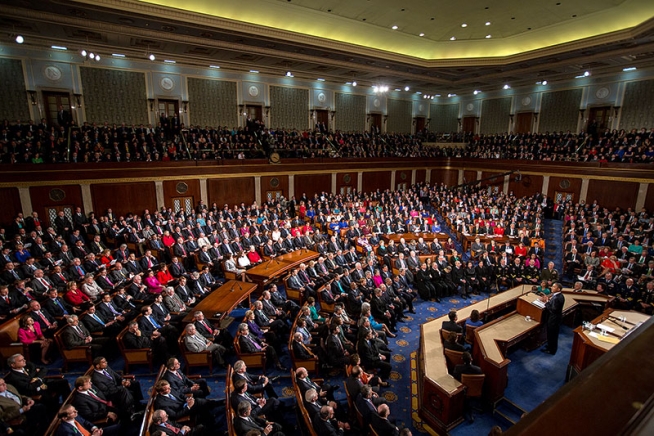
Congress in sessionIn an article he wrote many years before I was thinking about this issue, Jim Skillen nailed it: “Just laws and good public policies will not automatically flow from a renewal of individual ethical concern, and public justice will not automatically take care of itself if we simply concentrate hard enough on our families and schools and churches.”

Gospel-shaped moral transformations of individuals must lead to degrees of moral recovery not only of our homes, schools, and news rooms but of all aspects of society. If not, godly obedience is found wanting and the winds of corruption and injustice will blow into every quarter with increasing strength. In other words, a gospel-shaped wisdom will only influence society “by way of dedicated, purposeful action fit for each arena” – including law and politics.

“A republic,” Skillen concludes, “cannot be reformed apart from action by citizens prepared to serve their civic neighbors through laws and policies that do justice to all. Political renewal requires political action. Legal reform requires wise juridical acts and judgments. No shortcuts are available. Nothing human automatically cares of itself.”

Those saved school teachers and journalists and pols would have to move on from individual moral change to the long hard work of going back to the Book, and finding other wise resources as well, for helping to make the systems less corrupt and more just for all. But especially back to the Book.

Scripture, of course, doesn’t carry encyclopedic knowledge for answering every question that will come up. Not even close. But as a professor friend of mine likes to say: “Scripture may impinge on whatever is being tackled, so the right way to begin any investigation is to start by seeing what God might have to say about it.”

Will America itself be saved? Not just its people? Not by what takes place in Houston. Get everyone saved night after night there, and the song remains the same: “What happens the next day when?”

©2014 by Charles Strohmer

USING THE BIBLE TO THINK part 4 of 4

ABC building blocksAll cultures have developed out of the same “basic ingredients.” In fact, cultures do not develop unless their peoples learn mastery over the basic ingredients. As noted in a previous post, the most advanced mathematician began by learning the simplest calculations and the international concert pianist began with five-finger exercises. If the most elementary principles are not mastered, then a severe limit is set on how far one can cope with new demands.

Of course this is a well known fact of life and hardly needs mentioning, but I’m reminding us because when we are confronted with something new and unfamiliar that we want to make sense of, as often occurs in these changing times, it is a sound instinct to see it in terms of its basic ingredients. Most adults read words and even phrases in whole units, but if they have to read out some unfamiliar word, they will revert to the childhood method of dealing with it syllable by syllable.

The Bible uses the same principle. As we saw in another post, it deals with the ABCs of human culture, its fundamentals. It introduces us to God’s dealings with people in respect of the basic elements of human culture, under conditions in which they can be perceived most clearly – in the simpler forms of human society. Scripture deals with the issues of life, then, we may say, in its primary units. It shows us the beginnings of the historical process that leads on to the present day.

In the development of human history, the basic features of human life are seen most clearly in elementary types of society, and then they become combined and complicated in ways that make the result as different as a cake is from the ingredients that make it up. If you don’t like your cake, or if you want to improve it, you go back to the cookbook recipe, where the basic ingredients and original instructions are set out. No cook, however, would expect the cookbook to describe in detail every possible variation and refinement of the recipe that there might ever be. Rather, enough information is given about “the raw materials” and “the process of cultivation” to be able to vary the recipe or to make intelligent experiments from the basic features.

In Scripture we are presented with cultural life in the history of ancient Israel and her neighbors, and we are shown the way that some early historical processes and responses led to certain results. By faithfully identifying those basic ingredients, processes, and responses we can learn wisdom for addressing and dealing with things in today’s complex and changing world.

Sometimes cooking requires a thorough mixing of the ingredients (as in baking a cake). At other times, as in a meringue, it requires a division of the ingredients (“separate the yolk from the white…”). We can expect to see such processes in Scripture history and in our own history.

In a previous post I gave an example of how the “what is it?” question, when asked of one of today’s complex issues (foreign policy), is a good way to discover its basic ingredients, which we were able to trace to Scripture to learn wisdom from in ABCs applied to foreign policy today. This means that we need not fret when we cannot find today’s complex technical language in Scripture (socialized  medicine, geopolitical structures, free market economy, common core state standards, particle physics, multilateral diplomacy, the Web, iPads, whatever) for we will most likely find the basic ingredients.  Here’s two more examples, briefly .

What is a business corporation? What is this thing? To answer this properly will involve asking other basic questions, like “What is its purpose? What is its basis? What special characteristics distinguish it from other human activities or institutions?” We will also need to understand it by breaking it up into its component parts, what we normally mean by “analysis” – what the Hebrew language of the Jewish Bible calls bîyn.

Some elements of a business corporation will be fairly obvious, such as work and working with others, and the latter, we can say, is, in part, about human relationships within a social unit. It also involves the economic aspect, such as the use of capital and earning money to keep the bills paid! Now we would find quite a bit of wisdom about these “basic ingredients” of life in Scripture, and that wisdom would come into sharper relief by asking more “what?” question, such as what does the bible say about work, spare wealth, social relationships in the context of work, as so on?

Therefore, although the Bible does not use the term, or even the concept of “business corporation,” it does carry instruction about its basic ingredients. Given the 2012 U.S. Supreme Court’s major decision (Citizen’s United) that corporations are persons and its radical implications on political campaign spending, I’m waiting for some enterprising soul to tackle this problem biblically.

What is a state? If ever there was an influential institution today, the state is one. It is difficult to detect anything in Scripture that quite corresponds with it, but if we ask our basic questions – what it is; what goes to make it up – then things get a bit easier. For instance, one key element in the state is centralized governmental authority, which gets a prominent place in Scripture. The state is also about territory and nationhood, both of which are significant dimensions of human life in the Bible.

It is also about what today we call politics, which is not a word you can look up in a Bible concordance! But is you ask any good dictionary “what is politics?”, you’ll see that it is about guiding and influencing government policy, and the Bible has a lot to say about that. And when unpacking that you soon come on to bureaucracy, which is another element found in Scripture. For instance, the growth of bureaucracy under Solomon, or the way it functioned to quite a high pitch of sophistication in the Persia of Daniel’s experience, are fascinating matters for study.

suprised lookOf course, much more is involved for the state and the business corporation. I merely wanted to introduce these illustrations, and the one about foreign policy, as perhaps a fresh and exciting way of closely reading and using the Bible to think Christianly about today’s complex and changing world. I hope these recent posts, begun here, will be of some help to you in seeking wisdom for daily life. I may introduce a few more such themes next year sometime.

©2014 by Charles Strohmer

The above article was adapted from Uncommon Sense: God’s Wisdom for Our Complex and Changing World, by John Peck and Charles Strohmer (SPCK, 2001).

Images by Artful Magpie & George Thomas respectfully (permissions by Creative Commons)

Beyond the Mysterious Star of Bethlehem

star in blue skyI forsook casting horoscopes many decades ago when I became a Christian. Never once have I regretted that change of life, which began the day that I was transformed from being a worshiper of the stars to a worshiper of the God who made the stars. As a Christian, however, I took a serious interest in one star, the star of Bethlehem. Astrologers have all sorts of esoteric views about that star. So as a Christian who accepts the authority of the Bible, I made it a point to try to understand from Matthew’s Gospel just what was going on with this star.

Many people, including many Christians, typically seek to understand the star from strictly naturalist theories, which we considered in the previous post. But naturalism, we saw, is not enough. Theories to explain the star of Bethlehem that depend solely on novas, comets, conjunctions of planets, or on any other natural phenomenon, do not and cannot account for the faith to worship Christ the King that explains the experience of the magi.

But something else often niggled me and I could not put my finger on it. Then it occurred to me. From a close reading of Matthew chapter two, it became clear that naturalism cannot explain the ontology of the star itself, which seems almost personal. It seems to have a mind of its own. In other words, any strictly naturalistic explanation is inadequate because it cannot account for certain “unnatural” characteristics of the star.

In Matthew 2:7-9, for example, the star “appeared” at a particular time to the magi while they were in their homeland (probably Persia). Later, while the magi were on the road from Jerusalem to Bethlehem, the star “went ahead” of them “until it stopped.” And it did not stop randomly anywhere, like a car running out of fuel. It “stood over “ (AV) “the place where the child was.” Within the story of the miraculous birth of Jesus, it seems reasonable to conclude that this kind of behavior cannot be attributed to a strictly natural phenomenon. Here is a kind of personal agency, one that sets the star off as something quite “other” than any heavenly phenomenon governed exclusively by natural laws. As described in Matthew, the star seems as supernatural as the angels who appeared to the shepherds at Christ’s birth (Luke 2:8-15).

Personal agency of the star can also be deduced from the original language quoted in the above paragraph. The New Testament Greek word for “appeared” includes meanings associated with a shining light and, occasionally, for the appearance of an angel, such as to Joseph (Matthew 1:20; 2:13, 19). It is a term, therefore, that can be used of forms of luminous bodies other than literal stars. The word is also used of Jesus when he “appeared,” seemingly from nowhere, to his closest followers after his resurrection (Mark 16:9, 12, 14).

The verb “went ahead” is a peculiar construction in the Greek, used only a half dozen times in the New Testament, usually for “to lead” in a deliberate way. For example, a crowd is leading Jesus into Jerusalem (Matthew 21:9) or Jesus is leading his disciples to Jerusalem (Mark 10:32). And the word “stopped” is used numerous times in the New Testament to describe people who have made a conscious decision to stop whatever they were doing to stand still (Matthew 20:32; 27:11; Mark 10:49). All of this is to say that the idea of personal intention and purpose is implied in the nature of the star.

Just as faith is part of the magi’s experience, so is the personal ontology of the star of Bethlehem. Both are necessary aspects. Both are keys to making sense of the story, from first to last.

The star appears in the East and gets the magi going to Jerusalem. It is probable that these wise men knew, or had access to, the Hebrew scriptures, and upon seeing the unusual star they referenced it to Balaam’s prophecy about the Messiah, recorded in the book of Numbers, hundreds of years before Christ’s birth: “I see him, but not now; I behold him, but not near. A star will come out of Jacob; a scepter will rise out of Israel” (24:17). Traditionally, this was treated as one of Israel’s messianic prophecies about the divine Ruler to come. (See also Jeremiah 23:5-6.)

Arriving at Jerusalem – the heart of Israel’s religious life – the magi receive further biblical instruction, as their announcement about a new king of the Jews having been born raises havoc throughout the ancient city. Eventually, in King Herod’s presence, the rabbis tell the magi that anyone knows where this king is to be born. Why, what’s the big deal, they ask? Well, we saw his star in the East, they reply, and we’ve come to worship him. But we don’t know where to find him.

Mdina streetSo the rabbis crack the books and point out a prophecy in Micah: “But you, O Bethlehem Ephrathah, though you are small among the clans of Judah, out of you will come for me one who will be ruler over Israel, whose origins are from old, from ancient times” (5:2). From the Bible they now have the name of the town, which is just several miles south of Jerusalem.

But there’s a huge problem. They don’t have the address. A close reading of the story seems to indicate that Jesus may not have been at the birth-manger by the time of the magi’s arrival. It could have been days or weeks, if not months, or even a year or two, later. There is not scholarly consensus on this. So who knows where Jesus is? The star knows. From a close reading it also seems likely that the star had disappeared for a while and now appeared again to lead the magi to the very place where Jesus was. And there they worshiped him.

Another often overlooked important point is that to get to Jesus the magi are following Scripture, not the stars. They followed Balaam’s prophecy to Jerusalem. They followed Micah’s prophecy to Bethlehem. And then after they find Jesus they take instruction directly from God. Which brings us to a final thought.

Having been warned by God in a dream that they should not go back to Jerusalem to see Herod, they return to their country “another way.” This little phrase – ”another way”– is for me a third key on the ring, with faith and the star’s personal ontology, to the mystery of the message. The message of the magi and the star of Bethlehem is that of “another way” (AV), the way of Christ. To enter that way, faith and divine revelation are required. The wise are no exception.

©2014 by Charles Strohmer

Images by Riccardo Francesconi & M. Peinado respectively (Permission via Creative Commons)

The Star of Bethlehem + Faith = Worship

KONICA MINOLTA DIGITAL CAMERAStories about the magi and the star of Bethlehem (Matthew’s Gospel, chapter two) have fascinated people for two thousand years. Theories have abounded since the rise of modern astronomy in the seventeenth century. It was a very bright light – a supernova, or a comet, or a meteor, or a rare conjunctions of the planets Jupiter and Saturn in the constellation Pisces. Whatever it was, the magi saw an unusual heavenly phenomena and interpreted it to mean that Jesus Christ, the King of the Jews, had been born.

Is it just me, or does there seem to be more interest in the star this year than ever before? There are even some documentaries on the Web making the rounds, dedicated to the “science” of the star. Speaking of which, I just read a news story in Christianity Today (Dec. 2014) about yet another astronomer, Michael Molnar, who claims to have really figured it out. Molnar is also a coin collector who had only a mild interest in the star until he was investigating the symbolism of an ancient coin he had purchased, minted in Antioch in the early first century.

After sussing the coin’s symbolism, Molar had a hunch that a serious rethink was needed about the star of Bethlehem. The research then spun him off into both the astronomical and the astrological heavens, where the star, it seemed to him, was not any sort of bright heavenly light or a conjunction of planets. Instead, it was a much more modest phenomenon, albeit a rare one: The moon, viewed from Earth, was passing in front of Jupiter in the astrological sign of Aries. Molnar concluded that the magi, upon seeing that and knowing that Jupiter symbolized royalty, and knowing Micah 5:2 – out of Bethlehem a ruler of Israel will come – pulled all these threads together to mean the birth of Christ, the king of the Jews. They then set out on their arduous journey, far from Jerusalem, to worship him.

I’m not knocking astronomical theories. After all, it is the job of astronomers to investigate heavenly phenomenon; someday a consensus may emerge on the science of the star of Bethlehem. Who knows? But even if that consensus is reached, it will not be the science that accounts for the experience and actions of the magi. Science cannot account for the “Aha!” moment of divine revelation that awakens a person to the recognition of who Jesus Christ is.

star in blue skyEven the best of science will leave us at sixes and sevens about Jesus’ identity. Even when Jesus himself was present on earth – when he was heard, seen, and touched – when his doctor could examine him – even that to-hand physicality was not what revealed his identity, about which all sorts of views abounded. Who do people say that I am?, Jesus once asked his disciples. Some say you’re John the Baptist, they said. Some say Elijah. Others say Jeremiah or another prophet. Ask people today and they will say he was a good man, or a wise man, or a teacher, or a healer and miracle worker.

“But what about you?” Jesus asked them. “Who do you say I am?” Simon Peter, having one of his better days, answered: “You are the Messiah, the Son of the living God.” Jesus replied, “Blessed are you, Simon son of Jonah, for this was not revealed to you by flesh and blood, but by my Father in heaven” (Matthew 16:15-17).

It was this divine revelation about Christ’s identity to the magi that explains their experience and actions upon seeing the “star of Bethlehem.” Divine revelation was part of the mix. Apart from that, the star, or whatever it was, would certainly have been a fascinating phenomenon to the magi, but no way do they make the arduous journey hundreds of miles to Jerusalem to worship Christ (Matthew 2:2).

It takes that revelation of God to worship Christ the King, as people have discovered for themselves down through the centuries in countlessly varied contexts in which the physical science is secondary. Rabbi Saul of Tarsus, on the road to Damascus. St. Augustine, in a garden in Milan. John Wesley, in a church meeting in Aldersgate. Alexander Solzhenitsyn, while imprisoned in the Gulag. C. S. Lewis, in his digs at Magdalen College. Mine, in a hotel room in southern California.

Where are you, physically, today, in this season of the star? Worshiping Christ the King or unsure of his identity? If the latter, the experience and actions of the magi awaits you through faith. I invite you to pray for that divine revelation.

Concluded in the next post

©2014 by Charles Strohmer

Image by withrow & Riccardo Francesconi respectively (permission via Creative Commons)