“The world is too much with us; late and soon,
Getting and spending, we lay waste our powers…”

William Wordsworth’s opening complaint in his poem,
The World Is Too Much With Us.
Image by Jonathan Blocker, permission via Creative Commons.

“The world is too much with us; late and soon,
Getting and spending, we lay waste our powers…”
William Wordsworth’s opening complaint in his poem,
The World Is Too Much With Us.
Image by Jonathan Blocker, permission via Creative Commons.
 People are not stupid. In their own ways and in their own words, they want to know what philosophers and theologians call the ultimate meaning or significance of life, and of their own lives especially. What is the basic meaning of life? What is the sense of it all? “What’s it all about when you sort it out, Alfie?”
Something deep inside of us says that our ultimate meaning and significance is found in God. Problem is, belief in God has been made passé and embarrassing through education and science. Especially science, with its Big Bang theory of beginnings – the universe began with an initial terrific explosion billions of years ago.
As I say, people are not stupid. Having pledged allegiance to the Explosion for decades, they have a sneaking suspicion that their reliance on the theory for ultimate meaning has left them feeling pretty insignificant. Many such people, however, have nevertheless created fairly meaningful and significant lives for themselves anyway, as moral and upright human beings, and thank God for that. But the “Aha!” moment of meaning and significance eludes them still.
Yet it seems to me that in our day an increasing number of people are saying, well, the hell with it then, if my life is meaningless, I might as well go out the way I came in, with a bang, and take as many persons with me as I can. I’m now calling this the logic of violence, and I have begun to wonder if it is increasing in the land as Explosion Theory gets further imprinted onto our communal DNA.
You tell me. Here’s an idea I’m toying with. Physicists and other scientists today work with the belief that the distribution of matter-energy throughout the universe can be accounted for by rigid laws of mechanical causes and effects (sans any reliance on a personal creator God). Swell, okay. There certainly are such laws, and without science’s guiding hand applying them we would not enjoy the comforts and conveniences of modern life (of course, we would not cringe before the threat of nukes and other WMD either).

The thing is, if the Big Bang is accepted in the place of a personal creator God as originator of the universe, the only way in which the laws of causes and effects could ultimately be explained is in terms of explosions: as laws the results of which are entirely random. In other words, the physical laws are what they are because, well, that’s how the explosion happened. The incredibility of this has been described as being like a tornado hurtling through a junkyard and leaving behind in its wake a fully assembled 747 ready to fly.
This power of a theory to shape and change a society’s perception of life is also clear when we consider a parallel ultimate understanding: the evolutionary account that life began as basic molecular formations developed as the result of uncountable millions of transformations in a primordial cosmic soup. The odds against such an event, including subsequent events producing human beings, have been reckoned as one in a number greater than all the calculated atoms in the universe. All that can ultimately be said about it is that it happened, that human beings are the result of an incredible jackpot in a cosmic slot machine. Never mind. Viola! Now put the pilots and crew in the 747! And take off.
Because neither the Big Bang nor the Cosmic Soup can be proved in the way science demands, both theories of origins must be taken on faith. Over time, when ultimate faith beliefs in these theories are combined with similar notions in other areas of life, especially moral law, any ultimate significance to your life or my life slowly but inevitably fades to black. Life becomes meaning-less. No ultimate reason any longer exists for human beings to direct their lives in one way rather than another, or another, or another, no matter how morally irresponsible that way is. If family or society does not work for us, then something new can only be created by a mindless risk, a schoolyard massacre, a bloody revolution, another explosion, and then another, and then another.
A Christian vision of life opposes that. It does not deny the validity of physical laws or a scientific explanation. It denies that the laws or the scientific explanations – even all of them put together – can ever provide ultimate meaning or significance to one’s life. It maintains that to do so would be what the Bible calls idolatry.
Whatever formulae may be found to express our perception of how things are what they are, a Christian vision insists that behind that is a personal God with a will and a purpose. That Someone is our significance – Someone by whose wisdom, the Bible explains, the world was founded – Someone who relates to the creation and to us knowably on a personal level through Jesus Christ the Lord. That Someone created us and is the Source of the physical and moral laws that make us who we are. There is nothing random about it, any more than there is about how your house was built or about the laws that the courts enforce.
In the wisdom of the West, the natural sciences have gained such a high status in our communal thinking that the simple fact of its limits easily gets forgotten, and the result is serious. When there is no personal creator God at home in the universe who can be prayed to for forgiveness, mercy, and help in our time of need, life becomes meaningless in the long run, the logic of violence spreads, and we are without hope, in this world and in the next.
©2015 by Charles Strohmer
Images: Explosion of Paint, by markcharwickart; and Junkyard, by construct. Permissions via Creative Commons.
This article was inspired by an idea in chapter 23 of Uncommon Sense: God’s Wisdom for Our Complex and Changing World, by John Peck and Charles Strohmer.
A note from Charles: If you want more of the perspectives that Waging Wisdom seeks to present, I want to invite you to follow the blog. Just click here and then find the “Follow” button in the right margin, enter your email address just above that button, and then click “Follow.” Whenever I publish a new post, you will then receive a very short email notice. And, hey, if you really like this blog, tell some friends! Thank you.
 Several inches of snow already blanketed the ground and it was still falling heavily when I left – early – for the Wednesday evening fellowship. The forecast called for 8 inches by midnight, and I believed it. But this was Michigan. Flatland. Virtually bereft of hills and S-turns, but plenty of salt trucks. (Did you know that under the sprawling city of Detroit, whose suburban streets I was presently negotiating, you will find an enormous salt mine?)
No one who grew up in Detroit, as I did, fretted about driving in this weather. You drove cautiously. You paid attention. And, most likely, you would get there, and back again, on the flat terrain.
I expected the usual crowd at Jeannie’s spacious house. She lived there with her very cute, precocious 4-year old daughter, Heather. Sixty people could worship and fellowship comfortably in the large basement. I parked my rusty old Chevy 4-door at the curb and crunched through the deep snow twinkling up at me from the ground.
I don’t remember why, but sometime during the worship or preaching, I left the basement and went back upstairs. Nobody was there. But as I walked across the dimly lit living room, I saw Heather standing alone, rapt, beside the sliding glass doors that looked out into the large backyard. I quietly slid up alongside.
What a sight! Twelve hours earlier while driving to work, I had seen the world as it is.
Roads soiled by the traffic of cars that dripped oil. Fast food debris discarded along curbs. Sidewalks cracked through neglect. Lawns long yellowed in dormancy awaiting their green spring.
But, now, what a sight! A thick blanket of snow covered the ugly. All of man’s detritus – indeed, all earth itself – not a blade of dead grass could be seen – lay covered under sparkling snow.
I must have fallen rapt, too, standing alongside Heather looking in amazement. Flakes fell gently and quickly past the bright outdoor spotlights that lit up the yard, glittering and twinkling like I imagine the wings of angels sparkling with colors when I see them.
All was silent. This was another world. Adorned. Pristine. Speechless.
“Beautiful, isn’t it?” I whispered.
“The snow forgives us,” she said.
©2015 by Charles Strohmer
A note from Charles: If you want more of the perspectives that Waging Wisdom seeks to present, I want to invite you to follow the blog. Just click here and then find the “Follow” button in the right margin, enter your email address just above that button, and then click “Follow.” Whenever I publish a new post, you will then receive a very short email notice. And, hey, if you really like this blog, tell some friends! Thank you.
 The Walmart lot where I had just parked my car didn’t look prone to thieves and the neighborhood didn’t look particularly bad. But I was being cautious. I don’t want this to get stolen, I said to myself. Don’t be silly, said another thought. Leave it in the car. My better angel won that round. I wouldn’t chance losing that old cassette tape. So I slipped it into the top pocket of my shirt, locked the car, and walked into the big box store in peace.
The tape was irreplaceable, as far as I knew. And not available on the Web. Losing it would mean losing the message. I just couldn’t bear the thought of that. It had been speaking to me at a deep level, and I knew it wasn’t finished with me yet.
My car was still there when I exited Walmart. In one fluid motion, I unlocked the driver’s door, slipped behind the wheel, started the engine, lifted the tape from my pocket, slid it into the car’s cassette player, and drove away listening to the rest of the preacher’s message.
What I had actually done hit me a few days later, when some words of Jesus from long ago came echoing into my head: “Where your treasure is, there will your heart be.” I didn’t think of this at that time, but I held that cassette tape next to my heart. I suddenly realized how much I treasured that preacher’s sermon. I had placed it next to my heart.
That was a good thing to do. But since then I have had memories flit through my mind of bad things that I made into treasures of heart. Things that wore out, or decayed, or got stolen. Things temporal that tricked me. Things of wood and straw. Things over which I got depressed, or bitter, or angry, or divisive, or confused, or desperate, or sinned when they were gone.
I don’t carry that cassette tape around in my shirt pocket, but I did take the preacher’s message to heart. I’m not sure I will ever drive in and out of a Walmart lot the same again.
And I remembered something else Jesus said, that good things come out of hearts holding good treasures. That’s what I want more of. That’s what we all want more of. Things of joy, of grace, of hope, of peace, of love, of godliness. Things lastingly eternal, applied and normalized in our changed and changing hearts. Not for self-interest. But for the kind of selfless giving that blesses others, as that preacher’s message blessed me. Let that beat go on. So, what are you holding in your pocket?
©2015 by Charles Strohmer
Image by LuAnn Kessi via Creative Commons.
A note from Charles: If you want more of the perspectives that Waging Wisdom seeks to present, I want to invite you to follow the blog. Just click here and then find the “Follow” button in the right margin, enter your email address just above that button, and then click “Follow.” Whenever I publish a new post, you will then receive a very short email notice. And, hey, if you really like this blog, tell some friends! Thank you.
 There are good and sufficient reasons for arguing for and against the nuclear agreement with Iran. Far too much ambiguity exists in human affairs, especially in international relations, to conclude in any absolute sense that either camp has nailed it. The optimists tend to applaud the deal. The pessimists tend to conclude that the deal has us stepping off the cliff. The former trust heavily in the good in human nature. The latter assume, to borrow a word from the field of theology, that human sin prevents reaching responsible compromises among adversaries.
And then there are the diplomats and negotiators. In the real world of international relations, with its perennial admixtures of the constructive and the destructive, they are tasked with finding ways wiser than war. The dilemma they face is called “the problem of peaceful change,” and they focus on finding responsible compromises to try to solve it. To put it in words from the New Testament, “If it is possible, as far as it depends on you, live at peace with everyone.” Here, it is regrettably affirmed that in any given situation between individuals, peace may not be possible, yet one of the parties at least still must try. For peace may be possible.
If that is the predicament between individuals, and everyone knows that it is, then in predicaments between adversarial nations, efforts toward more peaceable agreements will be much more difficult. But finding wisdom for war prevention may be possible. This is what diplomats and negotiators are tasked to do. And so we now have, instead of war, the nuclear agreement with Iran.
There will be a new American president one year from now and a new Iranian president a year and a half later. Only God, and novelists, know the future. But the following “if … then” scenario seems a pretty sure bet. If the next U.S. president takes steps to pull us out of the nuclear agreement then the hardliners in Tehran will cry foul. They will say to Iran’s more moderate President Hassan Rouhani, whose team negotiated the nuclear deal with the P5+1 nations, “We told you so. You can’t trust the United States.” And then the regime will most likely manipulate into office in 2018 a nightmare Iranian president.
The regime employed this very strategy ten years ago. As Trita Parsi explains at length in his book Treacherous Alliance, Tehran formally reached out to Washington in the spring of 2003 with a comprehensive proposal to start high-level talks on points of contention between the two nations, including about Iran’s nuclear program. But the George W. Bush administration immediately and rudely snubbed the reach out, despite the fact that Iran had been a key actor with the United States in ousting the Taliban and al Qaeda from power in Afghanistan. “An opportunity for a major breakthrough had been willfully wasted,” Paris writes. In Tehran, “the American nonresponse was perceived as an insult.”
The hardliners played the snub skillfully. They undermined the peaceable foreign policy initiatives that Iran’s then president, the more moderate Mohammad Khatami, had in place toward America. They excluded nearly every moderate political candidate from seeking seats in the next parliamentary elections. And they stacked the presidential deck in favor of the sophomore mayor of Tehran, Mahmoud Ahmadinejad, in 2005.
Mark Twain is reputed to have said that history may not repeat itself but it sure does rhyme. Constitutionally, it would be possible through executive orders for the next America president to disrespect the Joint Comprehensive Plan of Action (JCPOA), as the nuclear agreement is formally known. New U.S. sanctions could be introduced and the U.S. could withdraw from key committees that oversee the accord.
Of course neither the U.S. nor the other signatory nations to the deal should not sit passively by if Iran makes a habit of violating terms of the agreement, but harsh penalties are in place for dealing with such deceit.
Mr., or Ms., Next President, give the deal a chance. But go even further. Task diplomats and negotiators to use the deal to seek to better U.S. – Iran relations. Wisdom is better than weapons of war.
©2015 by Charles Strohmer
Image by Neural, permission via Creative Commons.
This editorial was originally published in The Mountain Press, Sunday, November 1, 2015.
Charles Strohmer is a frequent writer on politics, religion, and international relations. He is the author of several books and many articles and is the founding director of The Wisdom Project.
A personal note from Charles: If you want more of the perspectives that Waging Wisdom seeks to present on important issues of the day, I want to invite you to follow the blog. Just click here and then find the “Follow” button in the right margin, enter your email address just above that button, and then click “Follow.” You will then receive a very short email notice whenever I publish a new article. And, hey, if you really like it here, tell some friends! Thank you.
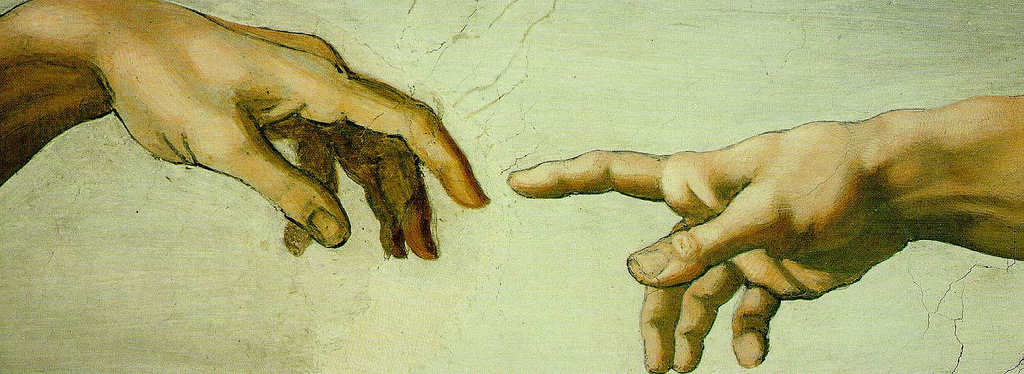 Never heard of John Peck? You’re not alone. He’s been called the most important pastor, theologian, and philosopher you’ve never heard of. It would take thousands of words for me to say why here, so let me try to introduce him to you briefly.
We live in a time when rapid changes in the world in which we live are overtaking us across the spectrum of our Christian lives, and as a result we can unexpectedly find ourselves behind the Eight Ball when it comes to responding to the new challenges in a way that is consistent with a gospel-shaped wisdom. Those who know John Peck will tell you that he has an exceptional ability for helping us get to unstuck. But because he keeps his head down, not enough people are aware of him. Yet for those who are, he is a significant force in the development of a biblical Christian wisdom that has transforming power to meet the challenges of what today we typically call “secular life.”
Before retiring from public ministry, John was a much sought-after teacher and consultant for diverse churches and organizations in the UK, Europe, and the US. He was a cofounder (in 1974) of the inimitable Greenbelt Festival, which is still going strong, and a cofounder and the principal of College House (1976-1995), which ran courses related to the Cambridge diploma in religious studies, focusing on developing a Christian philosophical framework for all of life. But I suspect John would say that his best achievement was the life-long one in which he and his wife, the late Hanna Peck, raised five biological and forty foster children – oh the stories they could tell!
In the interest of full disclosure, John is a dear friend and mentor to me, and we co-authored a book. But that is not why I thought it good to rerun this interview here (first published in 1998). For one thing, John has a grasp of the Bible, culture, and human nature, coupled with a gift for teaching, that is second to none and imparted with graciousness, wit, and skill.
Also, when I revisited the interview recently, I was surprised that I’d forgotten how much ground it covered. There’s biblical wisdom here: for marriages; for those raising families; for earning a living; for running a business or an institution; for writing and publishing books; for those engaged in democratic politics, law-making, or science; for trying to survive as an artist; for identifying disguised idolatries; for gaining a wholistic view of life; for what Christian obedience in “secular life” entails; and much more besides.
Also, a new generation of Christians face such issues today while concurrently feeling at a loss for ways ahead because they are aware of the contradictions implicit in traditional approaches to the emerging challenges. But God’s original wisdom for human beings has what it takes to meet those challenges. This interview focuses on that. So for many reasons it seemed quite natural to rerun it now.
I hope the following conversation makes clear that a wisdom based on the fear of the Lord is essential for meeting the new challenges the world throws at us. It’s a tricky business, this, because there are good things about “secular life” to appreciate, just as there are dubious things to critique and bad things to rebuke. John gets this, and I began by asking him how he first came to see it.
Charles Strohmer: John, you haven’t always thought like a Christian as you do now, have you? How did you arrive at this new attitude of mind that gave you an appreciation for God’s activity in so-called secular life?
John Peck: Well, the sort of nursery, if I can put it like that, in which I was cared for and taught as a new Christian was strong on Christian separation from the world. So we didn’t drink, smoke, dance, play cards. That sort of thing. I didn’t go to a movie theater for ten years. Actually, I’m rather glad that was my first Christian discipline because it left me with a lot of freedom to get to know the Word, to learn how to pray and witness, and so on. But over the years it left me in conflict.
Part of me was committed to what you could call the devotional life, and I would not for a moment want to deny or detract from my Christian obligations here. Trouble was, I couldn’t match that with things in the world that I recognized to be of value. For instance, having done my degree, I was teaching non-Christian religions at Glasgow Bible Institute,* and I could not deny what seemed to me the considerable spiritual power of the exordium in the first chapter of the Koran. I also found a lot of the spiritual psychology of Buddhism teaching me quite unconsciously about different aspects of my Christian devotional life. But I couldn’t match what was going on here with the way I’d been taught as a Christian to see life.
 CS: Something quite fundamental wasn’t right?
JP: Yes. And it came to a head in a particular way with literature. My two great loves were the metaphysical poets and Elizabethan drama. I could not deny the value in these, but I had no way to say that I could appreciate that value because there was this complete separation of “the religious” and “the secular” going on in my mind. Secular things were not on; they were bad. Of course, I’d try to pick out bits and spiritualize them, but that wasn’t a satisfactory process. I simply did not have a way to appreciate what was of value in literature (or culture, for that matter) or to criticize what wasn’t.
There was nothing I seemed to be able to do about this, and all sorts of uncertainties arose in me as a result. I knew this left me vulnerable, but there was nothing I could do. Then something happened that changed everything. I had to teach Ethics at GBI, and in pursuance of that a friend lent me a book called The Christian Philosophy of Law, Politics, and the State, by Hebden Taylor. That book introduced me to “modal theory,” and that theory unlocked so many of doors that enabled me to see the validity of the “secular” areas of life.
CS: So that turning point opened you to a new way of seeing life and being a Christian in it. Sounds like a kind of conversion.
JP: Well, I nearly had a nervous breakdown! There were so many things I wanted to explore all at once. And then I gravitated toward others who had already learned this stuff and had begun to explore a Christian perspective of things like politics, business, science, and the arts. In fact, it was in looking at science from the point of view of the Bible that I began to recognize that all science is religiously driven, and it was then that I began to learn what idolatry was. Before that, I thought idolatry was the heathen in his blindness bowing down to wood and stone. It hadn’t occurred to me that you could be a scientist and make an idol of your science.
CS: Or of your politics, or your business, or your art, or your family . . . .
JP: That’s right. These can be disguised idolatries. Another key was that I began to understand that life was no longer divided into two unrelated bits, the religious and the secular. This revolutionized my understanding of spirituality. I saw quite clearly that spirituality is about obedience to God’s order for the universe that we live in, and that God is just as involved in economics, or politics, or science, or art as He is in our church-related (religious) activities. The thing is, once you realize that “secular” life has laws that are ordained by God, then you’re obeying God in obeying them.
CS: Sounds like a whole new world opened up to you. You must have felt like you’d come home.
JP: I remember sitting back from my desk one day and saying about this, “Nothing can be that good!” Although, mind you, I’ve always held it subject to criticism. For example, as a theory, modal analysis doesn’t cope much with the supernatural dimension. But okay. I wasn’t expecting it to be perfect. In fact, I’m quite glad I’m aware of its limitations, because I know folk who’ve made a kind of orthodoxy out of it, which has brought them all sorts of headaches.
 CS: What is modal thinking, modal analysis, and how can we put it to work for us?
JP: It will be difficult to summarize here, but I’ll have a go. It’s a theory that looks at the “whole” of life as being made up of different aspects, or modes, of life and existence under God, aspects such as art, law, religion, economics, social matters, and so on. Modal theory sees each of these aspects as functioning by its own God-ordained laws or principles. It therefore helps us get to grips with the way God has ordained that the different aspects of everyday life should be conducted. It gives us a way to do distinctly Christian studies of the arts, business, politics, economics, sociology, and so on. It shows that our obediences to God cannot be limited to the religious and moral modes of our being. And it has unexpected benefits too. It enables us to deal with the paradoxes of Scripture, for instance, and to understand the disguised idolatries of our modern cultures more clearly.
CS: How does Jesus fit into all this?
JP: Well, there’s no way he can be kept out! It’s his creation. For instance, modal thinking gives us a way out of one of our age’s most fundamental problems when thinking about life. For example, nonChristian theories of life fasten on one or two of the aspects as the key for understanding the universe and human nature. So humanists fasten on reason, communists fasten on technology and economics, Buddhists tend to fasten on psychology. And they do this as a way for understanding and judging all of life. This gets them into trouble in the long run because everything can’t be explained only economically or only psychologically, and so on.
Now Christians have their equivalent to this. They often judge the value of everything only in terms of religion and morals. And this gets them into trouble in the long run for the same reason. Modal theory helps you steer clear of this because it shows that no aspect is capable of fully explaining all of life, for each aspect is but a part of life. Further, it helps you to see the aspects as having their unity and explanation in Jesus Christ alone. The Bible can help us understand this, as well as to see where we may be violating God’s laws in the aspects and therefore in need of making changes in our wisdom.
CS: Isn’t there a problem here, as subtle as it is profound? I mean, many Christians think they are already applying this way of reasoning, but in actual fact they are examining and explaining life only with the Bible’s religious and moral ideas, so those become the only remedy for ills within the “secular” aspects of life, such as in art, politics, economics, and social issues.
JP: Yes. Our obedience to God cannot be limited to or defined by our religious and moral obediences. When Christians do this, they violate God’s laws for the other aspects of life without even knowing it. What’s needed is instruction from Scripture for fulfilling our political, economic, and social obediences, and so on.
CS: It’s difficult to get this across. Why is that?
JP: Because people have an assumption that they’re doing it biblically, and assumptions are difficult to discuss with most people. You can be getting it quite wrong without realizing it. I remember running across a Christian business some years ago. It claimed to be Christian, anyway. But its advertising sounded just like the world’s, and I knew folk who worked there who told me that the employers were extremely hard to work for. Now, if you haven’t got a truly Christian theory, or vision, of business as, among other things, a rescue operation – if it isn’t a saving, a liberating, vision – God’s laws for that aspect get violated, things go wrong, and people suffer.
 CS: Are you suggesting that the employers assume they’re working out of a Christian view of business just because they’re Christians?
JP: That’s why it’s so hard to discuss it with them at times. You’re dealing with assumptions. Further, should you get going in a good discussion with these folk, it can get quite complicated. One thing I try to point out is that we don’t do anything in life without a theory, or a vision, of how a thing works. And if Christ is Lord, then he has to be Lord even of our theories, our visions, which means that, fundamentally, they have got to have a gospel-shaped character. That’s why I talk about it as being saving, rescuing, and liberating. But it’s difficult to get this over. Most people tend to think that good business is not telling lies, not breaking contracts, not flirting with the secretaries. Well, okay, we need to be good moral people. But that’s not enough of a theory for business. So you find, for instance, that when you talk to a person in business about making contracts that are generous in nature, there’s the rub, because the person is not thinking of business as being a liberating process, for business has been reduced, even for the Christian, to making as much profit as you can. Full stop. And because it’s an assumption, it’s not known.
CS: I was recently burned by this attitude in my field, Christian publishing, and it left me thinking that the enterprise is evolving to become driven strictly by making money. Should publishers like this even refer to themselves as “Christian” anymore?
JP: The problem here is partly economic, certainly, but it’s not just in that aspect that God’s laws are being violated. For instance, the publishers are part of an entire industry in a culture that fails to ask some quite radical questions, such as about the sorts of books that are published – those that sell so well only because they appeal to the prejudices and preoccupations of the worldly Christians, and feeding it.
Just recently I happened to be looking through a Christian book catalog and came across things that were out of this world. Well, out of God’s world, anyway! There was a title in the personal growth section indicating that the book’s contents, which were going to tell us about love, had all the trappings of romanticism. But love isn’t an emotion you can hope to cultivate lastingly, as the catalog blurb suggested. Love is a decision. This book is certainly not talking that way.
Another book I saw claimed to be about gaining emotional freedom. The jacket blurb promised readers a well-balanced emotional life, and I wondered what the author would do with Jeremiah, Ezekiel, or John the Baptist! Others that I saw were filled with “how to” formulas to help readers with their marriages. Methods are how to do it. Well, my wife and I have been married for a long time, through some pretty rough patches, too, but we’ve never read books on marriage about how to keep each other interested. At the beginning we made an assumption that we belonged to each other and that we had to care for each other no matter what. That’s what it’s all about.
CS: So the publishers must do more than examine the economic aspect.
JP: One of the radical questions the industry is not asking about these books is that they’re all concentrating on getting yourself right. To me, the Christian life is about forgetting yourself. It’s about saving, rescuing, liberating others, about getting to know the needs of those around you and doing something about them.
Now that I think about it, one of the things that has helped move our marriage along is that we’ve always been involved in other people’s troubles. My question to Christian publishers is: are we always going to spend our time concentrating on examining ourselves? It’s a kind of perpetual childhood, isn’t it? I mean, it’s kids that are absorbed with themselves, who are the center of their universes. And then there’s all the family stuff, which assumes the nuclear family. I defy anyone to find a nuclear family in the Bible. Certainly the family of God is not a nuclear family; thank God.
CS: Although we try to live like we are one.
JP: And that can produce churches that live like that. It’s a shame, really. I can appreciate the occasional book like this, because you’ve got to have something for children – I mean children in the faith. But this is a whole industry dedicated to giving middle-aged adult Christians children’s material.
CS: Modal thinking and analysis sounds quite different from what we may be accustomed to.
JP: Yes. And when you start to try to cope with the questions it raises, then the complexities begin to arise. It’s like I often say about the gospel: it’s like a daisy; any child can pick one, but if you want to understand it, to study it biologically and so on, it takes a lifetime.
 CS: And you use the Bible for this kind of study about secular life?
JP: Yes. For me it meant that I was able to stop reading Scripture through what I call the “stained glass widow effect.” That is, I was able to start understanding Scripture other than religiously and morally and I began to see the Bible’s “secular” wisdom. For example, when I was first involved in the arts with Greenbelt, I was obviously confronted with the need to be able to articulate what art was about and what God’s design for art was – rules for how art works. I’d read a lot of books about it and looked at different theories, some of which were helpful, but when I went back to the Scripture and looked at its art, in particular the parables and the Psalms, then I had living examples, if you will, of works of art that were authorized by God.
That gave me a point from which I could see the positive values of some people’s theories as well as the negative ones. In that process, working as a Christian believing in the gospel of salvation, I came to develop an aesthetic theory. At first I was a bit schizophrenic about the whole thing because I couldn’t see how I could relate to the arts as a Christian. Now I can.
CS: Are you saying that Christians can develop theories like this for business management, economics, education, psychology, politics, the family, and so on?
JP: Absolutely. And now there are Christian writers who are contributing to this. Whereas twenty-five years ago there wasn’t much available.
CS: In your own calling as a teacher, you and some colleagues, such as at College House, have tackled such areas.
JP: That’s right. Take business. We dug around not just for some vaguely Christian moral view of business and management but for something that had the gospel as its heart and how the patterns of the gospel would influence biblical themes of management. We were looking for a distinctly Christian mode of management. So we started with the Gospel, which meant that we looked for ways of doing management that are saving, rescuing, liberating. We also looked into Scripture to see how people were managed and how people in authority managed the managers. Moses, for instance, is classic here. He lost his temper and it cost him dearly, but he learned to delegate authority, and so on.
CS: You’re talking about much more than the kind of rescuing that makes nonChristians Christians.
JP: That’s right. It’s equipping people to do what God wants them to do in their work. Human beings, you see, are more than just religious and moral beings. They are also citizens, which means they live politically (even to not vote is to make a political statement). They are also social, which means they relate to one another in groups of various kinds. They use language and aesthetics. They are economic beings. And so on.
No one escapes this stuff. We have obediences to fulfill before God in these aspects, to make rescues there, if I could put it like that. If you think you can do politics simply by using morality, then you will end up violating God’s authority in the political realm. The same is true for any of the other aspects. God has His own way of ordering them, and if we’re going to have a wisdom based on the fear of the Lord, we’ve got to bring more than the Bible’s religious and moral values to bear on all the aspects.
CS: But surely religion and morality have a bearing on politics and on all the other aspects?
JP: Yes, indeed. To put it simply, one’s faith gives direction not only to one’s morals and ethics but also to one’s politics and economics and art, and so on. And so these too are part of a Christian’s obedience. The problem is that you cannot pass laws, for instance, telling people that they must love one another or else. What you can do is pass laws that liberate people to be loving. For example, laws that make medical professionals nervous or afraid about helping an injured person they may come across on the street, or in a serious accident, are not liberating laws.
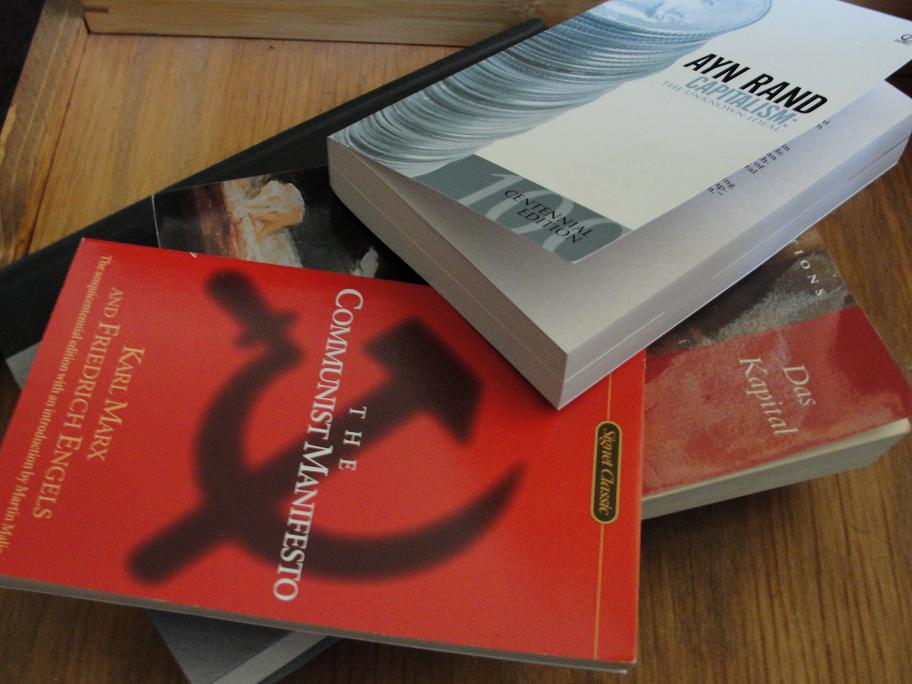 CS: But the Bible doesn’t give us fully developed theories of business management, economics, politics, or art. So how may we depend on Scripture in these aspects then?
JP: The Bible provides samples, not exhaustive treatments. It’s St. Paul, for instance, stating that “these things happen for our example.” Now the samples from Scripture are different from samples found elsewhere, in that they are authoritative for the Christian. After all, outside of Scripture, you don’t know what you’re getting. I would say that God’s purpose in the Old Testament was to create a sample of how He would order a culture and its history in a fallen world.
The glory of this is that it does this by taking sin and sinners seriously. Most “good advice” assumes that you haven’t sinned. And this is one of the problems of nonbiblical theories about life. If there’s no sin, there’s no redemption, no true liberty. So something quite fundamental gets left out of the picture. Christian theories of the aspects wouldn’t do that.
CS: Can you give us a sample from Scripture?
JP: How about, instead of looking at the Story of Naboth’s Vineyard as a purely moral lesson, we see it also as instructing us politically. This could help us to see, for instance, how the fear of the god you serve (your faith, even if you’re an atheist) influences your politics in quite practical ways. So you’ve got Jezebel, whose wisdom is based on the fear of a Baal, which gives her a certain politics regarding the land, which has drastic consequence for Naboth.
Elijah then comes along with a wisdom based on the fear of the Lord, which gives him a different view of politics with regard to the land and a way to mount a critique of Jezebel’s political theory. This story, then, can help us to see that different gods rule different ways of thinking about politics. So, if you’ve got a nation whose politics is based on dialectical materialism, or on life, liberty, and the pursuit of happiness . . . . Samples from the lives of Joseph and Daniel are also quite illuminating.
CS: This is fascinating to me, because folk like Joseph and Daniel held high political offices in “pagan” lands, were highly respected there, and known for doing a good job. And God seemed okay with it. In fulfilling their obediences to God, apparently they had quite a different way of looking at life than we do.
JP: Yes. This is bristling with all sorts of issues, like what one writer calls “responsible compromise.” So, Daniel, for example, is prepared to receive instruction in spiritistic areas and he’s willing to carry the name of a Baal, which must have been a constant thorn in the side, but he’s not willing to compromise in the matter of food. That was his sticking point.
CS: His sticking point?
JP: Yes. We all must have them. When you know what yours are – they’re a matter of conscience under the fear of the Lord – then you can do responsible compromise. It will be different for different Christians. You can have areas of responsible compromise only if you first know where you’ll say, “This far, no farther.”
CS: So as Christians we can use this principle under God?
JP: Yes, as God’s people have always done. And alongside it is the vital thing, for instance, for Old Testament politics. That is, it was not so much the structure of the politics that mattered as it was the tacit agreement between the people and the rulers that they were going to obey the word of the Lord. That’s the key to biblical kinds of politics. The problem with a modern democracy, I would say, is that it is more a demagoguery. Candidates tend to appeal not to people’s consciences but to their desires. There should be a common assumption between the candidate and his constituency that his business in politics is to obey the Law of the Lord.
CS: Sounds like you’re calling us to get to know the Bible as a “secular book.”
JP: You could put it like that. One of the beauties of the thing is that this kind of thinking lets you talk about your family, your business, your politics, your art, and so on from many points of view under God. You are not limited to the religious and moral ways of seeing, as important as these are. We must be obedient to God in the way we live our public lives. And the Book can show us how.
This interview with John Peck was originally published in 1998, in the little magazine Openings, and in 2001, as an Appendix in the book Uncommon Sense: God’s Wisdom for Our Complex and Changing World (SPCK, UK).
*GBI is now International Christian College.
A personal note from Charles Strohmer: If you want more of the perspectives that wagingwisdom.com seeks to present, I want to invite you to follow the blog. Simply click here wagingwisdom.com, find the “Follow” button in the right margin, enter your email address just above that button, and then click “Follow.” You will then receive a very short email notice whenever I publish a new article. And, hey, if you really like it, tell some friends! Thank you.
©2015 by Charles Strohmer
Eye image from Cesar R; Thinking Sculpture image from Davide Restive. Both via Creative Commons.
 There has been very little reporting in the U.S. media about what Israelis think of the Iran nuclear deal, or the Joint Comprehensive Plan of Action (JCPOA) as it is formally known. In fact, given the media’s persistent focus on Prime Minister Netanyhu’s condemnation of the deal, it is tempting to think that every Jew inside Israel is also against the deal. But this is far from true.
I only hinted at this in a previous post about the nuclear agreement, so I thought it would be good to say more about the notable leaders from across the spectrum in Israel who cautiously support the agreement. But I’m not going to do that in my own words. I want you to hear from someone else, someone whose “first personal encounter with Iran left me surrounded by death and destruction.” Read: Someone who could easily justify a view that opposed the nuclear deal, instead cautiously supports it. Why?
This someone is Rabbi Arnold Resnicoff. I realize there is controversy and contention over the nuclear agreement even among friends, so I urge you to read his article, published in The Jerusalem Post on the eve of the agreement’s assured passage through the U.S. Congress. It is “in large part because of my memories [that] I stand with the growing number of Israelis and Americans, including many Jewish Americans, who support the Joint Comprehensive Plan of Action on Iran,” Resnicoff writes.
 In the interest of full disclosure, Rabbi Resnicoff is a friend, but that is not why I want you to hear him. I have read a lot views about the deal, as I’m sure many of you have, but his article may be the best of the lot: in its sensitivity to both sides, its insider’s street cred, and the wise lesson that the solemn Jewish holiday of Sukkot can teach us about the nuclear deal.
Like the walls of the sukkot, Rabbi Resnicoff writes, the agreement is “a little shaky, and it might not last, but if it is the best that we can build right now – and I agree with the Israeli and American experts who say that it is – then build it we must.”
“[M]any Jewish groups have been trying to create the impression of consensus against the deal across the American Jewish community. But polling shatters that illusion, revealing that 63 percent of respondents who have an opinion on the deal are in favor of it. Top pro-Israel members of Congress from the past four decades have spoken out in favor of the deal. I was among more than 400 rabbis from across America’s denominational spectrum who signed a letter recommending support for the deal, at the same time urging increased efforts to fight Iran’s actions against Israel and other nations.”
“In Israel, too, the myth of the anti-deal consensus has been shattered. A pivotal point was the release of a letter in favor of the deal signed by dozens of the deans of Israel’s defense and intelligence elite, from former heads of the Mossad, Shin Bet and the Israeli nuclear program, to generals and admirals from all branches of the military.”
Read his entire article in The Jerusalem Post for full story of why Rabbi Resnicoff supports the deal. And then let’s have some conversation about it (use “Leave a Reply” at the end of this post).
©2015 by Charles Strohmer
Rabbi Arnold E. Resnicoff, captain, USN (ret.), is a former special assistant on values and vision to the secretary and chief of staff of the US Air Force. He is a former national director of interreligious affairs for the American Jewish Committee and was the first rabbi to study at the US Naval War College.
Charles Strohmer is a frequent writer on politics, religion, and international relations. He is the author of several books and many articles and is the founding director of The Wisdom Project.
Top image by William Ward (via Creative Commons). Lower image from atzimmes (via Creative Commons).
A personal note from Charles Strohmer: If you would like more of the perspectives that wagingwisdom.com seeks to present, I want to invite you to follow the blog. Simply click here wagingwisdom.com, find the “Follow” button in the right margin, enter your email address just above that button, and then click “Follow.” You will then receive a very short email notice whenever I publish a new article. And, hey, if you really like it, tell some friends! Thank you.
 So, Pope Francis has come and gone from America and his visit left me with a question. Why did our politicians want to be seen hobnobbing with the pontiff? The cynic in me says they only wanted to bask in his reflected glory. After all, Celebrity draws a crowd, and the pope’s celebrity shines brightly these days.
Which of us wouldn’t want to show off a selfie with the pope to our friends? I imagine the temptation being even stronger among our elected officials, many of whom can now boast to their constituencies about their selfies with the pope.
Not saying anything’s wrong with a selfie. Just asking myself why. Why the warm handshakes with Pope Francis on the steps of St. Partick’s Cathedral offered by New York Governor Andrew Cuomo and New York City Mayor Bill DeBlasio? And what was all that schmoozing about? And earlier the same day, why were our representatives in Congress reaching out to touch Someone as he entered that historic political arena and ambled to the podium to speak, where for more than an hour he was flanked by Vice President Joe Biden and House Speaker John Boehner?
That all four of these politicians are Roman Catholic, although DeBlasio admits to being non-practicing, is beside the point. Behind my question is the hope that our politicians have taken to heart the moral challenges Pope Francis has gently preached on our shores. I hope they took the challenges personally, as individuals, and politically, as values and truths to influence policies and law-making. I hope that is what they were saying to the pope during all their schmoozing with him during his visit.
Yet here’s where I need to beat back the cynic. Pope Francis’s moral challenges were so softly put, but with conviction, that I wonder if anyone even heard him, as used as we are to our nation’s constant polemical clamor.
Central to Pope Francis’s message to us, not to mention his personal witness, was his pastoral challenge that we build together on common ground. This pope is a Jesuit, but no matter what you think about the Jesuit principle of tolerance, taking up this challenge is key for mending the divided America of our time. This pope gets that.
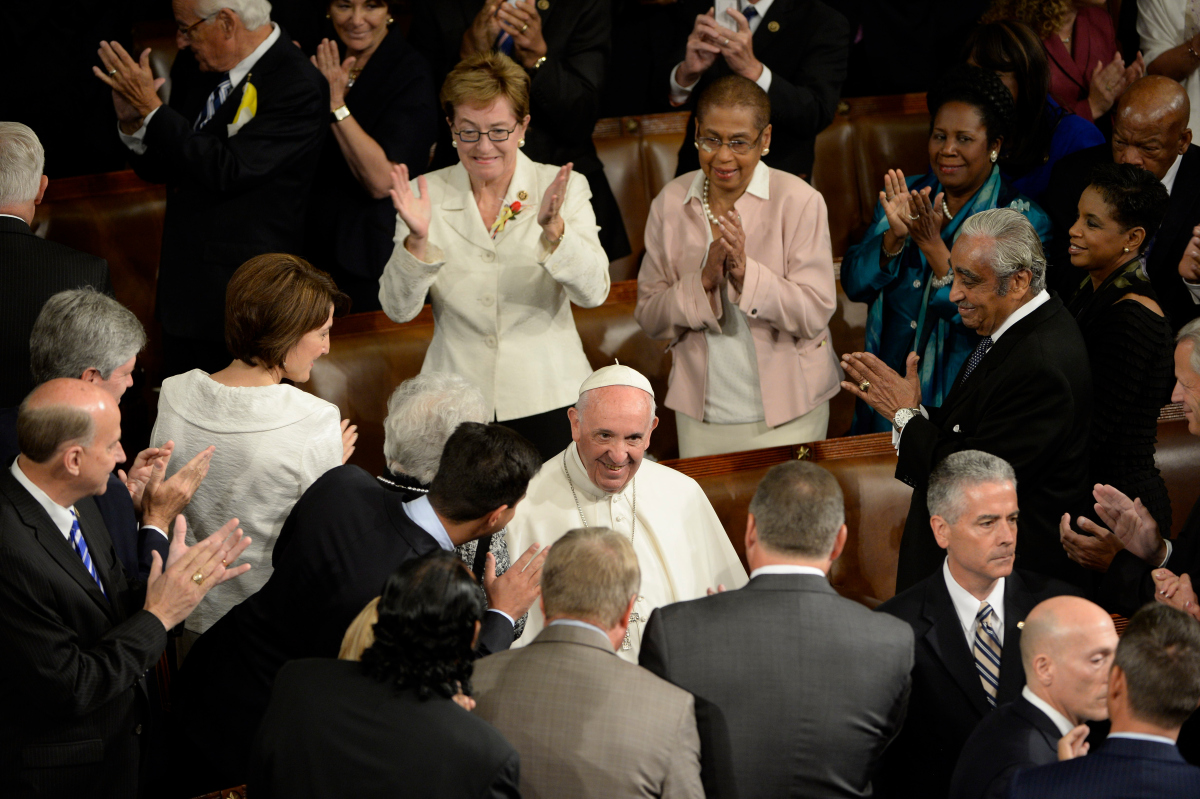 Speaking directly to the 535 member of Congress, Pope Francis explained that “the tireless and demanding pursuit of the common good . . . is the chief aim of all politics.” A political society endures when it seeks “to satisfy common needs by stimulating the growth of all its members, especially those in situations of greater vulnerability or risk. Legislative activity is always based on care for the people.”
Mind you, this is not about some wimpish togetherness, nor does it mean loss of individuality amid a sea of collectivism via a dictated uniformity. Working together on common ground for common good entails being responsible citizen-stewards of a human mutuality derived from being made as individuals in the image of God. It is a vision that avoids the obstructionism of rigid ideological interests and instead aids and abets a unity in our diversity. Admitting difference, it respectfully pulls together for mutual good. This pope gets that.
Is this too much vision to ask of our politicians? To quote Ringo, you know it don’t come easy. To quote the pope, “Politics” is an expression of “our compelling need to live as one, in order to build as one the greatest common good: that of a community which sacrifices particular interests in order to share, in justice and peace, its goods, its interests, its social life. I do not underestimate the difficulty that this involves, but I encourage you in this effort.”
That is what I hope our politicians had ears to hear. America will not get better if our elected officials stay on their current course of bitter polemics and obstructionist politics.
But let’s not point the finger. America cannot get better only from the top down. America also needs change for the better from the bottom up, with me and with you, in how we treat each other in our homes, neighborhoods, and communities. That will then spread into our state capitals and across the land to Washington. Without that vision, all we will have left is our selfies. This pope gets that, too.
©2015 by Charles Strohmer
This editorial was first published in The Mountain Press, Sunday Oct. 11, 2015.
Charles Strohmer is a frequent writer on politics, religion, and international relations. He is the author of several books and many articles and is the founding director of The Wisdom Project.
Top image from CNN. Lower image from USA Today.
A personal note from Charles Strohmer: If you want more of the perspectives that wagingwisdom.com seeks to present, I want to invite you to follow the blog. Simply click here wagingwisdom.com, find the “Follow” button in the right margin, enter your email address just above that button, and then click “Follow.” You will then receive a very short email notice whenever I publish a new article. And, hey, if you really like it, tell some friends! Thank you.
 Waging Wisdom