TWO GUEST SPEAKERS: MOODS & TUDES part 1 of 3

©2014 by Charles Strohmer

Up until this point in this series of posts we have mainly discussed ideas. These ideas about wisdom as a vital agency of cooperation and peace (shalom) amid human diversity have been raising urgent questions about why we tend to limit the reach of wisdom to some people but not to others. For wisdom, according to Scripture, delights in “all humanity.”
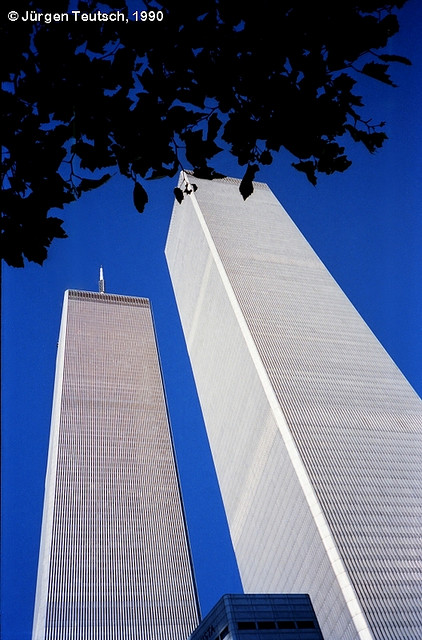
Twin TowersWell, it’s one thing to agree mentally to an idea, but it can be quite another thing to put it into practice. So I thought it might be good to take a few posts and just share some personal stories that reveal internal challenges that may try to prevent following wisdom’s peaceable paths. As you read this first story, ask yourself: Which of the two guest speakers was obeying and which one was breaking the wisdom norms of peaceableness and mutuality? The answer may surprise you.

Let me take you inside a small, brick church in the American south. It’s a Sunday morning and I’m sitting quietly in a pew in the middle of the small congregation. I’ve been invited there to hear a guest preacher, just being introduced by the church’s pastor. And before I go on, you need to know that it is August 2010, the summer when that firestorm of controversy is raging across the country over the proposal to build “a mosque at ground zero,” in lower Manhattan.

The guest preacher begins his sermon with a moving personal story to introduce his topic, which had nothing whatsoever to do with Muslims or the mosque controversy. This could be a good message, I thought. Just minutes later, however, and without any sort of segue, he suddenly starts ranting about “the mosque at ground zero.” Then this bombshell: “I say, let them build it. Then when they’re done, let’s blow it up! That’s what they did to us on 9/11.”

I can’t believe my ears. And I don’t know what shocked me more, his statement or the “Amens!” that arouse around me when he said it. Livid, I come close to shouting out a rebuke. But then just as suddenly he stops ranting and returns to his sermon topic. I didn’t know what to do. Should I walk out? As I was pondering that, I had my mind made up for me. Suddenly he’s back ranting about the mosque and repeating his bombshell remark, which again drew some “Amens!” My heart pounding, I rise, step into the aisle, and walk quickly out, many people eying me.

I couldn’t just sit there and by doing nothing tacitly agree to what amounted to sponsoring a policy of violence. My knees were so wobbly I had a time walking to my car. I sat there in the heat for a long time, unable to drive.

After I cooled off, I wondered whether the guest preacher would change his mind if, for instance,  he got to know Dr. Muqtedar Khan, an academic at the University of Delaware and a self-described liberal Muslim, whose editorial “Mr. Bin Laden: Go To Hell!” ran in dozens of newspapers around the world after 9/11. I also wondered what he would think about imam Feisal Abdul Rauf, a peace-loving sufi Muslim who is well-respected for his decades of interfaith work in New York City and in the U.S. State Department, which occasionally sends him to the Middle East on public diplomacy jaunts.

Now let me take you to another religious meeting, a memorial service for Daniel Pearl at B’nai Jeshurun, a prominent Manhattan synagogue. Daniel is the Wall Street Journal writer who was kidnaped and beheaded in Pakistan by his al Qaeda-connected captors in February 2002, and it’s now a year later. Rays of sunlight are slipping through the arched, blue-toned stained-glassed windows of the sanctuary. Judea Pearl, Daniel’s father, is sitting attentively in the front row of the packed sanctuary, his eyes on the speaker, imam Feisal Abdul Rauf, who has been invited to the memorial service by Judea.

During his eulogy for Daniel, the imam turns to Judea and asks his forgiveness for what has been done to Daniel in the name of Islam. Rauf then adds: “If to be a Jew means to say with all one’s heart, mind, and soul Shma ? Yisreal, Adonai Elohenu Adonai Aha – Hear O Israel, the Lord our God, the Lord is One – not only today I am a Jew, I have always been one, Mr. Pearl.” And to the Christians present, Rauf says: “If to be a Christian is to love the Lord our God with all of my heart, mind, and soul, and to love for my fellow human being what I love for myself, then not only am I a Christian, but I have always been one.”

This is the person that the guest preacher at the Sunday church service wanted to blow up. For imam Rauf, until 2011, was the lead visionary for the development of the multi-faceted, interfaith project in lower Manhattan that was manufactured into the ground zero mosque controversy. (For an in-depth account of the controversy and Rauf’s interfaith vision for the project, see Truth About the Mosque at Ground Zero. He hoped to model it somewhat after the multi-use, Jewish-run, 92nd Street Y.)

Attitudes toward others can oppose or encourage wise actions. Most Christian leaders, of course, would hate what the guest preacher said and agree with Jesus’s comment that “Wisdom is proved right by her actions” (Matthew 11:19). Some attitudes, of course, are on the surface, easily expressed. Others lay buried, and it may be a bit of a shock to discover that they are there. I want to share a story about that in the next post.

WISDOM AND HUMAN MUTUALITY part 5 of 5

©2014 by Charles Strohmer

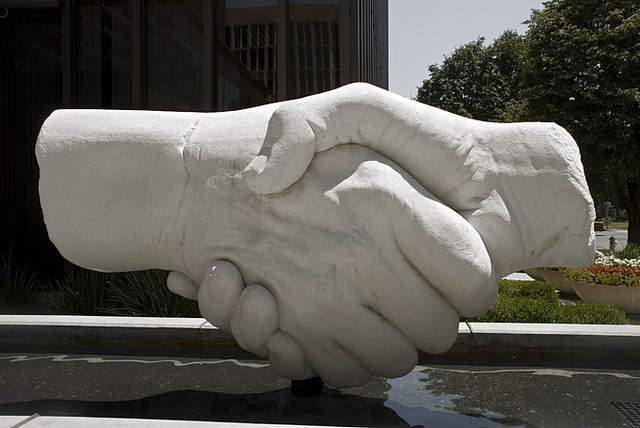
Carter Begin Sadat handshakeThese posts on wisdom and human mutuality have been raising urgent questions about why we tend to limit the reach of wisdom to some people but not to others. For we have been seeing what it means that wisdom, according to Scripture, delights in “all humanity.” As further evidence, the previous post looked at Lady Wisdom’s vital role for sustaining the unity-in-diversity of human life. She is, we concluded, a huge fan of human mutuality, not of uniformity or sameness. And she is an  agency of shalom amid that diversity.

That wisdom is for all humankind is affirmed centuries later by Jesus, in Roman-occupied Palestine, where diverse cultures abounded. Today, it is usually Jesus’ roles as a healer, miracle worker, and savior that are emphasized. Of course he is also known as a teacher but, to our loss, little emphasis has been placed on Jesus’ rather significant role as a teacher of wisdom. If you are a Christian reading this, stop and think about this for a minute. When was the last time, or the only time, that you heard a sermon on Jesus as a wisdom teacher? I sometimes ask this question to congregations and classes; it is  rare to see a hand go up. (Perhaps in some later posts we can spend some time looking at “Jesus the wisdom teacher.”)

Here, I just want to draw attention to a kind of riddle that Jesus makes about himself and John the Baptist. Jesus has been having a rather difficult time talking to a mixed audience that just doesn’t get John, and you can feel Jesus’ frustration building. He’s tried various ways to help them “get’ John, but to no avail.

To what shall I liken you, then? Jesus finally replies. You’re like silly children. We played dance music but you did not dance, so we played a funeral dirge but you did not mourn. John came fasting both wine and bread, like a holy, saintly man. But you say John has a demon. On the other hand, I’m eating and drinking and you say I’m a glutton, a drunkard, a friend of tax collectors and sinners.

His frustration then boils over in a cryptic comment, which he leaves with the crowd to solve: “But wisdom is proved right [vindicated; justified] by all her children” (Luke 7:35).

If you want to know who can be seen responding wisely to wisdom, “Wisdom is proved right by her actions,” which is the way Matthew’s Gospel ends the riddle (11:19). Simply put, Jesus seems to be saying, look at what people do. This echoes a prominent teaching of Proverbs, that by their actions people will be known as being wise or foolish. One wonders if that crowd ever figured out that wisdom is available to all sorts of people, including sinners, apparently. As David Ford writes Christian Wisdom, an exceptionable book, wisdom has many children. To explain further, Ford notes that the little word “all” in Luke 7:35 stresses “the diversity of the children and how hard it can be to see the family likeness” (p. 15).

There is also this affirmation of wisdom in relation to human mutuality in the epistle of James, a letter attributed to a brother of Jesus: “If any of you is deficient in wisdom, let him ask God for it, who gives with open hand to all men” (1:5; Weymouth New Testament). This epistle carries so many features of the Hebrew wisdom tradition that its author, says wisdom scholar Ben Witherington, “has a commitment to a typical Wisdom agenda” (Jesus the Sage; p. 237.)

I think I’ve said enough for now, to get some conversation started, about the wisdom norms of peaceableness and human mutuality. See “Leave a reply,” below.

So far in this series of posts on the wisdom tradition, we have seen that its literature reveals wisdom as an agency of shalom (well-being, wholeness, flourishing) and of human unity-in-diversity. This has helped me immensely to understand why reliance on wisdom is a vital means to enable Christians, Muslims, Jews, and others to work cooperatively and peaceably together in their communities, nations, and international relations.

In the next few posts, I would like to move this discussion from the realm of ancient ideas to the contemporary street in order to illustrate some of the challenges that will be faced in our day when trying to actually implement wisdom’s peaceable (shalomic?) way.

WISDOM AND HUMAN MUTUALITY part 4 of 5

©2014 by Charles Strohmer

wisdom traditionIn the previous post, we looked at one of two instances in Proverbs 8 that are noteworthy for understanding the wisdom norm of human mutuality and that raise urgent questions about why we limit the reach of wisdom to some people but not to others. Here we will look at the second instance. The passage is remarkable in its implications.

Wisdom, again speaking in the first person, reveals: 1) her presence with God before the process of creation, (2) her presence during the process of creation, and 3) her presence in the inhabitable world among human beings.

I was appointed from eternity, from the beginning, before the world began. . . . I was there when he [God] set the heavens in place . . . when he gave the sea its boundaries . . . when he marked out the foundations of the earth. . . . I was the craftsman at his side. I was filled with delight day after day, rejoicing always in his presence, rejoicing in his whole world, rejoicing in his whole world and delighting in [all] mankind [bene ‘adam] (8:25-31).

Among scholars, this may be the most debated passage in all of the wisdom literature. We’re not going into that debate here, but it does seem safe to conclude that the creative task wasn’t any sort of drudgery! The image is one of the great joy that Lady Wisdom had in God and in creation, and in the great delight she took in human beings. How contrary this is to some words from Hamlet on the subject. Having just brilliantly praised man as “the quintessence of dust” – How noble in reason! How infinite in faculties! How like an angel! How like a god! – he suddenly turns and declares with disgust, “Man delights me not.” Apparently he was in a bit of a blue funk in that scene. But whatever else the passage in Proverbs conveys, it is not Hamlet’s view.

But what we really need to see is that, in the text, wisdom is being depicted as both personal and relational: to God; to creation; to human beings. In other words, wisdom is not being presented here as any sort of abstract idea, or abstract entity, or as ideological, or as any sort of -ism but, rather, as personal and relational. Again, there is no scholarly consensus on just what this means, and this short post is not the place to start down that road. Ontological difficulties aside, the fact remains that wisdom is portrayed with an otherness that is somehow both personal and relational to God, to all of creation, and to all humankind.

I like the way Hebrew scholar Alan Lenzi puts it. When discussing Proverbs 8, Lenzi writes that wisdom is a personality; she is a “me” (Proverbs 8:22) who speaks at length in her own name, about having been created by God before the beginning of the world, about her primacy in nature, and about her delight in all human life. Lenzi concludes that wisdom is no “intellectual tool or abstract instrument.” She is, instead, a “personal presence” in the world. (Lenzi, “Proverbs 8:22-31: Three Perspectives on Its Composition,” Journal of Biblical Literature 125, no. 4, 2006: 687-714; his emphasis.)

diversityIt is both assumed and repeatedly indicted throughout the biblical wisdom literature, in a wealth of images and contexts, that wisdom has a personal relational presence with all human beings, with all of creation, and with God. Because of this strong emphasis, I have summarized this in my writings, elsewhere, as the “wisdom norm of relations.”

It is also important to grasp the kind of mutuality that is being implied in the text. It is not, for instance, uniformity. Neither are human distinctions considered illusory. Nor is the text indicating that human diversity is in a process of being eliminated, such as by being subsumed into a universal sameness. Rather, paradoxically, one might even say miraculously, the text indicates a oneness of humanity in its diversity, and that she, Lady Wisdom, is God’s agency (means) for handling that. Human difference and diversity is a good and praiseworthy thing.

In other words, because wisdom is a vital agency in the holding together and sustaining of a multifarious, variform earth, she is also a vital agency supporting the good, creational unity-in-diversity of human life. As a huge fan of human mutuality, not of uniformity or sameness, wisdom delights in “all humanity” (Proverbs 8:4, 16, 31; 9:4).

As an aside, and although I’m not a expert on the Qur’an, it seems somewhat to correspond in at least two places to the good unity-in-diversity being depicted in the Proverbs 8 text. Surah 5:48, for instance, reads: “Had Allah willed He could have made you one community. But that He may try you by that which He hath given you (He hath made you as ye are). So vie one with another in good works.” And Surah 49:13: “We have created you male and female, and have made you nations and tribes that ye may know one another” (Pickthall’s translation). (If I’m amiss in recognizing this correspondence, someone say why.)

In the next post we will look at ways in which Jesus and the New Testament affirm the wisdom tradition’s norm of human mutuality.

WISDOM AND HUMAN MUTUALITY part 3 of 5

©2014 by Charles Strohmer

wisdom traditionWhen it is thinking of humanity as a whole or human beings in general, the Hebrew Bible uses words such as bene ‘adam and banim ‘adam or sometimes just ‘adam. Traditionally, those words have been translated into English Bibles as “children of men,” “sons of men,” “all mankind,” or just “mankind.” More recent translations have been trending toward “humankind” or “humanity.” But back to the Hebrew, and their meaning as “humanity as a whole” in the wisdom literature. Two instances in Proverbs 8 are particularly noteworthy for understanding the wisdom norm of mutuality, and they raise urgent questions about why we may limit the reach of wisdom to some people but not to others.

In Proverbs 8:4, wisdom, speaking in the first person, says, “I raise my voice to all mankind.” The context is significant. In the two preceding verses, prominent multicultural public meeting places in the old-world Middle East are singled out: “the heights along the way,” “where the paths meet” [the crossroads], and “the gates leading into the city.” In the first two, wisdom “takes her stand.” In the third, “she cries aloud.”

Her appearance in these multicultural meeting places is significant, and “the gates” provide clues as to why. In the old-world Middle East, various city gates were established and respected places of authority where people of all sorts, including from different cultures, met to discuss or debate issues and situations or hammer out agreements amidst their competing interests. Somewhat analogous to today’s public squares and civil courts, the gates were where merchants could conduct commerce, elders could hear and settle disputes, and judges could administer justice (see, e.g., the book of Joshua 20:4-6 and Ruth chapter 4). Kings might even meet with their subjects there.

At these places of authority amid mixed multitudes, wisdom says, “To you, gentle ones, I call; my voice is for all humankind [bene ‘adam].” This is the compressed, literal way Kravitz and Olitzky translate Proverbs 8:4 in Misheli, their modern commentary on the book of Proverbs (p. 80). In other words, it doesn’t matter who you are or where you came from, I, wisdom, am speaking to you. This is at one and the same time wisdom’s affirmation of and participation in human mutuality as well as her protest against factionalism and sectarianism.

The text was certainly meant to communicate to ancient Israel that, even at the gates of a thoroughly monotheistic city such as Jerusalem, a wisdom-based way of reasoning provided a morally responsible means for peoples of different faiths not only to meet and greet but to hammer out cooperative and peaceable agreements across all sorts of otherwise perhaps unnegotiable boundaries.

All of this, of course, assumes that it would take persons (elders, counselors, judges, et al.) known for their wisdom to justly oversee such areas. Those who met to negotiate agreements would take that for granted. Apparently, the premium that was placed on this gave rise to the proverb: “Wisdom is too high for a fool; in the assembly at the gate he has nothing to say” (24:7).

Notice, too, that this is not about converting someone to your own faith before cooperative agreements can be reached. (The tragic histories of Christianity in seventeenth century Europe and Islam in the Middle East today disprove that principle anyway.) Instead, just as commercial and legal transactions take place today among all sorts of different people, the text indicates what we could call the internationality of wisdom – she is available to all humankind as they are, rather than, to use a Christian expression, what by the grace of God they may become.

I promised you that we would look at two instances in Proverbs 8 that are noteworthy for understanding the wisdom norm of mutuality, and that raise urgent questions about why we limit the reach of wisdom to some people but not to others. We’ll look at the second instance in the next post.

WISDOM AND HUMAN MUTUALITY part 2 of 5

©2014 by Charles Strohmer

Common GroundThis post picks up the conversation about human mutuality, which, like shalom, looms large in answering the leading question in this series of posts: What is the wisdom tradition? Previously, I mentioned that the “wisdom norm of mutuality” is the language I tend to use to refer to what is typically called common ground or common good or, as some say, the commons. Simply put, it indicates the sages’ emphasis on the basic concerns and responsibilities of life that are shared by all peoples everywhere and in any time in this world. For what other world is there? (I sometimes say that if theology is thinking about God, wisdom is thinking about our life in the world.)

James Skillen, president emeritus of the Center for Public Justice, has done a lot of thinking about this in the context of America’s international role. In With or Against the World? Skillen writes that

the American people “need to gain a deeper understanding of what it means that the world’s people and states share a single global commons, the governance of which is becoming more and more difficult with each passing year. . . . American failure to think and act cooperatively over the long term for the international common good is part of what threatens even America’s future.”

Of all of life’s certainties, Skillen concludes, “one in particular has proven very durable over the centuries, namely, that there is but one world” (pp. 128, 129, 146).

Whether one works in the field of international relations or locally, reliance on the wisdom norm of mutuality realistically enables cooperative and peaceable relations amid human diversity. It aids in building on common ground for common good, and in sustaining and increasing the effects of the good wherever they are already found to be repairing broken situations.

But why not just use standard language? Why not just say the “wisdom norm of commonality” (or commonness)? It’s a fair question, and my answer is tentative, but I favor the word “mutual” because “common” can carry the suggestion that some areas of life are belief-neutral. So, for instance, a Muslim, a Jew, a Christian, and an atheist get together and say: Let’s find some neutral ground where we can work together on a community project.

This common assumption – that there are patches of neutral ground – is also a common misunderstanding. For everyone stands ultimately somewhere. And that “ultimate somewhere” is religious ground, the ground of faith, even for those who do not consider themselves religious. There is no neutral ground. For instance, a theist believes that behind the material world an unseen God exists; an atheist believes that the material world is all that exists. These are irreconcilable differences of faith.

There are also irreconcilable differences between Islam, Judaism, and Christianity. Of core religious differences, wisdom theologian David Ford writes in The Shape of Living that

the “best engagements are between those who can say where they are coming from and then patiently try to communicate and discuss matters of importance” (p. 30).

The way I see it, “mutual” – as in human mutuality, or mutual good, or mutual ground, or the wisdom norm of mutuality – can draw attention (in a way that “common” cannot) to who we fully are as human beings, which includes our ultimate beliefs.

Maybe it’s just silly hair splitting – you decide – but the more I get under the skin of the wisdom tradition, the more I see the agency of wisdom underlining what is mutual and not just what is common. If I say to you: “I hear that you still write your books on paper and with a pen. So do I,” then we have books and paper and pens in common. But if you and I and several others are around the negotiating table and reach and sign an agreement, then our primary focus and aim has not been on what is common to us in the room (e.g., the table, paper, and pen) but on what is mutual (the signed agreement).

In short, according to the wisdom literature, wisdom is for all humanity, whichever word, common or mutual, you choose to use to communicate this. In the next post, I want to look at the significance of that little word “all.”

WISDOM AND HUMAN MUTUALITY part 1 of 5

©2014 by Charles Strohmer

wisdom traditionThe previous two posts introduced the idea that paths of wisdom are paths of a special kind of peace called shalom. These paths have an (often overlooked) direction: social, political, and economic well-being, wholeness, flourishing. We also looked at shalom as what I call the wisdom norm of peaceableness, which should have particular appeal to those whose desires include working for the good of their communities amid its diversity. The next few posts will take this further by looking at the wisdom norm of human mutuality.

With the world today increasingly becoming pluralistically close-knit, it takes skill to be in each other’s space without getting in each other’s face. The agency of wisdom enables us to have that skill. But like all skills, it isn’t developed overnight. In my own personal formation in this area, far from complete, the wisdom tradition’s emphasis on shalom in the context of “human mutuality” has been a godsend in many ways, such as in helping me to shake off unpromising ways of thinking and replace them with a more wisdom-based worldview, and in discovering how to love my neighbor as myself.

What is human mutuality? I am grateful to John Peck, British philosopher and theologian, and a dear friend and mentor, who helped me to understand that the wisdom tradition directs our attention to the basic interests, concerns, and goals that are shared by the human family as a whole before distinctions are made about ethnicity, nationality, and religion or even about, as today we would put it, who is religious and who is “secular.” This points to what I call the wisdom norm of mutuality.

Since time immemorial every person on the planet has participated in the same creation, held in common that bond of being human, shared the same basic concerns and interests, and desired and worked toward their fulfilment. Even beyond the most essential needs – water, food, shelter – all peoples everywhere, in any time, have desired that their children are raised safely and educated, that their societies are ordered and lawful, that poverty and hunger should be overcome, that the suffering of others should be eased, that opportunities to increase their well-being should not be denied to them, that justice prevail, and so on. Such shared basic concerns and interests have inspired billions of us to agree that there is common good to work toward achieving. People everywhere and in any time are constituted that way, believers and atheists alike. That is human mutuality. And wisdom lives and moves and has its being in it.

Call it common ground or common good or, simply, the commons, as some do. The shared concerns of everyday life and the decisions people will make in and about them as they live and work together is a central interest of the wisdom tradition. Work and wealth, family and neighbors, relationships and communication, politics and government, diplomacy and negotiations, rulers and the administration of justice, business and finance, prosperity and suffering, sickness and health, happiness and grief, social life and the law, the rich and the poor, the single and the married, parents and children, earning a living – such are subjects the wisdom literature finds as its objects – the stuff of human mutuality.

The wisdom books of Ecclesiastes, Proverbs, and Job deal with it extensively, and a huge emphasis is placed on the kinds of decisions people make in and about such areas, across the spectrum of life, in their relationships with others, day in and day out. Today such interests are often bracketed as secular life – much to the distress of many Muslims and Christians. Nevertheless, according to the wisdom literature, people are known as being wise or foolish depending on the choices they make in these areas. (We’ll take this further in the next post.)

BLESSED ARE THE PEACEMAKERS part 2 of 2

©2014 by Charles Strohmer

Wisdom TraditionThe previous post set the stage to say that when the wisdom literature talks about shalom (see Proverbs 3:17), it is saying more to us that just “peace” as it is commonly understood today. Shalom refers to collective well-being and wholeness, including in economic, social, and political life. “Flourishing” seems to be entering into the English lexicon as a synonym for this deeper meaning of shalom. Its force can be felt in the second half Psalm 34, which many scholars agree has an affinity to the wisdom tradition. In a Proverbs-like passage in the middle of the psalm (34:14), the people are exhorted (collectively) to seek shalom (well-being, wholeness, flourishing) and to pursue it (for the entire community).

Texts such as Proverbs 3:17 and Psalm 34:14, I believe, indicate the kind of peaceableness – shalom – that is normative to the wisdom tradition. It points to what I call the wisdom norm of peaceableness. (In the previous post we saw that the meaning of shalom is distinct from typical contemporary notions of peace.)

Identifying it as a “norm” is a significant, because norms, of course, can be broken. A norm is not like a physical law, which cannot be broken, and if you try to break it, immediate consequences result. Take, for instance, the law of gravity. Anyone jumping from the roof of a twenty-story building will suffer an immediate consequence. Break a norm, however, and the consequences may not be evident for quite some time.

The force of this can be felt in the prophetic literature when the scarcity of shalom is being lamented due to rampant injustice. For instance, in Jeremiah’s time both the prophets and priests do not seem to have taken seriously repairing what had become an utterly broken society, including economically and politically – a brokenness that the nation’s leadership bore a huge responsibility for, but was in denial about. These leaders superficially treated what the prophet calls “the [deep] wound” of society. Also, the nation’s leaders, apparently, had a history of collaborating among themselves in the royal court to enact policies designed to line their own pockets rather than to foster justice. Their goal was not the good of society but to increase their own comfort and affluence and to build more resilient shelters for themselves from life’s vicissitudes.

How’s that been working out for them? Quite well for a long time, evidently. Never mind that the larger society has fallen into conspicuously bad disrepair. Having fattened their portfolios and their standard of living, they are not going to stop now, just because a major city (Detroit?), is going down the tubes. So they (foolishly) reassure the nation. Shalom, shalom, they proclaim. All is well; all is well. The message from the royal court to its subjects couldn’t have been clearer: Don’t expect anything better for yourselves. But to this Jeremiah replies, There is no shalom. No well-being, no wholeness, no flourishing. Society is broken.

This narrative in Jeremiah chapters six and eight, in which the vital role of shalom plays a large role, is clear enough. It seeks to compel us to go beyond just saying “peace, peace” to the work of establishing shalom. (There may be a some subtext at play too: a tragic irony or a superficial blessing. That is, are the leaders saying of themselves “We are flourishing,” and to that the prophet is replying, “No, you’re not.” Or are the leaders saying to the people, “Be well; keep warm and well-fed,” to which the prophet is replying, “That’s no policy of shalom.”)

Working toward shalom should have been prominent in the wisdom of the Jerusalem leadership, but instead the leaders have a long history of breaking the norm of peaceableness. Perhaps it is because of this long history that they are chided for being worse off than animals. The force of this can be felt in Jeremiah 8:4-12, a section that would be at home in the wisdom literature. There, prophetic rebuke moves seamlessly into a wisdom-based way of reasoning with the leaders. This is done two ways. Once by invoking a lesson from creational order, which is typical of instruction found in Proverbs: Even though the stork, turtledove, swift, and crane know their own times and respond to them properly, these leaders do not (verse 7). And once by implicating “the wise” and their policies as hugely responsible for the society’s brokenness: Lacking even bird-sense, “their wisdom amounts to nothing” (verses 8-9; The Jewish Study Bible: Tanakh Translation).

Having a long history in which they broke the wisdom norm of peaceableness, seemingly without consequences for them, the consequences are now at the door. Not many years later, it must have been shocking for the leaders who were left alive after the destruction of Jerusalem and exiled in Babylon, to receive a letter from Jeremiah instructing them to “seek the shalom” of Babylon (Jeremiah 29:7). That would have been an especially hard pill for the exiled Jews to swallow: working for the well-being of a city filled with non-Jews.

An equivalent today might be the challenge to Christians, Muslims, and Jews to pull together to work for the good of the “secular” city. Yet if that is the reality, the wisdom norm of peaceableness would insist on nothing less. We will look at that the next post in this series.

BLESSED ARE THE PEACEMAKERS part 1 of 2

©2014 by Charles Strohmer

PeacemakingAmong non-Christians, “Blessed are the peacemakers” may be the most well-known of Jesus’ sayings. What is not so well-known, even among Christians, is that Jesus was a teacher of wisdom and that he would have been drawing on an understanding of “peace” known as shalom. This post and the next one will explore that idea.

I mentioned in the two previous posts that there’s much more to the wisdom tradition than books such as Ecclesiastes, Proverbs, and Job. One way that has helped me immensely to start seeing that “much more” has been a continual wonder about what was going on in the minds of the sages who gave us the views of life that we find in the wisdom writings. They were not thinking like priests or prophets. So what were you guys thinking about? And why were you thinking that way? And what’s the point of it for today?

It’s not possible to know such a subjective reality infallibly, of course. After all, what we have today are written texts, redacted ones at that, sourced in what was originally an oral tradition of the sages that goes way back. Nevertheless, we can at least approximate the mind of the sages by a close engagement with the texts over a period of time, as well as by standing on the shoulders of good wisdom scholarship. I’m not asking you spend years doing this yourself. That’s not the point of this series of blog posts. I’m just saying how I got here, and I’m sharing some of my homework with you in this series of posts.

From my own close engagements I’ve seen that the sages had a peaceable way of reasoning about human relationships, diversity, and activities across the spectrum of life. This seems to be a core, but an often missed, feature when it comes to understanding the wisdom tradition. This post and the next one will open up some ideas on this wisdom’s peaceable way of reasoning about life and suggest why it is vital for wisdom in today’s increasingly diverse relationships and communities.

We can begin simply by noting two wisdom texts, Proverbs 3:17 and James 3:17. The former states that all of the paths of wisdom are paths of peace (NIV translation); the latter states that the wisdom that comes from above is peaceable (AV translation). In short, the literature itself seems to indicate that wisdom is fundamentally about peace.

But this is where things get interesting. A close look reveals that this “peace” is not about ambitions such as the attainment of personal peace and affluence, or even shelter from life’s vicissitudes. Neither can the meaning be reduced to the absence of conflict or to balance of power arrangements (as “peace” is often understood in international relations). It does not even indicate the so-called Pax Americana of today’s world, any more than it would the Pax Romana of Jesus’ time.

The word for “peace” in Proverbs 3:17 in the Hebrew Bible is shalom (the paths of wisdom are paths of shalom). But even that Hebrew word today, like our English word “peace,” has lost its depth and richness with some of us, having been reduced to a greeting of good wishes, for instance. Nothing wrong with that greeting per se. Others, myself included, occasionally sign their emails with shalom as general blessing. Nothing wrong with that either. In fact, that kind of sentiment begins many of New Testament epistles, such as the apostle Paul’s formulaic greeting, “Grace and peace to you.” The word shalom, however, points beyond mere greetings to a depth and a richness, and to a challenge.

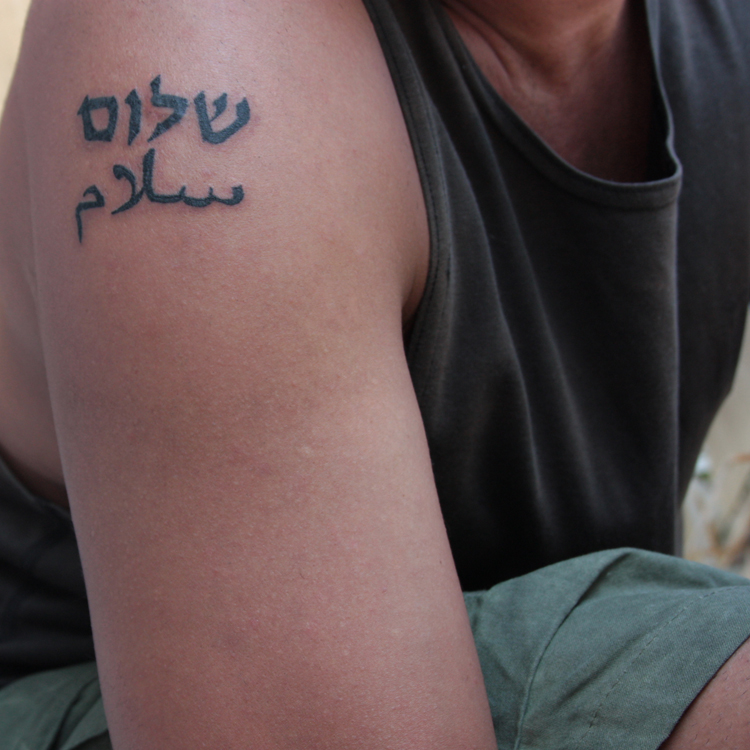
shalom salaam tatooFor one thing, shalom has something of an Arabic equivalent in the word salam (sometime spelled as salaam). Both Hebrew and Arabic trace back to a Semitic language in which slm is the root word for both shalom and salam (vowels are added to help with pronunciations and nuances of meaning). In the English Bible and the English Qur’an, shalom and salam, respectively, are typically translated “peace.” And both words are heard today in common greetings such as “Peace be upon you,” as in the Hebrew shalom aleichem and in the Arabic salamu alaykum. (For those who like interesting rabbit trails, slm appears in transliterations of the English Bible, as in “king of Salem,” to describe Melchizedek in Genesis 14:18, a priest mentioned in Hebrews 7:1-2 as “king of peace.” Slm is also found in “Salem” in Psalm 76:2, where it is an early word for Jerusalem, and in the names “Solomon” and “Absalom.”)

Still, this does not enter us into the depth and the richness shalom. To say it another way, the word on our lips only as good wishes, or greeting, or general blessing can act as a kind of religious conceit that gives us permission to escape grappling with ways in which shalom challenges what we may think of as wisdom today. For shalom denotes well-being, wholeness, and flourishing, including economically, socially, and politically. We’ll pick this up in the next post.