
Understanding the Religious–Secular Dilemma of U.S.–Middle East Relations, part 2 of 4

crescent moonIn Part 1 of this article I discussed why it seemed somewhat odd that the fledgling new nation of the United States of America decided not include a “department of religion” in its foreign policy structure. On the other hand, as a sign of the intellectual times, it seemed normal. But what were those times? Let’s look at that in this post. It was the end of the eighteenth century, and America’s founding fathers, politically, had drawn heavily from Enlightenment rationalism’s so-called secular way of doing politics. And that has had serious implications for U.S. foreign policy ever since. See what you think. Let’s have some conversation about this.

Religion and the Secular:
The Foremost International Dilemma
of U.S.-Middle East Relations
by Charles Strohmer

The secularization of U.S. foreign policy has been aptly explored by Scott Thomas in The Global Resurgence of Religion and the Transformation of International Relations. An international relations scholar from the London School of Economics who teaches at the University of Bath, Thomas asks us to think about the conceptual map of secularism that has informed U.S. foreign policy making since its beginning.

The map dates back to Enlightenment reasoning, and on it Thomas finds four primary contours that have historically shaped Washington’s approach to international relations. These contours suggest why it is difficult, if not unthinkable, for any presidential administration to seek the proper place of religion in U.S. foreign affairs. Briefly summarized here, the four contours are:

1) Secularization theory, which “helped to explain religion away, rather than to explain its significance in social action,” for it was “argued that the numbers of people who declare themselves to be believers and who regularly attend religious services will steadily decline as a country modernizes.”[1]

2) The civil war between Catholics and Protestants in France (1550-1650) and the Thirty Years’ War (1618-1648) had engulfed all of Europe. The treaties that ended these catastrophic wars brought about what has been called the Westphalian era, in which the rise of “the liberal or secular state” was going to “save us from the cruel and violent consequences of religion. The modern state, the privatization of religion, and the secularization of politics arose to limit religion’s domestic influence, minimize the affect of religious disputes, and end the bloody and destructive role of religion in international affairs.”[2] In the Westphalian system, political governance is organized around states’ so-called secular interests; religious toleration domestically, and religious noninterference in the domestic affairs of other states, are also guiding principles.

3) All of the different Western schools of international relations that have arisen since the seventeenth century have downplayed the study of religion upon international relations. Instead, each school in its own way (e.g., political realism and political idealism), have focused on aspects such as military power, national interests, the balance of power, international law, and international institutions.[3]

4) The Westphalian model has followed the dictates of the modern scientific method, whose twin controls of naturalism and materialism admit into its theories only one reality, the physical world. Here, religion is seen, at best, as a mere epiphenomenon, rather than as a basic instinct of human nature.[4]

To sum up…, Western political theory has explicitly followed secular contours. In so doing it has shaped and validated approaches to the study and practice of international relations and foreign policy in ways that have marginalized the legitimate interests and concerns of religious actors, religious belief, and religious institutions. After settling in, this political way of thinking has had more than 200 years to become second nature to specialists in U.S. foreign policy.

choicesSimilar to Thomas, Edward Luttwak, an international relations historian, attributes Washington’s basic foreign policy problem with religion to what he calls its secularizing reductivism. And he adds this, which helps explain why political analysts, journalists, and others were caught short on the religious implications of 9/11. Today, “Enlightenment prejudice … has remained amply manifest in the contemporary professional analysis of foreign affairs.” And with the sway of modern secularism, both politicians and journalists have often ignored “the role of religion, religious institutions, and religious motivation in explaining politics and conflict.” Instead, they have focused far too much on geographic, economic, social, political, or other non-religious primary causes. For Luttwak, this indicates “a learned repugnance to contend intellectually with all that is religion or belongs to it.”[5]

As I was thinking and writing about this one day back in 2007, I conducted a simple experiment. I pushed my chair back from my writing desk and took a break. I walked to my book shelves, where at the time I had fifty-two titles covering U.S. and Western international relations history, theory, and practice. Twelve of those titles were then in use in American university classrooms. (I ignored the other titles for this experiment.) I wanted to know how much attention the classroom texts (the twelve I knew about) gave to issues of religion in foreign policy. So I made some notes. Of the approximately 3,600 pages that comprise these twelve titles, only 76 pages addressed religious concerns, with many of the references limited to a short paragraph or less. And 61 of those pages appeared in one book![6]

Drawing from her personal experience as a foreign policy student, former U.S. Secretary of State Madeleine Albright confirms the systemic, academic disinterest in religion in university IR classrooms. In The Mighty and the Almighty, Albright reveals that her education in world affairs gave her quite a distaste for anything to do with religion in international relations. To some of her Georgetown students, she opened a window on her academic training:

My speciality was foreign policy, about which such icons as Hans Morganthau, George Kennan, and Dean Acheson theorized in almost exclusively secular terms. In their view, individuals and groups could be identified by the nations to which they belonged. Countries had governments. Governments acted to protect their nations’ interests, at least to the point where wars did not break out and the world did not blow up. Foreign policy was commonly compared to a game of chess: cerebral, with both sides knowing the rules. This was a contest governed by logic; its players spoke in the manner of lawyers, not preachers…. Religion was not a respecter of national borders; it was above and beyond reason; it evoked the deepest passions; and, historically, it was the cause of much bloodshed. Diplomats in my era were taught not to invite trouble, and no subject seemed more inherently treacherous than religion. This was the understanding that guided me while I was serving as President Clinton’s ambassador to the United Nations and as secretary of state. My colleagues felt the same. [7]

Like many in her field, Albright moved off this position after 9/11. Now when teaching in university classrooms she explains to students that learning about world affairs “cannot be done without taking religious tenets and motivations fully into account.”[8]

U.S foreign policy, of course, is not a one-way street. The formal role that religion plays in foreign policy toward America by Muslim majority countries in the Middle East is the other horn of the dilemma in U.S. – Mideast relations. Part 3 of this article delves into this much misunderstood area.

FOOTNOTES:

[1] Scott M. Thomas, The Global Resurgence of Religion and the Transformation of International Relations: The Struggle for the Soul of the Twenty-First Century (Palgrave Macmillian, 2005), pp. 50, 52.

[2] Ibid., p. 22; see also pp. 54-55.

[3] Ibid., pp. 55-58.

[4] Ibid., pp. 59-63.

[5] Johnston and Sampson, Religion: The Missing Dimension of Statecraft; Luttwak, “The Missing Dimension,” pp. 8-10.

[6] The twelve titles: The Twenty Years’ Crisis: 1919-1939; The Anarchical Society; Explaining the History of American Foreign Relations; Paths to Power; Ideology and U.S. Foreign Policy; Neorealism and Its Critics; Anarchy, State, and Utopia; Understanding International Conflicts; Power and Independence; Politics Among Nations; American Diplomacy; Promised Land, Crusader State (the title with the 61 pages). For complete title information, see this Bibliography on the Web.

[7] Madeleine Albright, The Mighty and the Almighty: Reflections on America, God, and World Affairs (HarperCollins, 2006), p. 8.

[8] Ibid., p. 11.

©2016 by Charles Strohmer

Images: Crescent moon by NASA’s Marshall Space Flight Center; two paths by William Ward (permissions via Creatve Commons).
Understanding the Religious–Secular Dilemma of U.S.–Middle East Relations, part 1 of 4

Common GroundI was in a fascinating conversation recently with a very sharp political science student, talking about the secular and religious intersection of U.S. – Middle East relations. An intricate and intractable problem, I have not said much about it on this blog. Inspired by the help that my student-friend said he got from our long conversation, I went back to my files on The Wisdom Project for the following, informative article I wrote on the subject years ago. Slightly updated, I’m posting it here in four parts over the next two weeks. See what you think, and let’s have some conversation about it.

Religion and the Secular:
The Foremost International Dilemma of
U.S.–Middle East Relations
by Charles Strohmer

At the start of the diplomatic history of the United States, it is curious that the founding fathers of the new nation did not include something akin to a “Department of Religion” in its foreign policy structure. After all, the fathers knew full well that their near-ancestors had acutely experienced negative influences from religion upon political decisions in sixteenth and seventeenth century England and Europe. And even after gaining its independence from England, the fledgling nation of America had ample reason to think about including some sort of religion bureau in its diplomatic toolkit.

Religion and U.S. foreign policy
In 1784-1785, John Adams and Thomas Jefferson were trying to negotiate an end to a foreign policy crisis between the new America and the so-called Barbary states (Morocco, Tripoli, Tunis, and Algiers), which were under Muslim rule. Ships of Barbary pirates were attacking and plundering American trade ships and selling their crews into slavery. It was young America’s “first acute foreign policy threat,” writes historian Michael Oren. U.S. negotiations to end the crisis were taking place, chiefly in London, with a shrewd foreign minister from Tripoli, a Muslim nobleman. In March, 1785, Jefferson joined Adams in London “for one last attempt to prevent ‘a universal and horrible War’ and reach an agreement with Tripoli.”[1]

Instead, the foreign minister from Tripoli reiterated to Adams and Jefferson that the United States must pay the nearly one million dollar sum that, he said, a peace treaty with the Barbary states would cost the new nation. It was an impossible demand, being nearly one-tenth of America’s annual budget. To further exacerbate the negotiations, the Muslim nobleman shocked the two American negotiators by citing that in the Qu’ran it was written that “all Nations who should not have acknowledged their [the Muslims] authority were sinners, [and] that it was their right and duty [then] to make war upon [them] and to make Slaves of all they could take as prisoners, and that every Mussulman who should be slain in battle was sure to go to Paradise.” Oren writes that Adams and Jefferson left the negotiations aghast.[2] (Two wars ensued (1801-1805 and 1815.)

Afterward, the diplomatic toolkit of the United States and the Cabinet remained without any sort of department of religion. It was a sign of the intellectual times. The European treaties of 1648, known as the Peace of Westphalia, had divided up and redistributed political power in Europe. With it, a tremendous worldview shift had begun that would fundamentally alter the relation of religion to European governments. The rise and institutionalization of the modern, western sovereign state had begun, in which the political life of the nation is divorced from any exercise of religious control. The so-called “secular state” emerged.

One result 125 years later was what international relations scholar Douglas Johnston calls “the rigorous separation” of church and state in America. Writing in Religion: The Missing Dimension of Statecraft, some eight years before 9/11, Johnston notes that the long and serious history of “separation” in the United States has by our day “desensitized many citizens to the fact that much of the rest of the world does not operate on a similar basis. Foreign policy practitioners, for instance, are often inadequately equipped to deal with situations involving other nation-states where the imperatives of religious doctrine blend intimately with those of politics and economics. At times, this has led to uninformed policy choices, especially in our dealings with countries in the Middle East.”[3]

the better angels of our natureThis conclusion from 1994, the year the book was published, would need to be footnoted today, to note some modifications in U.S. foreign policy that have slowing been occurring. In its international relations, Washington has been taking more systemically the roles that religious concerns, religious institutions, and religious actors may have in starting, sustaining, or ending international political tensions or conflicts.
That footnote has, in fact, become an entire book. Writing in 2003, Johnston and a team of scholars researched start-up initiatives begun by Washington to give religion a more official place in conflict analysis and political solutions. One such major initiative of the State Department was to establish the Office of International Religious Freedom in 1998, making Robert Seiple the first U.S. Ambassador for International Religious Freedom.[4]

Nevertheless, turning the ship of state in the direction of religion goes slowly and is understandably tentative. Although “such measures show a growing awareness of religion’s political importance,” Johnston concludes, “religious imperatives have yet to be incorporated as a major consideration in U.S. foreign policy. They should be.”[5] Turning this corner, however, Washington cannot expect, nor can we as participating citizens expect, in just a few years to wisely overcome two hundred years of institutionalized predisposition against religious concerns in its foreign policy structure.

In order for this institutional shift in Washington to work itself out into normative foreign policy practice, the momentum must be sustained through concerted effort. Meanwhile, a clear understanding of this secular-religious problem in America’s relations with Middle East states is the first step toward solving it.

(See Part 2 here.)

FOOTNOTES

[1] Michael B. Oren, Power, Faith, and Fantasy: America in the Middle East: 1776 to the Present (W.W. Norton & Company, 2007), pp. 18-27, citing letters written by Adams and Jefferson.

[2] Ibid.

[3] Douglas Johnston and Cynthia Sampson, Religion: The Missing Dimension of Statecraft (Oxford University Press, 1994), pp. 4-5.

[4] Douglas Johnston, Faith-based Diplomacy: Trumping Realpolitik (Oxford University Press, 2003), p. 3.

[5] Ibid.

©2016 by Charles Strohmer

Images via permissions from Creative Commons.

The Idiot’s Guide to the Iran Nuclear Deal

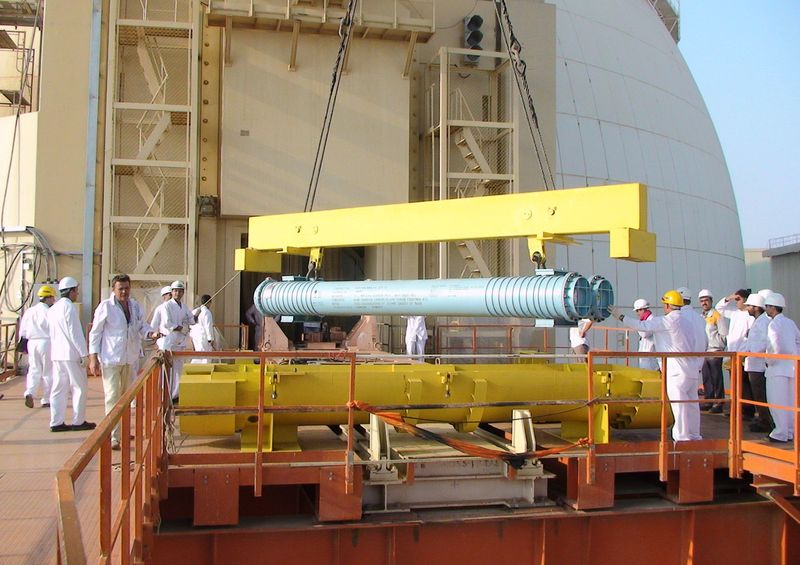
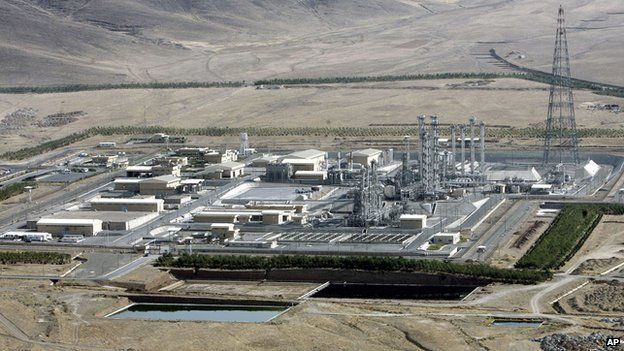
Iran nuclear facility at ArakWe don’t live in a perfect world, and the Iran nuclear agreement is not a perfect deal. There’s also an old principle in negotiations that goes something like this: People who are not at the table think they are better negotiators than those around the table. We’ve been hearing that posturing in the news about the agreement, and on talk radio. Of course the deal deserves to be debated, and honest people are going to disagree about it. Fortunately, with the signing of the agreement (July 14), its details can be found on the Web, and U.S. Secretary of State John Kerry, and others who have actually been at the table, are now out and about everywhere explaining the deal.

As someone who has been writing about U.S. – Middle East relations for many years, and who believes that diplomacy is better than weapons of war, here are seven reasons why I think the nuclear agreement with Iran will make the world a little safer. And that’s a good thing.

(1) It is very telling that President Obama and respected, high-level supporters of the deal – including two dozen U.S. generals and not a few high-profile Israelis, not to mention those who negotiated the deal – have been much more publicly forthcoming about its risks and vulnerabilities than many of its detractors have been about its benefits and substantial achievements. (There are, however, sensible critics of the deal. They do not decry the deal in toto. Rather, they acknowledge its value, while arguing, for instance, to shore up vulnerabilities in the deal and thereby strengthen the agreement.)

(2) This is not an agreement between the United States and Iran. And multilateral diplomacy is not in the same ballpark as trying to settle an argument with your neighbor, or plan the next family vacation with your spouse, or negotiate with the prospective buyer of your house to clinch the sale, or hammer out a difficult new policy on the library board. This is about negotiating nations. At the table are China, France, Russia, the United Kingdom, and the United States; plus Germany. (The so-called P5+1.) Six world powers; five are permanent members of the UN Security Council. Plus Iran.

To hear some people talk, it’s as if the United States has some sort of magnetic hold on China, France, Russia, the U.K., and Germany that can move them withersoever it wills. That’s crazy thinking. Those five sovereign international stake holders, plus Iran, all brought to the process their own national and security interests. All of that went into the mix, tumbled around, and was determinative of outcomes – from the pre-negotiations that got them all to the table in the first place, to securing agendas and procedures, to the actual talks, to the publicity and the deadlines, to the signing of the agreement. It was a huge achievement. With Iran’s national and security interest pulling against the P5+1, and because this was true at times even among the P5+1 nations, none of those outcomes was guaranteed.

(3) The deal should be seen as vital in the (still ongoing) diplomatic recovery of the United States. The path to recovery has been long and tedious and necessary, due in no small measure to the severe damage inflicted on America’s reputation by the Bush administration’s imprudent snub of Tehran’s diplomatic reach-out to Washington in the spring of 2003. The recovery has taken more than a decade and a new approach to U.S. foreign policy in the Middle East, especially toward Iran, and led by a White House that is willing and able to talk, really talk, to adversaries (not make absolutized demands as preconditions for talks).

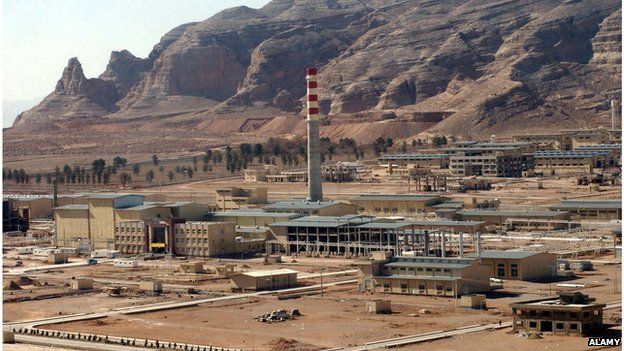
Iran uranium conversion plant at IsfahanIf, as many of its detractors want to see happen, the United States walks away from the Iran nuclear accord – which the seven nations’ emissaries have worked tirelessly, in sickness and in health, to forge – it will miserably depress the diplomatic recovery and U.S. credibility will suffer terribly in the international community. America’s good faith will be called into question, big time, and that would usher in an era of international relations that will not be good for Americans or for the rest of world.

(4) Diplomacy and negotiations are better than weapons of war. It may surprise many Americans to know that conservative Republican foreign policy toward the Middle East has been adjusting and adapting itself to the discredited political ideology of neoconservatism that was prominent in White House policymaking decisions about the Middle East during the first term of the George W. Bush administration.

Neoconservatism does not know how to negotiate with adversaries, and it does not favor diplomacy with Iran but, rather, military action. The political shift of many Congressional conservatives to this strategy can be heard in their broken-record, militaristic language about how the U.S. should deal with Iran’s nuclear program.

Pay attention to the language of Republican presidential candidates, not to mention that of liberal hawks, when they talk about their approach to U.S. foreign policy toward Iran. The absorption and promotion of neoconservative foreign policy into the worldview of American conservatism is little understood, alarmingly so.

(5) Diplomatically in the world, fifteen years is long time. Without the Iran nuclear accord, Iran is only a few months away from “breakout time” – the length of time it would need to produce one nuclear weapon. The deal, however, curbs Iran’s nuclear activities in ways that push breakout to around one year, for fifteen years. The year 2030, however, has left many fearful because by then breakout could be back to a few months.

But fifteen years is a long time. By then, Iran’s international actions may have shown a steady posture of coming out of the cold. The world may find an Iran that has not been cheating or kicking out the inspectors. The P5+1 plus Iran may have pulled together on one or two other significant issues. Iran’s government or interests may change. Who knows? In other words, that fifteen years may – please God – buy the world lot of good. If so, how can that be a bad deal? Alternatively, if Iran begins gearing up to produce a nuclear weapon, the P5+1 will have had time to gain additional wisdom for deciding what to do about that threat, and by sustaining its international credibility the United States will have accrued a lot of clout in the decision making.

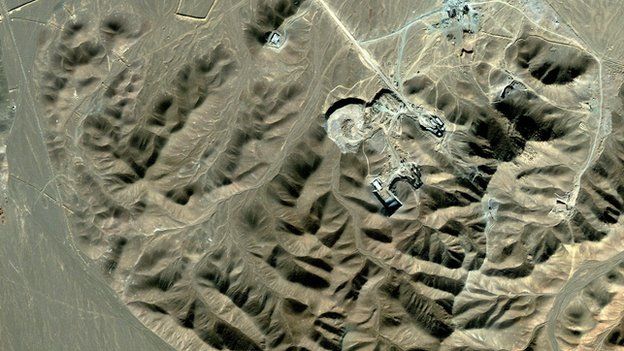
Iran uranium enrichment plant @ Qom (BBC)(6) The Middle East has become a fragile region. Without this nuclear deal, it is probable that extremely negative consequences that make the region more unstable will arise not far down the road. On the other hand, the Iran nuclear agreement could become the leaven for a wider strategy that makes the Middle East a safer place. With Iran’s nuclear behavior restrained, Israel should calm down some, and the Arab Gulf states should be less nervous and less inclined to seek their own nuclear weapons. Although it is unlikely that Persian Iran and the Arab states will any time soon drop their enmity, the nuclear deal may help them to cooperate against common enemies such as the so-called Islamic State (ISIS).

(7) If Congress votes to “disapprove” the agreement (a vote is scheduled for September), and if President Obama does not follow through on his promise to veto that vote, we would get the worst of all worlds. Iran will be the beneficiary of the lost deal, the U.S. the bad guy, with Russia and China rushing in to fill the vacuum, and the world will see not a united but a divided America on this extraordinary achievement. And even if the agreement stands, the next President could have enough domestic political support to pull the U.S. out of the deal, or to make U.S. support of the deal so unrealistically conditional as to become untenable.

Conclusion. If you want to make peace, you don’t talk to your friends but your adversaries. War does not resolve international problems. Diplomacy and negotiations accomplish that. If you agree with this editorial, now is the time to write or email your representative in Congress and tell him or her to vote to “approve” the Iran nuclear agreement. It is not based on trust but verification. It is currently the wisest available way to prevent Iran from getting a nuclear weapon. The world will be better off with the agreement than without it.

©2015 by Charles Strohmer

Addendum: A couple of days after I wrote the above article, I read a piece in The Atlantic explaining how Iran could derail the nuclear deal.

Charles Strohmer is a frequent writer on politics, religion, and international relations. He is the author of several books and many articles and is the founding director of The Wisdom Project.

Top image: Iran’s heavy water reactor and production plant at Arak (AP). Middle image: uranium conversion plant at Isfahan (Alamy). Lower image: uranium enrichment plant at Qom (BBC).

A personal note from Charles Strohmer: If you want more of the perspectives that wagingwisdom.com seeks to present, I want to invite you to follow the blog. Simply click here wagingwisdom.com, find the “Follow” button in the right margin, enter your email address just above that button, and then click “Follow.” You will then receive a very short email notice whenever I publish a new article. And, hey, if you really like it, tell some friends! Thank you.

An Imperfect Nuclear Deal with Iran: What Else?

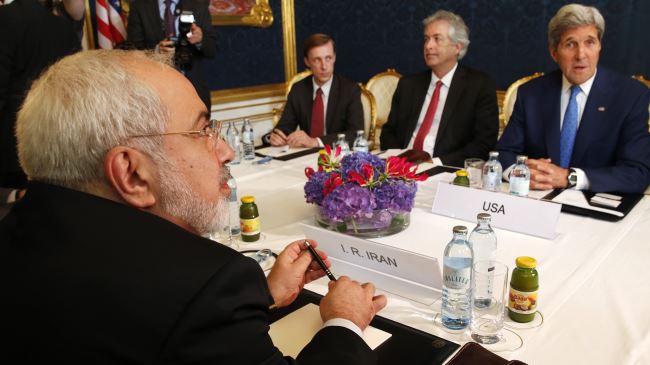
Kerry & Zarif at the tableYou only have to glance at news headlines in recent days to see that the nuclear deal with Iran raised as many tough questions as it solved. Jubilant Iranians in Tehran danced in the streets after the April 2 announcement while Iranian hardliners criticized the deal. In America, Republican presidential hopefuls were everywhere in the media voicing their opposition while President Obama explained his support of the deal to Thomas Friedman at the White House. In Israel, some editorials cautiously favored the deal while Benjamin Netanyahu stated plainly that the deal threatened Israel’s survival. The mix of opinions and emotions ranged far and wide and the wrangling won’t go away anytime soon.

Now that a solid interim agreement on Iran’s nuclear program has been reached between Iran and the P5+1 nations (the United States, United Kingdom, France, Russia, China, and Germany), the parties will bump along toward the June 30 signing deadline. As they do, during the next twelve weeks you’re going to hear high-level critics and defenders of the deal abuzz in the media, locked in a fiercely pitched verbal battle arguing their cases and trying to increase public and political support for their side.

Behind all the pushing and shoving, of course, is the question of whether this is a good deal? We all want to know the answer to this. And the only way to know – let’s be honest – is to understand the nuts and bolts of the agreement. But let’s face it, most of us don’t have the specialized technical and scientific nuclear training required for that kind of knowing. Even if we did, it will only be after the signing, perhaps well into the future, before we will know whether this was a good deal. The unpredictability of domestic and international politics, if not the intentions of a signatory, can scuttle even a good deal after it has been implemented. And there are other possibilities. The signing deadline might be pushed into the future or it may never take place.

Meantime, before June 30, as the final very technical details are being resolved (that is the goal), you will be hearing from supporters and naysayers about issues such as the upsides and downsides of the inspections, the break-out time line, the sunset clause, sanctions relief, Iran’s ballistic missiles, and an array of other strengths and deficiencies of the agreement. We will also be hearing that the deal doesn’t do a thing stop Iran from bankrolling terrorism or from quashing human rights. But diplomats, negotiators, and deal signers know that you’ve got to start somewhere.

Iranian workers at nucelar plantWho, then, are we to believe? What are we to think about this? It seems so murky. And what about trusting Iran? But the deal is not based on trust, President Obama said, but on an “unprecedented verification” inspections regime. Everyone will have to make up their own mind about the agreement. My advice during the coming weeks would be to listen chiefly and carefully to the hopeful but cautious supporters of the agreement who also admit to and discuss its weaknesses. Ignore the critics who have nothing good to say about the agreement.

No deal is going to cover all the bases, never mind being perfect. And if in the end, Iran’s Supreme Leader, Ayatollah Khamenei, who has the final say, does not accept it, the deal will not be signed by Iran. Despite all the uncertainties that remain, what we’re getting is far batter that what anyone anticipated when the current round of serious, high-level talks commenced in February 2013. (Diplomacy is often protracted, intense, and boring, with deals emerging after all-nighters and a lot of coffee. Iran and the P5+1 have been in various levels of talks about Iran’s nuclear program since June 2006.)

What we’re getting is basically an arms control agreement. Iran has agreed to scale back its nuclear program in exchange for sanctions relief. If the agreement is in good measure successful, it will be historic, not only because it would help usher Iran back into the community of nations or because it would be a giant step toward ending the thirty-five-year-old cold war between the United States and Iran.

If successful, the framework of the pact could also be used to break the pattern of nuclear proliferation that has been taking place since World War Two (think India, Pakistan, North Korea). Thinking paradigmatically, the agreement with Iran could be a template for preventing nuclear proliferation. And that would be historic.

There are only two options to this deal. One option is increased and stricter sanctions, which would destabilize the region even more. The other is bombing Iran’s nuclear facilities, which would certainly be the prelude to another U.S. war in the region. So there is the stark reality: the deal, stricter sanctions, or war. Given the likely ramifications of the latter two options, this agreement is a significant accomplishment and probably the best alternative.

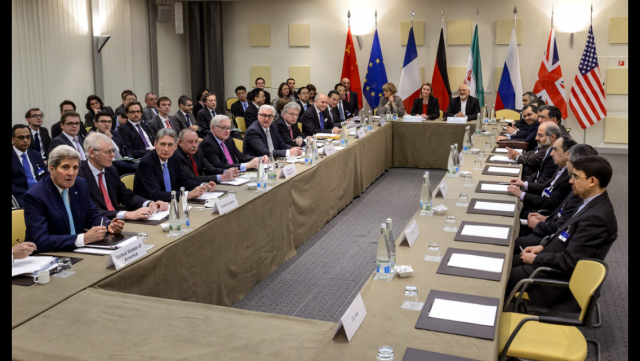
Iran and P5+1 nego table (uncredited photo)There are good and sufficient reasons, therefore, for welcoming this arms control agreement, despite its imperfection. Differences remain on both sides and must be resolved for the June 30 signing, and both sides want to see the deal improved in their favor before its signing. So much wrangling will take place around the table also. Who knows what the outcome of this final stage of negotiations will be? Only novelists know the future.

It is not the done thing in foreign policy circles to ask for prayers. The secularism of the circle rules that out. But if you are a praying person, you might want to pray that the agreement will be successful. It seems like a reasonable deal. The space that the diplomats have worked tirelessly to create for the world on this crucial issue is so much better than an Iran with nukes.

Outcomes cannot be guaranteed and troubling concerns will remain unanswered on June 30. But wisdom has a vital interest in seeing international relations established on mutual ground for mutual good amid their diversity. Wisdom is better than weapons of war.

©2015 by Charles Strohmer

Here is the full text of the April 2 agreement.

Here is President Obama’s very forthright discussion with Thomas Friedman about the June 30 agreement.

Here is a series of in-depth posts – they start here – about what turns out to be the surprising history of U.S. – Iran relations since 1979.

Top photo courtesy of Press TV. Center photo courtesy of IIPA via Ghetty. Lower photo courtesy ICHR Iran.

A personal note from Charles Strohmer: If you want more of the perspectives that wagingwisdom.com seeks to present, I want to invite you to follow the blog. Simply click here wagingwisdom.com, find the “Follow” button in the right margin, enter your email address just above that button, and then click “Follow.” You will then receive a very short email notice whenever I publish a new article. And, hey, if you really like it, tell some friends! Thank you.

Israel, Its Neighbors, and America: Change

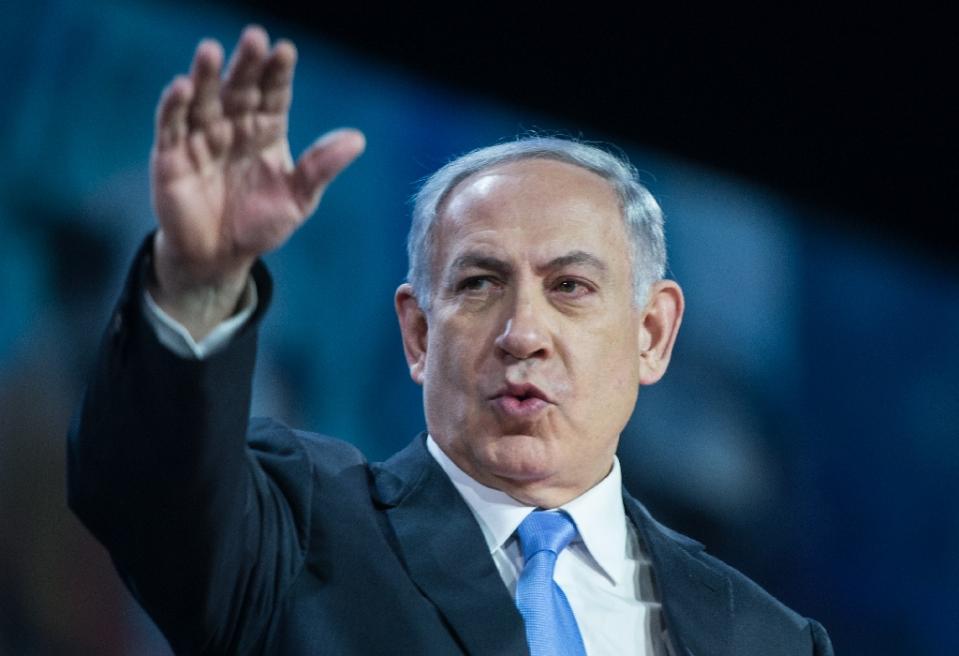
Netanyahu in DC Mar 2015There’s a lot of media buzz and political controversy in America just now, due to the arrival in Washington of Benjamin Netanhayu, for speeches to the Jewish lobby AIPAC and the U.S. Congress. This is a key month for Netanyahu, who, when he gets back home, faces the fight of his political life in a significant national election on March 17, to retain the office of Israel’s prime minister. The current junket to DC is part of Netanyahu’s reelection strategy.

Dramatic changes in Israel’s domestic politics play huge roles both in Israel’s relationships with the United States and with its regional neighbors. But basic issues of Israel’s political life may remain mysterious to many outsiders. They should not, given the ramifications of Netanyahu’s time in Washington just now and the up-coming March 17 election.

As I was pondering this today, I ran across two items – a straightforward and informative news story and a think piece – that together combine as a good pair for understanding key background issues, crucial changes that recently took place in Israel’s political life and the new internal polemic that has arisen as a result, and why American Christians need to be aware of this.

From an AP news story by Dan Perry, “Zionism Debate at Heart of Bitter Israeli Vote”:

“The debate over who best reflects the ideals of Zionism – and who can most credibly lay claim to its successes – has lent an oddly philosophical hue to a campaign that had been dominated by more prosaic issues such as budget scandals in the management of the prime minister’s residence. Along the way, the stage appears to have been set for a surprisingly climactic vote on March 17.” Read more here:

From Steven E. Meyer (political science and national security studies), in Capital Commentary, a thoughtful piece on “Israel’s Future”:

“The conflict between Israel and its neighbors in the Levant comes as close to being hopeless as any issue on earth, and leaving it to the international diplomatic process has proven to be a disaster. This issue is one that Christians need to take seriously, not to back one side or the other, or to cling to a misunderstanding of Scripture, but to pursue peace in our day as the Lord commanded in so many parts of Scripture, ‘Blessed are peacemakers, for they shall be called the sons of God’” (Matthew 5:9). Read more here.

What think ye?

©2015 by Charles Strohmer

Image by AFP Photos/Nicholas Kamm

The ISIS horror show: what you now need to know

higher learningSpeaking recently at the National Prayer Breakfast, President Obama called ISIS a “brutal, vicious death cult.” As the atrocities and inhumanity of the ISIS horror show spread and worsen, as air strikes continue, and as more combat troops are inserted, even people who have remained largely uninformed now know that they need at least some understanding of ISIS that goes beyond CNN or Fox News. So I thought it would be useful to gather in one place, for easy access, a number of short but informative articles on this.

Last year, over the space of two or three months on this blog, I posted several threads of well researched background articles that readers found helpful for learning what ISIS is on about. These non-sensationalistic but necessary pieces delve well beyond typical news coverage, talk radio punditry, political newspeak, and the religious hyper-ventilating that leaves far too many important questions untouched. Interested? If so, I have listed the first post of each of those threads here, just below, in the order that they were published, beginning with the first post. (At the end of each of those posts is a link taking you to the next piece in that thread.)

We hope you will take advantage of this opportunity. You can probably get through the complete fabric in an hour or two and take away a good “reader’s digest” version of where ISIS/ISIL is coming from and what its religious, political, and social goals are. This will also help you see what leaders of more than sixty nations understand about ISIS/ISIL and why they recently gathered in Washington for an unprecedented three-day summit on countering ISIS.

This is the only place on the Web, at least that I know of, where you can avail yourself of a detailed collection like this in one place. It may not scratch all of your itches, but you will come away pretty well informed.

Here is the list of threads, in order, beginning with the first one. But they have been written in such a way that you could jump in anywhere. I don’t have all the answers (no one does), but such as I have I give to you. If you find this list useful, send it to a friend or two.

1) RELIGION AND THE POST-9/11 BIG PICTURE part 1 of 2

2) THE RELIGIOUS ROOTS OF AL QAEDA AND ISIS part 1 of 4

3) WHERE ISIS STANDS: US VS. EVERYONE ELSE part 1 of 2

4) ISIS & THE RISE AND FALL OF ISLAM part 1 of 3

5) ISIS & AL QAEDA: THE ROLE OF JIHAD part 1 of 2

6) ISIS AND SOCIAL JUSTICE IN ISLAM part 1 of 2

7) ISIS & JIHAD: INEVITABLE WAR

©2015 by Charles Strohmer

Image by Brian Donovan (permission via Creative Commons)

ISLAM: IS IT OR IS IT NOT THE PROBLEM?

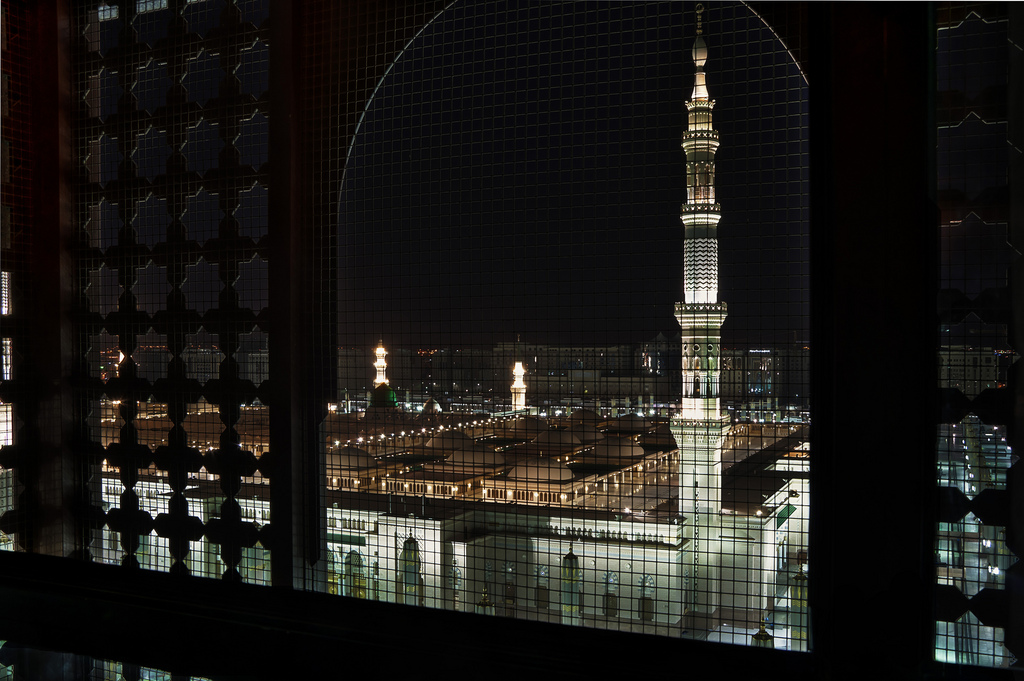
Islam at nightIn the wake of the terrorist attack on Charlie Hebdo in Paris that left 12 persons dead, Manuel Valls, the French Prime Minister, declared, “It is a war against terrorism, against jihad, against radical Islam.” President  Hollande, Valls’s boss, was more measured. “Those who committed these terrorist acts, those terrorists, those fanatics, have nothing to do with the Muslim religion,” he said during preparations for the Paris solidarity March.

There is more going on in the two comments than at first meets the eye. It is not just that Hollande’s is more accommodating to Islam. The two French leaders contradicted each other. From 9/11, to the London Underground bombing, to al Qaeda in Yemen and Boka Haram in Nigeria and the beheadings by ISIS in Iraq, two incompatible views about the role of Islam have saturated political views, the world media, and local coffee bars. Islam is the problem. Islam is not the problem. The horrific and well-planned Paris attack has made this serious bone of contention hugely public again, including comments by leaders such as Hollande and Valls.

Broadly speaking, behind the contradictory views lies, on the one hand, the organizing principle of “inclusion” found in multiculturalism, which too often makes excuses for jihadist violence, and, on the other hand, a religious, political, and social fundamentalism, such as is found in strains of American Evangelicalism, which has a complete and uncomplicated identification of Islam as a violent religion. In the former view, Islam is not the problem. In the latter, Islam is the problem.

The real problem, however, is that neither argument fits the facts. At the end of the day, both leak like a sieve. They lazily avoid the hard and time-consuming work of acknowledging and addressing all of the relevant facts. That’s half of my conclusion after more than a decade of work in the areas of Christian – Muslim relations and U.S. – Middle East foreign policy. The other half is this: Although it is wrong to say that Islam is the problem, it certainly is true that Islam has a problem.

Part of my work has entailed extensive research into this problem, and I recently began feeling brave enough to collect my thoughts about it in a formal essay. Besides writing deadlines and related pressing work, however, I hesitated to start the essay because, heart on sleeve, it would not be easy to write, to aptly cover what needs to be said. I also thought that someone wiser ought to tackle this.

And then I breathed a sigh of relief after reading John Azumah’s essay in First Things. Well written, tightly argued, amply illustrated, and covering all the cardinal issues in just a few thousand words, the essay ought to be required reading. Azumah is associate professor of World Christianity and Islam at Columbia Theological Seminary, and his essay, “Challenging Radical Islam, An Explanation of Islam’s Relation to Terrorism and Violence,” brilliantly subverts both the “Islam is the problem” and “Islam is not the problem” arguments.

Another crucial service Azumah performs for us is this. He deconstructs the is / is not arguments in a way that leaves us at the end of the essay taking away a fair, balanced, and clear understanding of the problems that Islam has, and he explains why only Muslims can solve them. Further, he is well aware that when you point a finger, three more point back at you. So I appreciated his humility, which at the end of the essay addresses ways in which we Christians also need reform.

Enough said. Read Azumah’s essay. He’s spared me a lot of work. And as a fellow writer, I can tell you he worked hard on this one.

©2015 by Charles Strohmer

Image permission of flickr.com.

President Obama, Symbolic Power, Paris, and Public Perception

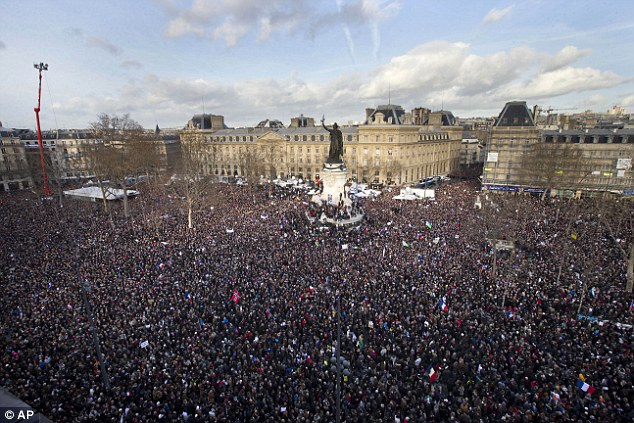
Paris march millions Every picture tells a story. Finally, instead of more excuses from the Obama administration about why the President was MIA among the world leaders at the Paris unity-against-terrorism March on Sunday, White House Press Secretary Josh Earnest said Monday afternoon that “we should have sent someone with a higher profile to the event.”

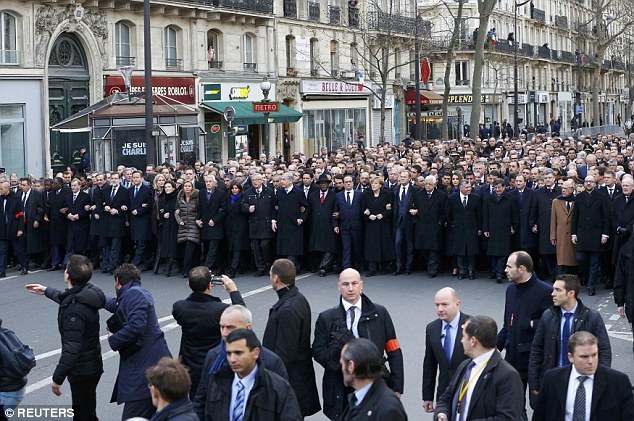
All day long Monday, images poured into and out of the media of the million+ people who had quietly gathered in the Place de la Nation Square to show the world’s solidarity for the victims of the Paris terrorist attack. At the head of the marching throng were pictured 40 world leaders walking arm-in-arm. But what many saw was: Where is the President of the United States?

Too short of a notice to get the President there, said the White House, given all the high security measures that would have been needed. It would have disrupted this important event.

And yet, there was British Prime Minister David Cameron, and German Chancellor Angela Merkel, and Israeli Prime Minister Benjamin Netanyahu, and Palestinian Authority President Mahmoud Abbas, and the King Abdullah II of Jordan, and Russian Foreign Minister Sergey Lavrov, and the others. Their security teams pulled off their attendance on short notice.

Paris march world leadersWorse, the scene lacked the presence of any top U.S. officials. That also stared everyone in the face. No U.S. Vice-President. No Secretary of State. Even Attorney General Eric Holder, who had been at a summit on terrorism in Paris that morning, did not take part. There were no senior cabinet officials either. Only U.S. Ambassador to France Jane Hartley and her staff were present.

Fareed Zakaria, host of CNN’s “Global Public Square,” called the absence of top U.S. officials a “pathetic” mistake. I agree. “I thought this was why God invented Vice-Presidents,” Zakaria quipped.

It’s true that the states represented their by their leaders at the Paris march don’t give a wit about the symbolic “message of the missing president.” The U.S. has been, is now, and shall remain adamantly united with them in their anti-terrorism policies. These leaders know that. Certainly France isn’t fussed about the symbolic message. After the Paris attack last week, President Obama made it a point to reassure French President Hollande of America’s solid partnership with its old ally France on the anti-terrorism front.

Nevertheless, emotional symbols in foreign affairs, like doctrines and explanations, play roles outside the corridors of a state’s power, where they can evoke public responses that can settle in and alter perception. The Paris solidarity march carries such a high degree of symbolism that President Obama’s absence was a glaring image that negatively affected world opinion. For a state that lacks the street cred it had in the world before the war about Iraq, it was indeed a pathetic mistake.

©2015 by Charles Strohmer

Top photo, AP. Bottom photo, Reuters.